
The history of Hawaii is a tapestry of incredible maritime navigation, royal legacy, and a complex transition from a sovereign kingdom to a territory of the United States. To answer the question of when the islands were colonized, one must look at two distinct eras: the initial settlement by Polynesian explorers and the later Western contact that led to political annexation. While the term “colonization” is most often associated with the late 19th-century overthrow of the Hawaiian monarchy, the roots of this transformation began much earlier, in the deep blue waters of the Pacific Ocean.
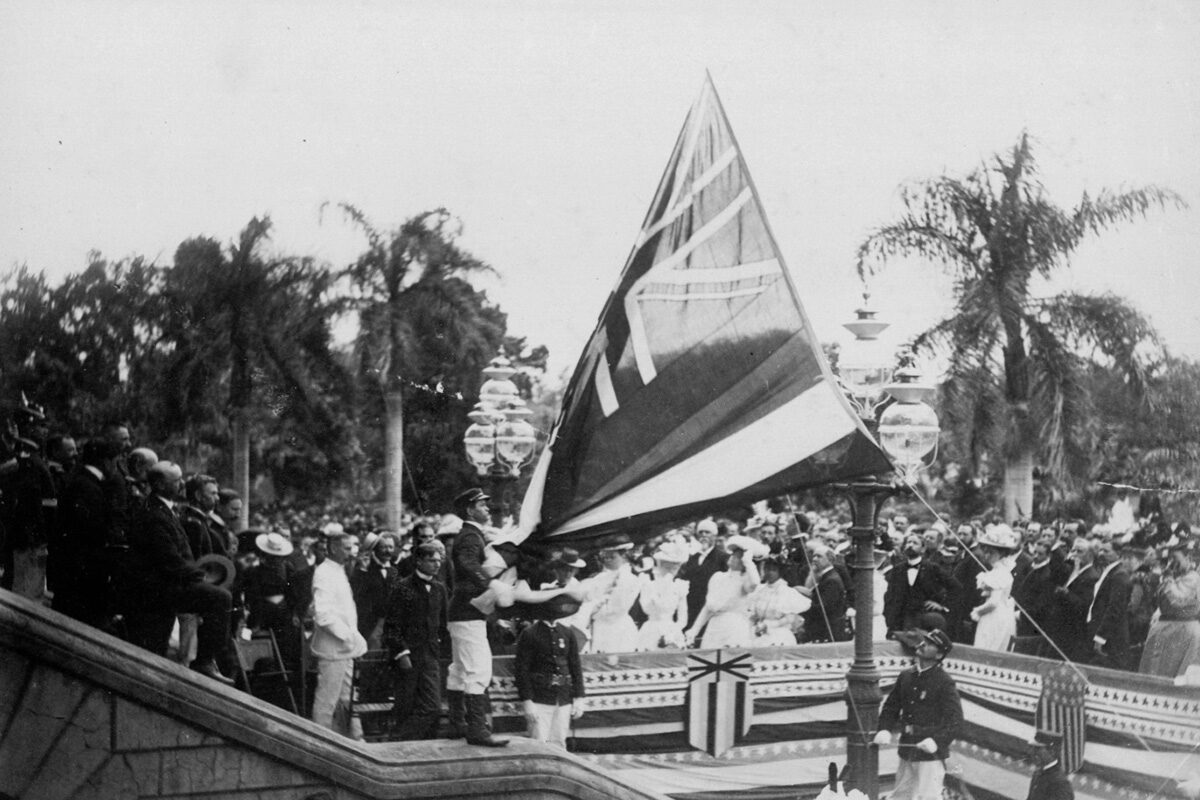
Today, visitors flocking to Honolulu or the shores of Waikiki often seek the natural beauty of the archipelago. However, the true essence of these landmarks lies in the historical narrative of the people who first called these islands home and the foreign interests that eventually reshaped their destiny.
The First Voyagers: The Polynesian Settlement of the Islands
Long before European ships appeared on the horizon, the Hawaiian Islands were discovered and settled by master navigators from Polynesia. This initial “colonization”—in the sense of establishing a new society—occurred in waves, creating a rich cultural foundation that defines the spirit of Hawaii to this day.
The Arrival of the Marquesans
Archaeological evidence suggests that the first group of settlers arrived from the Marquesas Islands as early as 400 to 500 AD. These early pioneers crossed thousands of miles of open ocean using only the stars, wind, and ocean currents for navigation. They landed on the Big Island and Kauai, bringing with them essential “canoe plants” such as taro, sweet potatoes, and coconuts, as well as livestock like pigs and chickens. This era established the first permanent settlements and the beginning of the traditional Hawaiian land management system.
The Second Wave from Tahiti
Around 1200 AD, a second wave of voyagers arrived from Tahiti. This migration brought significant changes to the social and religious structure of the islands. It was during this period that the high priests and chiefs established a strict “Kapu” system—a code of laws and taboos that governed every aspect of life. This era also saw the construction of massive stone temples known as heiau, such as the Puukohola Heiau National Historic Site, which remains a powerful landmark on the Kohala Coast.
Western Contact and the Path to Influence
The year 1778 marked a pivotal turning point in the history of the Pacific. While the islands had existed in relative isolation for centuries, the arrival of Western explorers signaled the beginning of a new, more traditional colonial era.
Captain James Cook and the Sandwich Islands
In January 1778, Captain James Cook, an English explorer, became the first European to make documented contact with the islands. He first sighted Oahu before landing at Waimea Bay on Kauai. Cook named the archipelago the Sandwich Islands in honor of the Earl of Sandwich.
This initial encounter introduced the islands to the global map, but it also brought devastating consequences. Western diseases, to which the native population had no immunity, began to decimate the local people. Despite the tragic loss of life, the arrival of explorers from Great Britain, France, and the United States accelerated trade, particularly in sandalwood and furs.
The Rise of the Kingdom of Hawaii
As foreign influence grew, King Kamehameha I utilized Western weapons and advisors to unify the warring islands. By 1810, he had established the Kingdom of Hawaii. This centralized government allowed Hawaii to interact with foreign powers as a sovereign nation. During the mid-1800s, Hawaii was recognized as an independent state by world powers including London and Paris.
However, the 1820s brought another wave of influence: the New England missionaries. Settling in towns like Lahaina and Honolulu, they introduced Christianity and Western education. Many descendants of these missionary families transitioned from religious work to the lucrative sugar industry, eventually becoming the powerful elite that would push for closer ties with the United States.
The 1893 Overthrow and Official Annexation

The most critical period of colonization occurred in the late 19th century. As the sugar industry boomed, American businessmen and plantation owners began to exert significant political pressure on the Hawaiian monarchy, seeking to protect their profits and eliminate tariffs.
The Bayonet Constitution and Queen Liliuokalani
In 1887, a group of armed settlers forced King Kalakaua to sign the Bayonet Constitution. This document stripped the monarchy of much of its power and effectively disenfranchised native Hawaiians and Asian immigrants by tying voting rights to property ownership.
When Queen Liliuokalani ascended to the throne in 1891, she sought to draft a new constitution that would restore power to the people and the sovereign. This move alarmed the American business interests. In 1893, a “Committee of Safety,” supported by United States Minister John L. Stevens and a contingent of U.S. Marines from the USS Boston, staged a coup d’état.
The Provisional Government and Annexation
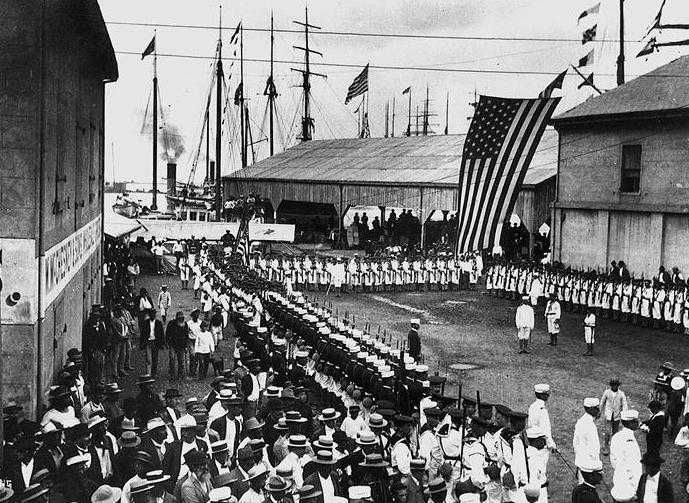
Following the overthrow, a provisional government led by Sanford B. Dole was established. Although President Grover Cleveland initially opposed the takeover and called for the Queen’s restoration, the political tide shifted with the Spanish-American War. The United States recognized the strategic importance of Pearl Harbor as a mid-Pacific naval base.
In 1898, President William McKinley signed the Newlands Resolution, officially annexing Hawaii as a territory. This marked the formal colonization of the islands by the United States, a status that would eventually lead to statehood in 1959.
Landmark Sites Reflecting Hawaii’s Colonial History
For those interested in history and architecture, Hawaii offers several landmarks that serve as physical reminders of this era. These sites tell the story of a kingdom lost and a culture that refused to be silenced.
Iolani Palace: The Seat of Sovereignty
Located in downtown Honolulu, Iolani Palace is perhaps the most significant landmark in the islands. Completed in 1882, it was the official residence of the Hawaiian monarchs. It remains the only royal palace on American soil. Visitors today can tour the grand halls where Queen Liliuokalani was later imprisoned following the overthrow, a poignant reminder of the end of the monarchy.
Washington Place
Just a short walk from the palace is Washington Place, the former home of Queen Liliuokalani and her husband, John Owen Dominis. This Greek Revival mansion has served as the residence for the Governor of Hawaii for decades but remains a site of deep cultural significance, representing the personal life of the last reigning monarch.
Bernice Pauahi Bishop Museum
To understand the depth of pre-colonial and post-colonial Hawaiian culture, the Bernice Pauahi Bishop Museum is an essential stop. Founded in memory of Princess Bernice Pauahi Bishop, the last direct descendant of the Kamehameha family, the museum houses the world’s largest collection of Hawaiian artifacts. It provides vital context on how the indigenous population navigated the pressures of Western colonization while preserving their identity.
Pearl Harbor and the USS Arizona Memorial
While often associated with World War II, Pearl Harbor is a landmark deeply tied to the narrative of colonization. The desire for a permanent naval presence in the Pacific was one of the primary drivers for the United States to annex the islands. Today, the USS Arizona Memorial stands as a testament to the islands’ strategic role in global history.
The Legacy of Colonization in Modern Hawaii
The colonization of Hawaii was not a single event but a long-term process that reshaped the demographics, environment, and politics of the archipelago. The transition from a self-sustaining indigenous society to a plantation-based economy brought waves of immigrants from Japan, China, the Philippines, and Portugal, creating the multicultural “melting pot” that defines Hawaii today.
However, the legacy of colonization remains a sensitive and active topic. In 1993, President Bill Clinton signed the Apology Resolution, in which the United States formally apologized for the illegal overthrow of the Kingdom of Hawaii. This admission has fueled modern movements for Hawaiian sovereignty and the revitalization of the Hawaiian language (Olelo Hawaii) and cultural practices.
For the modern traveler, understanding “when was Hawaii colonized” is about more than just dates. It is about recognizing the layers of history beneath the surface of famous landmarks. From the volcanic heights of Mauna Kea to the historic streets of Hilo, the story of Hawaii is one of resilience, transformation, and a continuing quest for balance between the traditions of the past and the realities of the present. Whether you are exploring the Na Pali Coast or visiting the National Memorial Cemetery of the Pacific, knowing the timeline of colonization enriches every experience in this extraordinary archipelago.
LifeOutOfTheBox is a participant in the Amazon Services LLC Associates Program, an affiliate advertising program designed to provide a means for sites to earn advertising fees by advertising and linking to Amazon.com. Amazon, the Amazon logo, AmazonSupply, and the AmazonSupply logo are trademarks of Amazon.com, Inc. or its affiliates. As an Amazon Associate we earn affiliate commissions from qualifying purchases.