
The creation of the Hawaiian Islands is a story written in fire, molten rock, and the relentless movement of the Earth’s crust. Unlike many landmasses that were formed through tectonic collisions or the slow accumulation of sediment, this volcanic archipelago emerged from the absolute center of the Pacific Plate. Understanding when Hawaii was created requires a journey back millions of years, tracing a path from the deepest ocean floor to the towering peaks that define the modern state of Hawaii.
The Geological Engine: The Hawaiian Hotspot
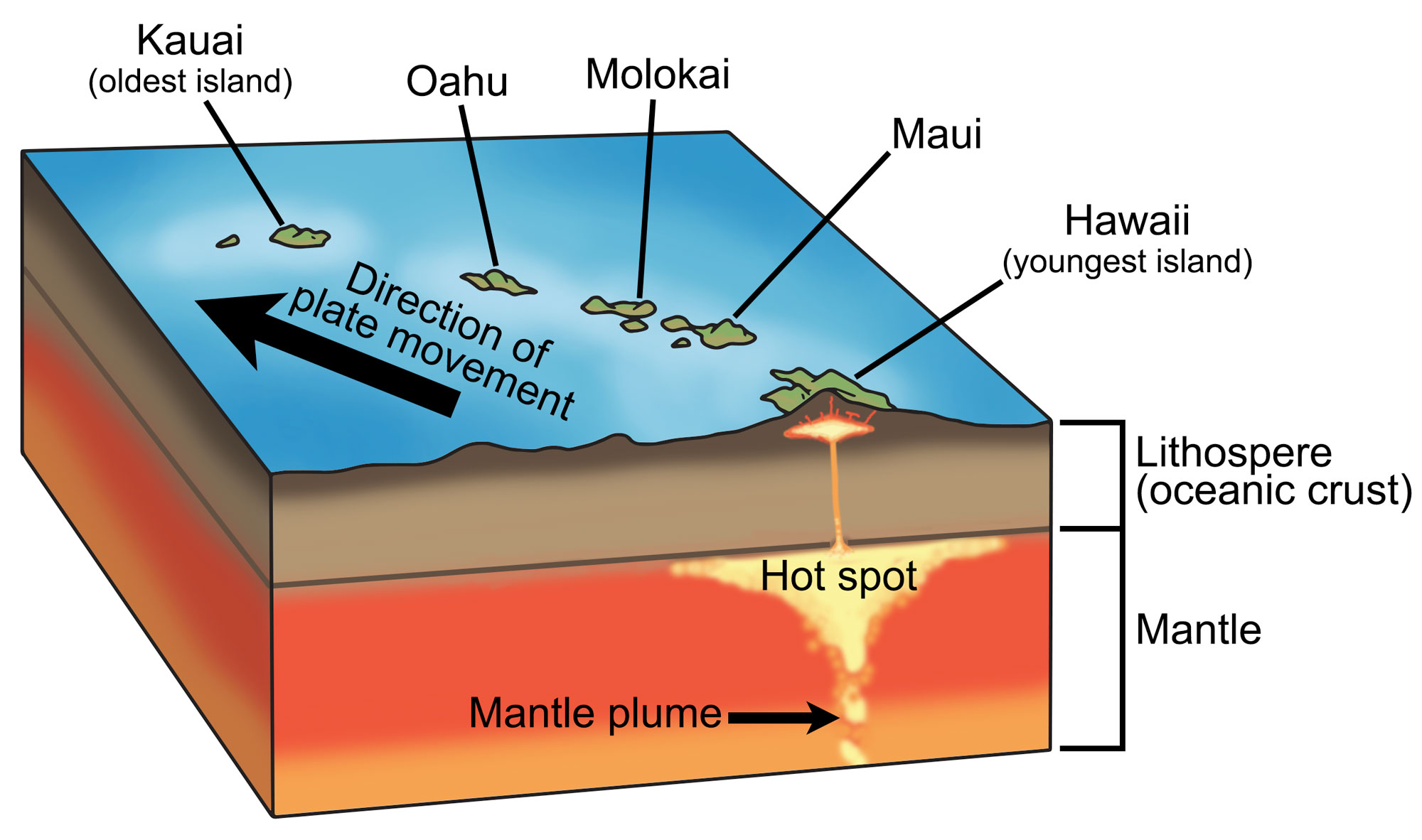
The narrative of Hawaii’s birth is tethered to a geological phenomenon known as a “hotspot.” Far beneath the surface, deep within the Earth’s mantle, a plume of intense heat rises toward the crust. As the Pacific Plate drifts slowly toward the northwest, this stationary plume creates a series of volcanoes.

Understanding Volcanic Migration
Because the tectonic plate is constantly in motion while the hotspot remains fixed, the islands were not created simultaneously. Instead, they were birthed one by one in a chronological sequence. As a volcano moves off the hotspot, it loses its source of magma and becomes extinct, while a new volcano begins to form behind it. This process has been repeating for tens of millions of years, carving a path across the ocean floor that stretches thousands of miles.
The Age of the Archipelago
Geologists have dated the rocks of the islands to determine exactly when the process began. The oldest islands in the chain—the Northwestern Hawaiian Islands—are roughly 30 million years old. As they drifted away from the hotspot, they succumbed to erosion, gradually sinking back beneath the waves. The main islands that residents and tourists recognize today are significantly younger, representing the most recent chapters of this ongoing volcanic epic.
The Formation of the Main Hawaiian Islands
The main islands, including Kauai, Oahu, Maui, and the Big Island, offer a clear timeline of the chain’s evolution. By studying the layers of basaltic rock and the rate of erosion, scientists can estimate when each major landmass broke the surface of the Pacific Ocean.
Kauai: The Elder Isle
Kauai is the oldest of the major islands, having formed approximately 5.1 million years ago. Its landscape reflects its age; centuries of tropical rain and wind have carved the dramatic cliffs of the Na Pali Coast and the deep, colorful ridges of Waimea Canyon. The island is a testament to the power of nature to sculpt land long after the initial volcanic fires have cooled.

Oahu and Maui: Middle Years
Oahu emerged between 2.2 and 3.4 million years ago, formed by the volcanic activity of the Waianae and Koʻolau ranges. Maui, often called the “Valley Isle,” is a dual-volcano formation that began roughly 1.3 million years ago. These islands represent a middle stage of volcanic aging, where the rugged topography is softened by lush vegetation and the development of intricate coral reef ecosystems.
The Big Island: A Work in Progress
The Big Island is the youngest and most geologically active island in the group. It is the only one still actively growing due to the presence of the hotspot directly beneath it.
The Birth of New Land
The Big Island is less than 500,000 years old. It is composed of five shield volcanoes: Kohala, Mauna Kea, Hualalai, Mauna Loa, and Kilauea. The continuous eruptions from Kilauea provide a living laboratory for geologists and visitors alike. When lava flows reach the Pacific Ocean, the interaction between molten rock and cold saltwater causes the island to expand, adding new territory to the state. This process ensures that the story of Hawaii’s creation is not a historical footnote, but an active, daily occurrence.
The Future of the Chain
Even as the Big Island grows, the hotspot continues its work to the southeast. A new seamount named Kama‘ehuakanaloa—formerly known as Loihi—is currently forming on the seafloor. It is expected to breach the surface of the ocean in approximately 10,000 to 100,000 years, effectively becoming the next member of the Hawaiian Islands chain.
Landmarks and the Legacy of Time
The geography of Hawaii acts as a historical record, where every mountain and beach tells a story of tectonic movement. Landmarks such as Diamond Head on Oahu or the summit of Haleakala on Maui provide physical evidence of the violent, yet creative forces that formed the islands.
Erosion and Adaptation
Once a volcanic island ceases to grow, the elements begin to dismantle it. The steep valleys of Kauai and the crumbling cliffs of the Northwestern Hawaiian Islands demonstrate the eventual fate of all land in this region. The tropical climate, characterized by abundant rainfall, accelerates this decay, transforming raw volcanic basalt into fertile soil that supports a unique ecosystem found nowhere else on Earth.
Geological Conservation
Understanding that Hawaii is essentially a collection of “temporary” peaks helps visitors appreciate the fragile nature of the landscape. Protecting these natural treasures, from the volcanic slopes of the Big Island to the protected Papahanaumokuakea Marine National Monument, is essential. These sites serve as a bridge between the deep past and the future of our planet, showcasing the raw, unbridled power of the Earth.
When we ask when Hawaii was created, the answer is a complex “it depends.” It is not a single date but a sprawling timeline that began 30 million years ago and continues into the present moment. From the ancient, submerged seamounts to the incandescent lava flows of Kilauea, the Hawaiian Islands remain a masterpiece of geological engineering, constantly evolving, shifting, and growing beneath the vast blue expanse of the Pacific.
LifeOutOfTheBox is a participant in the Amazon Services LLC Associates Program, an affiliate advertising program designed to provide a means for sites to earn advertising fees by advertising and linking to Amazon.com. Amazon, the Amazon logo, AmazonSupply, and the AmazonSupply logo are trademarks of Amazon.com, Inc. or its affiliates. As an Amazon Associate we earn affiliate commissions from qualifying purchases.