
A Historical Perspective on Civil Rights and Social Change
The question of when interracial marriage became legal in Alabama is not merely a matter of legal timelines; it is a profound inquiry into the historical arc of civil rights, social progress, and the persistent struggle for equality in the United States. For decades, Alabama, like many other Southern states, operated under laws that criminalized unions between individuals of different racial backgrounds, reflecting the deep-seated racial segregation and discrimination that defined much of American history. Understanding the journey to legalizing interracial marriage in Alabama requires an examination of key legal battles, landmark court decisions, and the broader societal shifts that ultimately dismantled these discriminatory statutes.
The Era of Anti-Miscegenation Laws in Alabama
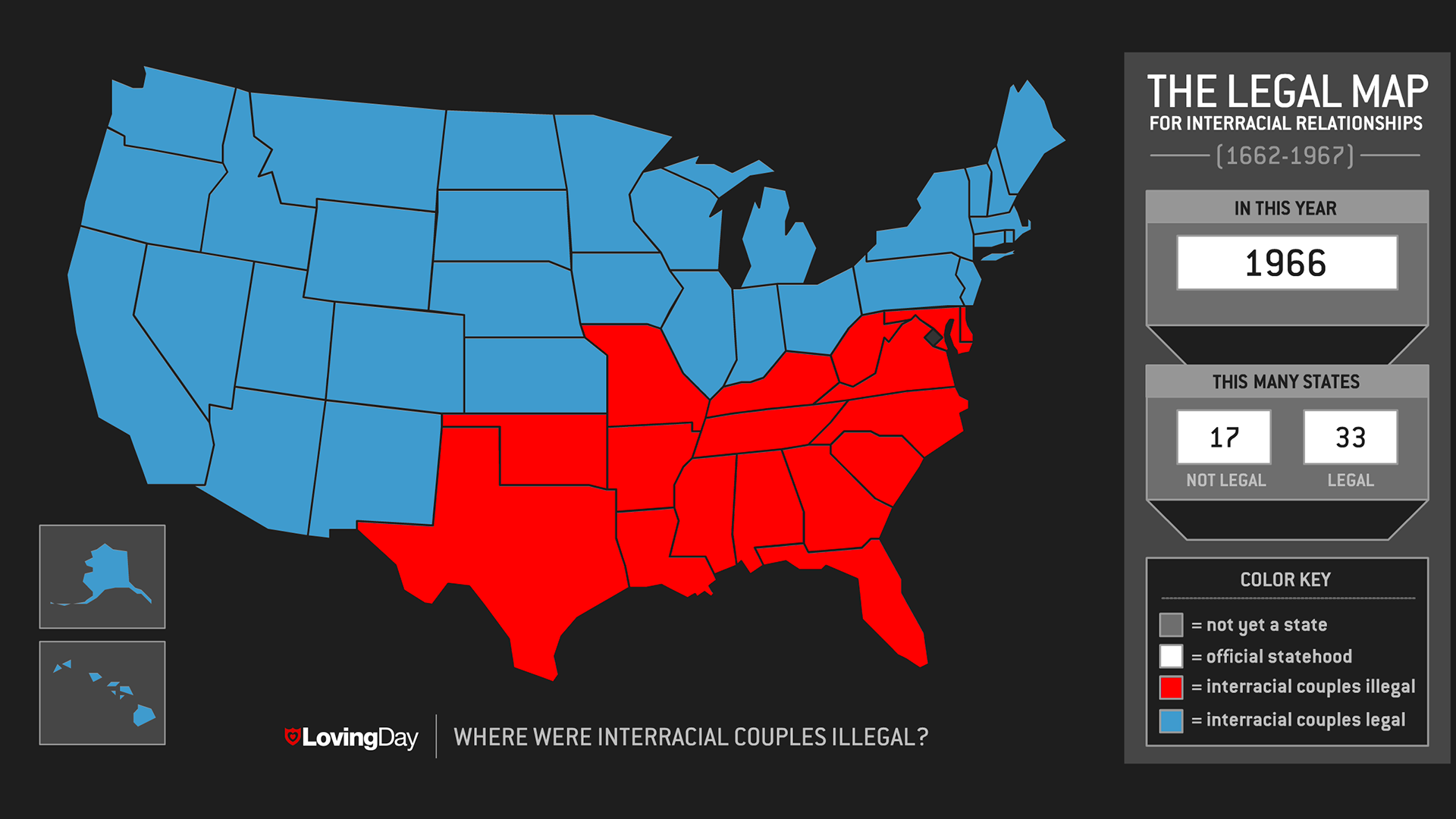
Prior to the mid-20th century, anti-miscegenation laws were a pervasive feature of the legal landscape across the United States. These laws, rooted in racist ideologies and the desire to maintain a rigid social hierarchy, prohibited marriage and, in some instances, sexual relations between individuals of different perceived races. In Alabama, these statutes were codified and enforced with significant penalties, impacting countless lives and perpetuating racial division.
The origins of anti-miscegenation legislation in America can be traced back to colonial times, with early laws enacted to prevent unions between European colonists and Indigenous peoples, and later, between whites and enslaved Africans. By the 19th century, these laws had become a cornerstone of racial segregation, particularly in the Southern states, and were used to uphold the system of white supremacy. Alabama’s own statutes reflected this historical context, defining racial categories in broad and often arbitrary ways, and carrying severe consequences for those who defied them, including imprisonment and the invalidation of marriages.
The social and economic implications of these laws were immense. They not only prevented loving relationships and family formations but also reinforced the systemic discrimination faced by people of color. The very existence of these laws sent a powerful message about the perceived inferiority of non-white individuals and the sanctity of racial purity, as defined by the dominant white society. For individuals who wished to marry outside their race, these laws presented an insurmountable legal and social barrier, forcing difficult choices, secrecy, or the abandonment of their relationships.
The Civil Rights Movement and the Challenge to Discriminatory Laws
The mid-20th century witnessed a monumental shift in the United States with the rise of the Civil Rights Movement. This era of activism and social change was characterized by courageous efforts to dismantle segregation and challenge discriminatory practices in all aspects of American life, including marriage. As the broader movement gained momentum, legal challenges to anti-miscegenation laws began to emerge, laying the groundwork for their eventual repeal.

While various legal battles were fought across the nation, the case that ultimately struck down anti-miscegenation laws at the federal level was Loving v. Virginia in 1967. This landmark Supreme Court decision declared that laws prohibiting interracial marriage violated the Equal Protection and Due Process Clauses of the Fourteenth Amendment. Although the Loving v. Virginia case directly addressed Virginia’s laws, its impact was nationwide, effectively invalidating similar statutes in all states that still had them in effect, including Alabama.
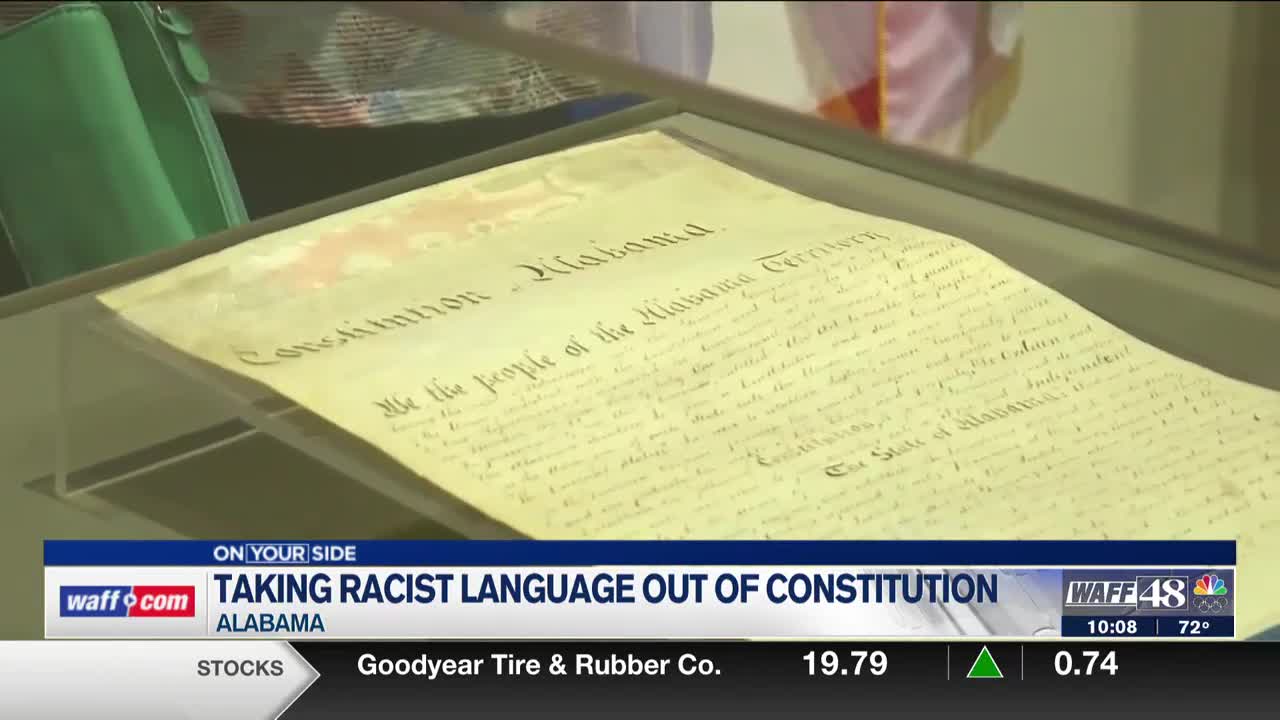
Before the Loving decision, individual states had the authority to enforce their own anti-miscegenation laws. In Alabama, the state constitution and statutory laws explicitly prohibited interracial marriage. For instance, Section 102 of the Alabama Constitution, adopted in 1901, stated: “The legislature shall never make any law respecting the establishment of religion, or prohibiting the free exercise thereof; nor shall the same, by law, be construed to prohibit or abridge the right of any person to employ any teacher, or to attend any school or institution of learning, except in the common schools, provided no preference is given to one religious sect over another, and no creed or platform, in matter of religion, shall be taught in the common schools, or any other school or institution of learning, with which the state is in any way connected, or where the state may have an interest; and provided further, that no person in the State of Alabama shall be deprived of life, liberty, or property, except by due process of law.” This section, while not directly mentioning marriage, was interpreted and complemented by other statutes that explicitly banned interracial unions.
The Aftermath of Loving v. Virginia and the Modern Legal Landscape
The Supreme Court’s decision in Loving v. Virginia on June 12, 1967, was a watershed moment. It unequivocally affirmed the principle that marriage is a fundamental right and that the state cannot arbitrarily interfere with this right based on race. Following this ruling, the anti-miscegenation laws that had been in effect in Alabama, and the other seventeen states that still maintained such prohibitions, were rendered unconstitutional and unenforceable.
The immediate impact of the Loving decision was the legal recognition of all previously prohibited interracial marriages and the freedom for individuals of all races to marry each other without legal impediment. This marked a significant victory for the Civil Rights Movement and a crucial step towards a more equitable and just society. It signaled a national repudiation of the racial prejudice that had underpinned these discriminatory laws for centuries.
However, the legal invalidation of anti-miscegenation laws did not instantly erase the deep-seated racial biases and social stigmas that had been cultivated over generations. While the legal barriers were removed, the journey towards full social acceptance and equality for interracial couples continued to be a gradual process. Nevertheless, the Loving v. Virginia decision provided the essential legal framework upon which true equality in marriage could be built.
Understanding the Legacy and Broader Significance
The history of interracial marriage legality in Alabama is a microcosm of the larger struggle for civil rights and human dignity in the United States. It highlights how legal systems can be used to enforce societal prejudices and how persistent advocacy and legal challenges are essential for dismantling unjust laws. The journey from prohibition to legal acceptance reflects a profound evolution in American jurisprudence and societal values.
The legal battles fought and won, culminating in the Loving v. Virginia decision, not only legalized interracial marriage but also reinforced fundamental principles of equality and individual liberty. They served as a powerful reminder that the rights of all citizens, regardless of their race, must be protected under the law. The legacy of these efforts continues to inform discussions about social justice, equality, and the ongoing work required to ensure that all individuals can live free from discrimination and prejudice.
For those interested in the historical evolution of civil rights in Alabama and across the nation, exploring the context of anti-miscegenation laws and their eventual demise offers critical insights into the transformative power of activism and the enduring importance of legal protections for fundamental human rights. The story is not just about a specific law, but about the broader societal progress that has been made and the continued efforts needed to achieve a truly inclusive society.
LifeOutOfTheBox is a participant in the Amazon Services LLC Associates Program, an affiliate advertising program designed to provide a means for sites to earn advertising fees by advertising and linking to Amazon.com. Amazon, the Amazon logo, AmazonSupply, and the AmazonSupply logo are trademarks of Amazon.com, Inc. or its affiliates. As an Amazon Associate we earn affiliate commissions from qualifying purchases.