
The allure of Maine has captivated travelers and history enthusiasts for centuries. Known as the “Pine Tree State,” its rugged coastline, pristine wilderness, and rich heritage beckon visitors seeking unforgettable experiences. But when did this distinct American entity, Maine, officially come into being? The answer to “When Was Maine Founded?” is not a single, simple date, but rather a narrative woven through centuries of exploration, settlement, and political evolution. To truly understand Maine’s founding, we must delve into its past, examining the earliest European claims, the establishment of colonial settlements, and its eventual path to statehood.

Early Explorations and Colonial Claims
Long before European ships first sailed into its harbors, the land that would become Maine was inhabited by Indigenous peoples for thousands of years. These original inhabitants, including the Wabanaki Confederacy, developed a deep connection with the land and its resources, shaping the very geography and ecological balance that would later attract European settlers.
The first documented European contact with Maine dates back to the early 16th century. Giovanni da Verrazzano, an Italian explorer sailing for the French crown, is believed to have charted portions of the Maine coast in 1524. However, it was Samuel de Champlain, a French explorer and cartographer, who provided more detailed early maps and descriptions of the region during his expeditions in 1604 and 1605. He explored Mount Desert Island and established a settlement on Saint Croix Island, marking one of the earliest attempts at French colonization in North America.
Following closely were the English, who also laid claim to the territory. In 1602, Bartholomew Gosnold explored the southern coast, and in 1607, the Plymouth Company sent colonists to establish the Popham Colony near the mouth of the Kennebec River. Though the Popham Colony was short-lived, it solidified English claims and demonstrated their intentions to settle the region.
The Rise of French and English Influence
The early years of European presence in Maine were marked by a territorial tug-of-war between France and England. The French, under the banner of New France, sought to expand their influence and fur trade networks inland, establishing trading posts and missions. The English, meanwhile, were focused on establishing permanent settlements and asserting their dominance along the Atlantic seaboard.
This period was characterized by a complex interplay of trade, conflict, and cultural exchange between the European settlers and the Indigenous peoples. The Wabanaki Confederacy, initially wary but often engaged in trade, found themselves increasingly caught between the competing colonial powers.
The Province of Maine, as it came to be known, was initially a proprietary grant. In 1622, King James I of England granted a vast territory stretching from the Merrimack River to the St. George’s River to Sir Ferdinando Gorges and Sir John Popham. This grant laid the groundwork for the future political and administrative development of the region, even though immediate large-scale settlement was slow.
The Province of Maine was distinct from the neighboring Massachusetts Bay Colony. While Massachusetts developed into a more unified Puritan society, the Province of Maine experienced a more fragmented settlement pattern, with various towns and manors established by different proprietors and settlers. This early divergence in development would shape Maine’s unique identity for generations to come.
The Path to Statehood and Formal Founding
The concept of “founding” Maine often refers to its eventual transition from a proprietary colony and district of Massachusetts to a sovereign state within the United States. This journey was a long and often arduous one, punctuated by wars, economic shifts, and evolving political aspirations.
For much of the colonial era, Maine was under the administration of Massachusetts. Following the death of Ferdinando Gorges, his heirs sold their proprietary rights to the Massachusetts Bay Colony in 1677. This consolidation of power meant that Maine became, in essence, a western district of Massachusetts, sharing its governance and facing the same political and economic tides.
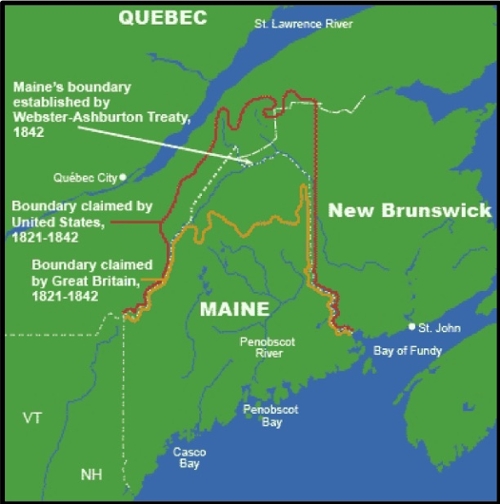
The period leading up to the American Revolution saw growing discontent among Maine’s settlers. They felt that their interests were not adequately represented by the distant government of Massachusetts, and they yearned for greater autonomy. Furthermore, Maine’s economy, heavily reliant on timber, fishing, and shipbuilding, faced challenges due to British trade restrictions and the disruption caused by various colonial wars, including the French and Indian War.
The Era of Self-Governance and Statehood
The American Revolution provided a pivotal opportunity for Maine to assert its desire for self-governance. Maine played an active role in the war effort, contributing soldiers and resources. As the colonies moved towards independence, the question of Maine’s future political status became increasingly prominent.
Following the Revolution, the desire for statehood intensified. Maine’s residents felt that their unique identity and needs were not being fully addressed as part of Massachusetts. They argued that their distinct geography, economy, and population warranted their own political entity.
The process of separating from Massachusetts was not immediate. It involved a series of votes by the Maine populace and negotiations with the Massachusetts legislature. Public sentiment in Maine overwhelmingly favored separation. In 1819, the Maine legislature formally requested permission from Massachusetts to become a separate state. After considerable debate and negotiation, Massachusetts agreed, contingent on Maine’s admission to the Union being approved by the United States Congress.
This led to the famous Missouri Compromise of 1820. The admission of Maine as a free state was balanced by the admission of Missouri as a slave state, a compromise that temporarily eased tensions over the issue of slavery’s expansion.
The Official Founding: A State of Independence
Thus, the official founding of Maine as a state, and therefore its modern “founding date” in the context of its political existence, is March 15, 1820. On this date, Maine was admitted to the Union as the 23rd state. This marked the culmination of centuries of exploration, settlement, and a persistent drive for self-determination.
The establishment of Maine as an independent state was a significant moment, not just for the region, but for the young United States. It represented the growing strength and diversity of the nation, as new entities emerged and contributed to the federal fabric.

Landmarks and Legacies of Maine’s Founding
The legacy of Maine’s founding can still be seen in its many historical sites and landmarks. The Fort Western in Augusta, for example, stands as a testament to early colonial life and the strategic importance of the Kennebec River. The charming coastal towns, many of which were established during the colonial period, retain much of their historic architecture and maritime character.
From the rocky shores of Acadia National Park, a breathtaking natural landmark that has inspired awe for generations, to the historic lighthouses that dot its coastline, Maine offers a tangible connection to its past. These sites serve as reminders of the hardy settlers, the Indigenous peoples who first called this land home, and the complex history that led to the creation of the state we know today.
For travelers, understanding Maine’s founding adds a deeper layer of appreciation to their visit. Whether exploring the quaint streets of Kennebunkport, visiting the historic Portland Head Light, or venturing into the vast wilderness of the Allagash Wilderness Waterway, the echoes of Maine’s journey to statehood are ever-present.
The story of Maine’s founding is a compelling narrative of human endeavor, resilience, and the enduring quest for identity. It’s a story that continues to unfold with each new visitor who discovers the unparalleled beauty and rich history of the Pine Tree State. From its early, often contested, European beginnings to its formal incorporation into the United States, Maine’s founding is a multifaceted tale that enriches the experience of anyone who ventures to its shores. The blend of natural wonders, from the dramatic cliffs of Acadia to the serene lakes and forests, coupled with a deep historical resonance, makes Maine a truly special destination. The exploration of its past, including the very question of “When Was Maine Founded?”, is an essential part of unlocking the soul of this captivating state. Whether you’re seeking adventure in its sprawling national parks, relaxation in a charming coastal inn, or a journey through time at its historic landmarks, Maine offers an experience that is both deeply rooted in its past and vibrantly alive in the present.
LifeOutOfTheBox is a participant in the Amazon Services LLC Associates Program, an affiliate advertising program designed to provide a means for sites to earn advertising fees by advertising and linking to Amazon.com. Amazon, the Amazon logo, AmazonSupply, and the AmazonSupply logo are trademarks of Amazon.com, Inc. or its affiliates. As an Amazon Associate we earn affiliate commissions from qualifying purchases.