
The question “When was New Mexico established?” is more complex than a simple date, for the establishment of this vibrant southwestern state encompasses centuries of human presence, diverse cultures, and shifting political landscapes. It’s a narrative woven from indigenous heritage, Spanish exploration, Mexican governance, and finally, its enduring place as a United States state. To truly understand when New Mexico was established, we must delve into its rich and layered history, exploring the pivotal moments that shaped its identity and brought it into existence as we know it today.
The origins of New Mexico stretch back millennia, long before any European foot touched its soil. Indigenous peoples, including the ancestors of the Pueblo tribes, thrived in the fertile river valleys, developing sophisticated agricultural societies, intricate social structures, and unique cultural traditions. Sites like Chaco Culture National Historical Park stand as testaments to the advanced civilizations that flourished here, leaving behind impressive ruins and a deep spiritual connection to the land. These ancient communities, with their enduring legacy, represent the earliest form of “establishment” in New Mexico, a deep-rooted human presence that laid the groundwork for all that followed.
The Spanish Colonial Era: A New Claim and a Name
The arrival of Europeans in the 16th century marked a dramatic turning point. Spanish explorers, driven by the allure of riches and the mission to spread Christianity, ventured into this vast territory. Francisco Vázquez de Coronado, in his ambitious expedition of 1540-1542, is often credited with being one of the first Europeans to extensively explore the region that would later become New Mexico. While his quest for the mythical Cities of Gold proved fruitless, his journey brought the area to the attention of the Spanish Crown.
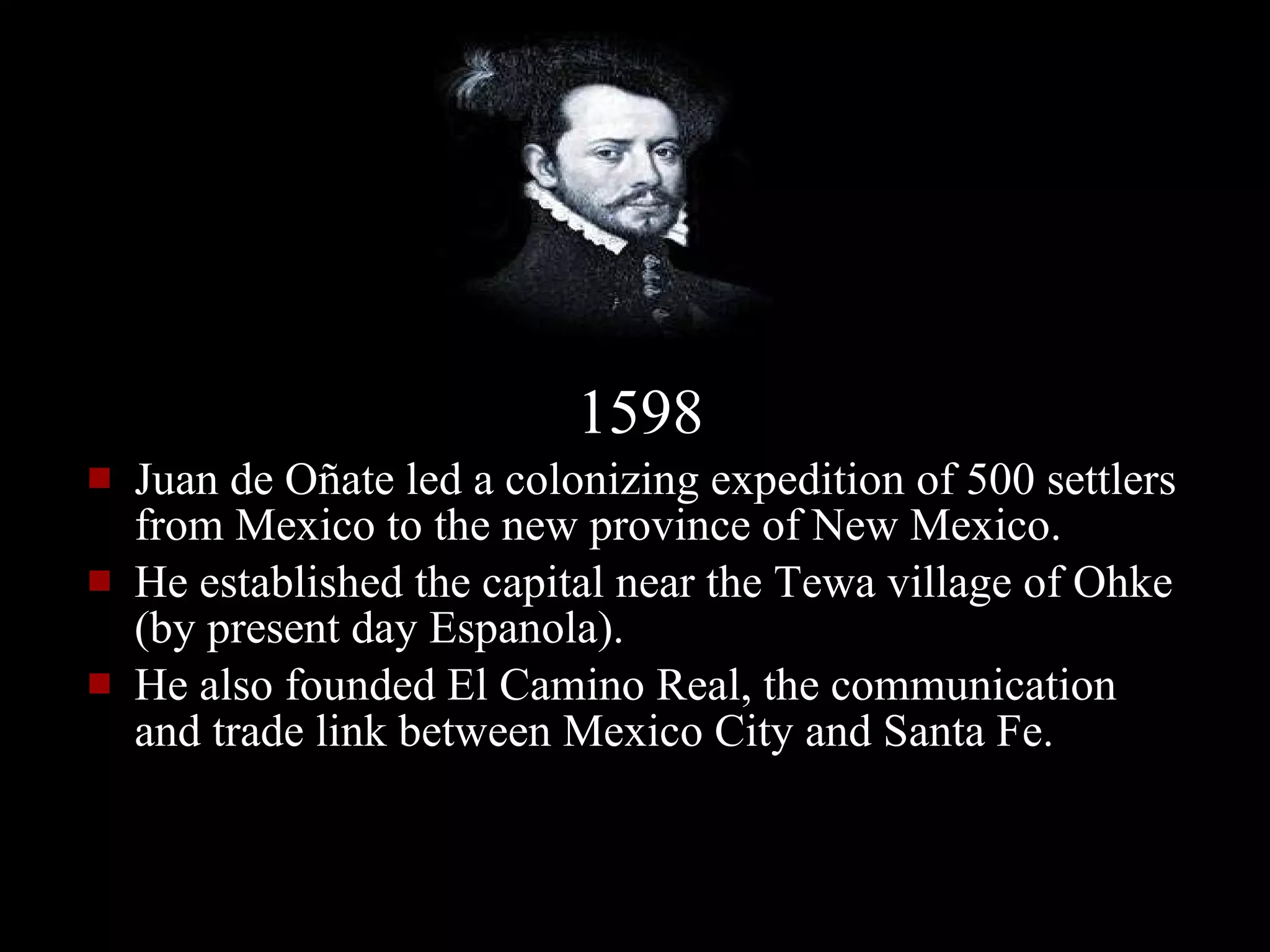
However, it was Juan de Oñate who would truly initiate Spanish colonization. In 1598, he led an expedition to establish a permanent settlement, claiming the territory for Spain. He founded San Gabriel de Yungue-Ouinge near present-day San Juan Pueblo, marking the first European capital in New Mexico. This act of colonization, though met with resistance from some indigenous groups, formally brought New Mexico under Spanish jurisdiction and gave it its enduring name. The name “New Mexico” itself was inspired by the fabled riches of Mexico City, a hope that this new land would yield similar treasures.
Early Settlements and the Pueblo Revolt
The early years of Spanish rule were characterized by the establishment of missions, presidios, and towns, with Santa Fe being founded in 1610 as the new capital. This period was not without conflict. The Spanish encomienda system, which granted Spanish colonists control over indigenous labor and tribute, led to widespread resentment and hardship. This culminated in the Pueblo Revolt of 1680, a pivotal moment where the indigenous peoples, united under the leadership of Popé, successfully expelled the Spanish from New Mexico for over a decade. This successful uprising demonstrated the resilience and determination of the native populations and profoundly impacted the subsequent Spanish reconquest.
In 1692, Diego de Vargas led the Spanish back, initiating a period of reconquest and resettlement. While the reconquest was not a smooth process, it re-established Spanish authority. This era saw the consolidation of Spanish influence, with the development of haciendas, agricultural practices, and a blending of cultures that continues to define New Mexico today. The Spanish colonial period, spanning over three centuries, fundamentally shaped the political, religious, and cultural fabric of the region, leaving an indelible mark on its landscape and its people.
Mexican Independence and the Path to Statehood

Following Mexico‘s independence from Spain in 1821, New Mexico became a territory of the newly formed Mexican Republic. This transition brought about changes in governance and economic policies. The Santa Fe Trail, a vital trade route connecting Missouri with Santa Fe, flourished during this period, fostering economic ties and cultural exchange between New Mexico and the eastern United States. While New Mexico was an integral part of Mexico, its distant location and unique demographic makeup often meant a degree of autonomy in its local affairs.
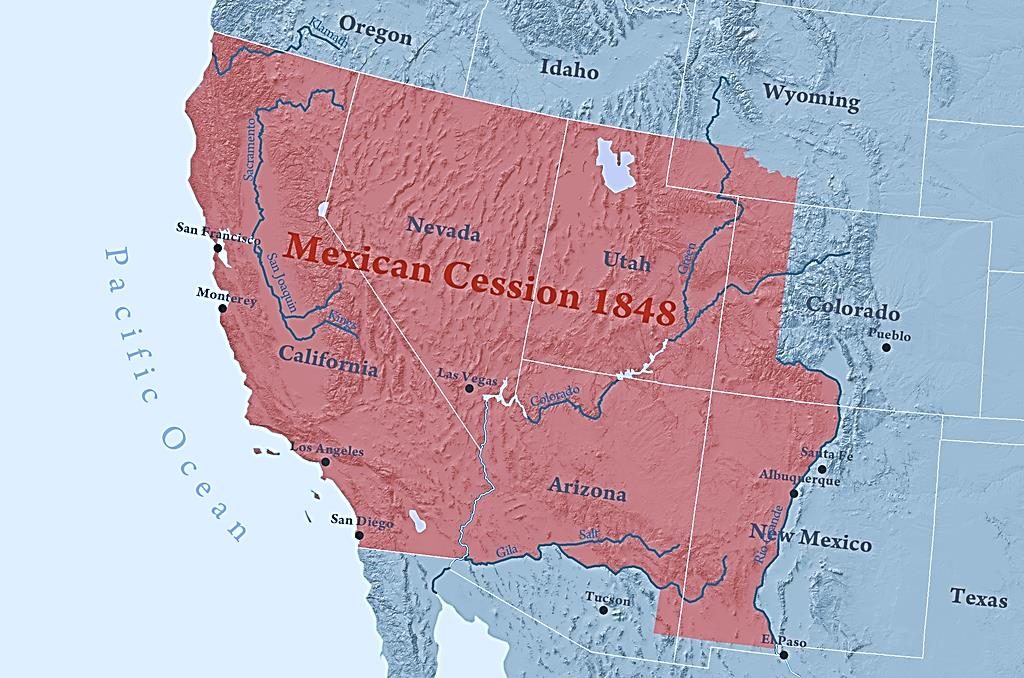
The Mexican-American War (1846-1848) drastically altered the trajectory of New Mexico. In 1846, Stephen Watts Kearny occupied Santa Fe without significant resistance, marking the beginning of American military control. The Treaty of Guadalupe Hidalgo, signed in 1848, ceded New Mexico and other vast territories to the United States. This marked the end of Mexican rule and the dawn of American administration.
The Territory of New Mexico and Statehood
The United States organized New Mexico as a territory in 1850. This period was characterized by further settlement, the development of infrastructure, and its role in the American Civil War, particularly during the New Mexico Campaign. However, the path to statehood was a long and arduous one, fraught with political challenges, economic disparities, and debates over representation. For decades, New Mexico remained a territory, while other regions achieved statehood.
Several factors contributed to the delay. Concerns about New Mexico‘s relatively small population, its predominantly Hispanic and indigenous populations, and perceived illiteracy rates were raised by opponents of statehood. The political climate in Washington, D.C. also played a role, with shifts in party control and the ongoing debates about admitting new states, particularly those with significant non-white populations, influencing the process.
Despite these obstacles, a strong movement for statehood persisted within New Mexico. Local leaders and citizens tirelessly advocated for their right to full representation. Finally, after numerous attempts and significant political maneuvering, New Mexico was admitted to the Union as the 47th state on January 6, 1912. This date marks the official “establishment” of New Mexico as a state within the United States, a culmination of centuries of history and a testament to the aspirations of its people.
A Legacy of Diversity and Enduring Culture
The establishment of New Mexico is not a single event but an ongoing story of adaptation, resilience, and cultural fusion. From the ancient indigenous civilizations to the Spanish colonial era, Mexican governance, and its eventual incorporation into the United States, each period has contributed to the unique character of the Land of Enchantment.
Today, New Mexico stands as a vibrant tapestry of cultures, where Native American, Hispanic, and Anglo traditions intermingle. This rich heritage is visible in its art, music, cuisine, architecture, and the enduring spirit of its people. Destinations like Taos Pueblo, a UNESCO World Heritage site, offer a glimpse into the living traditions of the Pueblo people. The historic plazas of Santa Fe and Albuquerque showcase the Spanish colonial influence, while modern cities buzz with contemporary life and innovation.
For travelers, New Mexico offers a journey through time and a celebration of diversity. Whether exploring the ancient cliff dwellings of Bandelier National Monument, marveling at the modern marvels of the International Balloon Fiesta in Albuquerque, or savoring the distinct flavors of New Mexican cuisine, visitors are immersed in a land shaped by a long and complex history. The question of “When was New Mexico established?” leads us not to a singular date, but to a profound appreciation for the multifaceted origins and the enduring legacy of this captivating state. The ongoing evolution of New Mexico, with its commitment to preserving its heritage while embracing the future, ensures its continued establishment as a unique and cherished part of the American landscape. The allure of New Mexico lies in this rich historical foundation, offering unparalleled experiences for those seeking to understand its past and celebrate its present.
LifeOutOfTheBox is a participant in the Amazon Services LLC Associates Program, an affiliate advertising program designed to provide a means for sites to earn advertising fees by advertising and linking to Amazon.com. Amazon, the Amazon logo, AmazonSupply, and the AmazonSupply logo are trademarks of Amazon.com, Inc. or its affiliates. As an Amazon Associate we earn affiliate commissions from qualifying purchases.