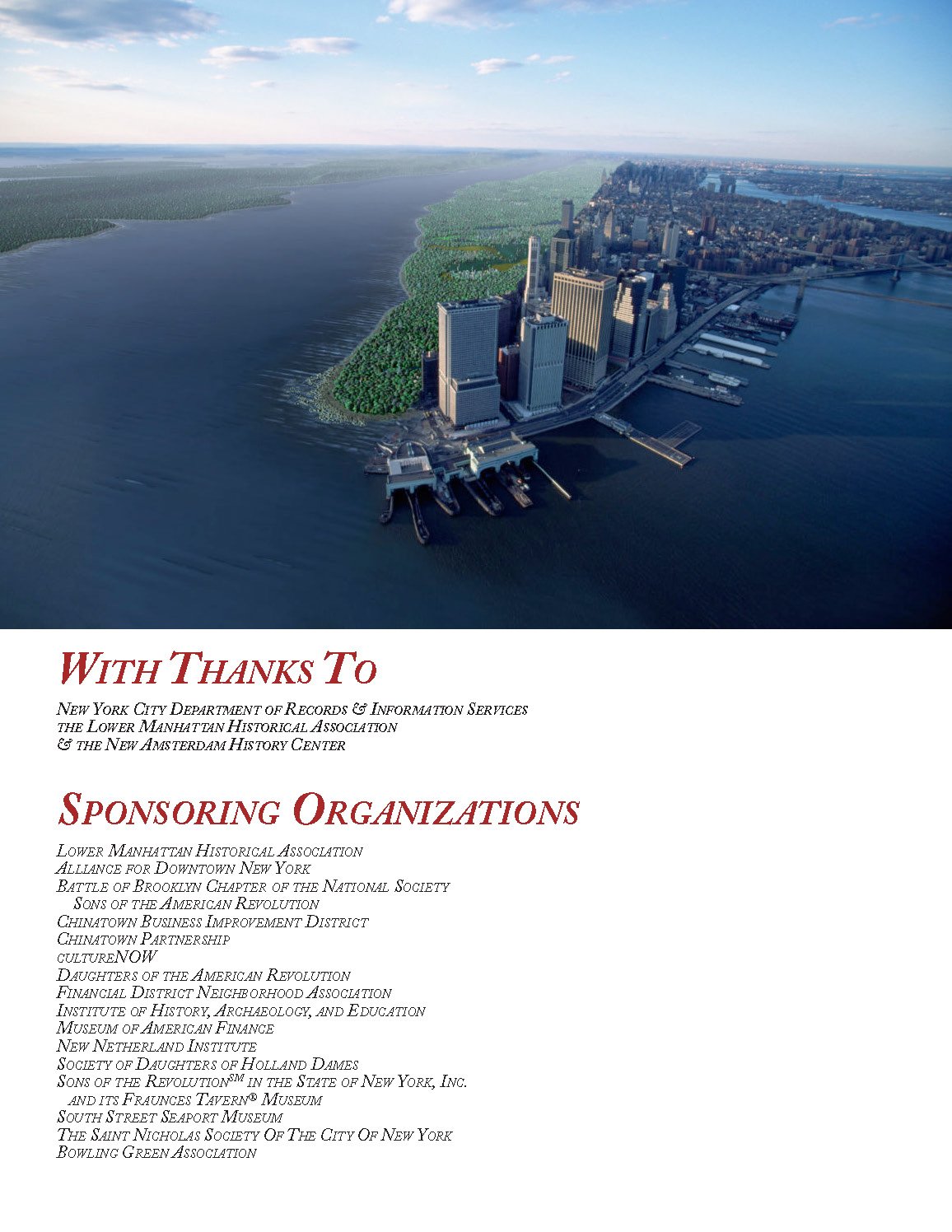
New York City is a global icon, a bustling metropolis synonymous with ambition, culture, and endless possibilities. For millions, it represents the pinnacle of urban [travel], a vibrant hub of [tourism], world-class [hotels], and diverse [lifestyle] experiences. From the towering Statue of Liberty to the neon glow of Times Square and the serene expanse of Central Park, the city’s [landmarks] are instantly recognizable. But beneath its modern facade lies a rich, complex history, a narrative that began centuries ago when a vast wilderness was transformed into the seeds of a future empire. Understanding “When was [New York City] founded?” is more than just pinpointing a date; it’s about tracing the footsteps of explorers, settlers, and visionaries who laid the groundwork for this incredible destination. While a definitive “founding date” can be debated, the story typically begins in the early 17th century with European exploration and the subsequent establishment of a small trading post known as New Amsterdam. This journey through time reveals how a strategic location became a melting pot of cultures, eventually evolving into one of the most significant cities in the [United States] and the world. It’s a story essential for any discerning traveler or history enthusiast wishing to truly grasp the spirit of the Big Apple.
The Dawn of a Metropolis: Early European Encounters
The land that would become [New York City] was far from uninhabited before European arrival. For thousands of years, indigenous peoples thrived in this fertile region, establishing complex societies and living in harmony with the abundant natural resources. Their presence forms the crucial first chapter in the city’s foundational narrative, long before any European flag was planted.
A Native American Heritage: The Lenape People
Before the Europeans set foot on the shores of what is now Manhattan Island and its surrounding boroughs, the area was the ancestral homeland of the Lenape people, also known as the Delaware Indians. These Algonquian-speaking people had a deep connection to the land, which they called “Lenapehoking,” encompassing parts of modern-day New York, New Jersey, Pennsylvania, and Delaware. Specifically, various bands of [Lenape], such as the Canarsie, inhabited the areas that are now Brooklyn and Queens, while others lived directly on [Manhattan].
The [Lenape]’s lifestyle was largely based on hunting, fishing, and agriculture. They cultivated corn, beans, and squash, and harvested oysters and clams from the waterways. Their settlements were typically small, seasonal villages, reflecting a nomadic pattern that allowed them to utilize different resources throughout the year. They understood land ownership differently from the Europeans, viewing it as a shared resource to be used, rather than a commodity to be bought and sold. This fundamental difference in perspective would later lead to significant misunderstandings and conflicts. Today, while much of their physical presence has been erased by urban development, the legacy of the [Lenape] people is being increasingly recognized through historical markers and educational efforts, reminding visitors of the land’s original stewards and offering a deeper understanding of the local culture that preceded colonial [tourism].
Henry Hudson’s Exploration and the Dutch Claim
The first significant European contact with the area came in 1609, with the arrival of Henry Hudson. An English explorer sailing under the flag of the Dutch East India Company, [Hudson]’s primary mission was to find a Northwest Passage to Asia. Instead, he sailed his ship, the Half Moon, into the expansive bay that now bears his name—the Hudson River.
[Hudson] spent several weeks exploring the river, trading with the [Lenape] people, and meticulously charting the waterways. While he didn’t find the elusive passage, his detailed reports back to the Dutch Republic painted a picture of a land rich in furs, particularly beaver, which were highly prized in Europe for hat making. This discovery sparked immediate interest from Dutch merchants, who quickly recognized the immense potential for trade. Within a few years, Dutch traders were making regular trips across the Atlantic to engage in the lucrative fur trade with the [Lenape]. This early commercial activity laid the groundwork for permanent settlement and marked the true beginning of European claims on what would become a cornerstone of [North America]’s future economic and [travel] landscape. The initial exploration by [Hudson] was the spark, transforming a native homeland into a sought-after destination for colonial enterprise.
The Birth of New Amsterdam: 1624 and Beyond
The lure of beaver pelts proved irresistible, leading to a scramble among Dutch merchants. To bring order and maximize profits, the Dutch West India Company was chartered in 1621, granted a monopoly on trade in the Americas and West Africa. This company was instrumental in establishing the first permanent settlements and officially founding [New Amsterdam].
The Arrival of the Walloons and the Founding of Fort Orange
The official founding of a permanent Dutch presence in the region is generally attributed to 1624. In that year, the [Dutch West India Company] dispatched 30 families, primarily Walloons (French-speaking Protestants from what is now Belgium and [France]), to the newly claimed territory of New Netherland. These families were initially dispersed, with some sent to establish Fort Orange (near present-day Albany) further up the [Hudson River], strategically located for the fur trade. Others were stationed on Nut Island, now known as Governors Island, at the mouth of the [Hudson River].
While [Fort Orange] was important for trade, the small settlement on [Nut Island] marked the very first European attempt at a permanent habitation in the immediate [New York City] area. This initial settlement provided a basic form of [accommodation] and a strategic outpost, demonstrating the [Dutch]’s commitment to colonizing the region. Though often overshadowed by the later events on [Manhattan], the arrival of these [Walloons] in 1624 is the earliest concrete date for the continuous European occupation that would eventually lead to the founding and growth of the city. It represents the crucial step from mere exploration and seasonal trading to a deliberate colonial enterprise, setting the stage for future [landmarks] and urban development.
The Infamous “Purchase” of Manhattan Island
Two years later, in 1626, a pivotal event occurred that forever linked the name [Manhattan] with the founding of [New York City]. Peter Minuit, the Director-General of [New Netherland], arrived and orchestrated a transaction with the local [Lenape] people (likely the [Canarsie] band, though historical accounts vary regarding the specific group). For goods valued at 60 Dutch guilders (a sum often mythologized as being equivalent to $24 [United States] dollars, though its true purchasing power was considerably higher at the time), [Minuit] supposedly “purchased” [Manhattan Island].
From the European perspective, this was a legitimate real estate transaction, securing the land for permanent settlement and establishing a more defensible position than [Governors Island]. For the [Lenape], however, the concept of selling land outright was alien. They likely understood it as granting usage rights or sharing resources, not a permanent transfer of ownership. This clash of cultural understandings led to what is perhaps one of history’s most famous and controversial land deals. Regardless of the interpretation, the 1626 “purchase” undeniably paved the way for the concentrated development of [New Amsterdam] on the southern tip of [Manhattan]. This moment is often cited as the symbolic founding of [New York City] as we know it, the genesis of a global [landmark] and a powerful draw for modern [tourism]. It provided the physical space upon which the vibrant urban tapestry, with its diverse [hotels] and [attractions], would eventually be woven.
Life in New Amsterdam: A Nascent Trading Post
Following the “purchase,” the Dutch rapidly developed their settlement on [Manhattan]’s southern tip. They constructed Fort Amsterdam, a defensive structure, and a small town began to grow around it. This nascent community, named [New Amsterdam] after the capital of the Netherlands, became the capital of [New Netherland] and quickly established itself as a bustling fur trading post. Its strategic location at the mouth of the [Hudson River] made it an ideal harbor, connecting inland trading routes with trans-[Atlantic] shipping lanes.
Life in early [New Amsterdam] was characterized by its surprising diversity. Unlike many other colonial settlements that were ethnically and religiously homogenous, the [Dutch West India Company] practiced a policy of relative tolerance to attract settlers and traders. By the mid-17th century, the town boasted a population speaking over 18 languages, encompassing Dutch, English, French, Walloon, African slaves, and various indigenous peoples. This early multiculturalism is a foundational aspect of [New York City]’s enduring identity as a melting pot.
Prominent figures like Peter Stuyvesant, who served as Director-General from 1647 to 1664, played a crucial role in shaping the town. He implemented strict laws, constructed public works, and generally brought order to the often-chaotic settlement. He oversaw the construction of defensive palisades (which gave Wall Street its name), a canal (Broad Street), and the first public school. The early architecture reflected Dutch influences, with gabled houses and narrow streets. While conditions were often harsh, the promise of trade and a new life drew a continuous stream of immigrants, establishing the early patterns of [accommodation] and [lifestyle] that would define the city for centuries. The rudimentary infrastructure of [New Amsterdam] was the blueprint for the intricate urban landscape that attracts millions of [travelers] today, showcasing the city’s ability to constantly reinvent itself.
From Dutch Colony to British Powerhouse: The Renaming of New York
The Dutch hold on [New Netherland] was always precarious. Sandwiched between [English] colonies to the north (New England) and south (Virginia), its strategic harbor and valuable trade routes made it an attractive target for the burgeoning Kingdom of England. This geopolitical tension ultimately led to a change of hands, marking another pivotal moment in the city’s founding narrative.
English Conquest and the Anglo-Dutch Wars
The rivalry between the [Dutch Republic] and the [Kingdom of England] escalated into a series of conflicts known as the [Anglo-Dutch Wars]. The Second Anglo-Dutch War proved decisive for [New Amsterdam]. In August 1664, a small [British] fleet under the command of Colonel Richard Nicolls sailed into [New Amsterdam]’s harbor and demanded its surrender. Despite [Peter Stuyvesant]’s initial defiance, the town’s residents, many of whom were tired of his authoritarian rule and saw little hope of successful resistance against the well-armed [English], pressured him to concede.
On September 8, 1664, [New Amsterdam] surrendered without a shot being fired. The colony of [New Netherland] officially became an [English] possession, and [New Amsterdam] was promptly renamed [New York] in honor of James, the Duke of York, brother of King Charles II and the proprietor of the newly acquired territory. Though the Dutch briefly recaptured the city in 1673 during the [Third Anglo-Dutch War] (renaming it New Orange), it was permanently ceded to the [English] in 1674 by the Treaty of Westminster. This conquest marked the definitive end of Dutch rule and the beginning of [British] dominion, firmly establishing the foundation of the city under a new name and political power. This shift fundamentally altered the city’s trajectory, cementing its role as an [English] port and future global power, a transformation that laid the groundwork for its modern appeal as a diverse [travel destination].
Laying the Foundations of a Future Global City
Under [British] rule, [New York] continued its rapid growth, benefiting from its superb natural harbor and increasingly important role in colonial trade. The [English] built upon the Dutch foundations, expanding the city’s infrastructure and strengthening its commercial ties within the British Empire. The city’s population continued to diversify, with an influx of [English] settlers, Scots, Irish, and a growing enslaved African population whose labor was vital to the city’s economic engine.
The [British] era saw the development of key institutions, including a more formal legal system, a stronger colonial government, and an expansion of trade beyond furs to include agricultural products, manufactured goods, and the transatlantic slave trade. This period also witnessed the construction of more permanent public buildings and residences, beginning to shape the architectural character that would precede the iconic [landmarks] we recognize today. The city’s grid plan, initially influenced by Dutch patterns, began to evolve, accommodating its burgeoning population and commercial activity. [New York]’s transformation from a modest trading post to a significant provincial capital under [British] rule was a crucial phase in its founding story. It cemented the city’s strategic importance, economic prowess, and cultural dynamism, setting the stage for its eventual emergence as a global metropolis, a [destination] whose history informs every aspect of its vibrant present, from its diverse culinary scene to its unique [lifestyle] options.
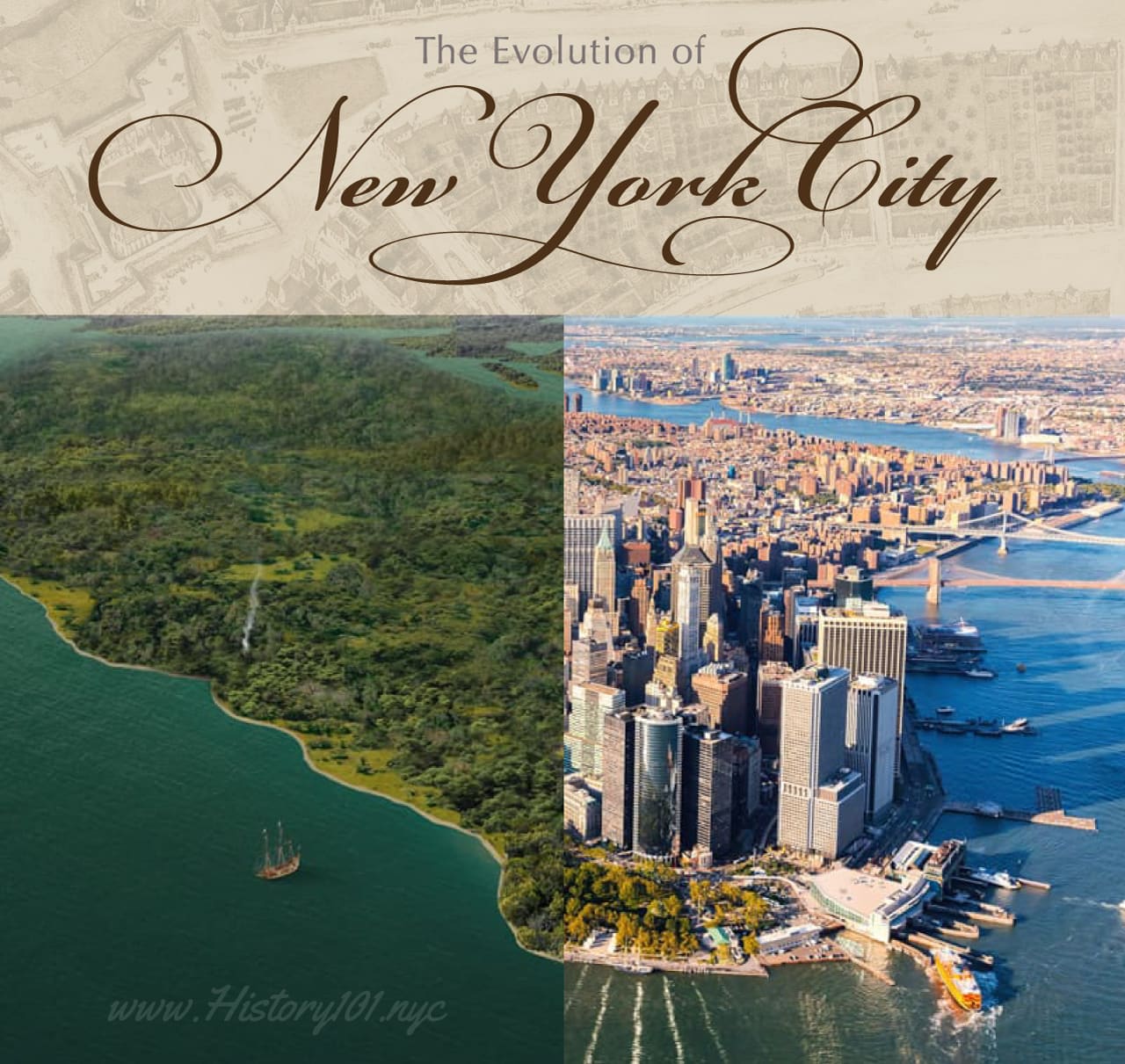
The Legacy of a Founding: New York City Today
The narrative of “When was [New York City] founded?” culminates not in a single date, but in a continuous story of transformation. From the indigenous [Lenape] homeland to a Dutch trading post and then a [British] colonial port, each chapter added layers to its identity. Today, the echoes of this multifaceted founding are visible everywhere, making [New York City] an unparalleled [travel] and [tourism] experience.
A Melting Pot of Cultures and a Hub for Tourism
The early diversity of [New Amsterdam], with its mix of [Walloons], Dutch, and various other nationalities, foreshadowed [New York City]’s current status as one of the world’s most diverse and multicultural urban centers. This legacy is palpable in every neighborhood, from the historic streets of the Financial District, where the Dutch first settled, to the vibrant immigrant communities that define much of the city’s character. The constant influx of people from every corner of the globe has shaped [New York City]’s distinct [lifestyle], its innovative cuisine, its rich arts scene, and its dynamic social fabric.
For travelers, this means an unparalleled array of experiences. Visitors can explore the historical roots of the city in Lower Manhattan, wander through culturally distinct neighborhoods, and savor authentic dishes from virtually every country. The city’s cultural [landmarks] are themselves a testament to its diverse history and population, from the [Statue of Liberty], a beacon for immigrants, to the countless museums like the Metropolitan Museum of Art, the Museum of Modern Art, and the Guggenheim Museum, which showcase global art and history. Modern [accommodation] options, from [luxury hotels] to [boutique apartments], cater to every taste and budget, reflecting the city’s universal appeal. The story of [New York City]’s founding is not just history; it’s the living, breathing essence that continues to draw millions for [tourism] and [travel].
Experiencing New York’s Past and Present
To truly appreciate [New York City] is to understand its journey from a small colonial outpost to the global powerhouse it is today. When you walk through the narrow streets near [Wall Street], you are treading paths first laid by the Dutch. When you visit [Governors Island], you are standing on the site of the earliest permanent European settlement. Even iconic structures like the Brooklyn Bridge connect the historical boroughs, bridging past and present.
Many sites offer a direct connection to this foundational period. The African Burial Ground National Monument in [Lower Manhattan] provides a poignant reminder of the enslaved Africans who contributed to the city’s early development. Fraunces Tavern, a historic restaurant and museum, harks back to the colonial and revolutionary eras. St. Paul’s Chapel, a surviving example of 18th-century architecture, stood witness to many of the city’s transformations.
Exploring these [landmarks] enriches the [travel experience], offering a deeper appreciation for how the city came to be. Whether you are seeking [luxury travel] or [budget travel], looking for [family trips] or [business stays], [New York City]’s history is an inseparable part of its charm. The city’s founding is not a static event but an ongoing process, a testament to resilience, adaptation, and endless reinvention. So, while the definitive answer to “When was [New York City] founded?” involves specific dates like 1624 and 1626, the real answer is a continuous unfolding story that makes this extraordinary [destination] eternally fascinating for travelers worldwide. It’s a city that continuously celebrates its past while always looking forward, offering a unique blend of historical depth and modern dynamism that promises unforgettable [experiences].