
The question of “When was New York found?” isn’t as simple as pinpointing a single date. Like many great metropolises, the story of New York City is a tapestry woven from centuries of exploration, settlement, conflict, and transformation. What began as a strategic trading post eventually blossomed into a global powerhouse, a vibrant hub of culture, finance, and tourism that beckons millions of travelers each year. Understanding its founding requires a journey back to the early 16th century, tracing the footsteps of intrepid explorers and the ambitions of colonial powers.
From its earliest days as a Dutch fur-trading outpost to its current status as a beacon of modern lifestyle, New York’s history is intimately linked with its appeal as a destination. The very landmarks that define its skyline today—from the historic Brooklyn Bridge to the towering Empire State Building—are testaments to its continuous evolution. For anyone planning travel to this iconic city, or simply seeking to understand its enduring spirit, delving into its foundational story offers invaluable context.
The Dawn of Exploration: Early Encounters with the New World
Before European settlers ever conceived of a bustling city on the shores of the Hudson River, the land was home to indigenous peoples, primarily the Lenape (also known as the Delaware Indians). Their presence dates back thousands of years, living off the abundant natural resources of the region. Their intimate knowledge of the land, its waterways, and its wildlife predates any European claim, establishing the true “first founding” in a much earlier era.
Giovanni da Verrazzano and the First Glimpse
The first recorded European encounter with what would become New York occurred in 1524. An Italian explorer named Giovanni da Verrazzano, sailing under the French flag, navigated his ship, La Dauphine, into what he described as a “very pleasant place located between two small prominent hills,” which we now know as the Upper New York Bay. He described the area as a vast harbor, fertile and full of people. However, he did not establish a settlement or claim the land for France beyond a brief exploration. His voyage primarily focused on finding a Northwest Passage to Asia, and while his discovery was significant, it would be many decades before permanent European interest truly took root. His fleeting visit marked the initial European discovery, laying the groundwork for future expeditions and implicitly highlighting the region’s potential as a future port and travel destination.

Henry Hudson’s Voyage and the Dutch Claim
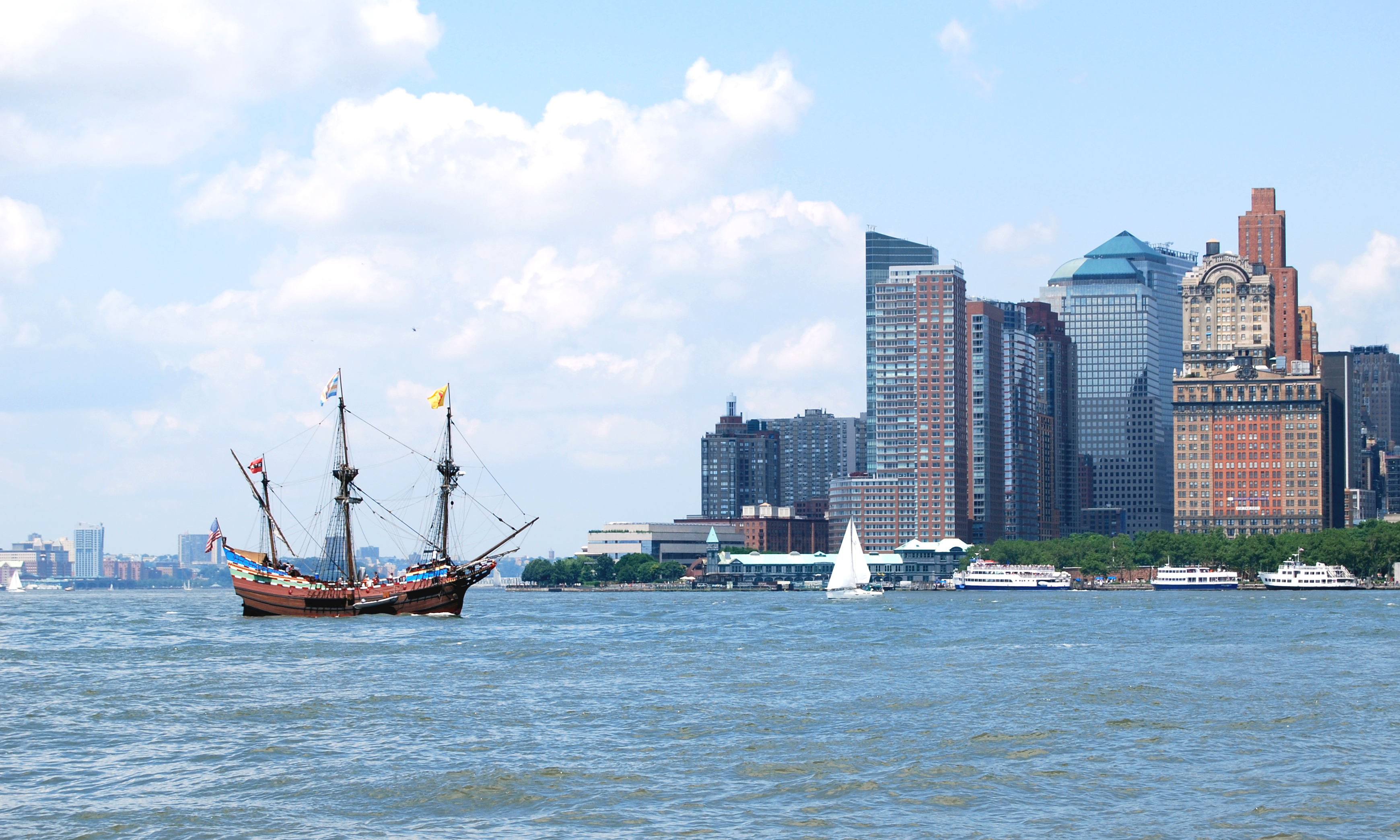
It wasn’t until 1609 that another pivotal exploration took place, one that would directly lead to European settlement. Henry Hudson, an English navigator hired by the Dutch East India Company, sailed his ship, the Half Moon, into the Upper New York Bay and then up the magnificent river that now bears his name. While he, too, was searching for a passage to Asia, he quickly realized the commercial potential of the region, particularly its abundant fur-bearing animals. His detailed reports back to the Netherlands sparked significant Dutch interest, setting the stage for colonization. The rich fur trade, particularly in beaver pelts, became the primary economic driver for the establishment of a permanent presence, turning a pristine wilderness into a valuable resource for European powers. This era effectively “found” New York from a colonial perspective, identifying it as a place of immense strategic and economic value.
New Amsterdam: A Flourishing Dutch Colony
Following Henry Hudson’s voyage, the Dutch were quick to capitalize on the region’s potential. Private Dutch trading companies began sending ships to the area, establishing temporary trading posts. The official colonial effort began in 1621 with the chartering of the Dutch West India Company, which was granted exclusive rights to trade and settle in New Netherland, the name given to the Dutch territories in North America.
The Purchase of Manhattan Island
In 1624, the first permanent Dutch settlers, primarily families, arrived and established several small communities. The true birth of the city as we know it, however, is often linked to 1626. In that year, Peter Minuit, the Director-General of New Netherland, famously “purchased” Manhattan Island from the Lenape people for 60 Dutch guilders, an amount often cited as equivalent to about $24 worth of trade goods. While the concept of land ownership differed greatly between the Lenape and the Dutch, this transaction marked the formal establishment of a Dutch settlement on the southern tip of the island, which they named New Amsterdam. This act is perhaps the closest one can get to a singular “founding date” for what would become New York City, solidifying the European claim and initiating organized colonial life. For tourism enthusiasts, this event provides a rich historical backdrop to the city’s early development.

Life in the Early Settlement
New Amsterdam quickly grew into a bustling, if somewhat unruly, trading post. Its strategic location at the mouth of the Hudson River made it ideal for trade, attracting a diverse population of traders, farmers, and artisans from various European countries, as well as enslaved Africans. By the mid-17th century, the settlement boasted a fort (Fort Amsterdam), a church, and a growing community. The Dutch introduced concepts like religious tolerance (though limited) and diverse economic activities that would shape the city’s future. Peter Stuyvesant, the last Dutch Director-General, played a significant role in organizing and developing the colony, including constructing a protective wall on the northern edge of the settlement, which famously lent its name to Wall Street. The early Dutch influence can still be seen in various landmarks and street names, offering a fascinating glimpse into New York’s layered past for modern travelers.
From New Netherland to New York: An English Transition
The prosperity of New Netherland, particularly its strategic harbor and valuable trade routes, did not go unnoticed by rival European powers. The English, in particular, viewed the Dutch presence as an unwelcome intrusion into their burgeoning North American territories.
The Bloodless Conquest of 1664
The geopolitical tensions between England and the Netherlands escalated throughout the 17th century, leading to several Anglo-Dutch Wars. In 1664, during the Second Anglo-Dutch War, King Charles II of England granted his brother, James, the Duke of York, the vast territory of New Netherland. Without firing a shot, an English fleet, led by Colonel Richard Nicolls, arrived in New York Bay and demanded the surrender of New Amsterdam. Peter Stuyvesant, despite his initial defiance, was compelled by the town’s citizens and a lack of resources to surrender the colony on September 8, 1664. The Dutch settlement was promptly renamed “New York” in honor of the Duke of York. This bloodless takeover was a pivotal moment, fundamentally changing the trajectory of the city and establishing its long-lasting English identity. While the Dutch briefly recaptured it in 1673, it was permanently ceded to England by the Treaty of Westminster in 1674, solidifying its new name and allegiance. This shift marked a new chapter in the city’s “founding” as a major British colonial center.
Building a Colonial Powerhouse
Under British rule, New York continued to flourish. Its strategic location at the confluence of major rivers and an excellent natural harbor made it a critical port for trade within the British Empire. The city grew rapidly, attracting merchants, artisans, and laborers from across Europe and beyond. The British introduced their legal system, administrative structures, and cultural norms, yet the city retained a unique cosmopolitan character inherited from its Dutch origins. By the mid-18th century, New York was one of the largest and most important cities in the American colonies, playing a significant role in colonial politics and commerce. The vibrant commercial activity of this period laid the groundwork for New York’s future as a global financial and lifestyle hub, establishing landmarks and institutions that would endure for centuries.
New York’s Ascent: From Revolutionary Capital to Global Metropolis
The transition from a colonial outpost to a thriving, independent city was marked by yet another defining period: the American Revolution.
A City Forged in Revolution
New York played a complex and pivotal role in the American Revolution. Its population was divided between Loyalists and Patriots, and its strategic importance meant it was a constant target. After the Battle of Long Island in 1776, New York City fell to British forces and remained under their occupation for the majority of the war, serving as a British military headquarters. It was not until Evacuation Day in November 1783 that the last British troops departed, allowing George Washington and his Continental Army to march triumphantly back into the city.
In the immediate aftermath of the Revolution, New York served as the first capital of the newly formed United States from 1785 to 1790. It was here, at Federal Hall on Wall Street, that George Washington took the oath of office as the first President of the United States in 1789. This period firmly cemented New York’s place in the founding narrative of America and established many of the political and economic frameworks that would drive its future growth. For those interested in American history and historical landmarks, these sites offer a profound connection to the nation’s genesis.
The 19th Century Boom: Immigration and Innovation
The 19th century witnessed an explosive period of growth and transformation for New York. The opening of the Erie Canal in 1825, connecting the Great Lakes to the Hudson River, dramatically expanded the city’s economic reach into the American Midwest. This infrastructural marvel solidified New York’s position as the nation’s premier port and commercial center.
The city also became the primary gateway for millions of immigrants seeking a new life in America. Ellis Island, located in New York Harbor, processed countless newcomers, each contributing to the city’s diverse cultural fabric. This influx of people fueled industrialization, population growth, and a dynamic urban environment. Iconic landmarks like the Statue of Liberty, a gift from France in 1886, became enduring symbols of hope and welcome for these arrivals. The city’s burgeoning hotels, accommodations, and transportation networks evolved to meet the demands of this rapid expansion, laying the foundation for modern tourism.
New York Today: A Living Legacy
By the turn of the 20th century, New York was undeniably a global city. The 20th and 21st centuries saw the construction of its iconic skyline, with architectural marvels like the Empire State Building, Chrysler Building, and later the Freedom Tower (One World Trade Center) defining its silhouette. It became the headquarters for the United Nations, a center for international diplomacy.
Today, New York City is a testament to its multifaceted history. Its Dutch roots are subtly present in street names and old architectural styles. Its British colonial past shaped its governance and institutions. Its role in the American Revolution and as the nation’s first capital is celebrated in numerous historical sites. And its relentless growth, fueled by immigration and innovation, continues to make it a vibrant, ever-evolving metropolis.
From the bustling streets of Times Square to the serene paths of Central Park, from the cultural treasures of Broadway, the Metropolitan Museum of Art, and MoMA to the diverse neighborhoods of Greenwich Village, Harlem, and Chinatown, New York offers an unparalleled array of experiences. Its history is not just preserved in museums or historical markers but lives and breathes in its diverse population, its iconic landmarks, and its relentless pace. When you visit New York, whether you’re staying in luxurious hotels or boutique apartments, you are walking through centuries of “founding” moments, experiencing a city that was not simply found once, but continually reborn and redefined by generations of dreams and ambitions. It is this perpetual motion and layered history that makes New York an eternal source of fascination for any traveler seeking to explore a truly global icon.
LifeOutOfTheBox is a participant in the Amazon Services LLC Associates Program, an affiliate advertising program designed to provide a means for sites to earn advertising fees by advertising and linking to Amazon.com. Amazon, the Amazon logo, AmazonSupply, and the AmazonSupply logo are trademarks of Amazon.com, Inc. or its affiliates. As an Amazon Associate we earn affiliate commissions from qualifying purchases.