
Oklahoma, a state renowned for its rich history, vibrant culture, and stunning natural landscapes, holds a unique place in the tapestry of the United States. The question of when Oklahoma was established is not a simple one, as its journey to statehood was a complex and multifaceted process, deeply intertwined with the history of Native American tribes and the westward expansion of the United States. To truly understand Oklahoma’s establishment, one must delve into its origins as Indian Territory and the subsequent unification that led to its admission as the 46th state.
The Genesis of Indian Territory
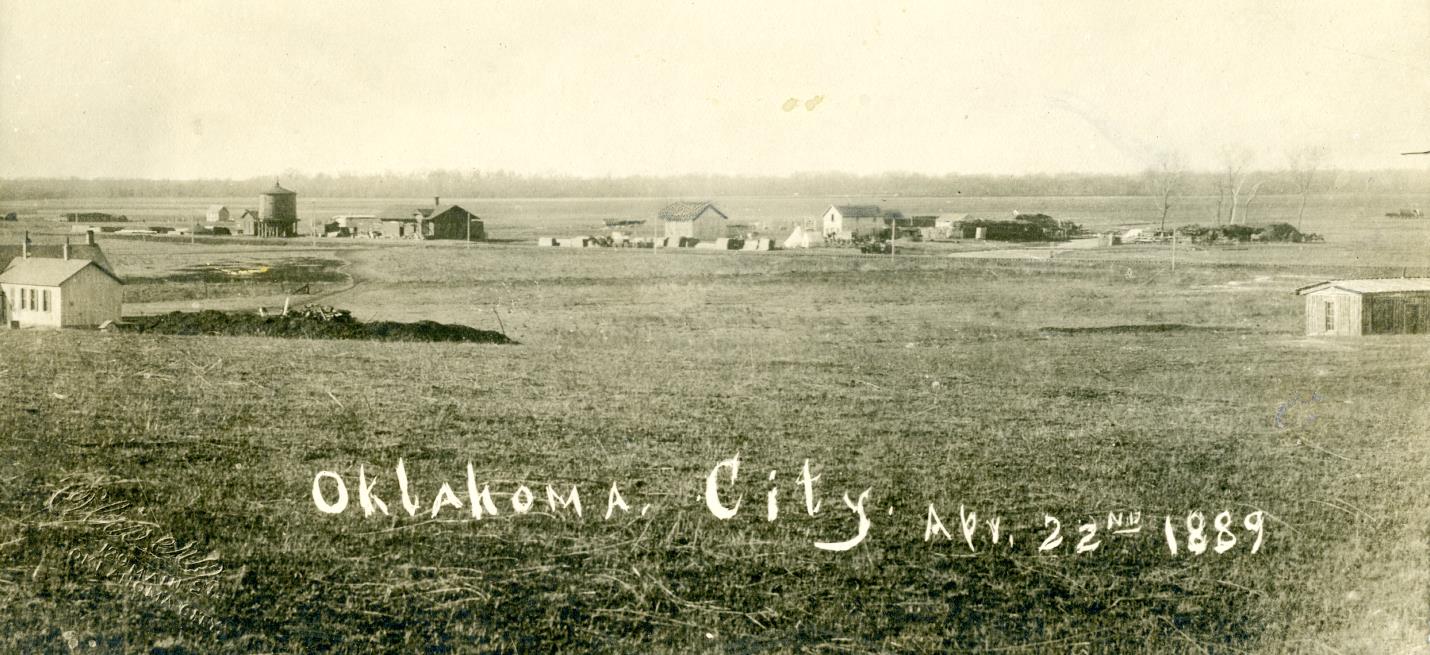
The story of Oklahoma’s establishment begins long before it was officially recognized as a state. The land that now comprises Oklahoma was originally home to numerous Native American tribes. Following the passage of the Indian Removal Act of 1830, many of these tribes, including the Cherokee, Muscogee (Creek), Seminole, Chickasaw, and Choctaw – collectively known as the Five Civilized Tribes – were forcibly relocated from their ancestral homelands in the southeastern United States to this designated region. This forced migration, infamously known as the Trail of Tears, was a deeply traumatic period for these nations.
A New Homeland for Indigenous Nations
The land granted to the Five Civilized Tribes was intended to be their permanent home, a sovereign territory where they could govern themselves. This era, spanning much of the 19th century, saw these tribes re-establish their communities, develop their own governments, and cultivate their unique cultures within what became known as Indian Territory. They brought with them sophisticated systems of governance, agriculture, and education, adapting to their new environment while striving to preserve their traditions. The Cherokee Nation, for instance, established a capital at Tsalagi (near modern-day Tahlequah) and developed a written constitution. The Choctaw and Chickasaw Nations also established their own governments and judicial systems, with capitals at Tuskegee and Tishomingo, respectively. The Muscogee (Creek) Nation, with its capital at Okmulgee, also maintained a robust governmental structure.
The Dawes Act and the Erosion of Sovereignty
However, the dream of a perpetual Indian Territory began to wane with increasing pressure from white settlers eager to acquire land in the region. The passage of the Dawes Act (also known as the General Allotment Act) in 1887 marked a significant turning point. This federal law aimed to break up tribal lands into individual allotments, distributing the remaining “surplus” land to non-Native American settlers. While intended to assimilate Native Americans into mainstream society by making them landowners, the Dawes Act had devastating consequences, leading to the loss of millions of acres of tribal lands and further undermining tribal sovereignty.
The Unification of Two Territories
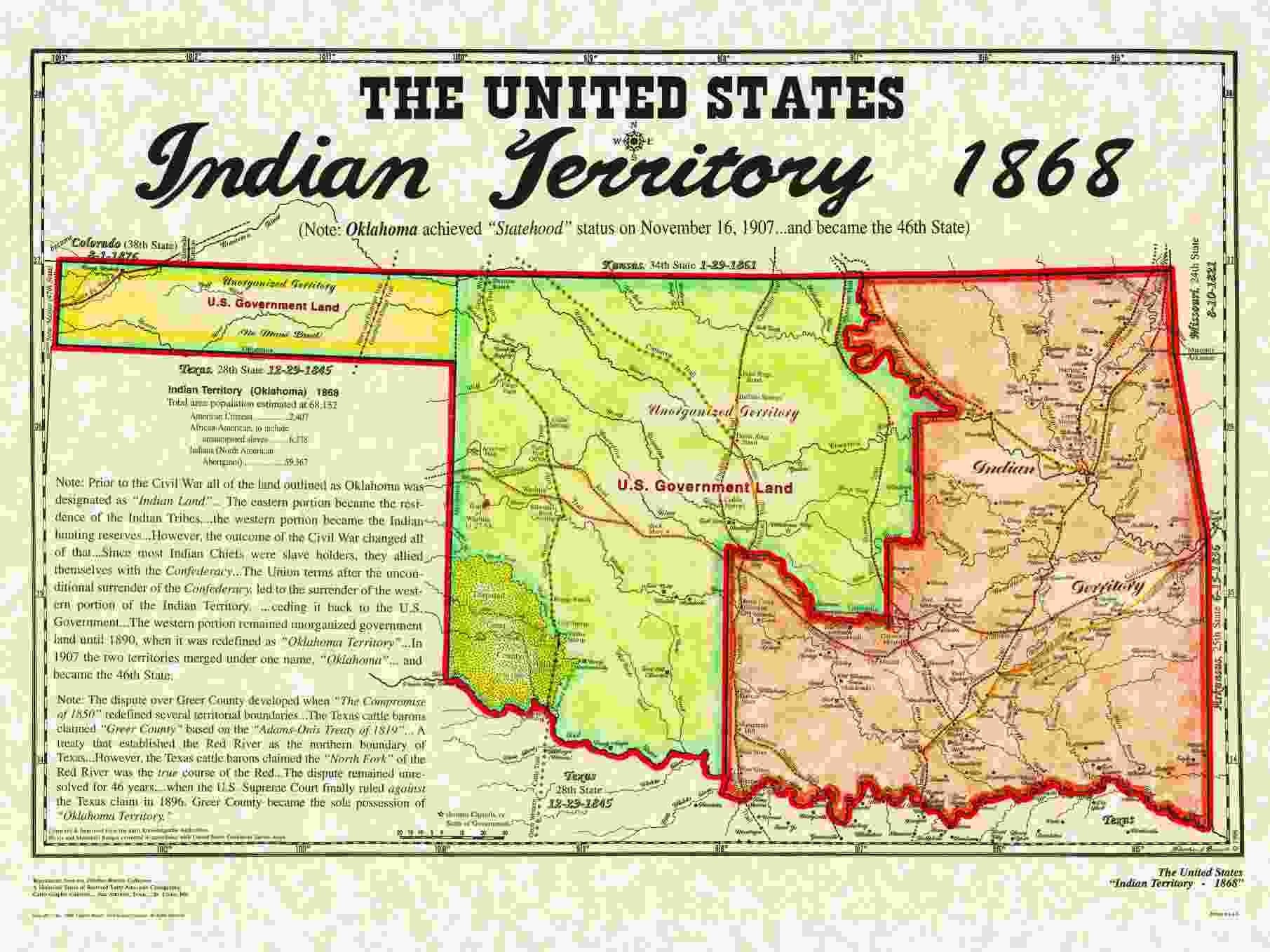
As the 20th century dawned, the landscape of Oklahoma was divided into two distinct entities: Indian Territory in the east and Oklahoma Territory in the west. Oklahoma Territory had been organized in 1890 from the western lands that were not allotted to the Five Civilized Tribes and was primarily settled by non-Native American pioneers. This division created a unique political and social dynamic, with different laws, governance structures, and settlement patterns.

The Push for Statehood
The concept of a single, unified state encompassing both territories gained momentum in the late 19th and early 20th centuries. Proponents of statehood argued that a unified state would bring greater political stability, economic development, and improved infrastructure to the region. The Dawes Act had already paved the way for the dissolution of tribal land ownership in Indian Territory, making its separate existence increasingly untenable. The idea of merging Oklahoma Territory and Indian Territory into a single state, to be named Oklahoma, began to resonate.
The Enabling Act and Constitutional Convention
The federal government responded to the growing desire for statehood by passing the Enabling Act of 1906. This crucial legislation empowered the residents of both Oklahoma Territory and Indian Territory to draft a state constitution and form a government, paving the path for their admission into the Union. Following the passage of the Enabling Act, delegates from both territories convened in Guthrie (the capital of Oklahoma Territory) for a constitutional convention. This assembly, comprised of men and women from diverse backgrounds, worked tirelessly to craft a constitution that would reflect the aspirations of all the people in the proposed state. The constitution they drafted was progressive for its time, including provisions for direct election of officials, initiative and referendum, and prohibitions against perpetuating segregation.
Oklahoma Becomes the 46th State
The culmination of decades of political maneuvering, cultural integration, and the collective will of its inhabitants arrived on November 16, 1907. On this historic day, President Theodore Roosevelt signed the proclamation admitting Oklahoma as the 46th state of the United States. This act officially marked the establishment of Oklahoma as a unified entity, bringing together the legacy of Indian Territory and Oklahoma Territory under one banner.
The Legacy of Two Territories
The establishment of Oklahoma statehood was not merely a bureaucratic event; it was the fusion of distinct historical trajectories. The spirit of Indian Territory, with its deep roots in Native American culture and sovereignty, continued to influence the identity of the new state. While tribal governance was largely superseded by state authority, the rich heritage and resilience of the Five Civilized Tribes and other Native American nations remain an integral part of Oklahoma’s cultural fabric. The state’s museums, historical sites, and living traditions serve as testaments to this enduring legacy.
A State Forged in Unification
The story of Oklahoma’s establishment is a compelling narrative of resilience, adaptation, and the pursuit of self-determination. It is a testament to the complex history of the United States, marked by both dispossession and the eventual integration of diverse peoples and lands. From its origins as a sanctuary for displaced Native American tribes to its emergence as a unified state, Oklahoma embodies a unique historical journey that continues to shape its present and future. The date November 16, 1907, stands as the official marker of its establishment as a state, but its true story is etched in the centuries of history that preceded it, a narrative of nations, migrations, and the enduring spirit of a land.
LifeOutOfTheBox is a participant in the Amazon Services LLC Associates Program, an affiliate advertising program designed to provide a means for sites to earn advertising fees by advertising and linking to Amazon.com. Amazon, the Amazon logo, AmazonSupply, and the AmazonSupply logo are trademarks of Amazon.com, Inc. or its affiliates. As an Amazon Associate we earn affiliate commissions from qualifying purchases.