
The vibrant metropolis of Portland, Oregon, often celebrated for its eccentric culture, lush green spaces, and innovative spirit, boasts a rich history that stretches back to the mid-19th century. Understanding the exact moment of its inception offers a profound insight into the city’s unique character and the enduring landmarks that define its historical narrative. While the region was inhabited by indigenous peoples for millennia, the formal establishment of Portland as a Euro-American settlement—a critical juncture in its development—can be traced back to the year 1845. This period was marked by daring pioneers, strategic land claims, and a fateful coin toss that irrevocably shaped the destiny of what would become one of the Pacific Northwest’s most iconic cities. Exploring its founding is not merely a delve into dates and names; it’s an examination of the foundational decisions that sculpted its urban fabric and laid the groundwork for the remarkable landmarks we appreciate today.

The Formative Years: Pre-Founding Settlement
Before the official platting of Portland, the fertile lands at the confluence of the Willamette River and Columbia River were a strategic hub for indigenous communities, and later, a magnet for American pioneers seeking new opportunities in the vast western frontier. The story of Portland’s founding is inextricably linked to these earlier narratives.
Indigenous Roots and Early Explorers
Long before European-American settlers arrived, the land that would become Portland was the ancestral home of various indigenous peoples, including the Multnomah, Clackamas, Chinook, and Kalapuya tribes. These communities thrived for thousands of years, utilizing the bountiful rivers for fishing and trade, and the dense forests for hunting and gathering. Their deep connection to the land and sophisticated trading networks laid an invisible foundation for the future city’s role as a commercial center.
The first documented European-American presence in the general region came with the Lewis and Clark Expedition in 1805-1806, though their explorations primarily focused further north along the Columbia River and along the coast. It wasn’t until the fur trade era, spearheaded by companies like the Hudson’s Bay Company with their major outpost at Fort Vancouver across the Columbia River, that a sustained Euro-American presence began to emerge in the Pacific Northwest. These early interactions, while not directly leading to Portland’s founding, set the stage for subsequent waves of American pioneers.
Pioneers and the Claim Jumps
The 1840s saw a dramatic increase in migration along the Oregon Trail, drawing thousands of American settlers to the fertile Willamette Valley. The promise of free land, particularly after the passage of the Donation Land Claim Act of 1850, fueled this westward expansion. Settlers often established claims based on squatter’s rights, hoping to formalize them later.
In 1843, a pioneer named William Overton recognized the strategic importance of a particular 640-acre parcel of land situated at a bend in the Willamette River. This location, roughly 12 miles upstream from the confluence with the Columbia River and at the head of navigation for ocean-going vessels, presented an ideal spot for a future port city. However, Overton lacked the funds to file a claim. He quickly partnered with Asa Lovejoy, a lawyer from Boston, Massachusetts, selling half of his claim for a mere 25 cents. This initial, somewhat informal, transaction marked the very beginning of what would become Portland. The subsequent year, Overton grew restless and sold his remaining half-interest to Francis Pettygrove, a merchant from Portland, Maine, for five thousand dollars worth of goods, thus bringing the two key founders into play.
The Epoch of Foundation: Naming and Establishment
With Asa Lovejoy and Francis Pettygrove as co-owners, the next crucial step was to formally establish and name their burgeoning settlement. This period, particularly the year 1845, stands as the true founding moment for Portland.
The Coin Toss That Shaped a City
The partnership between Lovejoy and Pettygrove was fruitful in terms of planning and development, but it came to a pivotal moment when it was time to name their new town. Asa Lovejoy, hailing from Boston, advocated for “Boston.” Francis Pettygrove, a native of Portland, Maine, naturally favored “Portland.”
Unable to reach an agreement, they decided to settle the dispute with a coin toss. Using an 1835 copper cent, they flipped for the city’s future. Pettygrove won two out of three tosses, securing his preferred name. This now-legendary “Portland Penny” is a treasured artifact, symbolizing the serendipitous beginning of a major American city. The coin toss, which occurred in 1845, is widely recognized as the symbolic birth of Portland. Without this moment, the city’s identity, and by extension many of its future landmarks and cultural touchstones, might have taken a significantly different path.
The Initial Platting and Urban Vision
Following the coin toss, Lovejoy and Pettygrove proceeded with the essential task of platting the townsite. In 1845, they commissioned surveyors to lay out the streets and lots, a crucial step in transforming a land claim into an organized urban center. The initial plat consisted of 20 blocks, essentially forming the original grid that would define downtown Portland. This early planning included generous street widths and designated public spaces, a visionary approach for a frontier settlement.
This deliberate act of urban design, though modest at its inception, provided the framework for the city’s subsequent growth. The foresight in creating a structured layout allowed for orderly development, contrasting with the often organic and haphazard growth of many other frontier towns. The original plat forms the core of what is now Old Town Chinatown, an area rich with historical buildings and the echoes of Portland’s earliest days. The historical significance of this initial urban plan can still be seen in the grid system and the enduring public squares that characterize the city’s central core.

Early Growth and Defining Milestones
With its name secured and its streets platted, Portland began its rapid transformation from a speculative land claim into a bustling port town and, eventually, the largest city in the Territory of Oregon.
From Village to Vibrant Port
By 1848, just three years after its founding, Portland had established itself as a significant trading post. Its strategic location on the Willamette River, allowing easy access to both the Columbia River and the interior farmlands of the Tualatin Valley, made it a natural hub for goods and services. Grain, timber, and produce from the fertile Willamette Valley were shipped through Portland’s docks, creating a thriving economy. This early commercial success overshadowed its earlier rival, Oregon City, which was the first capital of the Oregon Provisional Government.
The California Gold Rush in 1849 further accelerated Portland’s growth, as it became a crucial supply center for prospectors heading south. The demand for lumber, provisions, and equipment spurred the establishment of sawmills, warehouses, and general stores along the riverfront. By 1850, the nascent city had its first newspaper, “The Oregonian,” and was incorporated as a city in 1851. These milestones illustrate the rapid development and entrenchment of Portland as a vital economic and cultural center in the region, setting the stage for the construction of significant structures and public spaces.
Architectural Beginnings and Historic Districts
As Portland grew, its architecture began to reflect its prosperity and aspirations. Early buildings were often simple wooden structures, but as wealth accumulated, more substantial brick and stone edifices emerged. The earliest commercial buildings clustered along the Willamette River in what is now Old Town Chinatown. This area, with its cast-iron fronts and Victorian architecture, offers a tangible link to Portland’s mid-19th-century boom.
The preservation of these early architectural styles and districts provides invaluable landmarks that tell the story of the city’s origins. Historic structures like the Skidmore Fountain (though built in 1888, it anchors a historically significant area) and buildings within the Yamhill Historic District evoke the city’s foundational period. The careful planning that went into the initial platting also allowed for the eventual development of public amenities such as the South Park Blocks, conceived in the mid-19th century as a series of linear parks and today serving as a cherished urban green space, connecting the city’s past to its present. These early architectural endeavors and preserved areas are direct descendants of the city’s 1845 founding and subsequent rapid growth.
The Legacy of Early Portland: Enduring Landmarks
The decisions made during Portland’s founding years continue to resonate through its contemporary landscape, manifesting in preserved historical sites, unique urban planning, and a distinct civic identity. These are the enduring landmarks that connect us directly to its origins.
Preserving the Past: Key Historical Sites
Many of Portland’s most cherished landmarks owe their existence or their historical context to the foundational period. Old Town Chinatown, for instance, is not just a district but a living museum of the city’s early commercial and social life. Its narrow streets and brick buildings, many dating back to the late 19th century, were built upon the very plat laid out by Lovejoy and Pettygrove. The Skidmore Fountain, a public drinking fountain donated in 1888, stands as a testament to the civic pride that began to flourish as the city matured from its frontier origins.
The city’s dedication to historical preservation is evident in numerous buildings listed on the National Register of Historic Places that dot downtown Portland and surrounding neighborhoods. These structures, from grand Victorian homes to early industrial buildings, are direct architectural links to the aspirations and economic realities of the post-founding era. They are physical reminders of the vision that began with a simple land claim and a coin toss. Even the original location of the coin toss, though unmarked by a grand monument, is an important, almost mythical, site that contributes to the city’s historical lore.
How Founding Principles Shaped Modern Portland
The initial planning of Portland emphasized access to the river and a grid system that prioritized orderly growth. This foresight allowed for the development of an efficient port and a walkable downtown. The subsequent growth, fueled by the timber industry and trade, led to a distinct architectural style and a lasting emphasis on integrating nature within the urban fabric. The preservation of the South Park Blocks, for example, showcases an early understanding of the importance of green spaces, a principle that continues to define Portland’s identity as a “Green City.”
Furthermore, the spirit of individualism and innovation that characterized the early pioneers, including the pragmatic coin toss, arguably contributed to Portland’s contemporary reputation for independent businesses, artistic expression, and a progressive mindset. The city’s growth from a small trading post to a regional powerhouse underscores the resilience and ingenuity of its founders and early inhabitants. These intangible legacies are as much a part of Portland’s historical fabric as its physical landmarks.
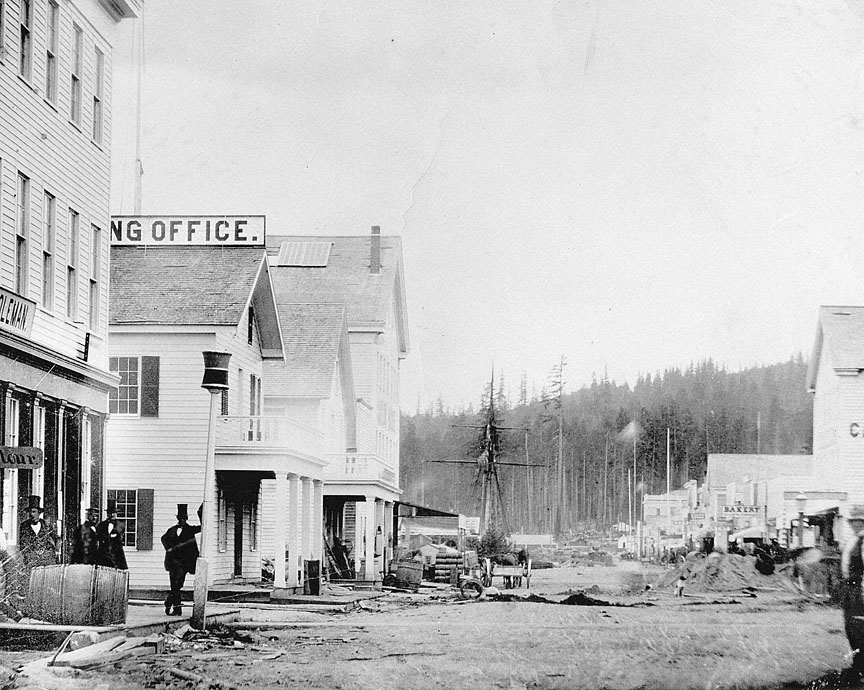
Conclusion: Portland’s Enduring Historical Tapestry
The question of “When was Portland, Oregon founded?” leads us to the pivotal year of 1845. It was in this year that William Overton’s initial land claim transformed, through the partnership of Asa Lovejoy and Francis Pettygrove, into a formally platted town, securing its name through a legendary coin toss. This act of founding was more than just setting a date; it was the genesis of a unique urban experiment that quickly blossomed into a significant American city.
The history of Portland’s founding is etched into its landmarks, from the historic architecture of Old Town Chinatown and the Yamhill Historic District to the visionary layout of the South Park Blocks. These physical manifestations serve as constant reminders of the strategic location, the pioneering spirit, and the pragmatic decisions that shaped its earliest days. Understanding Portland’s origins provides a deeper appreciation for its current vibrancy, demonstrating how the past continues to inform and enrich its identity as a truly distinctive city in the Pacific Northwest. The story of its founding is a testament to the enduring power of vision and chance, leaving an indelible mark on its landscape and its soul.
LifeOutOfTheBox is a participant in the Amazon Services LLC Associates Program, an affiliate advertising program designed to provide a means for sites to earn advertising fees by advertising and linking to Amazon.com. Amazon, the Amazon logo, AmazonSupply, and the AmazonSupply logo are trademarks of Amazon.com, Inc. or its affiliates. As an Amazon Associate we earn affiliate commissions from qualifying purchases.