
The shimmering waters of San Francisco Bay, the iconic silhouette of the Golden Gate Bridge, and the vibrant, diverse tapestry of neighborhoods define the modern city of San Francisco. Yet, beneath this contemporary charm lies a deep history, a narrative of exploration, ambition, and resilience that stretches back centuries. To truly appreciate the unique character of this California gem, one must delve into its origins, tracing the footsteps of its founders and understanding the pivotal moments that transformed a remote Spanish outpost into one of the world’s most beloved destinations. Understanding “When Was San Francisco Founded?” is more than just pinpointing a date; it’s uncovering the layers of discovery, conflict, and aspiration that shaped its very soul, offering a fascinating journey for any traveler.
The Dawn of a City: Early Explorations and Spanish Missions
The story of San Francisco begins not with a formal founding ceremony, but with a gradual realization of the strategic importance of its natural harbor. Long before it bore its current name, the land was home to indigenous peoples, particularly the Ohlone, for thousands of years. Their sophisticated cultures thrived amidst the rich natural resources of the Bay Area, existing peacefully before the arrival of European explorers irrevocably altered the course of history.
Spanish Colonial Ventures and the Discovery of the Bay
The 18th century marked a period of intense colonial expansion for Spain in the Americas. Concerned about Russian and British incursions into their claimed territories along the Pacific coast, Spain initiated efforts to colonize Alta California, the northernmost part of its New Spain viceroyalty. The goal was to establish a chain of missions and presidios (military forts) to solidify their control and convert the native populations.
In 1769, a pivotal moment occurred with the Portolá Expedition. Led by Don Gaspar de Portolá, a Spanish soldier and administrator, this overland expedition aimed to find the famed Monterey Bay, which had been described by earlier navigators but proven difficult to locate precisely. After an arduous journey north from San Diego, the weary expedition overshot their target. On November 2, 1769, scouts from Portolá’s party stumbled upon a massive, landlocked body of water that had eluded European eyes for centuries – what we now know as San Francisco Bay. This accidental discovery was immediately recognized for its immense potential as a natural harbor, a strategic jewel for future settlement. Despite this discovery, the expedition returned south, and it would be a few more years before concrete steps were taken to establish a presence in the area.
Establishing the Presidio and Mission Dolores
The true “founding” of San Francisco as a permanent European settlement can be pinpointed to 1776. Following Portolá’s discovery, subsequent expeditions confirmed the bay’s significance. In 1775, Juan Manuel de Ayala became the first European to sail into San Francisco Bay, charting its contours and further cementing its strategic value.
The following year, a major overland expedition led by Lieutenant Colonel Juan Bautista de Anza arrived, charged with establishing a presidio and a mission at the bay’s entrance. On June 29, 1776, Father Francisco Palóu, acting on behalf of Father Junípero Serra (the founder of the California mission system), officially established the Mission San Francisco de Asís, more commonly known today as Mission Dolores. Just a few months later, on September 17, 1776, the Presidio of San Francisco, a military fort, was formally established by Lieutenant José Joaquín Moraga on a bluff overlooking the entrance to the bay.
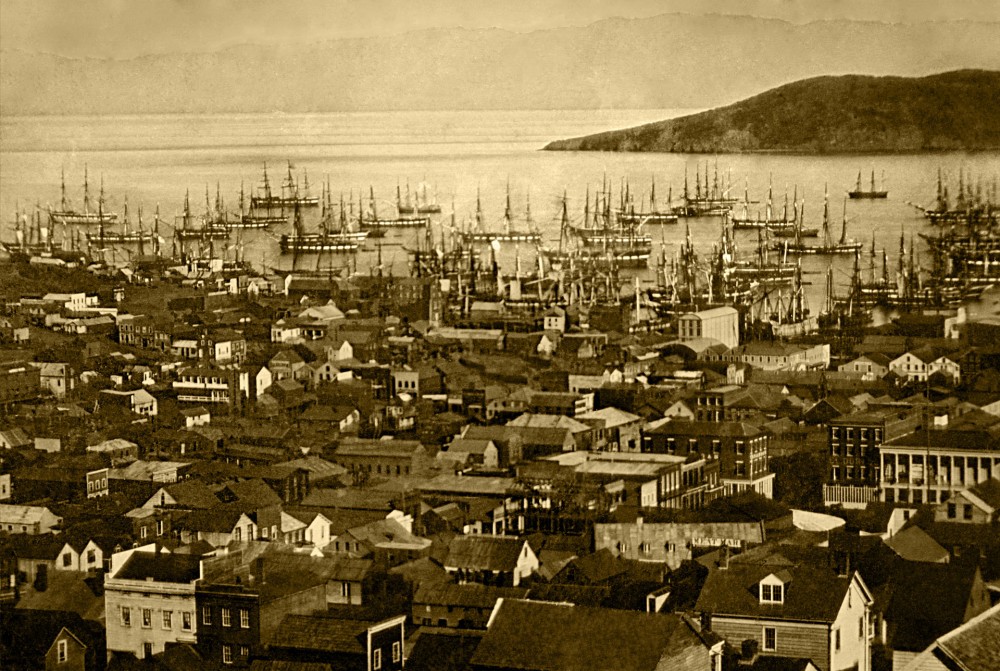
These twin establishments — the religious mission and the military presidio — represent the official founding acts of what would eventually become San Francisco. They anchored Spanish presence in the region, laying the groundwork for future development and marking the true beginning of the city’s continuous modern history. Today, both Mission Dolores and the Presidio of San Francisco stand as powerful landmarks, offering visitors a tangible connection to the city’s earliest days. Exploring their grounds provides not just a historical lesson but an immersive experience into the genesis of this iconic city, a journey that seamlessly blends history with contemporary travel and tourism interests.
From Yerba Buena to San Francisco: The Gold Rush Era
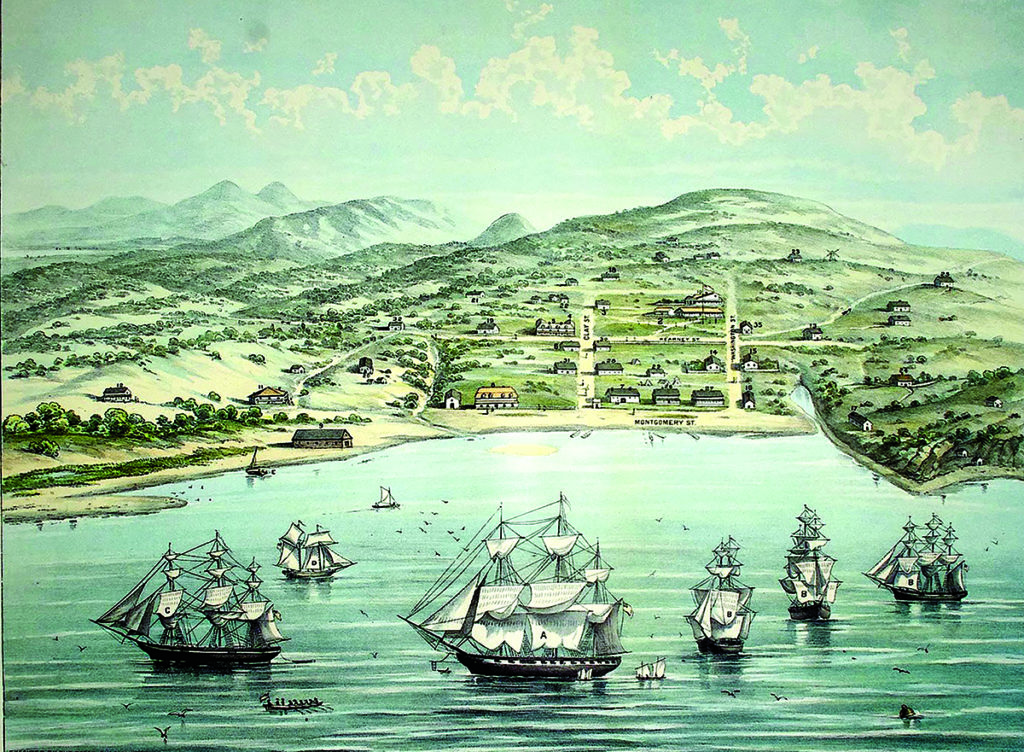
For several decades after its founding, the settlement remained a relatively sleepy outpost. Mexico gained independence from Spain in 1821, and Alta California became a Mexican territory. During this period, a small civilian community began to grow slightly to the east of the mission and presidio, near a cove that offered good anchorage. This community, initially just a scattering of adobes and tents, became known as Yerba Buena (Spanish for “good herb,” named after a wild mint native to the area).
The Mexican-American War and the Birth of a New Name
The mid-19th century brought significant geopolitical changes that dramatically reshaped the future of Yerba Buena. Tensions between the United States and Mexico escalated, leading to the Mexican-American War in 1846. On July 7, 1846, Commodore John D. Sloat claimed California for the United States by raising the American flag in Monterey. Two days later, on July 9, 1846, Captain John B. Montgomery of the U.S. Navy sailed into Yerba Buena Cove and raised the American flag over the town plaza. This effectively ended Mexican rule in the area.
A significant administrative change followed quickly. On January 30, 1847, by order of Lieutenant Washington Allon Bartlett, the acting alcalde (mayor) of the town, Yerba Buena was officially renamed San Francisco. This renaming was a strategic move to secure the name for the growing port on the bay, distinguishing it from other settlements and capitalizing on the established reputation of the bay itself. This date, then, represents the formal birth of the city under its now-famous moniker.
The Gold Rush: A Catalyst for Growth
If the discovery of the bay laid the foundation, and the renaming solidified its identity, then the California Gold Rush was the explosive catalyst that propelled San Francisco from a small port town into a bustling metropolis. Just over a year after the renaming, in January 1848, gold was discovered by James W. Marshall at Sutter’s Mill in Coloma, near Sacramento. News of this discovery spread like wildfire, triggering an unprecedented influx of “forty-niners” from across the globe.
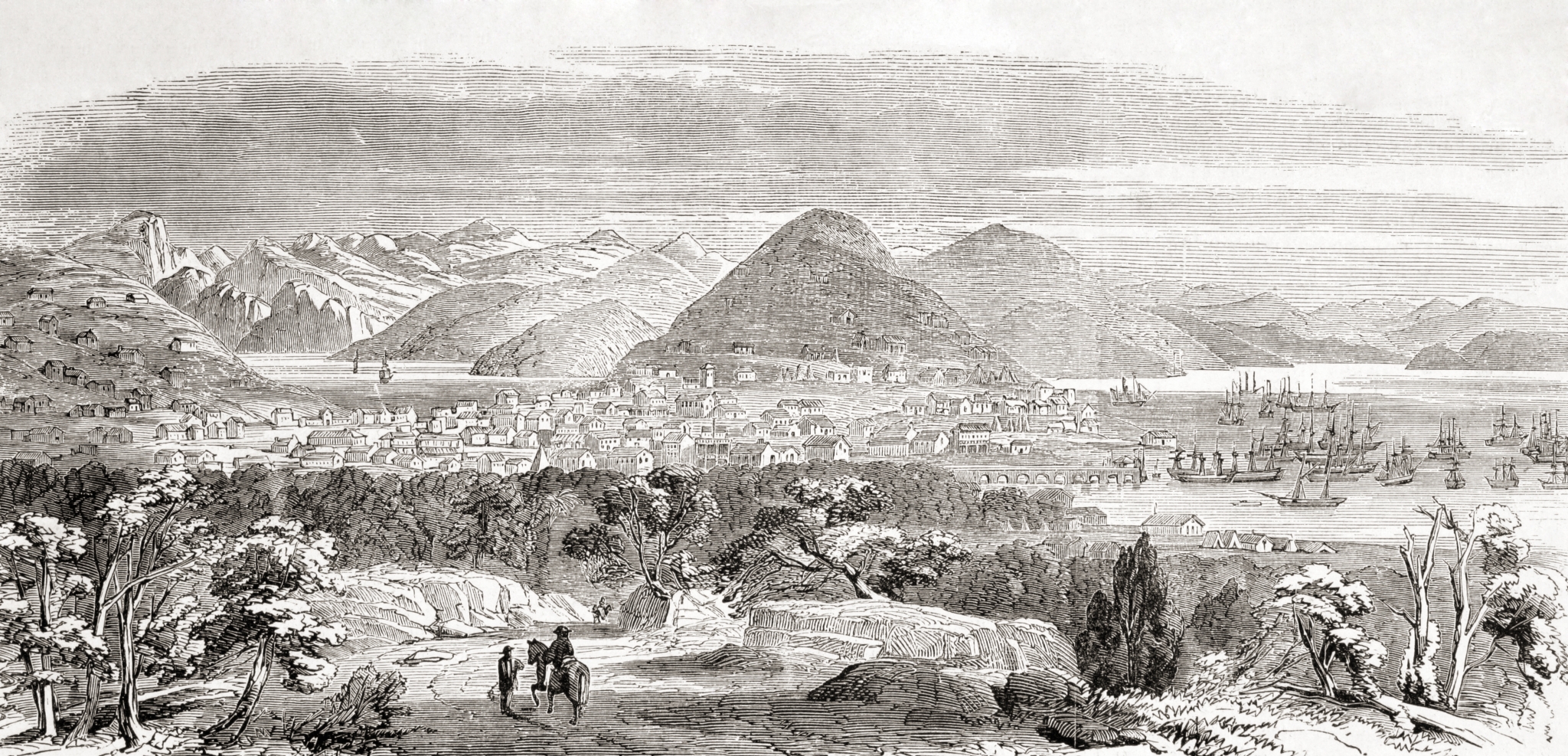
San Francisco was perfectly positioned to become the gateway to the goldfields. Its deep-water harbor was ideal for the thousands of ships arriving laden with prospectors and supplies. The city’s population exploded almost overnight, transforming it from a few hundred residents to tens of thousands in just a few years. This rapid growth brought both chaos and incredible opportunity. Businesses boomed, catering to the needs of the miners, from saloons and gambling halls to banks and shipping companies. The city became a vibrant, if wild, international hub, where diverse cultures clashed and mingled, laying the groundwork for the cosmopolitan spirit that defines San Francisco to this day. The Gold Rush era is a crucial chapter in the city’s history, showcasing its ability to attract ambitious individuals and rapidly adapt to monumental change, offering a glimpse into the early days of its unique lifestyle and tourism potential.
Shaping Modern San Francisco: Disasters, Rebuilding, and Cultural Flourishing
The Gold Rush established San Francisco as a major urban center on the West Coast of the United States. However, its journey to becoming the iconic city we know today was far from smooth. It faced numerous challenges, none more destructive than the cataclysm of 1906.
The Great Earthquake and Fire of 1906
At 5:12 AM on April 18, 1906, a massive earthquake, estimated to be between 7.9 and 8.3 on the Richter scale, struck San Francisco. While the initial shaking caused widespread damage, it was the subsequent fires, fueled by ruptured gas lines and a breakdown of the city’s water supply, that truly devastated the city. For three days, uncontrolled infernos raged, destroying an estimated 25,000 buildings across 490 city blocks, including much of the downtown area. The human toll was catastrophic, with thousands of lives lost and hundreds of thousands left homeless.
The 1906 San Francisco Earthquake and Fire remains one of the worst natural disasters in U.S. history. Yet, even amidst the rubble and despair, the indomitable spirit of San Francisco’s residents shone through. The city, known for its resilience and forward-looking attitude, immediately began the monumental task of rebuilding.
A City Reborn: Resilience and Architectural Marvels
The rebuilding effort after 1906 was nothing short of miraculous. Within a decade, much of the city had been reconstructed, often with improved infrastructure and grander architecture. The disaster spurred innovation in urban planning and construction, contributing to the city’s distinctive look. This period saw the rise of many of the elegant buildings that still define downtown San Francisco, embodying a spirit of optimism and determination.
The early to mid-20th century also witnessed the construction of its most recognizable landmarks. The majestic Golden Gate Bridge, an engineering marvel, opened in 1937, becoming a global symbol of the city. Alcatraz Island transformed from a military fort to an infamous federal prison, adding another layer of intrigue to the bay. The city’s counter-culture movements in the 1960s, centered in areas like Haight-Ashbury, cemented its reputation as a hub for progressive thought and alternative lifestyles. This rich history, punctuated by significant events and artistic movements, contributes immensely to its allure as a global travel destination.
San Francisco Today: A Hub of Culture, Innovation, and Tourism
Today, San Francisco stands as a vibrant testament to its complex past. It is a world leader in technology and innovation, particularly due to its proximity to Silicon Valley. Beyond its economic prowess, it remains a cultural melting pot, famous for its diverse neighborhoods, world-class cuisine, and progressive politics.
The city’s founding story, from a tiny mission and presidio to a dynamic international city, is a narrative of adaptability and reinvention. It invites visitors to explore its historical roots, appreciate its architectural triumphs, and immerse themselves in its unique cultural tapestry. Every cable car ride, every stroll through a historic neighborhood, and every visit to a famed landmark tells a piece of this extraordinary journey, making it a compelling focus for tourism and travel enthusiasts.
Experiencing San Francisco: Travel, Accommodation, and Landmarks
For those drawn to its captivating history and vibrant present, San Francisco offers an unparalleled travel experience. From its earliest foundations to its modern marvels, the city is a treasure trove of landmarks, cultural experiences, and diverse accommodation options catering to every lifestyle.
Iconic Landmarks and Must-Visit Attractions
No trip to San Francisco is complete without visiting its renowned sights. The Golden Gate Bridge is, of course, a paramount attraction, whether you choose to walk, bike, or simply admire its grandeur from Fort Point or Twin Peaks. A ferry trip to Alcatraz Island offers a chilling yet fascinating glimpse into its infamous past as a federal prison, requiring advance booking due to its popularity.
The bustling Fisherman’s Wharf, with its resident sea lions at Pier 39, provides quintessential San Francisco charm, alongside fresh seafood and street performers. A ride on the historic San Francisco Cable Cars is not just a mode of transport but an attraction in itself, offering breathtaking views as it climbs the city’s famed hills. Don’t miss the chance to navigate the “most crooked street in the world,” Lombard Street.
For a blend of history and beauty, explore the tranquil grounds of Mission Dolores, or wander through the vast expanse of Golden Gate Park, home to attractions like the California Academy of Sciences and the de Young Museum. The architectural grandeur of the Palace of Fine Arts and the panoramic views from Coit Tower are also essential stops. The city’s commitment to culture is evident in its numerous museums, including the innovative Exploratorium and the impressive San Francisco Museum of Modern Art (SFMOMA). These landmarks and attractions offer diverse experiences, from educational outings for family trips to romantic vistas for a luxury travel escape.
Where to Stay: Hotels and Accommodation for Every Lifestyle
San Francisco boasts an incredible array of hotels and accommodation options, catering to diverse tastes and budgets. For those seeking luxury travel, the city offers world-class establishments. The historic Fairmont San Francisco, perched atop Nob Hill, provides opulent suites and unparalleled city views. Equally prestigious are The Ritz-Carlton, San Francisco, renowned for its impeccable service, and the grand Palace Hotel, a Luxury Collection Hotel, showcasing magnificent Gilded Age architecture near Market Street. For modern elegance, Four Seasons Hotel San Francisco and St. Regis San Francisco in the SoMa district offer sophisticated rooms and top-tier amenities, perfect for both leisure and business stays.
Mid-range options are plentiful and diverse. Boutique hotels in areas like Union Square, North Beach, or the Mission District offer character and charm without breaking the bank. Consider Hotel Nikko San Francisco for its contemporary design or Hotel Vitale for bayfront elegance. For budget-conscious travelers, hostels and guesthouses provide affordable yet comfortable stays, particularly if focusing on vibrant neighborhood experiences. Booking in advance is always recommended, especially during peak seasons, to secure the best rates and ideal locations, whether you’re looking for resorts, apartments, or specialized suites.
Beyond the Sights: Culinary Delights and Local Experiences
San Francisco’s tourism appeal extends far beyond its landmarks. The city is a culinary mecca, offering everything from Michelin-starred dining to casual food trucks. Explore Chinatown, the oldest Chinatown in North America, for authentic dim sum and vibrant street life. The Mission District is famous for its delicious taquerias and colorful murals, reflecting its rich Latin American heritage. North Beach, the city’s historic Italian quarter, offers charming cafes and delectable pasta dishes.
Beyond food, dive into the city’s unique culture. Attend a show in the Theater District, enjoy live music in a intimate club, or explore the eclectic boutiques of Haight-Ashbury. The diverse communities, such as the vibrant Castro District, showcase the city’s pioneering spirit in social justice and lifestyle diversity. For nature lovers, a short drive out of the city can take you to the towering redwoods of Muir Woods National Monument or the pristine beauty of Angel Island State Park, offering a contrast to the urban bustle. These local activities and guides emphasize the richness of San Francisco beyond its surface, providing deep, authentic experiences for every visitor.
From its humble beginnings as a Spanish mission and presidio to its rise as a global icon, San Francisco’s history is as compelling as its fog-kissed hills. It’s a city that has continuously reinvented itself, shaped by explorers, gold miners, entrepreneurs, and a resilient spirit that overcomes adversity. When you next find yourself gazing at the bay, remember the journey that brought this magnificent city into existence, and appreciate the layers of history that make every visit a truly enriching experience.
LifeOutOfTheBox is a participant in the Amazon Services LLC Associates Program, an affiliate advertising program designed to provide a means for sites to earn advertising fees by advertising and linking to Amazon.com. Amazon, the Amazon logo, AmazonSupply, and the AmazonSupply logo are trademarks of Amazon.com, Inc. or its affiliates. As an Amazon Associate we earn affiliate commissions from qualifying purchases.