
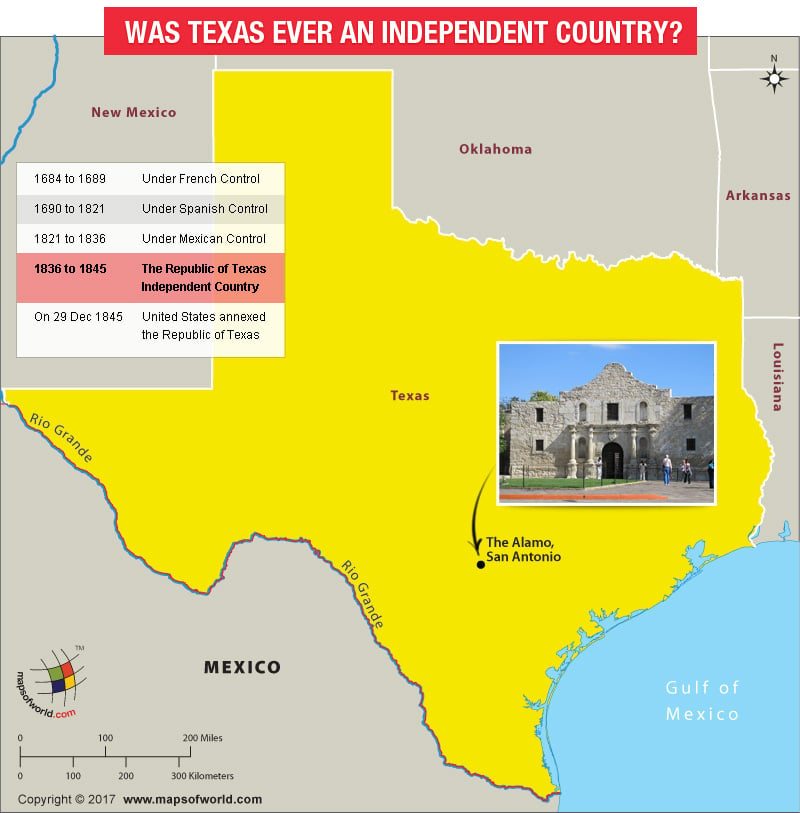
The Lone Star State boasts a rich and complex history, and for a significant period, it indeed stood as an independent nation. Understanding when Texas was its own country requires delving into a pivotal era marked by revolution, independence, and eventual statehood. This journey from a Mexican territory to a sovereign republic and finally to a state within the United States is a cornerstone of Texan identity and a fascinating chapter in North American history.
The Road to Independence: From Mexican Territory to Republic
Texas was initially part of Mexico, which gained its independence from Spain in 1821. The vast territory of Texas was sparsely populated by Mexicans and increasingly settled by Anglo-Americans, who were invited by the Mexican government to foster economic development. However, cultural differences, a desire for greater autonomy, and political disagreements soon sowed the seeds of conflict.

Growing Tensions and the Spark of Revolution
By the 1830s, the Mexican government, under President Antonio López de Santa Anna, began implementing policies that were seen as increasingly oppressive by the Texan settlers. These included attempts to centralize power, abolish state legislatures, and enforce Mexican laws more strictly, including the prohibition of slavery, which was vital to the Texan economy. The settlers, many of whom had come from the United States with a strong tradition of self-governance, felt their rights were being violated.
The situation escalated rapidly. In October 1835, a skirmish near Gonzales, often referred to as the “Lexington of Texas,” marked the beginning of armed conflict. The Texans, though initially outmatched, rallied with a fierce determination to defend their perceived liberties. Key events like the capture of San Antonio from Mexican forces, a significant early victory, bolstered the revolutionary spirit.
The Declaration of Independence and the Birth of a Republic
The pivotal moment arrived on March 2, 1836. Delegates from across Texas convened at Washington-on-the-Brazos and formally declared independence from Mexico. This bold declaration established the Republic of Texas, a sovereign nation that would exist for nearly a decade. The document, heavily influenced by the U.S. Declaration of Independence, articulated the grievances of the Texans and their aspiration for self-determination.
The fight for independence was far from over, however. The newly formed republic faced immense challenges, including a lack of resources, internal divisions, and the continued military might of Mexico. The war reached its brutal climax with the Siege of the Alamo, where a small group of Texan defenders, though ultimately defeated and killed, became legendary symbols of resistance. The cry of “Remember the Alamo!” galvanized Texan forces.
Just weeks later, at the Battle of San Jacinto on April 21, 1836, General Sam Houston led the Texan army to a decisive victory over Santa Anna‘s forces. This stunning triumph effectively secured Texas‘s independence, although Mexico would not formally recognize it for many years. The Republic of Texas was officially established, with its own constitution, president (David G. Burnet served as interim president, followed by elected president Sam Houston), and aspirations for international recognition.
Life as the Republic of Texas: Navigating Sovereignty
The period of the Republic of Texas (1836-1845) was a formative era characterized by nation-building, economic struggles, and complex foreign relations. As an independent entity, Texas had to establish its own governance, infrastructure, and diplomatic ties.
Governance and Early Challenges
The early years of the republic were marked by significant challenges. The government, based in Houston for a time before moving to the newly established capital of Austin, struggled with finances. The cost of war and the establishment of a new nation had left the treasury depleted. Texan currency, known as the “redback,” experienced severe depreciation, leading to economic instability.
Establishing a stable government was also a priority. Sam Houston, a charismatic and experienced leader, served as the first elected president, laying the groundwork for the republic’s institutions. Subsequent presidents, including Mirabeau B. Lamar, who envisioned Texas as a major power, also played crucial roles in shaping the nation’s destiny. Lamar‘s presidency, for instance, saw increased efforts to expand Texan territory and establish a more robust military.
Foreign Relations and Expansionist Dreams
The Republic of Texas actively sought international recognition from countries like the United States, France, and Great Britain. Recognition was crucial for trade, security, and legitimacy. While the United States was largely sympathetic, internal debates over slavery and the potential for a war with Mexico delayed official recognition for some time.
Texas also harbored expansionist ambitions. Its vast territory was an attractive prospect, and there were aspirations to extend its influence westward. The republic’s leaders engaged in various diplomatic and military maneuvers, including conflicts with Native American tribes and attempts to assert control over disputed territories.
The Question of Annexation
From its inception, the issue of annexation by the United States loomed large. Many Texans, particularly those who had emigrated from the United States, desired to join their former homeland. However, the process was complicated. Mexico continued to claim Texas as part of its territory, and the prospect of admitting another large, slave-holding state into the Union was a contentious issue in U.S. politics, fueling debates about the balance of power between free and slave states.
The End of the Republic and the Dawn of Statehood
The debate over annexation intensified throughout the 1840s. Pro-annexation sentiment grew as Texas continued to face economic difficulties and security concerns from Mexico. The United States, after significant political maneuvering and changing presidential administrations, finally agreed to annex Texas.
The Annexation Treaty and its Aftermath
In 1845, the United States formally annexed Texas. This act, however, was not without consequence. Mexico viewed the annexation as an act of aggression and a violation of its territorial integrity, which ultimately led to the Mexican-American War (1846-1848).
The Mexican-American War resulted in a decisive U.S. victory and the cession of vast territories to the United States, including present-day California, Nevada, Utah, Arizona, New Mexico, and parts of Colorado and Wyoming. For Texas, annexation meant becoming the 28th state of the United States on December 29, 1845.
Legacy of the Republic
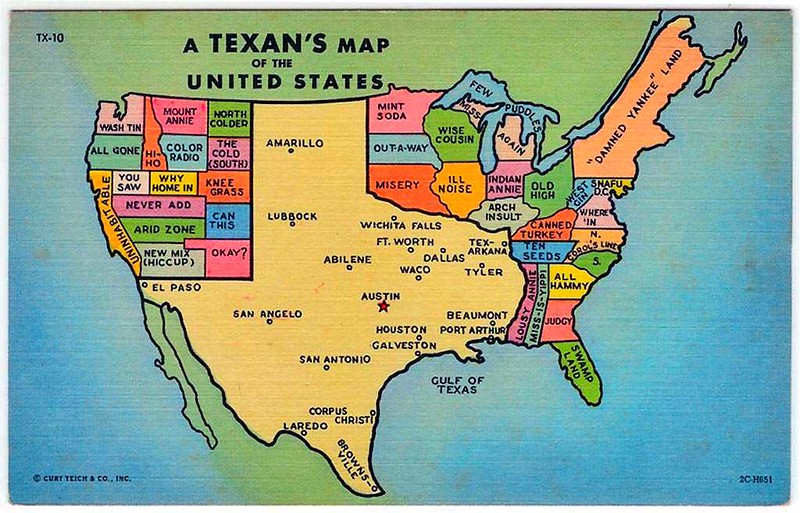
Even though the Republic of Texas existed for a relatively short period, its legacy is profound. The ideals of independence, self-reliance, and a unique Texan identity were forged during this era. The struggle for freedom and the establishment of a sovereign nation continue to be celebrated and deeply ingrained in the state’s cultural fabric.
The story of Texas as its own country is a testament to the power of determination and the pursuit of self-governance. From the battlefields of the revolution to the halls of government as an independent republic, Texas charted its own course, leaving an indelible mark on history and solidifying its status as a place with a distinct and proud heritage. The memory of those years as the Lone Star Republic remains a vital part of the Texan spirit, a constant reminder of the journey from revolution to statehood.
LifeOutOfTheBox is a participant in the Amazon Services LLC Associates Program, an affiliate advertising program designed to provide a means for sites to earn advertising fees by advertising and linking to Amazon.com. Amazon, the Amazon logo, AmazonSupply, and the AmazonSupply logo are trademarks of Amazon.com, Inc. or its affiliates. As an Amazon Associate we earn affiliate commissions from qualifying purchases.