
California, a state synonymous with golden beaches, iconic landmarks, and a vibrant travel scene, captivates millions of visitors each year. From the bustling streets of Los Angeles and the historic charm of San Francisco to the serene beauty of Big Sur, its coastline is a magnet for adventurers, luxury seekers, and families alike. Yet, beneath this picturesque facade lies a dynamic geological landscape, one where seismic activity is a known characteristic. This raises a crucial question for both residents and curious travelers: when was the last tsunami in California?
While devastating local tsunamis, like those experienced in other parts of the Pacific Rim, are rare for California, the state has certainly felt the effects of distant, powerful seismic events. The most significant and impactful tsunami to strike California in recent memory occurred on March 28, 1964. This event was triggered by the magnitude 9.2 Great Alaska Earthquake, the second-largest earthquake ever recorded globally. While originating thousands of miles away, the ensuing tsunami traveled across the Pacific Ocean and delivered a powerful, destructive blow to several California coastal communities, most notably Crescent City.
Understanding this history is not merely an academic exercise; it’s an essential part of responsible travel and living in a state as geologically active as California. For those planning their next adventure, whether it’s exploring the rugged coastlines, relaxing at a beachfront resort, or diving into local culture, being aware of natural phenomena and preparedness measures enhances both safety and peace of mind. This article will delve into the history of tsunamis in California, explain the underlying geological factors, and provide valuable insights for travelers and residents on how to understand and mitigate potential risks while fully enjoying the Golden State’s unparalleled beauty.
A Historical Perspective: California’s Encounter with Tsunamis
California’s long and diverse coastline has been shaped by millennia of geological activity, including the infrequent, yet powerful, impact of tsunamis. While not as prone to locally generated, catastrophic tsunamis as countries situated directly on major subduction zones, California is vulnerable to “distant-source” tsunamis, meaning those generated by large earthquakes far across the Pacific Ocean. The 1964 event remains the benchmark for tsunami preparedness in the state, but it is far from the only instance of tsunami activity impacting its shores.
The Defining Event: The 1964 Alaska Earthquake Tsunami
The most significant tsunami to impact California in recorded history originated not from its own active fault lines, but from the immense Great Alaska Earthquake on Good Friday, 1964. This colossal earthquake, with its epicenter in Southcentral Alaska, triggered a massive tsunami that radiated across the entire Pacific Ocean. Approximately four to five hours after the earthquake, the first waves began to reach the California coast.
The impacts were varied but severe in some areas. Crescent City, a small port town in Humboldt County near the Oregon border, bore the brunt of the devastation. Four main waves, each more powerful than the last, struck the town. The largest waves, reaching up to 21 feet in height, surged far inland, destroying much of the downtown area, including 29 city blocks. Over 289 businesses and homes were damaged or destroyed, and tragically, 12 people lost their lives in Crescent City alone. The force of the water carried cars, logging trucks, and entire buildings hundreds of yards, leaving a scene of widespread destruction.
Other communities along the California coast also experienced significant damage, albeit less catastrophically than Crescent City. Eureka, Fort Bragg, and Monterey harbors saw docks, fishing boats, and waterfront structures severely damaged. The tsunami’s reach extended as far south as San Diego, where harbor facilities experienced some impact. The 1964 event served as a stark and painful reminder of California’s vulnerability to distant-source tsunamis and catalyzed significant improvements in tsunami warning systems and preparedness protocols across the United States and the Pacific Rim.
Other Notable Incidents and Distant Threats
While 1964 stands out, it wasn’t the last time California experienced tsunami activity. In fact, smaller tsunamis or significant surges have been recorded several times since. These events, though less destructive, underscore the continuous natural threat.
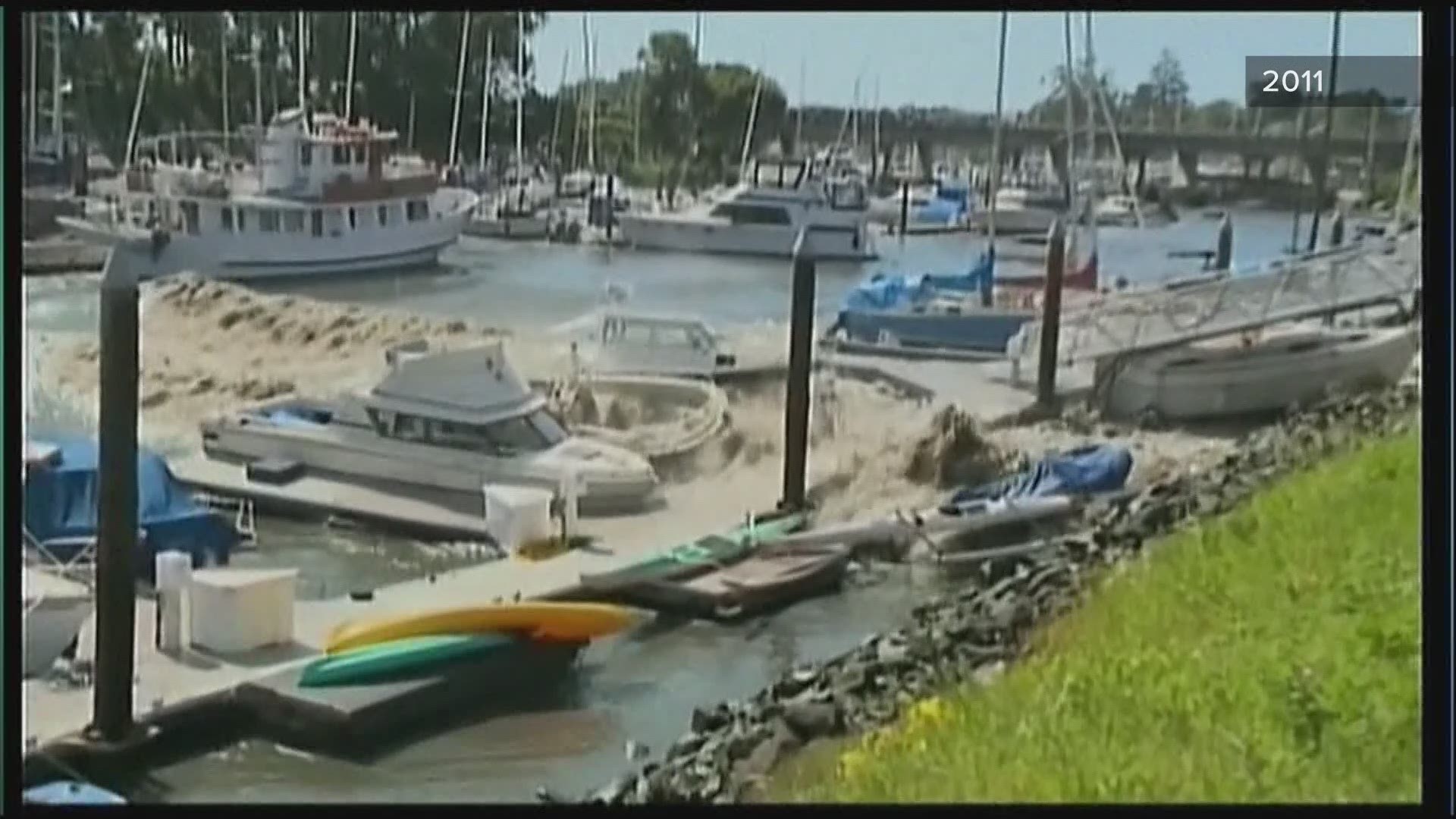
One of the most recent significant distant-source tsunamis to affect California occurred in March 2011, following the catastrophic magnitude 9.1 Tohoku Earthquake off the coast of Japan. While no large waves comparable to 1964 struck the shore, powerful surges and currents caused considerable damage to harbors and marinas, particularly in Santa Cruz and the Santa Barbara area. Total damage estimates for California from the 2011 Tohoku tsunami exceeded $100 million, primarily affecting boats and port infrastructure. One person tragically died while attempting to photograph the incoming waves in Del Norte County.
Another notable distant tsunami occurred in May 1960, following the magnitude 9.5 Great Chile Earthquake, the largest earthquake ever recorded. Waves reaching several feet were observed along the California coast, causing some damage to coastal infrastructure but no fatalities in the state. More recently, in January 2022, the eruption of the Hunga Tonga-Hunga Ha’apai volcano near Tonga generated a rare meteotsunami that caused minor flooding and strong currents in harbors across California, prompting advisories and closures. These events highlight that even non-seismic phenomena can trigger tsunami-like effects.
These historical accounts emphasize that while truly devastating tsunamis are infrequent, California’s coastal communities and visitors must remain vigilant. The state’s extensive tourism infrastructure, including its myriad hotels, resorts, and attractions, is built with an awareness of these natural forces, incorporating preparedness into their operations to ensure the safety of guests.
Understanding the Threat: California’s Seismic Landscape
To truly grasp the dynamics of tsunamis impacting California, it’s essential to understand the state’s unique geological setting. California sits atop the notoriously active Pacific Ring of Fire, a horseshoe-shaped belt of volcanoes and seismic activity that rings the Pacific Ocean. While often associated with the San Andreas Fault and its propensity for large earthquakes, the primary tsunami threat to California typically comes from elsewhere.
Geological Factors and Tsunami Generation
Tsunamis are most commonly generated by large underwater earthquakes that cause significant vertical displacement of the seafloor. This rapid movement displaces a massive volume of water, creating powerful waves that can travel across entire ocean basins.
- Distant-Source Tsunamis: These are the most common and significant tsunami threats to California. They originate from powerful subduction zone earthquakes far away, such as those along the Aleutian Trench in Alaska (like 1964) or the Japan Trench (like 2011). These waves lose little energy as they traverse deep ocean waters and can impact distant coastlines hours later.
- Local-Source Tsunamis: These are less common for California but pose the most immediate danger due to extremely short warning times. They would be generated by large offshore earthquakes directly along California’s coast or the nearby Cascadia Subduction Zone, which stretches from northern California up to British Columbia. While the San Andreas Fault is primarily a strike-slip fault (meaning horizontal movement), it could potentially trigger underwater landslides or secondary faults that generate local tsunamis. Scientists are also studying the potential for large offshore landslides, unrelated to earthquakes, to generate local tsunamis.
The Pacific Tsunami Warning Center (PTWC) and the National Tsunami Warning Center (NTWC) are critical components of the tsunami warning system. They monitor seismic activity and sea level changes across the Pacific, issuing alerts and warnings to coastal regions, providing precious time for evacuation when a distant tsunami is inbound.
Measuring Risk: Tsunami Hazard Zones and Preparedness
To mitigate risk, California has implemented comprehensive tsunami preparedness programs. One of the most visible aspects is the delineation of Tsunami Hazard Zones. These zones, typically marked with distinct signage, indicate areas that could be inundated by a significant tsunami. They are often low-lying coastal areas, beaches, harbors, and river mouths.
Travelers and residents alike should familiarize themselves with these zones, especially when staying in coastal accommodations. The California Office of Emergency Services (CalOES) and local emergency management agencies work diligently to educate the public, conduct drills, and establish clear evacuation routes. Key preparedness measures include:
- Recognizing Natural Warnings: A strong earthquake that makes it difficult to stand, or a sudden and unusual recession of ocean water, are natural signs that a tsunami may be imminent. If you experience either, immediately move to higher ground, even without an official warning.
- Heeding Official Warnings: Follow instructions from local authorities. Tsunami watches mean a tsunami is possible; tsunami warnings mean a tsunami is imminent or expected.
- Knowing Evacuation Routes: Look for blue and white tsunami evacuation route signs. These are particularly important in popular tourist destinations like Santa Barbara, Orange County, or Mendocino.
- Staying Informed: Many coastal hotels and resorts provide information on tsunami preparedness in guest rooms or at the front desk. Utilizing apps and local news for emergency updates is also recommended.
Understanding these geological realities and preparedness strategies is not meant to deter travelers but rather to empower them. California’s robust emergency services and the public’s awareness make it a relatively safe destination, even with its seismic backdrop.
Traveling Safely Along California’s Coasts: A Guide for Tourists
The allure of California’s coast is undeniable. From the iconic Golden Gate Bridge in San Francisco to the sun-drenched beaches of Malibu and the family-friendly attractions of San Diego, coastal California offers an unparalleled array of experiences. For those planning a trip, particularly to beachfront hotels or resorts, understanding safety protocols regarding tsunamis is a smart and responsible part of trip planning.
Coastal Destinations and Their Preparedness
Popular coastal destinations across California have integrated tsunami preparedness into their community planning and tourism infrastructure. Whether you’re considering a drive along Highway 1 or a stay in a picturesque beach town, you’ll find varying levels of visible preparedness.
- Santa Cruz: Known for its vibrant boardwalk and surf culture, Santa Cruz has experienced tsunami impacts (notably in 2011). The city has clear evacuation routes from its famous beach and pier areas.
- Monterey & Carmel-by-the-Sea: These charming towns, home to the Monterey Bay Aquarium and world-class golf courses, are situated along a coastline with deep offshore canyons, which can sometimes amplify tsunami effects. Local authorities are well-versed in emergency procedures.
- Laguna Beach & Newport Beach: In Orange County, these upscale communities with their stunning coves and harbors are popular for luxury travel and family trips. They actively participate in the “TsunamiReady” program, an initiative by the National Weather Service to promote community preparedness.
- San Diego: With its extensive harbor and popular beaches like Coronado and La Jolla, San Diego has robust emergency plans. Its strategic location means it generally experiences smaller tsunami wave heights compared to northern California, but strong currents are still a concern for boating and harbor activities.
When exploring these destinations, pay attention to local signage. “Tsunami Evacuation Route” signs are common, guiding you to safe high ground. Many tourist information centers and parks also provide brochures on local safety.
Accommodation Choices and Safety Protocols
When booking accommodation in California’s coastal areas, especially beachfront properties, it’s wise to consider their emergency preparedness. From budget-friendly motels to opulent resorts, many establishments have protocols in place.
- Ask About Emergency Plans: Don’t hesitate to inquire about the hotel’s tsunami evacuation plan when you check in. Most reputable hotels, particularly those near the water, will have clear instructions.
- Identify Evacuation Routes: Locate the designated evacuation routes from your room and the general hotel property. This information is often posted on the back of hotel room doors or in common areas.
- High-Rise vs. Low-Rise: While ground-floor rooms directly on the beach might offer breathtaking views, rooms on higher floors in multi-story buildings further inland are inherently safer from tsunami inundation. Many luxury resorts, like the Ritz-Carlton, Laguna Niguel or Terranea Resort in Rancho Palos Verdes, are built on bluffs overlooking the ocean, naturally elevating them above potential tsunami zones.
- “TsunamiReady” Certified Hotels: Some hotels or resorts in “TsunamiReady” communities actively promote their adherence to safety standards. These properties are typically well-versed in their emergency response.
- Long-Term Stays and Vacation Rentals: If considering a long-term stay or booking a vacation rental, verify its location relative to tsunami hazard zones. Websites or property managers should be able to provide this information.
Choosing accommodations with a focus on guest safety not only provides peace of mind but also reflects responsible tourism. Resorts like the historic Hotel del Coronado on Coronado Island have decades of experience in guest safety, balancing their iconic status with modern preparedness. Similarly, boutique hotels in charming towns like Mendocino or Pismo Beach are often deeply integrated into local community emergency networks.
Beyond the Horizon: Enjoying California Responsibly
California offers an incredible lifestyle, from the laid-back surf culture of Huntington Beach to the sophisticated culinary scene of San Francisco and the natural wonders of Point Reyes National Seashore. While the topic of tsunamis might seem daunting, it’s crucial to remember that such events are rare and that the state has robust systems in place to protect its residents and millions of visitors.
Embracing Coastal Lifestyle with Awareness
The vast majority of time spent enjoying California’s coasts will be free of any natural threats. Whether you’re taking a family trip to Disneyland and then heading to Santa Monica Pier, or embarking on a solo adventure exploring hidden coves, an informed approach enhances the experience rather than detracting from it.
- Enjoy Beaches and Water Activities: Swim, surf, paddleboard, and relax on the beach with confidence. Normal conditions are safe. However, always be aware of changing ocean conditions, rip currents, and local advisories.
- Support Local Businesses: Coastal communities thrive on tourism. By supporting local hotels, restaurants, and shops, you contribute to the resilience and continued preparedness efforts of these towns.
- Educate Children: If traveling with family, teach children about beach safety and emergency procedures in an age-appropriate way. This empowers them without instilling undue fear.
- Respect Nature: Understanding California’s geological activity is part of respecting its powerful natural beauty. It’s a reminder of the forces that shaped its stunning landscapes.
Contributing to Sustainable and Safe Tourism
Responsible tourism extends beyond environmental considerations to include personal safety and community well-being. By being informed about potential natural hazards, you become a more conscientious traveler. This includes choosing accommodation that prioritizes safety, heeding local warnings, and understanding the unique characteristics of the places you visit.
California’s commitment to safety, combined with its unmatched beauty and diverse attractions, ensures it remains a top global destination. From luxury travel experiences in cliffside resorts like Post Ranch Inn in Big Sur, offering breathtaking views from a safe elevation, to budget travel options in bustling beach towns, there’s an experience for every lifestyle. The “last tsunami in California” was indeed a significant event in 1964, with further impacts in 2011, but the lessons learned have fortified the state, making it a place where visitors can explore with both wonder and security. So pack your bags, head to the Golden State, and immerse yourself in its endless coastal charm, knowing that awareness is your best travel companion.
LifeOutOfTheBox is a participant in the Amazon Services LLC Associates Program, an affiliate advertising program designed to provide a means for sites to earn advertising fees by advertising and linking to Amazon.com. Amazon, the Amazon logo, AmazonSupply, and the AmazonSupply logo are trademarks of Amazon.com, Inc. or its affiliates. As an Amazon Associate we earn affiliate commissions from qualifying purchases.