
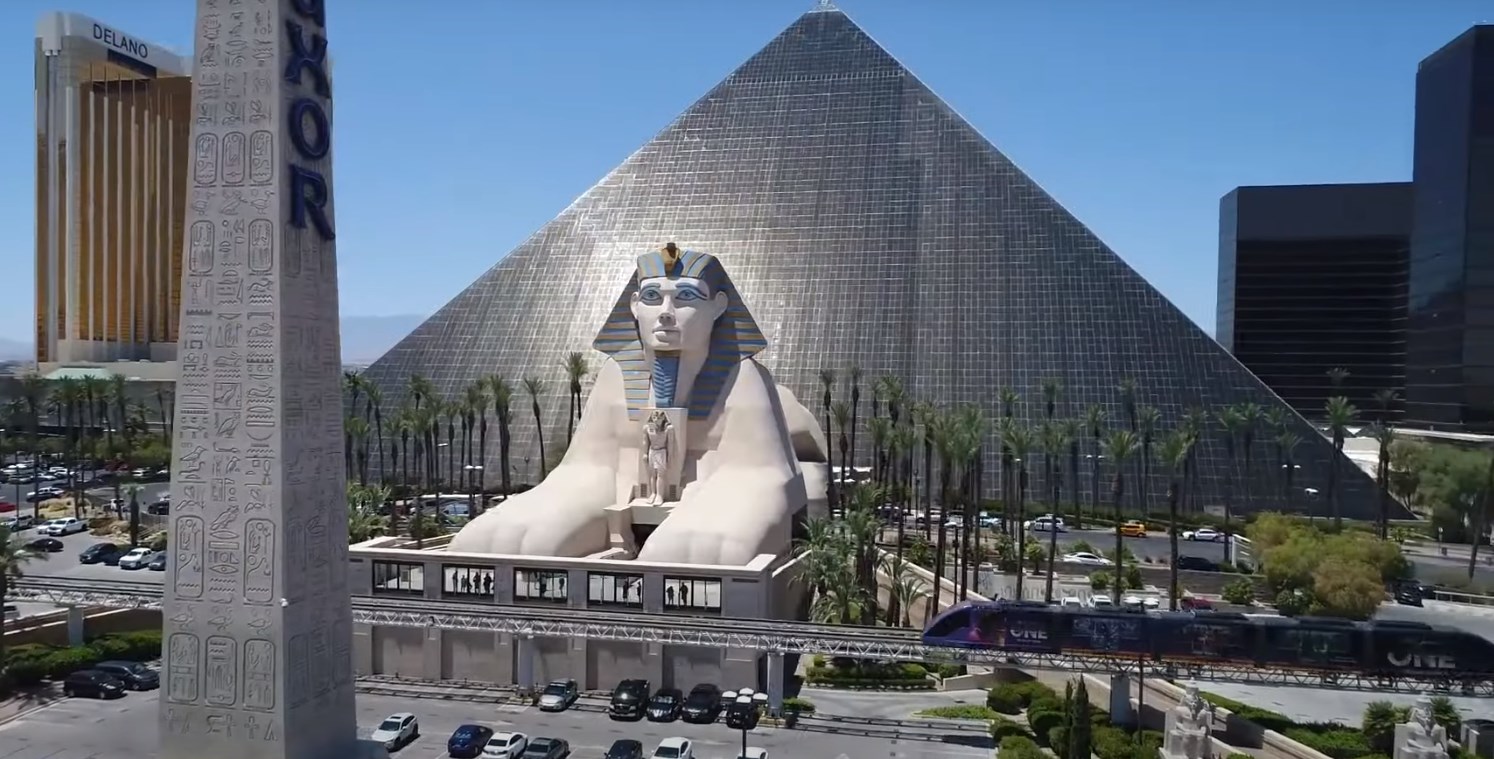
The Luxor Las Vegas stands as one of the most recognizable icons along the Las Vegas Strip. With its massive obsidian pyramid and the powerful beam of light piercing the night sky, it has defined the skyline of Nevada for decades. To understand the significance of this structure, one must look back to the early 1990s, a transformative era for the gambling capital of the world.
The Conception and Construction Timeline
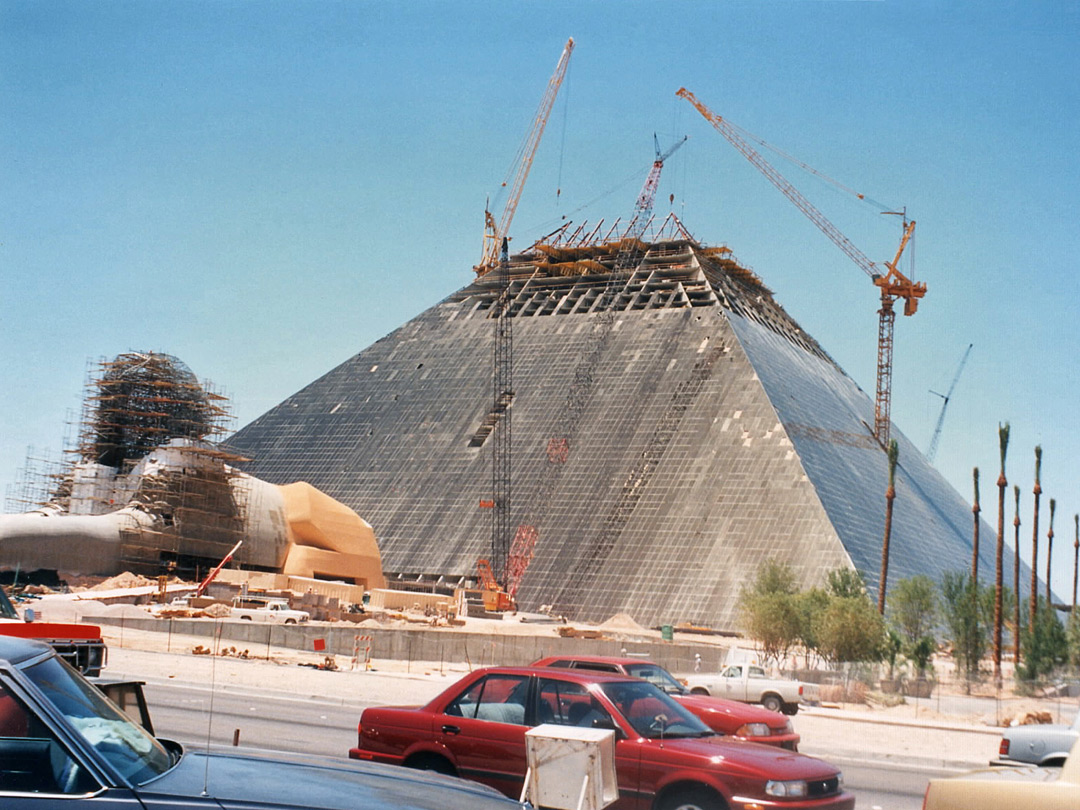
The development of the Luxor was a bold experiment in themed resort architecture. While many hotels in Las Vegas drew inspiration from global aesthetics, none had attempted the sheer scale and structural complexity of an ancient Egyptian monument.
Breaking Ground
Construction of the Luxor Hotel and Casino officially began in 1992. The project was spearheaded by Circus Circus Enterprises, a major player in the hospitality industry at the time. The goal was to capitalize on the “mega-resort” boom that was sweeping through the desert. Architects and engineers faced a unique challenge: building a thirty-story steel-and-glass pyramid that could withstand the harsh heat and seismic considerations of the region.
The Grand Opening
After roughly 18 months of intensive construction, the doors to the resort opened to the public on October 15, 1993. The launch was a spectacle that signaled a new era of immersive entertainment. Upon its debut, the resort featured 2,526 guest rooms, a massive casino floor, and a variety of attractions that brought the mysteries of the Nile River to the United States. It was an immediate cultural phenomenon, cementing itself as a must-visit destination for travelers seeking something beyond the traditional casino experience.
Architectural Significance and Evolution
The pyramid design was not merely for aesthetics; it represented a structural marvel that pushed the boundaries of hotel engineering in the 1990s. The building is famously known for its “inclinator” elevators, which travel up the interior sides of the pyramid at a 39-degree angle, a necessity dictated by the unconventional shape of the structure.
The Beam of Light
Perhaps the most famous feature of the Luxor Sky Beam is its ability to be seen for hundreds of miles, even from Los Angeles on a clear night. Composed of 39 xenon lamps and curved mirrors, the beam generates a light output so intense that it creates its own ecosystem, attracting moths and other insects that provide food for bats and birds in the area. This installation remains a hallmark of the resort’s identity.
Major Renovations
The property has undergone significant transformations since its 1993 completion. While the exterior remains largely unchanged, the interior has shifted away from the “Nile-themed” maximalism of the 1990s. In the late 2000s, the resort underwent a $300 million renovation aimed at modernizing the rooms and casino floors. These updates were designed to appeal to a more contemporary demographic, replacing some of the older, kitschy artifacts with sleek, sophisticated designs that bridge the gap between the historic theme and modern luxury travel.
The Luxor in the Context of Las Vegas History
To understand the Luxor build date, one must place it in the context of the “Themed Resort Era.” This period, roughly spanning from 1989 with the opening of the Mirage to the early 2000s, saw Las Vegas transition into a city focused on grand, immersive experiences.
A Catalyst for Development
The Luxor served as a proof-of-concept for the viability of extreme themed architecture. Its success paved the way for subsequent developments, such as the Excalibur Hotel and Casino and the Mandalay Bay Resort. In fact, the Luxor is physically connected to these properties, forming a complex that allows guests to move between Egyptian, medieval, and tropical-themed environments without ever leaving the climate-controlled walkway.
Longevity and Legacy
Unlike many of its contemporaries that have been demolished or rebranded beyond recognition, the Luxor has managed to maintain its architectural integrity. While the “Tut-mania” of the 1990s has faded, the pyramid remains a symbol of the creative excess that defines Nevada. It stands as a testament to an era when developers believed that the sky was the limit—or in the case of the Luxor, that a desert oasis could be successfully transformed into a replica of an Ancient Egypt monument.
Planning Your Visit Today
For those planning to visit this iconic landmark, understanding its history adds a layer of depth to the experience. Whether you are staying in the “Pyramid” rooms or the more standard “Tower” rooms, you are essentially sleeping inside a piece of modern American history.
What Remains of the Original Theme?
While much of the interior has been refreshed to meet modern standards of comfort and technology, remnants of the original vision remain. The sheer geometry of the building continues to inform the guest experience. The atrium—once the largest in the world—still provides a sense of awe that is difficult to replicate in traditional skyscraper hotels. Visitors can still feel the ambition of the 1992 construction team when standing in the lobby, gazing up at the apex of the structure.

Navigating the Resort
Today, the Luxor functions as a central hub on the southern end of the Las Vegas Strip. Its proximity to other major resorts makes it an ideal base for those wanting to explore the history of Las Vegas architecture. From its 1993 beginnings to its modern status as a staple of the MGM Resorts International portfolio, the Luxor continues to invite travelers to witness the intersection of historical fantasy and architectural ingenuity.
In summary, the Luxor was built during the peak of the Las Vegas construction boom of the early 1990s, with a grand opening in October 1993. It stands today not just as a hotel, but as a defining pillar of the city’s identity, proving that even a three-decade-old concept can remain relevant in the ever-evolving landscape of global tourism. Whether you are a fan of architecture or simply a curious traveler, the pyramid remains an essential stop on any tour of the Nevada desert.
LifeOutOfTheBox is a participant in the Amazon Services LLC Associates Program, an affiliate advertising program designed to provide a means for sites to earn advertising fees by advertising and linking to Amazon.com. Amazon, the Amazon logo, AmazonSupply, and the AmazonSupply logo are trademarks of Amazon.com, Inc. or its affiliates. As an Amazon Associate we earn affiliate commissions from qualifying purchases.