
The history of the American West is punctuated by moments of intense, transformative energy, but few events capture the chaotic ambition of the frontier quite like the Oklahoma Land Run. To understand when this pivotal chapter in Oklahoma history occurred, one must look back to the high-noon excitement of April 22, 1889. This date remains etched in the historical consciousness of the United States as the definitive turning point for the “Unassigned Lands,” a region that would soon blossom into a territory and eventually a state.
The Genesis of the 1889 Land Run
The genesis of the Land Run was rooted in the Indian Appropriations Act, a piece of federal legislation that fundamentally altered the landscape of the Great Plains. For years, the area known as the Unassigned Lands had been a point of contention between cattle ranchers, who illegally grazed their herds on the fertile grasses, and settlers, who hungered for the opportunity to claim a stake of their own.

The Legislative Push
The United States Congress had been pressured for decades to open the region to non-Native settlement. When President Benjamin Harrison issued a proclamation in March 1889, he set the stage for the massive migration that would occur the following month. He designated April 22 as the day the gates would open, triggering one of the most remarkable logistical challenges in the history of the American West.
The Gathering Storm
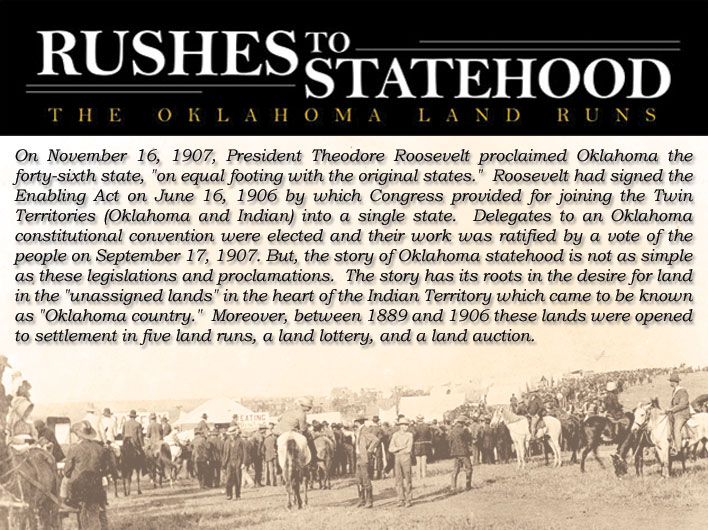
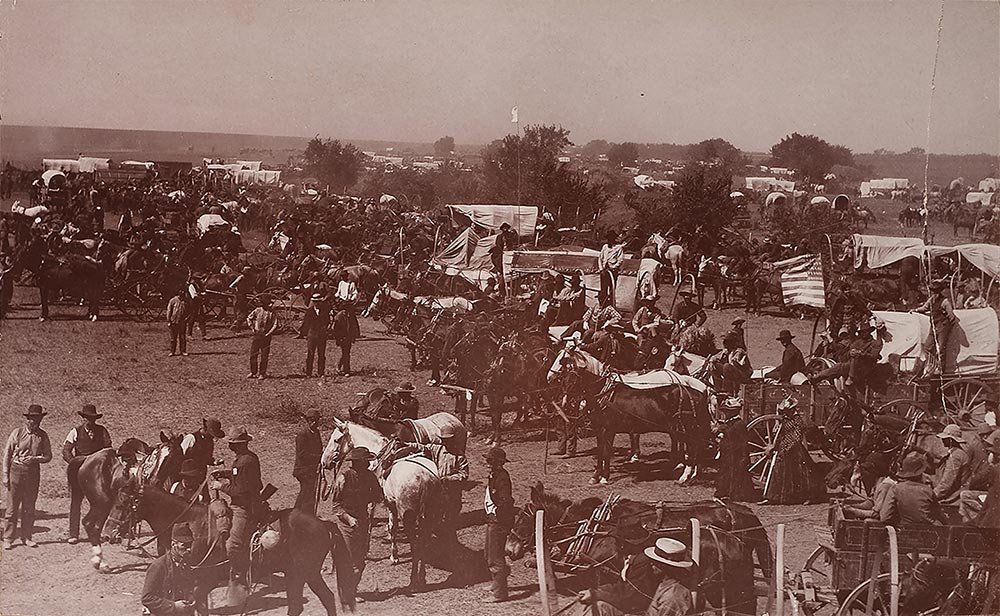
Thousands of prospective settlers, known as “Boomers,” had been congregating along the borders of the territory for weeks. They camped in makeshift tent cities under the watchful eyes of the United States Army, waiting for the signal—a gunshot or a bugle blast—that would allow them to rush into the promised land. The tension was palpable; men sat on horses, wagons were packed to capacity, and the dusty plains hummed with a nervous, competitive electricity.
The Race for Stakes: A Day of Chaos and Opportunity
When the sun reached its zenith at noon on April 22, the frantic race began. By some estimates, over 50,000 individuals surged across the boundary lines simultaneously. This was not a civilized claim process; it was an unbridled sprint of humanity.
The Strategy of the Sooner
While the rules of the Land Run were strict—stipulating that no one could cross the line before the appointed hour—the reality was far messier. The term “Sooner” originated during this period to describe those who had slipped across the borders early, hiding in the brush or tall grass to stake their claims before the official start. This act of “jumping the gun” created significant legal and social friction, as legitimate participants found the best plots of land already occupied by those who had cheated the system.
Defining the Landscape
The rush was not just for agricultural potential; it was a race to found cities. Oklahoma City and Guthrie are perhaps the most famous examples of “instant cities.” Within a single afternoon, thousands of people had arrived, pitched tents, and begun the process of transforming a pristine prairie into a burgeoning urban center. The speed at which these settlements materialized remains a marvel of human settlement patterns, demonstrating the sheer desperation and hunger for land that defined the era.
The Legacy of the Oklahoma Land Run
The Land Run of 1889 was not an isolated incident. It was the first of several such openings in the territory, but it remains the most iconic. The event fundamentally reshaped the Indian Territory, accelerating the push toward statehood and fundamentally displacing the Native American populations whose ancestral lands were being partitioned.
Cultural and Historical Significance
Today, the legacy of the Land Run is preserved through various landmarks and museums that invite travelers to explore this intense period of expansion. The National Cowboy and Western Heritage Museum provides deep insights into the artifacts and personal stories left behind by those who participated in the rush. Walking through the quiet, developed streets of modern-day Oklahoma, it is difficult to visualize the dusty, chaotic frenzy that occurred on that spring day in 1889, yet the foundations of these communities were built directly upon the stakes driven into the ground during that historic afternoon.
Reflecting on the Frontier Experience
The event serves as a reminder of the relentless drive of the frontier spirit. It was a time when the geography of the nation was being redrawn in real-time, influenced by policy, ambition, and the sheer audacity of thousands of people seeking a new start. The Land Run was more than just a real estate scramble; it was a foundational myth of the Great Plains that continues to define the identity of the region.
Visiting the Sites of History
For those traveling through the region today, the history of the Land Run is accessible in several key locations. Whether you are interested in the architectural transition from sod houses to brick storefronts or the broader context of Manifest Destiny, the state offers a wealth of opportunities for historical tourism.
- Guthrie Historic District: As the former territorial capital, Guthrie offers some of the best-preserved Victorian architecture in the region, reflecting the rapid development that followed the 1889 rush.
- Oklahoma City National Memorial: While focused on more recent history, the city itself stands as a testament to the speed of development that began with the Land Run.
- Land Run Monument: Located in the Bricktown district, this massive bronze sculpture captures the dynamic, frantic energy of the settlers on horseback, providing a powerful visual representation of the event for modern visitors.
Understanding the timing of the Oklahoma Land Run—April 22, 1889—is essential for any student of American history or any traveler looking to understand the unique cultural fabric of the Midwest. It was a moment when the map was being written as quickly as the pioneers could ride, a defining spectacle of the Frontier that turned a wilderness into a state in the blink of an eye. By tracing the paths of these original settlers, one gains a deeper appreciation for the profound speed and scale at which the American landscape was permanently altered.
LifeOutOfTheBox is a participant in the Amazon Services LLC Associates Program, an affiliate advertising program designed to provide a means for sites to earn advertising fees by advertising and linking to Amazon.com. Amazon, the Amazon logo, AmazonSupply, and the AmazonSupply logo are trademarks of Amazon.com, Inc. or its affiliates. As an Amazon Associate we earn affiliate commissions from qualifying purchases.