
The University of Florida stands today as a preeminent public research institution and a significant landmark in the state of Florida. Its sprawling campus in Gainesville, characterized by distinctive architecture and verdant landscapes, embodies a rich history rooted in the early 20th century. Understanding its establishment is to delve into a pivotal moment in Florida’s educational history, marking the consolidation of several disparate institutions into a singular, comprehensive university that would go on to shape generations and contribute profoundly to science, culture, and society.
The Genesis of a Gator Nation: Consolidating Educational Aspirations
The formal establishment of the University of Florida as we know it today dates back to 1905. This specific year is not merely a date but the culmination of legislative efforts to create a unified and robust state university system. Before this landmark act, Florida possessed several smaller colleges and seminaries, each with its own focus and regional influence. The desire for a more efficient and academically ambitious structure led to significant legislative action.

Early Legislative Acts and Predecessors
The path to the University of Florida began with a fragmented educational landscape. Prior to 1905, the state’s public higher education system consisted of a series of institutions established primarily during the post-Civil War era. Among these were the Florida Agricultural College in Lake City, the East Florida Seminary in Gainesville, the South Florida Military College in Bartow, the St. Petersburg Normal and Industrial School for African Americans, and the Florida Institute for the Blind, Deaf and Dumb in St. Augustine. These institutions, while serving their communities, often operated with limited resources and lacked the comprehensive scope of a modern university.
The Morrill Act of 1862 had provided federal land grants to states for the establishment of agricultural and mechanical colleges. In Florida, this led to the creation of the Florida Agricultural College, which technically held the designation as the state’s first land-grant institution. However, its curriculum was primarily focused on agricultural and engineering fields, and it was not envisioned as a broad liberal arts university. The East Florida Seminary, founded in 1853, offered a classical curriculum, laying some foundational groundwork for higher education in Gainesville. The existence of these separate entities highlighted the need for centralization to maximize resources and enhance educational quality.
The Consolidation and Formation of the University of Florida
The turning point came with the passage of the Buckman Act of 1905, spearheaded by State Senator William H. Milton Buckman. This landmark legislation abolished the state’s existing public colleges and consolidated them into two segregated institutions: the University of the State of Florida (for white men) and the Florida Female College (now Florida State University, for white women). A separate institution was established for African Americans, which would eventually become Florida Agricultural and Mechanical University.
Following the Buckman Act, a special committee was tasked with selecting the permanent location for the new University of the State of Florida. After much debate and competition among several cities, Gainesville was chosen in July 1905, largely due to its central location, existing facilities from the East Florida Seminary, and a strong local campaign that pledged financial and land contributions. The first academic year officially began in September 1906, with Dr. Albert Murphree as its first president. The initial enrollment comprised 102 students and 17 faculty members. The institution was renamed the University of Florida in 1909, solidifying its identity.
Architectural Splendor and Enduring Legacy
The physical manifestation of the newly established university quickly took shape in Gainesville, evolving into an architectural landmark that defines its character. The initial buildings set a precedent for a distinctive style that would be maintained and expanded upon for decades, creating a cohesive and impressive campus environment.
Collegiate Gothic: A Defining Style
From its earliest days, the University of Florida adopted the Collegiate Gothic architectural style, a popular choice for American universities at the turn of the 20th century. This style, characterized by its use of red brick, limestone accents, steeply pitched roofs, battlements, and arched windows, evokes a sense of tradition, scholarly gravitas, and timeless grandeur. It intentionally harkened back to the great European universities, bestowing an immediate sense of academic pedigree and permanence on the nascent institution.
Early campus architects, most notably William Augustus Edwards, were instrumental in implementing this vision. Edwards’ designs for the first permanent buildings established the foundational aesthetic. This commitment to a unified architectural language has ensured that despite expansions and modern additions, the core of the campus maintains a distinct, historically rich appearance, making it one of the most aesthetically pleasing and recognizable university campuses in the nation. The consistent application of the Collegiate Gothic style across its oldest structures provides a physical timeline of its growth and a harmonious visual identity that contributes significantly to its status as a landmark.
Iconic Structures and Campus Planning
The first buildings constructed on the Gainesville campus stand today as iconic landmarks, testaments to the university’s early ambitions. Buckman Hall, completed in 1906, was one of the very first dormitories and an integral part of the initial campus layout. Thomas Hall and Murphree Hall, named after William Reuben Thomas and the first president, Albert Murphree, respectively, followed shortly after, along with the original University Auditorium. These early structures, arranged around the historic central plaza known as the Plaza of the Americas, formed the nucleus of the campus.
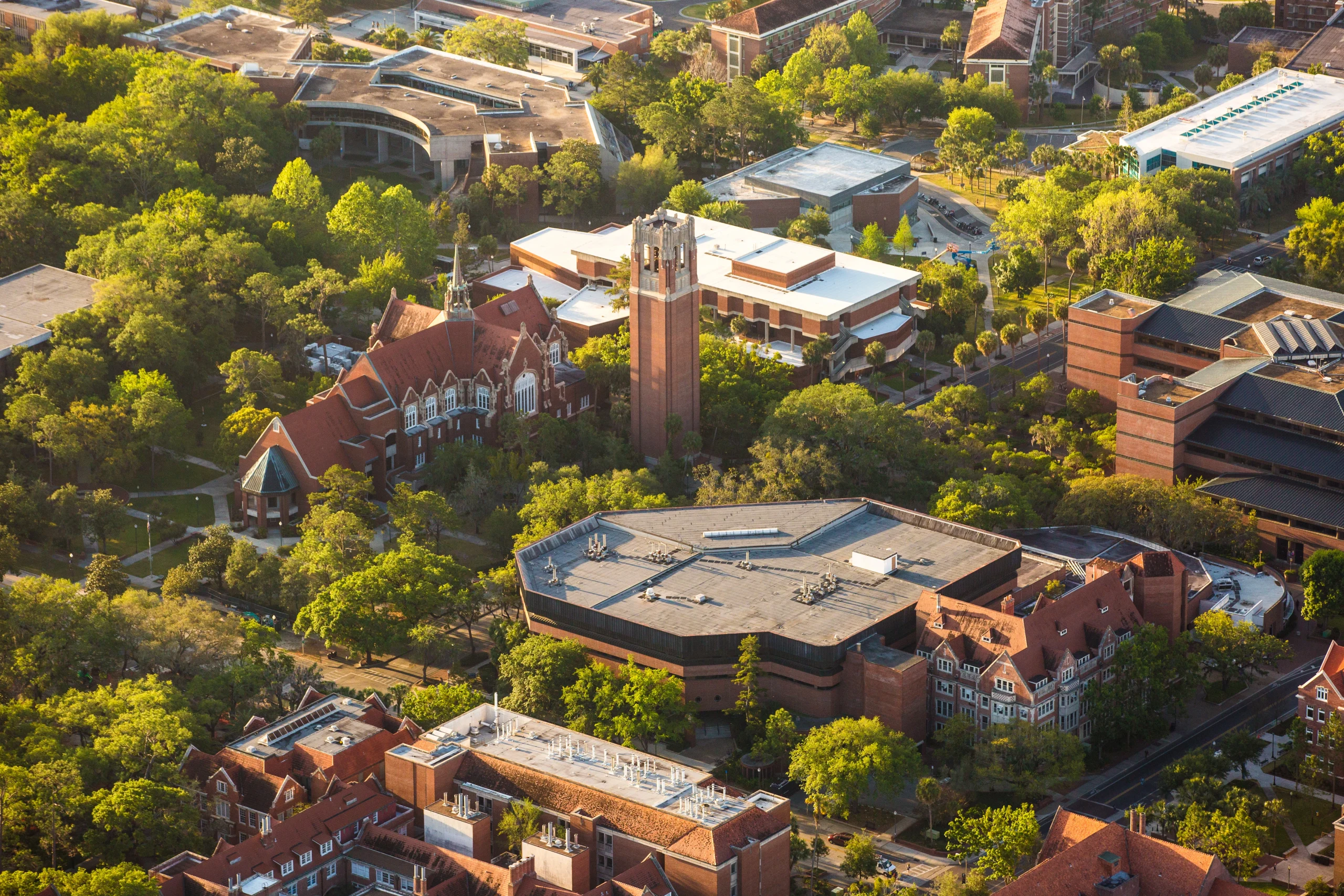
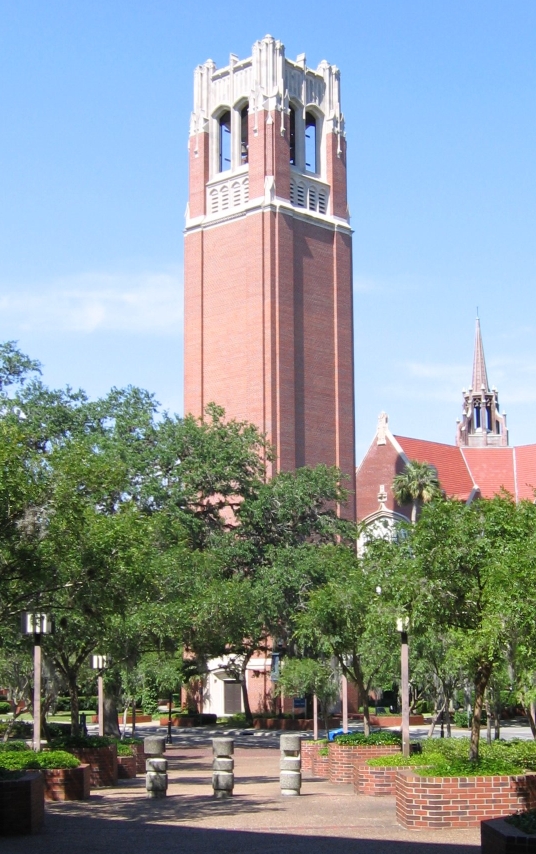
The careful planning of the campus, even in its early stages, emphasized open spaces, shaded walkways, and a harmonious relationship between buildings and nature. This foresight has allowed the campus to grow organically while retaining its historic core and its appeal as a landscaped landmark. The Century Tower, though built later in the 1950s to commemorate the university’s half-century mark, has become another defining vertical landmark, its carillon bells echoing across the campus and symbolizing the university’s enduring presence and commitment to tradition. These structures are not merely buildings; they are repositories of history, sites of countless memories, and enduring symbols of the institution.
A Landmark of Education and Innovation
Beyond its physical architecture, the University of Florida is a landmark of intellectual achievement and societal progress. Its establishment paved the way for a century of growth, transforming a regional college into a global research powerhouse.
Growth and Expansion Through the Decades
From its modest beginnings in 1906, the University of Florida experienced continuous expansion. The student body grew rapidly, necessitating the construction of more academic buildings, dormitories, and research facilities. Key milestones include the establishment of the College of Law in 1909, the College of Engineering in 1910, and the College of Agriculture becoming increasingly prominent. The admission of women in 1947, following World War II and the influx of veterans, significantly diversified the student population and broadened the university’s scope.
Each new college, department, and research center added another layer to the university’s physical and intellectual landscape, creating a dynamic environment that reflected the evolving needs of the state and nation. The expansion included iconic facilities like the Marston Science Library, the J. Wayne Reitz Union, and numerous cutting-edge research laboratories, each contributing to the university’s reputation as a hub of innovation. The university’s strategic master plans consistently aimed to balance modernization with the preservation of its historical and architectural integrity, ensuring that new constructions complement the existing Collegiate Gothic aesthetic.
Preserving History While Forging the Future
As a landmark, the University of Florida balances the preservation of its historical roots with a forward-looking vision. Many of its original buildings have been meticulously restored and adapted for modern use, ensuring their longevity and continued relevance. The careful maintenance of its tree-lined avenues, courtyards, and iconic structures underlines a deep respect for its heritage.
The university’s historical archives, housed in the Smathers Libraries, serve as a vital repository of Florida’s past, documenting not only the university’s evolution but also significant regional and state history. The ongoing commitment to preserving these physical and intellectual assets ensures that future generations can appreciate the journey from its 1905 establishment to its current status as a leading educational and research institution. This commitment to both history and progress is what truly solidifies its role as a living, evolving landmark.
The University of Florida’s Place Among Florida’s Landmarks
The University of Florida is more than just a place of learning; it is a cultural and historical touchstone for the state. Its establishment marked a new era for higher education in Florida, creating a beacon that continues to draw attention and admiration.
Cultural and Historical Significance
The establishment of the University of Florida represents a monumental effort to centralize and elevate public higher education in Florida. It quickly became a symbol of state pride and intellectual aspiration. The legacy of its founding, rooted in the Buckman Act of 1905, speaks to the vision of early state leaders who understood the importance of a strong, unified academic institution. Its campus, with its enduring Collegiate Gothic architecture and meticulously planned green spaces, tells a story of ambition, growth, and resilience.
Beyond its academic contributions, the university has fostered a unique cultural identity, especially through its athletic programs and vibrant student life, which contribute to its recognition as a dynamic landmark. The presence of significant cultural institutions on campus, such as the Harn Museum of Art and the Florida Museum of Natural History, further cements its role as a major cultural landmark accessible to the public, extending its influence far beyond the student body. These institutions enrich the experience of the university grounds, making it a destination for those seeking knowledge and artistic appreciation.
A Destination for History Enthusiasts and Architectural Admirers
For those interested in history, architecture, or the development of American educational institutions, the University of Florida offers a compelling exploration. Its meticulously preserved early buildings, the Plaza of the Americas, and the overall campus layout provide a tangible link to the past. Walking through the campus is akin to strolling through an open-air museum, where each building, from Buckman Hall to the newer research facilities, tells a part of its century-long narrative.
The historical markers dotted across the campus offer insights into significant events and figures, allowing visitors to connect with the pioneering spirit that defined its establishment. The university’s commitment to maintaining its original architectural integrity, while also embracing modern functionality, makes it a prime example of historical preservation in an active, evolving environment. Thus, the question of when the University of Florida was established leads to a profound understanding of not just a date, but a landmark institution that has profoundly shaped Florida’s landscape, intellect, and identity since its formal founding in 1905.
LifeOutOfTheBox is a participant in the Amazon Services LLC Associates Program, an affiliate advertising program designed to provide a means for sites to earn advertising fees by advertising and linking to Amazon.com. Amazon, the Amazon logo, AmazonSupply, and the AmazonSupply logo are trademarks of Amazon.com, Inc. or its affiliates. As an Amazon Associate we earn affiliate commissions from qualifying purchases.