
The promise of high-speed rail transforming travel across the Golden State has captivated imaginations for decades. Envision a future where the bustling metropolises of Los Angeles and San Francisco are connected by a sleek, electric train, whisking passengers between them in under three hours. This isn’t merely a dream; it’s the ambitious goal of the California High-Speed Rail project. However, the journey to completion has been as winding and complex as the mountainous terrain the railway aims to traverse. For travelers, hoteliers, and tourism professionals, understanding the project’s timeline and its eventual impact is crucial for planning and adapting to a new era of California exploration.
A Grand Vision for Golden State Travel
The concept of high-speed rail in California was born out of a desire to create a sustainable, efficient, and modern transportation backbone for one of the world’s largest economies. As road congestion worsened and air travel became increasingly cumbersome, the need for an alternative became clear. The idea was to mimic the successful systems seen in Japan with its Shinkansen or Europe with the TGV in France and AVE in Spain, offering a seamless travel experience that could redefine how people interact with the state’s diverse regions.
The Genesis of a Mega-Project
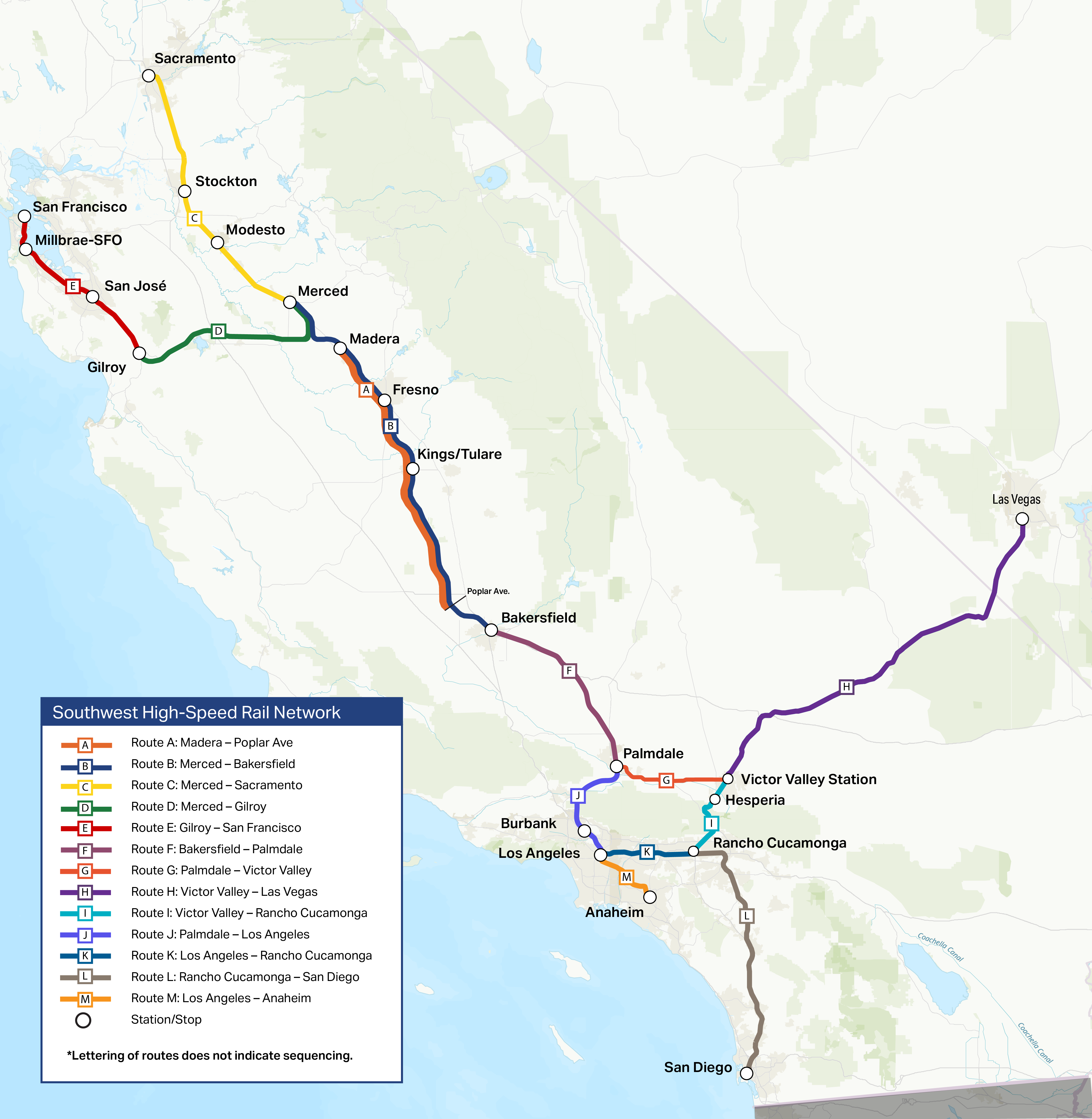
The official genesis of the California High-Speed Rail project dates back to 2008 when California voters approved Proposition 1A, a bond measure providing initial funding for the extensive system. The vision outlined a massive 800-mile network connecting the state’s major population centers: Sacramento in the north, stretching through the Central Valley to Los Angeles and San Diego in the south, with trains capable of speeds exceeding 200 miles per hour. This ambitious plan aimed not only to reduce travel times but also to lessen dependence on fossil fuels, decrease air pollution, and alleviate congestion on highways and at airports. For a state focused on innovation and environmental stewardship, high-speed rail seemed like a natural, forward-thinking solution.
Why High-Speed Rail Matters for California
The significance of the California High-Speed Rail extends far beyond mere transportation efficiency. For the travel industry, it promises a revolution. Imagine being able to enjoy the cultural attractions of San Francisco, then, a few hours later, immerse yourself in the vibrant arts scene of Los Angeles, all without the hassle of airport security or traffic jams. This connectivity opens up new possibilities for tourism, encouraging visitors to explore regions like the often-overlooked Central Valley with its rich agricultural heritage and burgeoning food scene.
Hoteliers and accommodation providers foresee increased demand as travel becomes more fluid. A business traveler could easily commute for meetings, choosing to stay in less expensive areas and commuting swiftly, or a family could plan multi-city vacations with unprecedented ease. This shifts the lifestyle paradigm for both residents and visitors, making multi-destination trips within the state not just feasible, but genuinely enjoyable. It underscores a commitment to sustainable travel, offering an eco-friendlier alternative to short-haul flights and long car journeys, aligning with modern consumer preferences for responsible tourism.
Navigating the Complexities: Challenges and Delays
Despite the compelling vision, the path to bringing high-speed rail to fruition in California has been fraught with challenges. Mega-projects of this scale inherently encounter hurdles, but the California High-Speed Rail has faced a particularly intense gauntlet of political, financial, and logistical obstacles that have significantly impacted its original timeline and budget.
Funding Hurdles and Political Landscape
From the outset, funding has been a persistent issue. The initial bond measure provided a crucial start, but subsequent federal and state appropriations have been inconsistent and often subject to political wrangling. The sheer cost of building such a vast and complex system, estimated to be in the tens of billions of dollars, requires sustained political will and diverse funding streams. Changes in gubernatorial administrations and shifts in federal policy have periodically threatened to derail the project or alter its scope. Debates over the allocation of funds, the prioritization of certain segments, and the overall cost-benefit analysis have led to slowdowns, re-evaluations, and a constantly evolving financial plan. This intricate dance between financial viability and political commitment remains one of the project’s most significant challenges, making it difficult to project a fixed completion date.
Engineering Marvels and Environmental Concerns
Beyond finances and politics, the engineering demands of the California High-Speed Rail are immense. Traversing California’s diverse topography requires building bridges over vast rivers, boring tunnels through mountain ranges like the Pacheco Pass and the Tehachapi Mountains, and navigating earthquake-prone areas. Each segment presents unique geotechnical and design challenges, often leading to unforeseen complications and schedule adjustments. Moreover, the project must adhere to rigorous environmental regulations, undergoing extensive impact assessments and mitigation efforts. Land acquisition, particularly in agricultural areas and densely populated urban corridors, has also proven to be a lengthy and contentious process. These factors, while necessary for responsible development, contribute to the project’s extended timeline and increased costs.
Current Status and Key Progress
Despite the myriad challenges, the California High-Speed Rail Authority has made tangible progress, particularly in the Central Valley. While the full vision remains distant, significant construction is underway, laying the groundwork for what will eventually become the fastest train system in the United States.
Construction Milestones in the Central Valley
The core of current construction efforts is concentrated in the Central Valley, a stretch considered the backbone of the initial operating segment. Over 119 miles of guideway are under active construction across multiple work packages between Merced, Fresno, and Bakersfield. This includes numerous structures like viaducts, bridges, and underpasses, transforming the landscape. The Central Valley South segment, in particular, is witnessing substantial activity, with thousands of workers employed and billions of dollars invested. The goal is to complete an initial operating segment in this region, proving the technology and capacity before expanding to the more complex mountain and urban sections. This pragmatic approach aims to deliver a functioning high-speed line as early as possible, even if it’s not the complete system. While initial estimates had this segment opening in the mid-2020s, current projections suggest this could be pushed further into the late 2020s or early 2030s, depending on funding availability and ongoing construction challenges.
Future Phases: Connecting the Major Metropolises
The ultimate objective remains to connect San Francisco to Los Angeles, with extensions north to Sacramento and south to San Diego. Following the Central Valley segment, the next critical phases involve bridging the gap over the Diablo Range to the Bay Area and over the Tehachapi Mountains and Grapevine to Southern California. These sections involve significant tunneling and more complex engineering solutions, often through environmentally sensitive areas. Planned stations in key hubs like San Jose, Palmdale, and Burbank will serve as crucial nodes, integrating the high-speed line with existing transit networks. The timeline for these subsequent phases is highly dependent on securing future funding and successfully navigating the environmental review and construction processes. Each segment represents a significant undertaking, and their sequential nature means the full operational system is still many years, if not decades, away.
The Impact on California’s Tourism and Lifestyle
When fully realized, the California High-Speed Rail will have a transformative impact on travel, tourism, and lifestyle across the state. It’s not just about speed; it’s about accessibility, convenience, and fostering new ways to experience California’s rich tapestry of attractions.
Reshaping Travel Experiences
For travelers, the high-speed rail will offer a paradigm shift. Imagine waking up in a hotel in San Francisco, enjoying a leisurely breakfast, and then seamlessly boarding a train to explore the museums and vibrant culture of Los Angeles in the afternoon, all without the stress of airport transfers or traffic. This connectivity will unlock new possibilities for multi-destination trips, allowing visitors to combine diverse experiences – from the tech innovation of Silicon Valley to the agricultural heartland of the Central Valley and the sun-drenched beaches of Southern California – within a single itinerary. It will make day trips between major cities not just plausible but highly attractive, fostering spontaneous adventures and enriching travel guides.
Economic Boost for Destinations
The economic benefits will ripple through various sectors. Remote towns and regions along the route, particularly in the Central Valley, could see a significant boost in tourism and local business. New hotels, restaurants, and attractions are likely to emerge around the high-speed rail stations, creating jobs and injecting vitality into local economies. Boutique hotels, luxury resorts, and even budget accommodations will all find new markets as access improves. Events and conferences could become more attractive across different cities, as business travelers can move between urban centers with greater ease. This decentralization of tourist traffic could alleviate pressure on traditionally overcrowded destinations while elevating the profile of emerging ones, encouraging local culture and unique experiences to flourish.
Sustainable Travel and the Future
In an era increasingly focused on environmental responsibility, the California High-Speed Rail represents a significant stride towards sustainable travel. Electrically powered trains offer a considerably lower carbon footprint compared to air or car travel, aligning with California’s ambitious climate goals and the growing demand for eco-conscious tourism. This shift towards greener transportation embodies a modern lifestyle choice, allowing travelers to minimize their environmental impact without sacrificing convenience or speed. The project’s long-term vision is not just about moving people faster but about moving them smarter, contributing to a more sustainable future for California and inspiring similar infrastructure developments elsewhere.
Project Completion: An Evolving Timeline
The persistent question, “When will the California High-Speed Rail be completed?” remains fluid. The journey has been marked by shifting timelines, revised budgets, and political ebb and flow. While the ultimate dream of a fully connected California by high-speed rail is still a long-term goal, the incremental progress, particularly in the Central Valley, signals a determined effort to bring this vision to life.
What to Expect Next
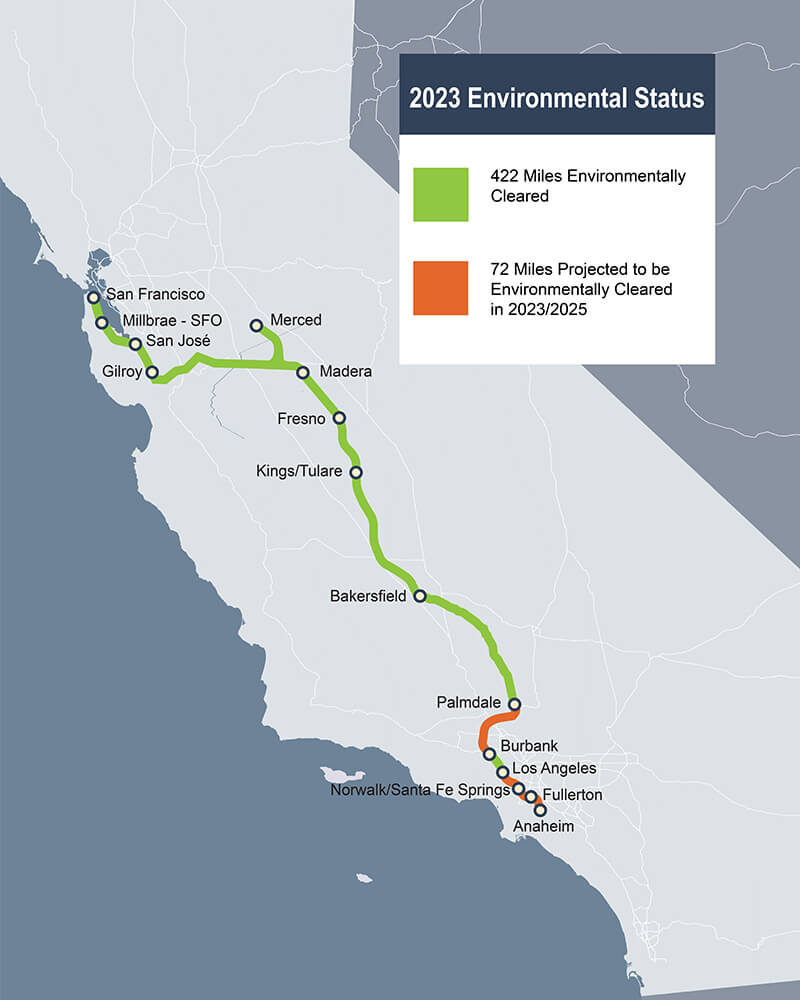
The immediate focus for the California High-Speed Rail Authority is to complete and operationalize the initial 119-mile segment in the Central Valley. This segment, connecting cities like Merced, Fresno, and Bakersfield, is currently projected to open for passenger service sometime between the late 2020s and early 2030s. This initial operating section will be crucial for demonstrating the system’s capabilities, generating revenue, and building public confidence. Concurrently, efforts will continue on environmental clearances and design work for the more challenging mountain and urban extensions towards San Francisco and Los Angeles. Securing additional state and federal funding will be paramount to accelerate these future phases.

The Ultimate Promise
While the complete 800-mile network linking San Francisco to Los Angeles and beyond is unlikely to be fully operational before the mid-2040s, or even later, the strategic importance of the project endures. It represents California’s commitment to modern infrastructure, sustainable growth, and a future where travel is faster, greener, and more accessible. For those planning future adventures or considering long-term accommodation investments in the Golden State, the California High-Speed Rail is a development worth watching closely. It promises not just a new way to travel but a reimagined landscape of tourism, lifestyle, and connectivity that will define California for generations to come. The question isn’t if it will be completed, but rather, when its full transformative power will be unleashed across the state.
LifeOutOfTheBox is a participant in the Amazon Services LLC Associates Program, an affiliate advertising program designed to provide a means for sites to earn advertising fees by advertising and linking to Amazon.com. Amazon, the Amazon logo, AmazonSupply, and the AmazonSupply logo are trademarks of Amazon.com, Inc. or its affiliates. As an Amazon Associate we earn affiliate commissions from qualifying purchases.