
Choosing the optimal time to visit Alaska, the United States’ largest and most geographically diverse state, is paramount to crafting an unforgettable travel experience. Unlike many destinations where seasonality might only slightly alter the ambiance, Alaska’s dramatic climate shifts dictate everything from available activities and wildlife sightings to daylight hours and accessibility. Understanding these seasonal nuances is key to aligning your trip with your unique interests, whether you seek endless daylight, a chance to witness the Northern Lights, or the thrill of winter sports.
Understanding Alaska’s Seasons
Alaska’s year can broadly be divided into peak Summer, two distinct Shoulder Seasons (Spring and Fall), and a lengthy Winter, each offering vastly different perspectives of the Last Frontier.
Summer: The Peak Season (June-August)
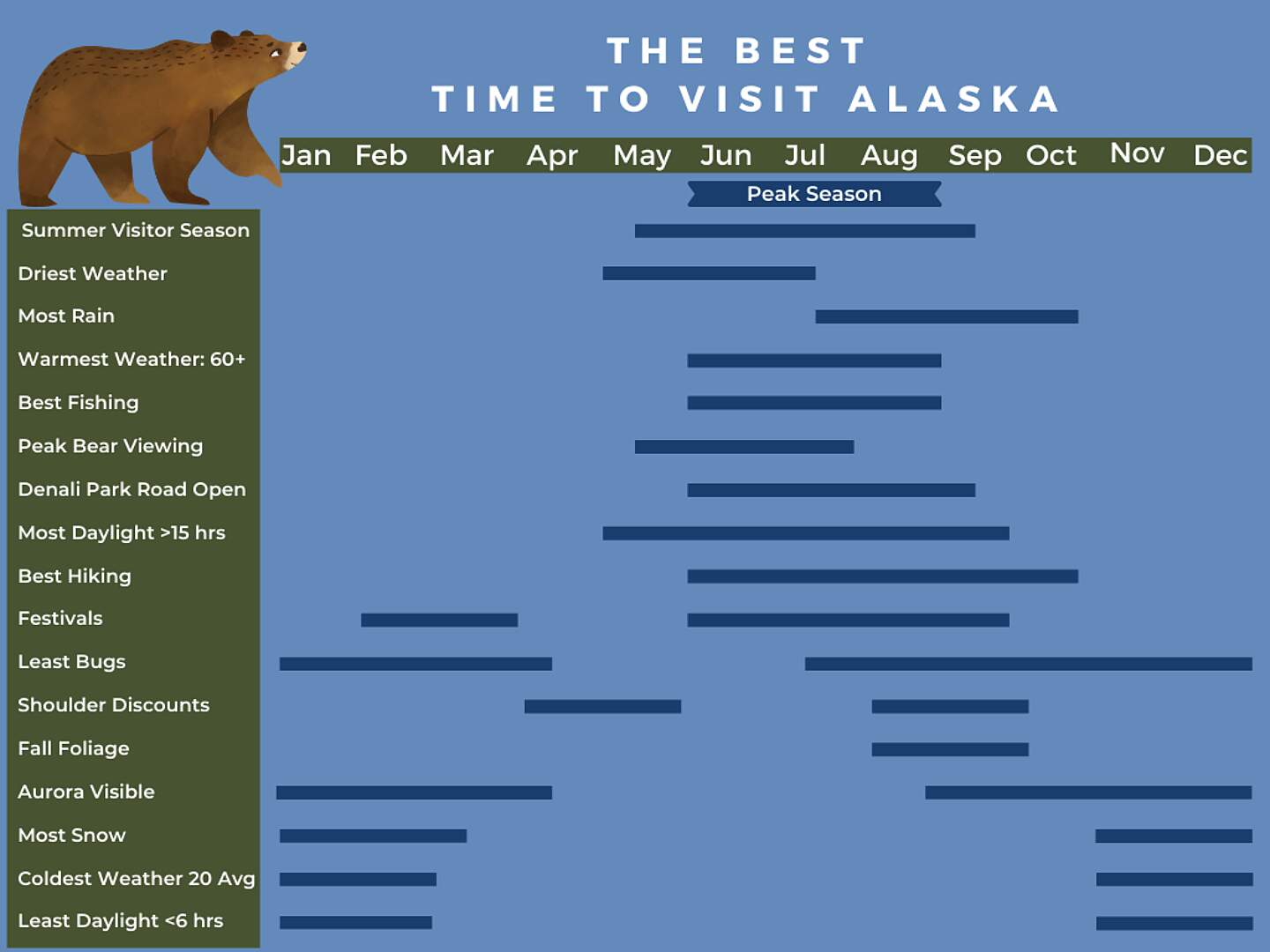
Summer is undeniably the most popular time to visit Alaska, drawing the largest crowds and offering the widest array of activities. From early June through late August, the state basks in extended daylight hours, often experiencing 18-24 hours of light in the northern regions. This period is synonymous with mild temperatures, typically ranging from the 50s to 70s Fahrenheit (10-25°C), though coastal areas like the Inside Passage can be cooler and rainier, while inland areas like Fairbanks or Anchorage can experience warmer days.
The advantages of a Summer trip are numerous. All major attractions and services are fully operational. Denali National Park bus tours run frequently, offering prime opportunities to spot moose, caribou, grizzly bears, and even wolves. Cruises along the Inside Passage or the Gulf of Alaska provide unparalleled glacier viewing opportunities and chances to see whales, porpoises, and sea lions. Fishing for salmon and halibut is at its peak, particularly in the Kenai Peninsula and around Kodiak Island. Hiking trails are clear, and kayaking or rafting adventures are in full swing. The long daylight hours also mean more time for exploration and less pressure to rush. However, this popularity comes with higher prices for flights, accommodation, and tours, along with more crowded conditions at popular sites and in cities like Juneau and Seward.
Shoulder Seasons: Spring (May) and Fall (September)
The shoulder seasons offer a compelling alternative for travelers seeking a balance between good weather, fewer crowds, and more favorable pricing.
Spring (May): May in Alaska is a time of awakening. Snow begins to melt, rivers swell, and migratory birds return. Daytime temperatures are cooler than Summer, typically in the 40s and 50s Fahrenheit (4-15°C), but with increasing daylight. While some higher-elevation trails in Denali National Park might still be closed due to snow, the park road usually opens progressively through May, offering early access for those eager to experience the wilderness without the peak-season rush. Wildlife, especially bears emerging from hibernation, can be particularly active. Major cruise lines and tour operators begin their seasons, meaning you can often find good deals on early-season voyages. Services are starting to ramp up, but not everything might be fully operational, requiring a bit more planning.
Fall (September): September is a photographer’s dream, as the state transforms into a palette of fiery reds, brilliant golds, and deep oranges. The vibrant fall foliage, especially in the interior, is breathtaking. Temperatures begin to drop, averaging in the 40s and 50s Fahrenheit (4-15°C), and daylight hours noticeably shorten, but this also brings a greater chance of witnessing the Northern Lights as the nights grow longer. Wildlife viewing remains excellent, particularly for bears feeding before winter hibernation. Fishing continues strong into early Fall for silver salmon. Cruise ships and tour operators start winding down their operations towards the end of the month, resulting in fewer crowds and often significant discounts on cruises and accommodations. Some remote lodges or attractions might close by mid-September, so check specific operating hours.
Winter: A Niche Experience (October-April)
Winter in Alaska is a magical, albeit challenging, time for travel. While much of the state is blanketed in snow and ice, and temperatures can plummet well below freezing, it offers unique experiences not available at any other time. Winter is the prime season for viewing the Northern Lights, especially in interior Alaska around Fairbanks, where dark, clear nights are frequent.
Activities include dog sledding, cross-country skiing, snowmobiling, ice fishing, and even participating in or spectating at events like the Iditarod Trail Sled Dog Race in March. Cities like Anchorage and Fairbanks remain active, offering museums, cultural centers, and local dining. Prices for flights and accommodations are generally lower, and crowds are virtually non-existent outside of specific winter festivals. However, daylight hours are extremely limited, roads can be challenging, and many remote areas and tourist services are closed. This season is best suited for resilient travelers prepared for extreme cold and who embrace winter activities.
Tailoring Your Trip to Your Interests
Your ideal travel time to Alaska hinges entirely on what you wish to experience.
Wildlife Viewing & Nature Photography
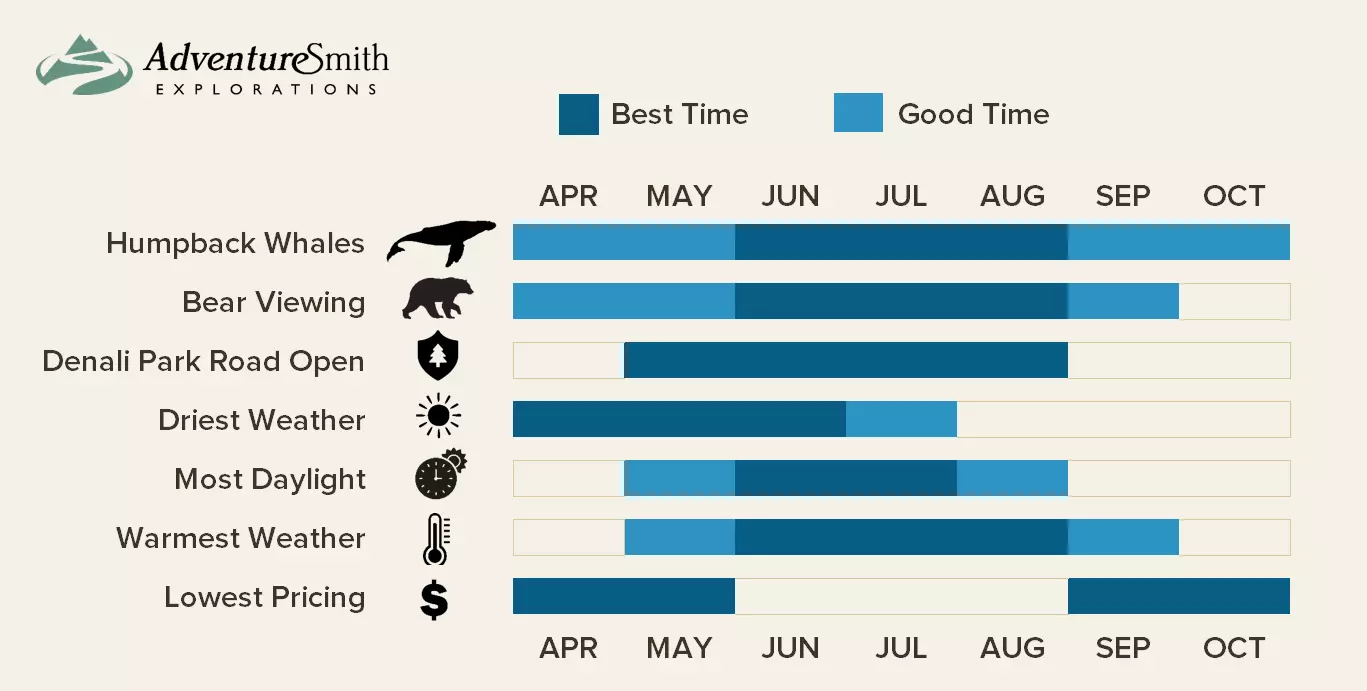
For the broadest range of wildlife sightings, including grizzly bears, moose, caribou, and marine mammals, Summer (June-August) is unparalleled. Early Summer (June-July) sees young animals, while late Summer (August) is prime for bears fattening up on salmon. Katmai National Park‘s famous Brooks Falls for bear viewing is best from late June through September. Birdwatchers will find Spring (May) and early Summer (June) best for migratory species. Fall (September) offers stunning foliage coupled with active wildlife, especially caribou migrations and moose rutting season, making it excellent for photography.
Cruising the Inside Passage
The vast majority of Alaska cruises operate from May through September. The peak of Summer (July-August) offers the warmest weather and calmest seas, ideal for enjoying deck activities and shore excursions to places like Juneau and Mendenhall Glacier. However, the shoulder seasons (May and September) often provide better value, fewer crowds in port towns, and still excellent opportunities for glacier viewing and whale watching. Early May cruises might encounter more unpredictable weather but offer a pristine, uncrowded experience. September cruises boast dazzling fall colors, especially as you travel inland on pre- or post-cruise land tours.
Northern Lights & Winter Sports
To witness the celestial dance of the Northern Lights, your best bet is during the dark months from mid-September through April. Fairbanks, situated beneath the aurora oval, is often considered the best place on Earth to view them. For winter sports like dog sledding, snowmobiling, ice skating, and cross-country skiing, December through March provides reliable snow cover and colder temperatures. Adventurous travelers might consider a trip to Talkeetna to experience dog mushing or explore remote areas accessible by ski plane.
Fishing & Outdoor Adventures
Fishing enthusiasts typically target Summer (June-August) for salmon (King, Sockeye, Silver) and halibut, with various runs occurring throughout these months in rivers and coastal waters. The Kenai Peninsula is particularly renowned for its salmon fishing. Hiking, kayaking, rafting, and bear viewing tours are generally at their best during the long daylight hours and mild temperatures of Summer. Expeditions to remote areas like Gates of the Arctic National Park are almost exclusively undertaken during the short Summer window.
Key Considerations for Planning Your Alaskan Journey
Regardless of your chosen season, several practical aspects should influence your planning.
Weather Variability and Packing
Alaska’s weather is notoriously unpredictable, even in Summer. Be prepared for sudden changes, including rain, wind, and temperature drops, regardless of the forecast. Layered clothing is essential, featuring a waterproof and windproof outer shell. Even in Summer, you’ll want warm layers, hats, and gloves, especially for glacier tours or early morning excursions. In Winter, extreme cold weather gear is non-negotiable.
Cost and Crowds
Summer is the most expensive and crowded period. Booking flights, accommodations, and popular tours (like those for Denali National Park or the Alaska Railroad) well in advance, sometimes 6-12 months out, is crucial to secure your preferred options and potentially better rates. The shoulder seasons offer a sweet spot with reduced prices and fewer people, while Winter provides the lowest costs and the most solitude for those hardy enough to brave the cold.
Accessibility and Transportation
During Summer, most roads, ferries, and internal flights are fully operational, offering comprehensive access to various regions. The Alaska Marine Highway System is a popular way to explore coastal towns. In Winter, some roads close, and ferry schedules are reduced, impacting accessibility to remote areas. Rental cars are available year-round, but four-wheel drive and experience driving on ice and snow are advisable during the colder months.
Making the Most of Any Season
Ultimately, there isn’t a single “best” time to go to Alaska; rather, there’s a best time for you. If your dream involves endless daylight, abundant wildlife, and a wide array of accessible activities, Summer is your season. If vibrant fall colors, fewer crowds, and a chance to see the aurora appeal, consider Fall. For the intrepid adventurer seeking solitude, winter sports, and the ethereal glow of the Northern Lights, then Winter holds unique charm. Plan carefully, understand the seasonal trade-offs, and Alaska will reward you with an unforgettable journey, whenever you choose to visit.
LifeOutOfTheBox is a participant in the Amazon Services LLC Associates Program, an affiliate advertising program designed to provide a means for sites to earn advertising fees by advertising and linking to Amazon.com. Amazon, the Amazon logo, AmazonSupply, and the AmazonSupply logo are trademarks of Amazon.com, Inc. or its affiliates. As an Amazon Associate we earn affiliate commissions from qualifying purchases.