
The name California conjures images of sun-drenched beaches, towering redwoods, and a vibrant cultural landscape, but its origins are far more whimsical and ancient than many realize. Unlike many places named after explorers, geographical features, or indigenous tribes, California’s designation springs directly from the pages of a fantastical medieval romance novel, a tale of mythical islands and powerful warrior queens. This unique genesis imbues the very name of the state with a layer of historical intrigue, linking its modern identity to an epic narrative penned centuries before its shores were even charted by European navigators. Unraveling the story of California’s name is a journey through literature, exploration, and the enduring power of myth in shaping geographical understanding.
The Mythical Roots: Las Sergas de Esplandián
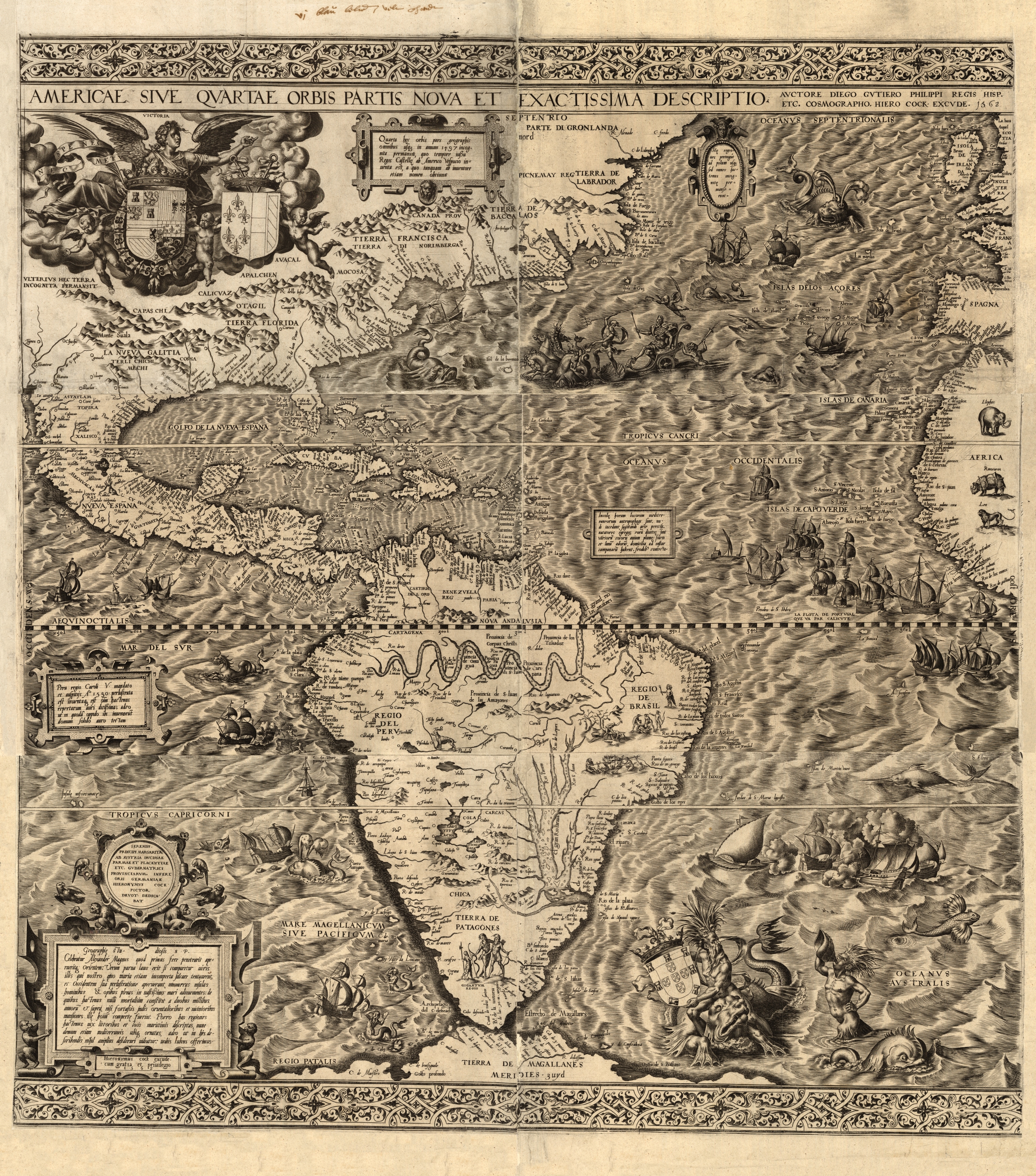
The most widely accepted theory for the origin of the name California traces back to a Spanish chivalric romance, Las Sergas de Esplandián (The Adventures of Esplandián), a sequel to the immensely popular Amadís de Gaula. Published in 1510 by Garci Rodríguez de Montalvo, this novel captivated European readers with its tales of knights, sorcery, and exotic lands. It was a cultural phenomenon of its time, shaping imaginations and providing a literary backdrop against which the Age of Discovery would unfold. The vivid descriptions within its pages, particularly of a rich and mysterious island, would inadvertently bestow a lasting legacy upon a land across the Atlantic.
Garci Rodríguez de Montalvo’s Vision
Montalvo, a Castilian author, penned Las Sergas de Esplandián as a continuation of the adventures of Amadís’s son, Esplandián. His work, like many romances of the era, blended elements of heroism, love, and the supernatural. Crucially for the future of a distant land, Montalvo conjured an island kingdom of immense wealth and power, strategically placing it in his narrative where it could contribute to Esplandián’s grand quests. This literary creation, far from being a mere backdrop, was described with such detail and allure that it seemingly leaped off the page and into the minds of explorers seeking new worlds.
Queen Calafia and Her Island Paradise
Central to the allure of this fictional island was its ruler, Queen Calafia. She was depicted as a magnificent and formidable Black Amazonian warrior, dwelling on an island named California, “very close to the Terrestrial Paradise.” This island was described as being “on the right hand of the Indies,” made entirely of gold, and inhabited solely by Black women who lived like Amazons, using golden weapons and riding griffins. Queen Calafia was a powerful and independent figure, leading her armies and resources to aid the Muslim forces against the Christians, ultimately journeying to Constantinople to fight. Her fierce independence and the island’s immense riches made California an emblem of exotic wealth and untamed beauty within the medieval imagination. The description was so vivid, so alluring, that it created an archetype for a mythical land brimming with possibility.
Gold, Amazons, and Beasts
The details of Montalvo’s fictional California resonated deeply with the era’s spirit of exploration. Spanish conquistadors, already accustomed to tales of El Dorado and other legendary cities of gold, were ripe for another such myth. The idea of an island paradise, rich in gold and inhabited by powerful, un-Christianized women, mirrored many of the hopes and fears that fueled the voyages across the Atlantic. The text stated: “Know, that on the right hand of the Indies there is an island called California, very close to the Terrestrial Paradise, which was peopled by black women, without a single man among them, and they lived in the manner of Amazons. They were of robust bodies, with strong and fiery hearts, and great strength. The island itself is one of the wildest in the world due to the ruggedness of its rocks, and it has an abundance of gold, as no other metal is found there.” This fantastical description, passed from reader to explorer, provided a ready-made name for the new, mysterious lands being discovered.
Early Explorations and the First Naming
The connection between Montalvo’s fictional island and the real-world landmass began to solidify during the Spanish exploration of the Americas. As conquistadors pushed westward from New Spain (modern-Mexico), their encounters with unknown territories often sparked comparisons to the popular narratives of their homeland. The belief in a fabled island of gold fueled many expeditions, and when a vast, arid peninsula was discovered, it seemed a fitting, if somewhat ironic, namesake.
The Cortés Expedition and Baja California
The first European to sight what is now known as the Baja California Peninsula was likely Hernán Cortés’s lieutenant, Fortún Ximénez, in 1533. However, it was Cortés himself who led an expedition to the area in 1535, landing in what is now La Paz. Believing he had discovered an island, and likely influenced by the widely read romance novel, he or his men are thought to have bestowed the name “California” upon this stark and forbidding land. The initial assumption that it was an island, geographically separate from the mainland, perfectly aligned with the literary description. This vast, unexplored territory, with its potential for riches and its isolation, became the geographical embodiment of Montalvo’s exotic creation.
Juan Rodríguez Cabrillo and Alta California
Years later, in 1542, the Portuguese explorer Juan Rodríguez Cabrillo, sailing under the Spanish flag, ventured further north along the Pacific coast. He became the first European to explore what is now known as Alta California, documenting its coastline and interacting with its indigenous inhabitants. His expedition explored as far north as the Russian River area, claiming the entire region for Spain. Although Cabrillo may not have explicitly used the name “California” in his personal logs, the Spanish cartographers and subsequent explorers continued to apply the name to this expanded territory, solidifying its reach from the tip of the peninsula northward. The idea of California as a singular, grand entity, albeit still often depicted as an island, was beginning to take shape.
Mapping the “Island”
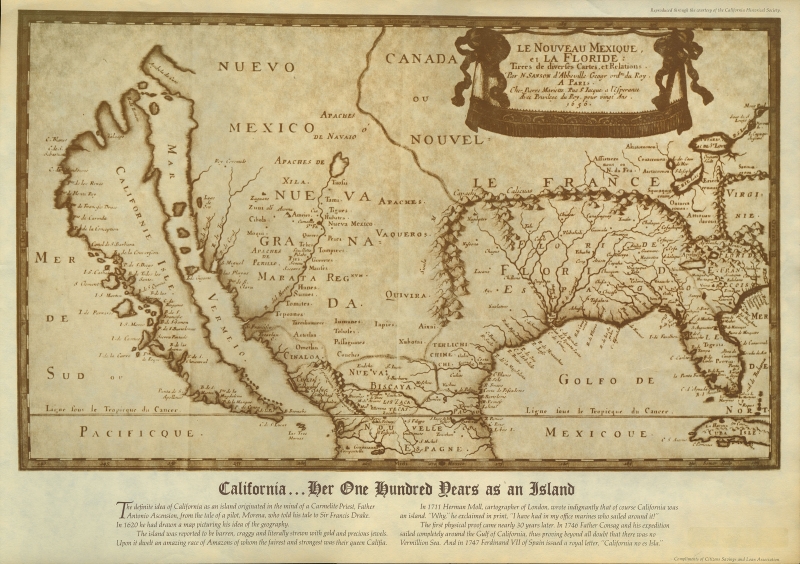
For nearly two centuries following Cortés’s initial landing, maps of the Americas frequently depicted California as a massive island, separated from the North American mainland by the mythical Strait of Anian or the Sea of Cortés. This cartographical error, perpetuated by various expeditions and mapmakers, reinforced the literary origin of the name. The persistent belief in “The Island of California” was a testament to the powerful influence of Las Sergas de Esplandián. The allure of the golden island with its fierce queen continued to shape not only the nomenclature but also the geographical understanding of the new world. It wasn’t until the early 18th century, with clearer explorations, that the peninsula’s true geographical nature was definitively established, finally connecting “The Island of California” to the continental landmass.
The Geographical Shift: From Island to Peninsula to State
The evolution of California’s geographical understanding from a mythical island to a known peninsula and eventually a prominent state is a fascinating chapter in world history. This transformation was driven by improved navigation, meticulous exploration, and the shifting geopolitical landscape of North America. The name, however, remained constant, a persistent echo of its literary birth.
Cartographic Evolution and the Myth’s Persistence
Despite early Spanish expeditions like that of Francisco de Ulloa in 1539, who circumnavigated the Baja California Peninsula and correctly identified it as such, the “Island of California” persisted on maps for over 150 years. European mapmakers often relied on earlier, less accurate accounts, or perhaps found the romantic notion of an island too compelling to discard. It wasn’t until the expeditions of Eusebio Kino, a Jesuit missionary and cartographer, in the late 17th and early 18th centuries, that the peninsular nature of Baja California was definitively proven. Kino’s extensive overland explorations from 1681 to 1705 established the land bridge between the mainland and the peninsula, finally correcting the long-standing cartographic error and connecting the mythical island to the North American continent.
The Spanish Missions and Settlement
Following Kino’s discoveries, Spain began to solidify its presence in the region. The establishment of missions throughout Alta California, starting with Mission San Diego de Alcalá in 1769 by Junípero Serra, marked the permanent European settlement of the area. These missions, along with presidios (military forts) and pueblos (civilian towns), formed the backbone of Spanish colonial efforts, extending the reach of ” California” far beyond its original peninsular designation. The name now encompassed a vast northern territory, a frontier of agricultural development and religious conversion, slowly transforming the wild, mythical land into a settled province of New Spain.
Mexican Independence and the American Conquest
After Mexico gained independence from Spain in 1821, Alta California became a Mexican territory. This period saw increased trade and immigration, including a growing number of American settlers. The stage was set for the next major transformation of California’s identity. The Mexican-American War (1846-1848) resulted in the cession of Alta California to the United States via the Treaty of Guadalupe Hidalgo. The discovery of gold in 1848, just as the territory was transitioning to American control, triggered the famous California Gold Rush, leading to a massive influx of people and rapid development. In 1850, California was admitted to the Union as the 31st state, forever cementing its name and identity in the national consciousness, still bearing the name born from a medieval fantasy.
Legacy and Cultural Impact
The unusual origin of California’s name is more than just a historical footnote; it has subtly shaped the state’s cultural narrative and its enduring appeal. The state’s association with wealth, opportunity, and a certain mythical allure can be seen as a direct inheritance from the imaginative descriptions of Montalvo’s romance.
How the Myth Resonates Today
The themes present in Las Sergas de Esplandián — a land of abundant gold, powerful women, and a pioneering spirit — bear a striking, almost prophetic, resemblance to aspects of modern California. The California Gold Rush fulfilled the prophecy of a land rich in precious metals, drawing fortune-seekers from around the globe. The state’s reputation for innovation, entrepreneurship, and a forward-thinking social ethos, particularly in areas like women’s rights and progressive movements, subtly echoes the spirit of Queen Calafia and her Amazonian society. Places like San Francisco and Los Angeles have become global epicenters of creativity and economic dynamism, embodying a modern vision of wealth and influence. The name itself, vibrant and evocative, carries this historical weight, hinting at a destiny foretold in fiction.

The Enduring Allure of California
Today, California remains a landmark of aspiration and innovation, a place where dreams are pursued and often realized. From the iconic silhouette of the Golden Gate Bridge to the star-studded boulevards of Hollywood, the state continues to embody a sense of extraordinary possibility. Its diverse landscapes, from the serene deserts to the majestic mountains, offer a wealth of experiences that draw millions. The connection to a chivalric romance adds an almost magical dimension to its history, suggesting that this land was, in a way, destined for greatness and distinction. The name California is not merely a label; it is a narrative, a testament to how literature and imagination can intertwine with exploration and history to shape the very fabric of our world. It stands as a unique example of how a fictional island of Amazons and gold, penned in 16th-century Spain, became the namesake for one of the most dynamic and influential places on Earth.
LifeOutOfTheBox is a participant in the Amazon Services LLC Associates Program, an affiliate advertising program designed to provide a means for sites to earn advertising fees by advertising and linking to Amazon.com. Amazon, the Amazon logo, AmazonSupply, and the AmazonSupply logo are trademarks of Amazon.com, Inc. or its affiliates. As an Amazon Associate we earn affiliate commissions from qualifying purchases.