
The confluence of the Missouri River and the Mississippi River marks one of North America’s most significant natural landmarks, a geographical marvel where two titans of the continent’s waterways merge their formidable flows. This momentous meeting point is not merely a geographical curiosity; it is a site steeped in history, ecological importance, and profound natural beauty, serving as a silent witness to millennia of natural processes and human endeavors. Understanding this confluence means delving into the very heart of the United States‘ hydrological network, a system that has shaped landscapes, ecosystems, and civilizations for centuries.
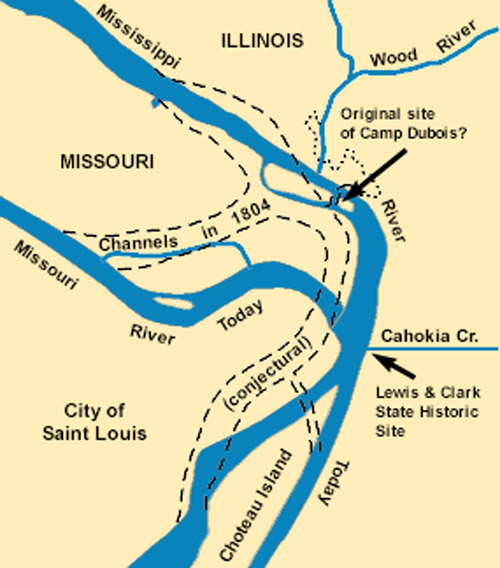
The precise location of this grand convergence is a point of immense interest for geographers, historians, and nature enthusiasts alike. It represents a critical juncture, where the Missouri River, often celebrated as the longest river in North America, concludes its epic journey from the Rocky Mountains, surrendering its waters and its legacy to the even more voluminous Mississippi River. This union does not just combine water; it blends two distinct riverine personalities, each carrying unique sediment loads, temperatures, and ecological characteristics, creating a dynamic and ever-evolving landscape at their meeting point.
A Meeting of Giants: Pinpointing the Confluence
The precise location where the Missouri River pours into the Mississippi River is a landmark that has shaped the geography, history, and ecology of the central United States. This monumental meeting occurs just north of St. Louis, Missouri, near the town of Hartford, Illinois. It is a spectacle of nature, easily observable and historically significant, marking a pivotal point in North America’s vast river system.
Geographical Precision
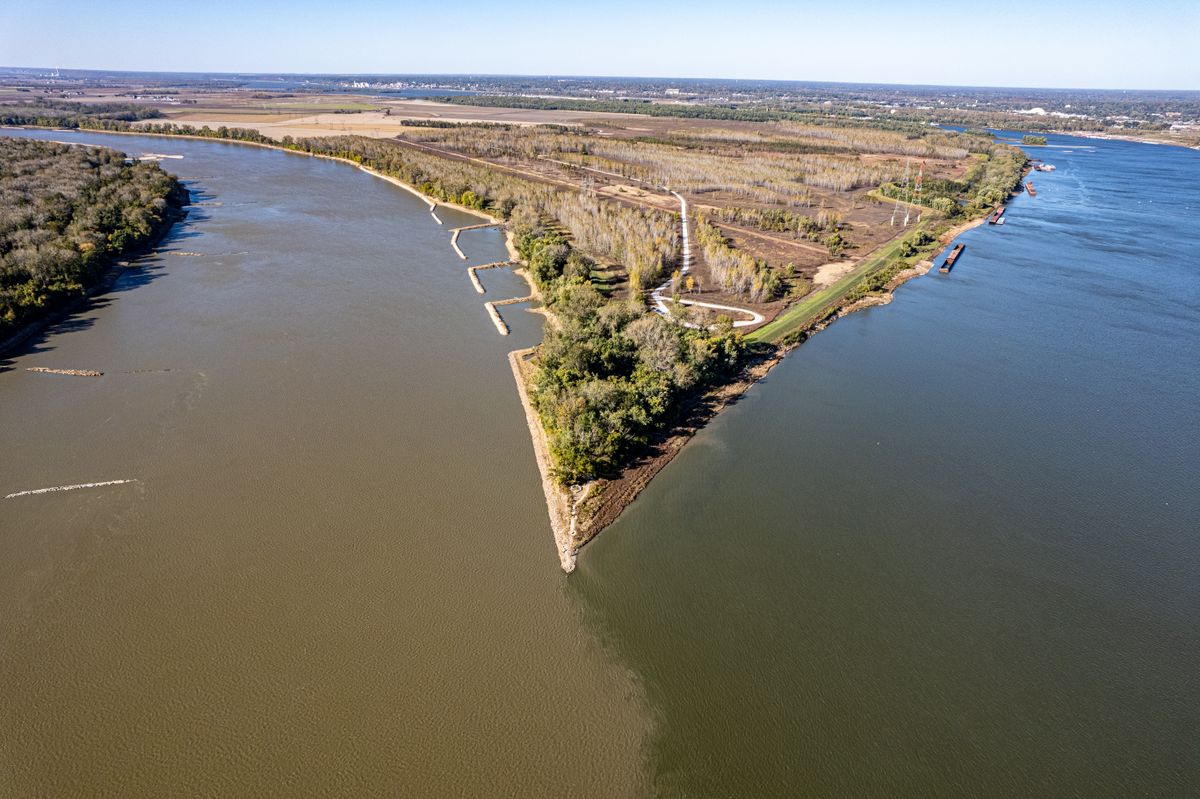
The confluence is situated approximately 17 miles (27 kilometers) north of downtown St. Louis, on the Illinois side of the Mississippi River. Specifically, it lies within the bounds of what is now known as Confluence State Park in Hartford, Illinois. From an aerial perspective or observation point, one can distinctly see the differing characteristics of the two rivers before they fully merge. The Missouri River typically carries a heavier sediment load, often appearing more turbid and brownish, a stark contrast to the clearer (though still often muddy) waters of the Mississippi River that has already integrated numerous tributaries upstream. For a notable distance downstream from the actual meeting point, the distinct flows of the two rivers remain discernible, a testament to their individual power and volume. This phenomenon, where two rivers flow side-by-side for miles without fully mixing, is a visually striking feature of this particular confluence.
The Scale of Two Mighty Rivers
To fully appreciate the significance of this meeting, one must understand the immense scale of the two rivers involved. The Missouri River, stretching approximately 2,341 miles (3,767 km) from its source in southwestern Montana, is the longest river in North America. Its vast basin covers a significant portion of the Great Plains, draining parts of ten U.S. states and two Canadian provinces. It carries a tremendous volume of water, sediment, and nutrients, profoundly influencing the geology and ecology of the regions it traverses.
The Mississippi River, while slightly shorter than the Missouri at about 2,320 miles (3,730 km) from its traditional source at Lake Itasca in Minnesota, surpasses the Missouri in terms of discharge volume, especially after their union. The Mississippi basin itself is the largest in North America, draining all or parts of 31 U.S. states and two Canadian provinces, culminating in its discharge into the Gulf of Mexico. When the Missouri joins the Mississippi, it effectively doubles the length of the main Mississippi-Missouri waterway system, creating the fourth-longest river system in the world. This combined system becomes a behemoth, a critical artery for commerce, ecology, and human settlement throughout the central and southern United States.
A Tapestry of History and Exploration
The confluence of the Missouri and Mississippi Rivers has not only shaped the physical landscape but also played a pivotal role in the human history of North America. For millennia, it has been a nexus of activity, a strategic location for indigenous peoples, and a critical waypoint for European explorers and settlers, leaving an indelible mark on the continent’s development.
Indigenous Heritage and Early Encounters
Long before European arrival, the land surrounding the confluence was home to numerous indigenous cultures. Its strategic location, abundant resources, and natural transportation routes made it an ideal place for hunting, fishing, trade, and settlement. Various Native American tribes, including the Osage, Illiniwek, and Missouria, thrived in the region, establishing complex societies and leaving behind rich archaeological evidence. The rivers provided sustenance, pathways for communication, and spiritual significance. The confluence was likely a sacred site, symbolizing the union of life-giving forces and representing a cosmological center for these early inhabitants.
The Lewis and Clark Expedition‘s Pivotal Stop
Perhaps one of the most famous historical associations with the confluence is its role in the Lewis and Clark Expedition. In 1804, Meriwether Lewis and William Clark, commissioned by President Thomas Jefferson to explore the newly acquired Louisiana Purchase and find a water route to the Pacific, chose the mouth of the Missouri River as their starting point. They established Camp Dubois (also known as the Wood River Cantonment) on the Illinois side of the Mississippi River, directly opposite the Missouri’s mouth.
Here, for several months, they prepared for their arduous journey, training their Corps of Discovery, gathering supplies, and refining their plans. The site was crucial for its access to resources and its strategic position at the gateway to the vast western territories. On May 14, 1804, the expedition embarked from this very spot, paddling their keelboat and pirogues upstream into the unknown, forever cementing the confluence’s place in American exploration history. Today, the Lewis and Clark State Historic Site stands near this historic encampment, commemorating their monumental journey.
Economic Lifeline and Transportation Hub
Beyond exploration, the confluence quickly evolved into a critical economic and transportation hub. The rivers served as natural highways for fur traders, merchants, and pioneers. Boats laden with goods traversed these waterways, facilitating trade between the eastern settlements and the burgeoning western frontier. St. Louis, just a short distance downstream, grew into a major port city, directly benefiting from its proximity to this vital junction. The meeting of the rivers allowed for the efficient movement of raw materials, manufactured goods, and people, playing an indispensable role in the westward expansion and industrialization of the United States. Steamboats later revolutionized river travel, further enhancing the economic importance of the confluence and its surrounding areas.
Ecological Significance and Natural Wonders
The confluence of the Missouri and Mississippi Rivers is not just a landmark of history and geography; it is a vibrant ecological zone, a critical habitat for diverse flora and fauna, and a powerful demonstration of natural hydrological processes. Its dynamic nature makes it an ever-changing landscape, constantly sculpted by the immense power of these two great rivers.
Biodiversity Hotspot
The unique characteristics of the confluent waters create a rich tapestry of habitats. The differing sediment loads, temperatures, and nutrient profiles of the Missouri and Mississippi contribute to a diverse aquatic environment. This ecological complexity supports a wide array of fish species, including catfish, sturgeon, and carp, which thrive in the varied river conditions. The confluence also serves as a critical migratory corridor for countless bird species, making it a prime location for birdwatching, especially during spring and fall migrations. Waterfowl, wading birds, and raptors utilize the riverine forests, wetlands, and open waters for nesting, feeding, and resting. Mammals such as deer, beaver, and otter also inhabit the riparian zones, further adding to the area’s rich biodiversity. The health of this confluence directly impacts the broader ecosystem of the entire Mississippi River basin, highlighting its profound ecological significance.
The Dynamic Landscape
The landscape around the confluence is anything but static. The immense volume and velocity of water from both rivers continuously reshape the banks, islands, and floodplains. Floods and droughts dramatically alter the riverbeds, creating new channels, sandbars, and backwater lakes. This constant geomorphological change fosters a dynamic environment where specific plant communities adapted to fluctuating water levels flourish. The river’s power is evident in the sheer scale of erosion and deposition that occurs, providing an ongoing natural laboratory for studying fluvial processes. The unique visual characteristic of the two rivers flowing side-by-side without fully mixing for several miles downstream is a direct result of their differing velocities, densities, and sediment concentrations, showcasing a fascinating natural phenomenon that shifts with the seasons and river conditions.
Preserving a National Treasure: The Confluence as a Landmark
Recognizing its immense historical, ecological, and geographical significance, efforts have been made to preserve and interpret the confluence of the Missouri and Mississippi Rivers as a vital landmark. These initiatives ensure that future generations can appreciate and learn from this remarkable natural phenomenon and its storied past.
Confluence State Park and Interpretive Centers
The primary site for experiencing and understanding the confluence is Confluence State Park, located in Hartford, Illinois. This park offers visitors unparalleled views of the meeting point, with observation decks and walking trails that provide direct access to the riverbanks. The park is designed to educate the public about the natural history, geology, and cultural significance of the confluence. Interpretive signs explain the ecological dynamics, the historical events that unfolded there, and the distinct characteristics of the two rivers.
Complementing Confluence State Park is the nearby Lewis and Clark State Historic Site, which focuses specifically on the expedition’s encampment and departure. This site features a reconstructed Fort Dubois and an excellent museum that details the preparations, challenges, and scientific discoveries of the Lewis and Clark Expedition. Together, these landmarks provide a comprehensive understanding of the confluence’s multifaceted importance. Through these sites, visitors gain insights into the physical grandeur of the rivers and the profound impact they have had on the course of American history and natural heritage.

Conservation Efforts and Future Outlook
The preservation of the confluence extends beyond simply designating parks; it involves ongoing conservation efforts to protect its unique ecological integrity. Organizations and governmental agencies work to manage the river system, monitor water quality, and restore riparian habitats. Challenges such as pollution, habitat degradation, and invasive species require continuous attention and coordinated efforts across multiple states. The immense commercial traffic on both rivers, especially south of the confluence towards St. Louis, also presents complex management issues that balance economic needs with environmental protection.
The future of the Missouri-Mississippi confluence as a landmark relies on continued dedication to stewardship and public awareness. By understanding its role as a natural wonder, a historical touchstone, and a vital ecological zone, efforts can be sustained to ensure that this remarkable meeting point remains a cherished and protected part of North America’s natural and cultural landscape for generations to come. It stands as a powerful reminder of the vast, interconnected forces that shape our planet and the profound stories embedded within its most significant natural features.
LifeOutOfTheBox is a participant in the Amazon Services LLC Associates Program, an affiliate advertising program designed to provide a means for sites to earn advertising fees by advertising and linking to Amazon.com. Amazon, the Amazon logo, AmazonSupply, and the AmazonSupply logo are trademarks of Amazon.com, Inc. or its affiliates. As an Amazon Associate we earn affiliate commissions from qualifying purchases.