
Las Vegas, a city synonymous with dazzling lights, world-class entertainment, and opulent resorts, thrives in the heart of the Mojave Desert. This seemingly paradoxical existence, where a sprawling metropolis flourishes amidst an arid landscape, inevitably raises a crucial question: Where does all this water come from? The answer is not as simple as turning on a tap; it’s a complex, decades-long story of engineering, resource management, and inter-state cooperation. The lifeblood of this desert oasis is primarily drawn from a vast and vital natural reservoir, meticulously managed to sustain its unique growth and appeal.
The Colorado River: The Lifeline of the Desert Southwest
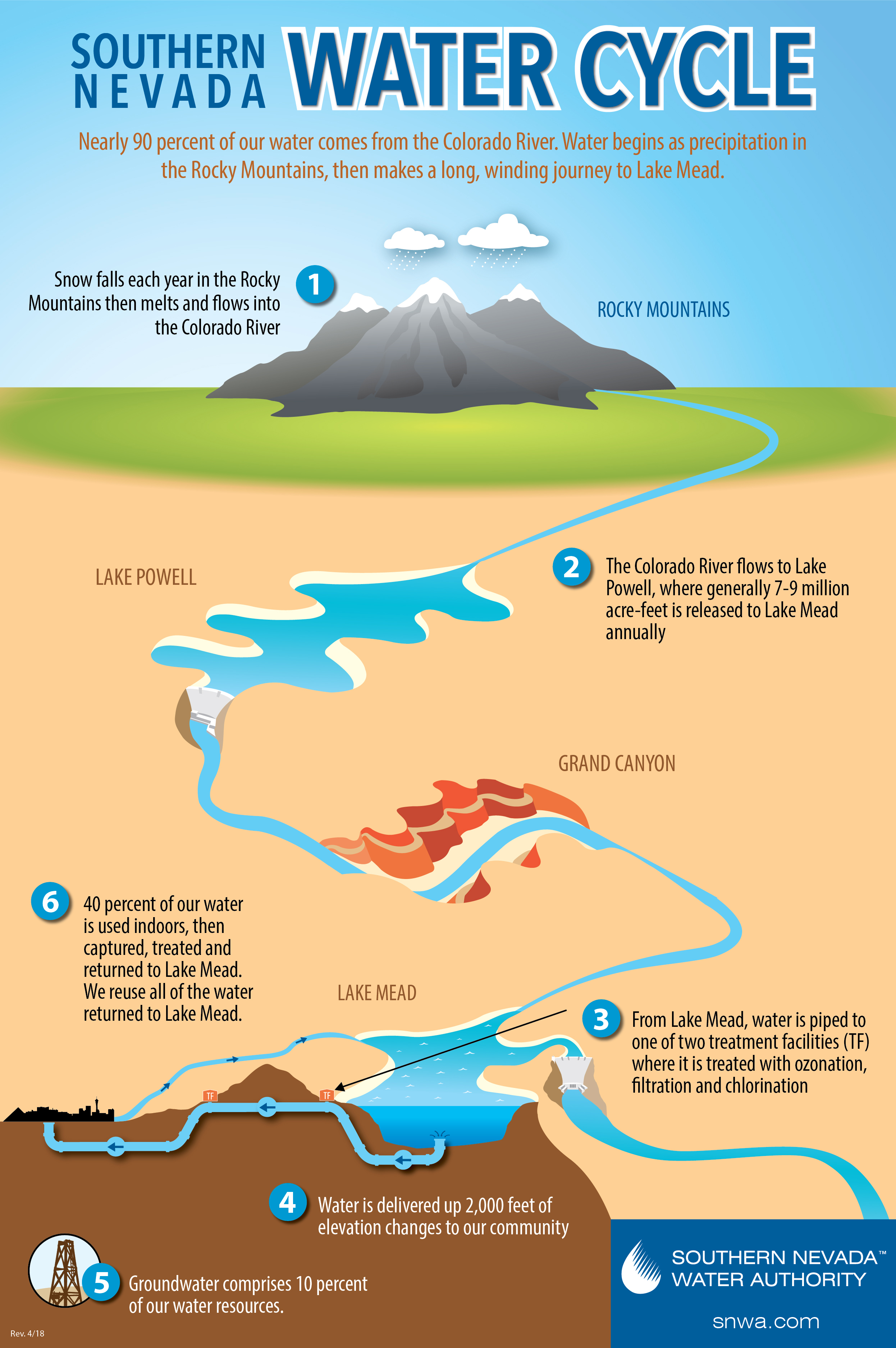
The most significant and indispensable source of water for Las Vegas is the mighty Colorado River. This immense river system, stretching over 1,450 miles and draining parts of seven states in the United States and two states in Mexico, is a lifeline for millions of people and vast agricultural areas across the arid Southwest. For Las Vegas, the river’s waters are not just a convenience; they are the very foundation of its existence and continued development.
Lake Mead: The Critical Reservoir
The Colorado River does not flow directly into Las Vegas as a rushing torrent. Instead, its waters are captured and stored in a monumental man-made reservoir known as Lake Mead. Created by the construction of the Hoover Dam in the 1930s, Lake Mead serves as the primary water bank for southern Nevada, southern California, and western Arizona. The sheer scale of this reservoir is staggering; at its peak, it held enough water to cover the entire state of Pennsylvania with one foot of water.
The water is diverted from Lake Mead through a massive intake system operated by the Southern Nevada Water Authority (SNWA). This authority is responsible for treating and distributing the water to more than two million residents and millions of tourists annually. The process involves multiple pumping stations and treatment facilities to ensure the water is safe and potable for consumption and for use in the city’s many hotels, casinos, and residential areas. The iconic fountains at the Bellagio and the pristine pools at resorts like The Venetian all draw from this single, crucial source.
The Colorado River Compact: Allocating a Scarce Resource
The allocation of Colorado River water is governed by the Colorado River Compact of 1922. This landmark agreement, signed by the seven basin states, divides the river’s waters into the Upper Basin (Wyoming, Colorado, Utah, New Mexico) and the Lower Basin (Arizona, California, Nevada). Each basin is entitled to a certain amount of water annually. Nevada, being a relatively smaller state in terms of population and agricultural needs compared to its neighbors, has a significantly smaller allocation from the river. This limited allocation underscores the critical need for efficient water management in Las Vegas.
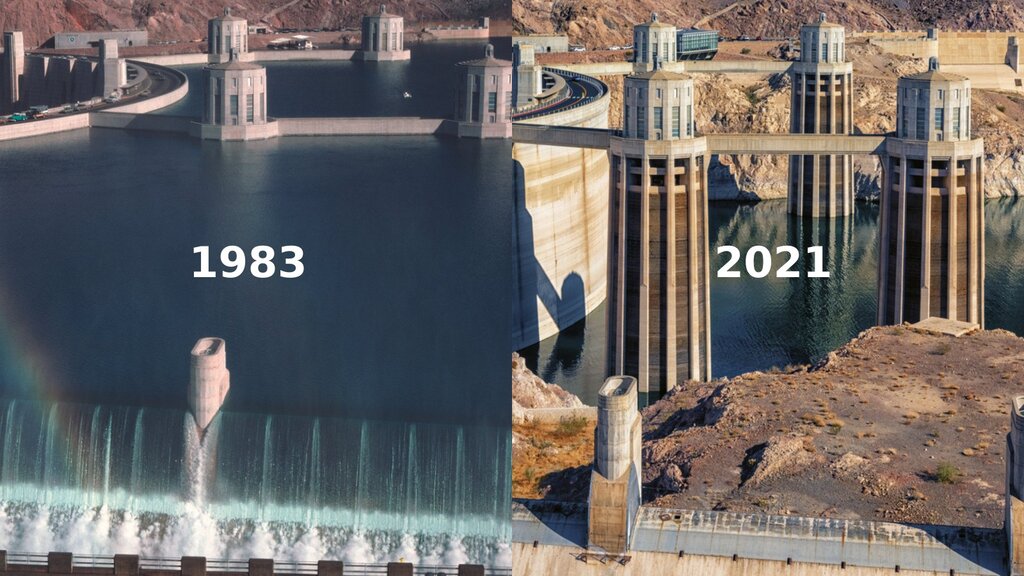
The compact, however, was based on historical flow data that, unbeknownst to the signatories, reflected a period of unusually high rainfall. Decades of drought, coupled with increased demand from a growing population and burgeoning industries across the Southwest, have led to significant declines in the water levels of Lake Mead and the entire Colorado River system. This situation has necessitated ongoing negotiations and adjustments to water management strategies among the basin states, highlighting the fragility of this vital resource.
Innovative Water Conservation and Reuse: A Desert Imperative
The realization of the finite nature of water resources has driven Las Vegas and the SNWA to become pioneers in water conservation and reuse technologies. Faced with a growing population and the ever-present threat of drought, the city has implemented aggressive strategies to reduce water consumption and maximize the efficiency of its water supply.
Wastewater Treatment and Recycling: A Closed-Loop System
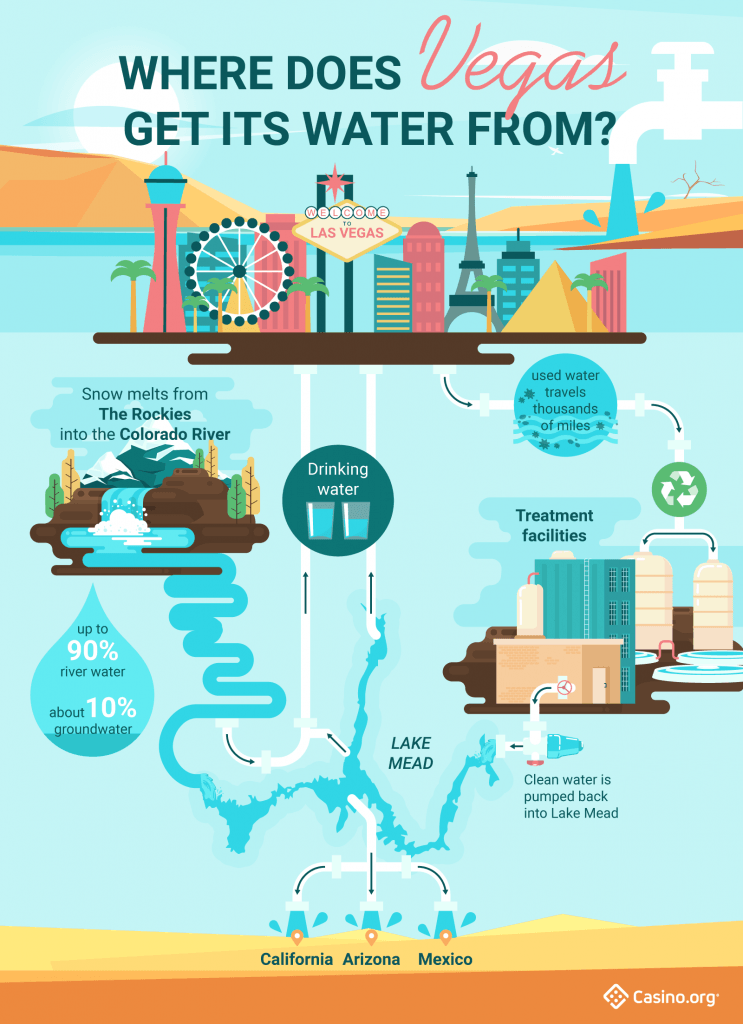
One of the most impressive aspects of Las Vegas’ water management is its sophisticated wastewater treatment and recycling program. Nearly all the water used by residents and visitors is collected, treated to the highest standards, and then returned to Lake Mead or reused for other purposes. This closed-loop system significantly reduces the amount of fresh water that needs to be drawn from the Colorado River.
The wastewater treatment facilities are state-of-the-art, capable of processing millions of gallons of sewage daily. The recycled water, often referred to as “purple pipe” water due to the color of the pipes used for its distribution, is used for a variety of non-potable purposes. This includes irrigating golf courses, parks, and landscaping in residential communities and commercial areas. Many of the lush green spaces that seem so incongruous in the desert are, in fact, sustained by this recycled water, making them a testament to the city’s commitment to sustainability.
Drought-Resistant Landscaping and Water-Wise Practices
Beyond large-scale infrastructure, Las Vegas has also been instrumental in promoting water-wise practices at the individual and community level. The SNWA has offered significant incentives for residents to replace thirsty lawns with drought-tolerant landscaping, a movement that has visibly transformed the city’s aesthetics. Once characterized by sprawling green grass yards, many neighborhoods now feature beautiful desert-friendly gardens with native plants, rocks, and gravel.
Furthermore, strict water conservation ordinances are in place, limiting outdoor watering days and times, prohibiting the washing of cars on driveways, and encouraging the use of low-flow fixtures in homes and businesses. The hospitality industry, a cornerstone of the Las Vegas economy, has also embraced these principles, implementing water-saving technologies in their hotels, casinos, and attractions, such as low-flow toilets and showerheads, and advanced irrigation systems for their landscaping. This collective effort has resulted in a remarkable reduction in per capita water consumption over the years, even as the city’s population and visitor numbers have continued to grow.
Future Challenges and Sustainable Solutions
The long-term sustainability of Las Vegas’ water supply remains a significant concern, given the ongoing drought conditions in the Southwest and the projected impacts of climate change. While the city has made incredible strides in conservation and reuse, the dwindling levels of Lake Mead serve as a constant reminder of the challenges ahead.
Declining Water Levels and Inter-State Cooperation
The shrinking Lake Mead has had tangible consequences, including lowering the water intake levels at the Hoover Dam and impacting power generation. The SNWA has proactively addressed this by investing in a third intake pumping station, ensuring access to water even at critically low lake levels. However, this is a temporary solution to a systemic problem.
The future of water management for the entire Colorado River basin hinges on continued cooperation among the seven states and Mexico. Discussions often involve potential reductions in water allocations, further investments in efficiency, and exploring new technologies. The success of Las Vegas as a vibrant tourist destination is intrinsically linked to the health of the Colorado River system, making its preservation a shared responsibility.
Exploring Alternative Water Sources
While the Colorado River will remain the primary source for the foreseeable future, researchers and water managers are continuously exploring alternative and supplementary water sources. These could include advanced water purification technologies to treat wastewater to an even higher standard, potentially allowing for more direct reuse, or even desalination of brackish groundwater, although the energy costs and environmental impacts of such options are considerable.
The story of Las Vegas and its water is a compelling narrative of human ingenuity, adaptation, and the critical importance of responsible resource management. It’s a testament to how a city can not only survive but thrive in a challenging environment by embracing innovation and committing to conservation. The glittering lights of the Las Vegas Strip are powered, in a very real sense, by the careful stewardship of a precious desert resource, a lesson that resonates far beyond the arid landscapes of Nevada.
LifeOutOfTheBox is a participant in the Amazon Services LLC Associates Program, an affiliate advertising program designed to provide a means for sites to earn advertising fees by advertising and linking to Amazon.com. Amazon, the Amazon logo, AmazonSupply, and the AmazonSupply logo are trademarks of Amazon.com, Inc. or its affiliates. As an Amazon Associate we earn affiliate commissions from qualifying purchases.