
New York City, a metropolis that pulsates with an unparalleled energy, relies on a vast and intricate system to quench the thirst of its millions of residents and visitors. The source of this vital resource is not a single river or lake, but a collection of magnificent reservoirs nestled in the picturesque upstate regions. This sophisticated network, a marvel of engineering and foresight, ensures a constant and pristine supply of water, underpinning the city’s very existence and its iconic status as a global hub.
The Emerald Aqueducts: A Journey Upstate
The journey of New York City’s water begins far from the urban sprawl, in the verdant and protected watersheds of Catskill Mountains and the Delaware River basin. These regions, characterized by rolling hills, dense forests, and pristine lakes, are meticulously managed to preserve the quality of the water that eventually flows into the city. The New York City Department of Environmental Protection (DEP) oversees this vast territory, which spans three counties and encompasses over 2,000 square miles of forests and undeveloped land. This extensive protected area is crucial for maintaining the natural filtration process, minimizing the need for chemical treatment.
The Catskill System: A Foundation of Purity
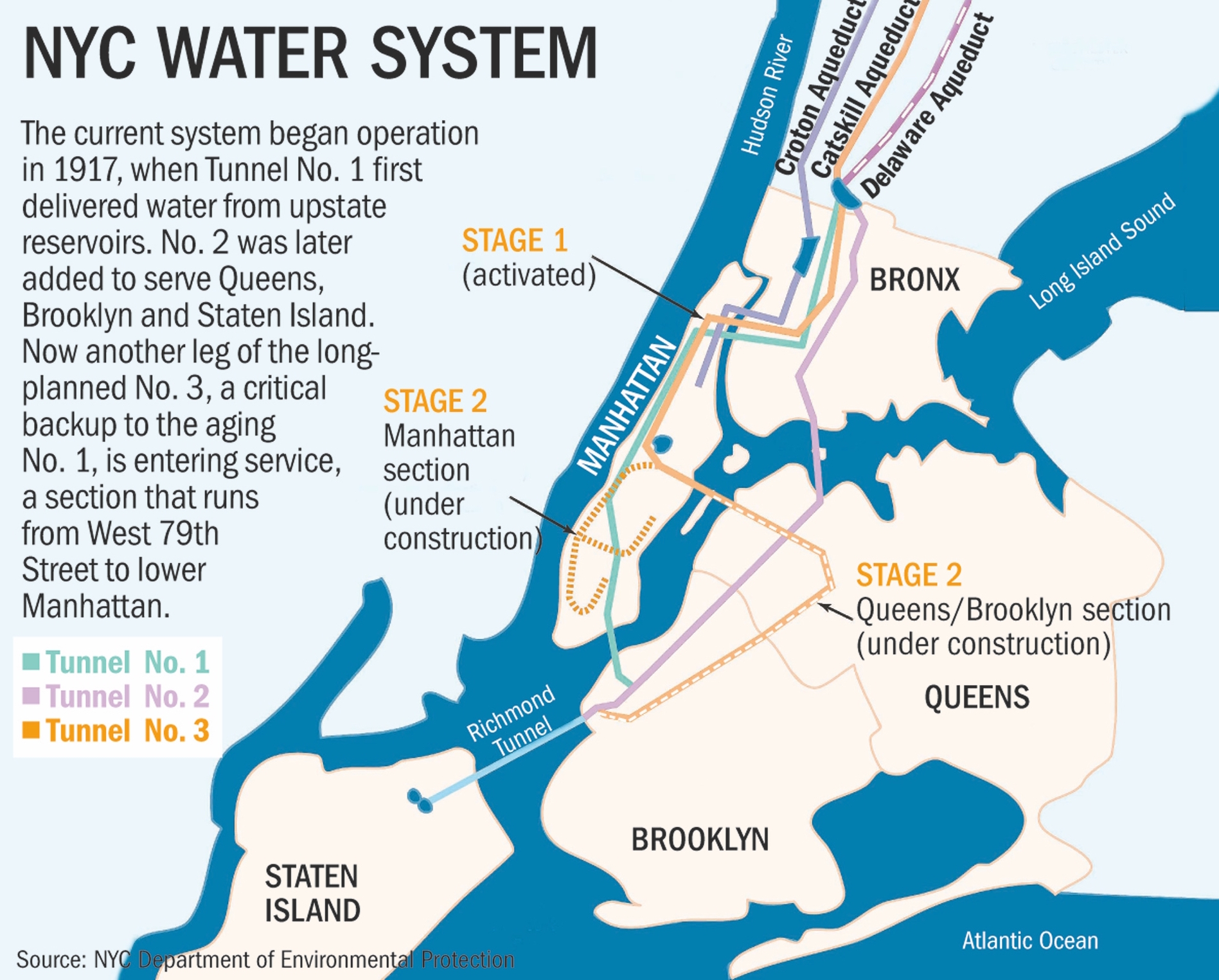
The Catskill System, one of the cornerstones of the city’s water supply, is comprised of four reservoirs: Ashokan Reservoir, Schoharie Reservoir, Pepacton Reservoir, and Rondout Reservoir. These reservoirs collectively hold billions of gallons of water, a testament to the region’s abundant rainfall and snowmelt. The construction of the Catskill System, a monumental undertaking that began in the early 20th century, involved the creation of vast impoundments and the construction of the Catskill Aqueduct, a gravity-fed conduit that transports water over 92 miles to the city. The foresight in its design, prioritizing gravity flow, significantly reduces energy consumption for water transport.
The Delaware System: Augmenting the Supply
To further bolster the water supply, the Delaware System was developed, drawing from the Delaware River watershed. This system includes three reservoirs: Cannonsville Reservoir, Neversink Reservoir, and Pepacton Reservoir (which is also part of the Catskill system). The Delaware Aqueduct, the longest tunnel aqueduct in the world, carries water from these reservoirs to the city, further extending the reach of this incredible water infrastructure. The combined capacity of these systems ensures that even during periods of drought or increased demand, New York City has access to a reliable and high-quality water source.
The Journey to the Taps: Aqueducts and Distribution
Once the water reaches the outskirts of New York City, it enters a complex network of tunnels and pipes that distribute it to every borough. The City Aqueducts, a series of large-diameter tunnels, convey water from the upstate reservoirs to the city’s distribution points. The Croton Watershed, though older and now providing a smaller percentage of the supply, also contributes to the city’s water needs through its own set of reservoirs and aqueducts.
From Reservoirs to Regulators: The Gravity Advantage

A key feature of the New York City water system is its reliance on gravity. The upstate reservoirs are situated at higher elevations than the city, allowing water to flow downhill through the aqueducts. This natural process not only minimizes the energy required for pumping but also helps preserve the water’s pristine quality. Upon reaching the city, the water is channeled into large underground reservoirs and distribution points, such as the Hillview Reservoir in Yonkers and the Jerome Park Reservoir in the Bronx. These holding areas act as buffers, ensuring a consistent supply and allowing for pressure regulation.
The Final Filtration: A Commitment to Purity
While the natural filtration provided by the protected watersheds is exceptional, New York City employs advanced treatment processes to guarantee the highest standards of water quality. The Kensico Reservoir, located in Westchester County, serves as a critical point for UV (ultraviolet) disinfection, a process that inactivates any potentially harmful microorganisms without the use of chemicals. Additionally, a small amount of chlorine is added for residual disinfection, ensuring the water remains safe as it travels through the extensive pipe network. This multi-layered approach to water treatment reflects the city’s unwavering commitment to public health.
Protecting the Source: A Shared Responsibility
The pristine quality of New York City‘s water is a direct result of aggressive land acquisition and conservation efforts in the upstate watershed. The DEP actively works with landowners, municipalities, and environmental groups to protect the forests, wetlands, and waterways that feed the reservoirs. These efforts include land purchases, conservation easements, and programs that promote sustainable land management practices. The success of these initiatives underscores the vital connection between the health of the upstate environment and the quality of the water delivered to millions of New Yorkers.
Watershed Protection Programs: A Proactive Approach
The New York City watershed protection program is a model for water management worldwide. It recognizes that preventing pollution at its source is far more effective and cost-efficient than treating contaminated water. Programs focus on reducing runoff from agricultural and developed areas, managing wastewater effectively, and preserving natural habitats. This proactive stance ensures that the water entering the reservoirs remains as pure as possible, minimizing the need for extensive chemical treatment and safeguarding the long-term viability of the water supply.
The Role of Nature: Natural Filtration at its Finest
The vast forested areas within the watershed act as natural filters, trapping sediments and removing impurities from rainwater and snowmelt before it reaches the reservoirs. The intricate root systems of trees and plants help to stabilize the soil, preventing erosion, while the forest floor absorbs and filters water. This natural process is incredibly effective and is a primary reason why New York City‘s water is renowned for its clarity and taste, often requiring less treatment than water from more heavily developed or industrialized areas.

A Marvel of Engineering and Conservation
The water system that serves New York City is more than just a utility; it is a testament to human ingenuity, foresight, and a profound respect for nature. From the majestic reservoirs nestled in the Catskill Mountains to the intricate network of aqueducts and pipes that traverse the five boroughs, this system ensures that one of the world’s most dynamic cities has a constant and pure supply of life-giving water. The ongoing commitment to protecting the upstate watersheds highlights a crucial understanding: the health of the environment is inextricably linked to the well-being of the city it sustains. This remarkable feat of engineering, coupled with dedicated conservation efforts, allows New York City to continue to thrive, providing a critical resource that is often taken for granted but is, in reality, the lifeblood of this vibrant metropolis.
LifeOutOfTheBox is a participant in the Amazon Services LLC Associates Program, an affiliate advertising program designed to provide a means for sites to earn advertising fees by advertising and linking to Amazon.com. Amazon, the Amazon logo, AmazonSupply, and the AmazonSupply logo are trademarks of Amazon.com, Inc. or its affiliates. As an Amazon Associate we earn affiliate commissions from qualifying purchases.