
Florida, the Sunshine State, is a popular destination for travelers seeking sun-drenched beaches, thrilling theme parks, and vibrant culture. Whether you’re planning a luxury travel escape, a family trip, or a business stay, understanding the nuances of your destination is key to a seamless experience. One such nuance, often overlooked until it causes a minor hiccup, is the time zone division within the state. While most of Florida operates under a single time zone, a distinct boundary exists, impacting travel plans and daily schedules for those venturing into specific regions. This article delves into the fascinating geography of Florida’s time zones, helping you navigate your trip with confidence.
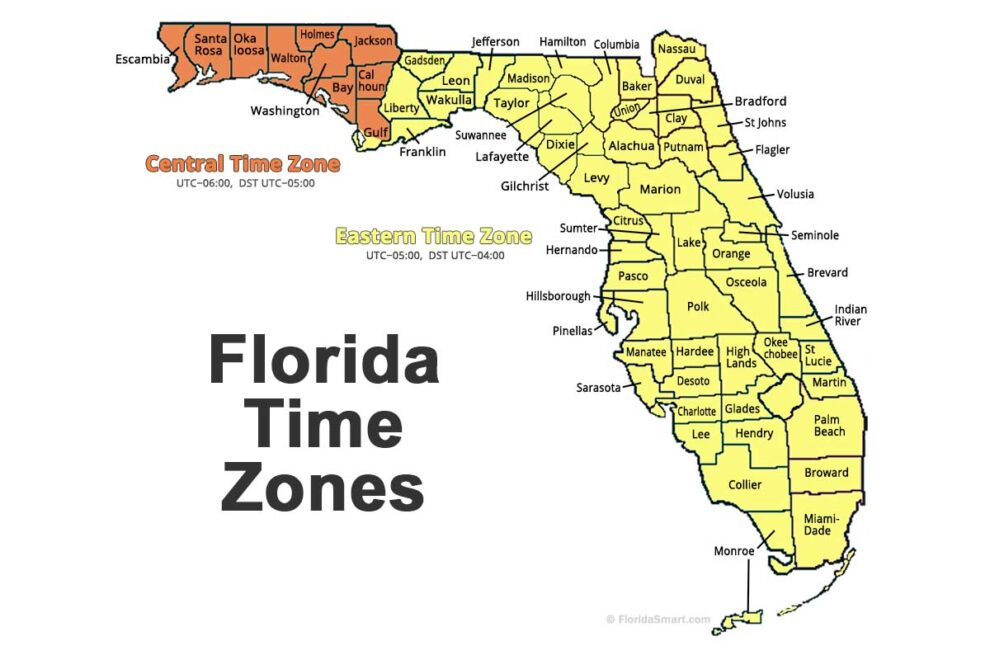
The Sunshine State is predominantly located within the Eastern Time Zone (ET). This includes major cities and popular tourist hubs like Miami, Orlando, Tampa, Fort Lauderdale, and the entirety of the Florida Keys. For the vast majority of visitors, this means that when it’s 12:00 PM in New York City, it’s also 12:00 PM in Key West. This uniformity simplifies itinerary planning, especially when coordinating with other travelers or booking flights and accommodations. Most hotels, resorts, and attractions operate on Eastern Standard Time (EST) or Eastern Daylight Time (EDT) depending on the season, mirroring the rest of the eastern seaboard of the United States.
However, a small but significant portion of Florida observes a different time. This geographical anomaly lies in the westernmost part of the state, an area often referred to as the “Florida Panhandle.” Here, the Central Time Zone (CT) is in effect. This means that for a portion of the day, the time in places like Pensacola or Panama City Beach will be one hour behind cities in the rest of Florida.
The Dividing Line: Where Eastern Meets Central
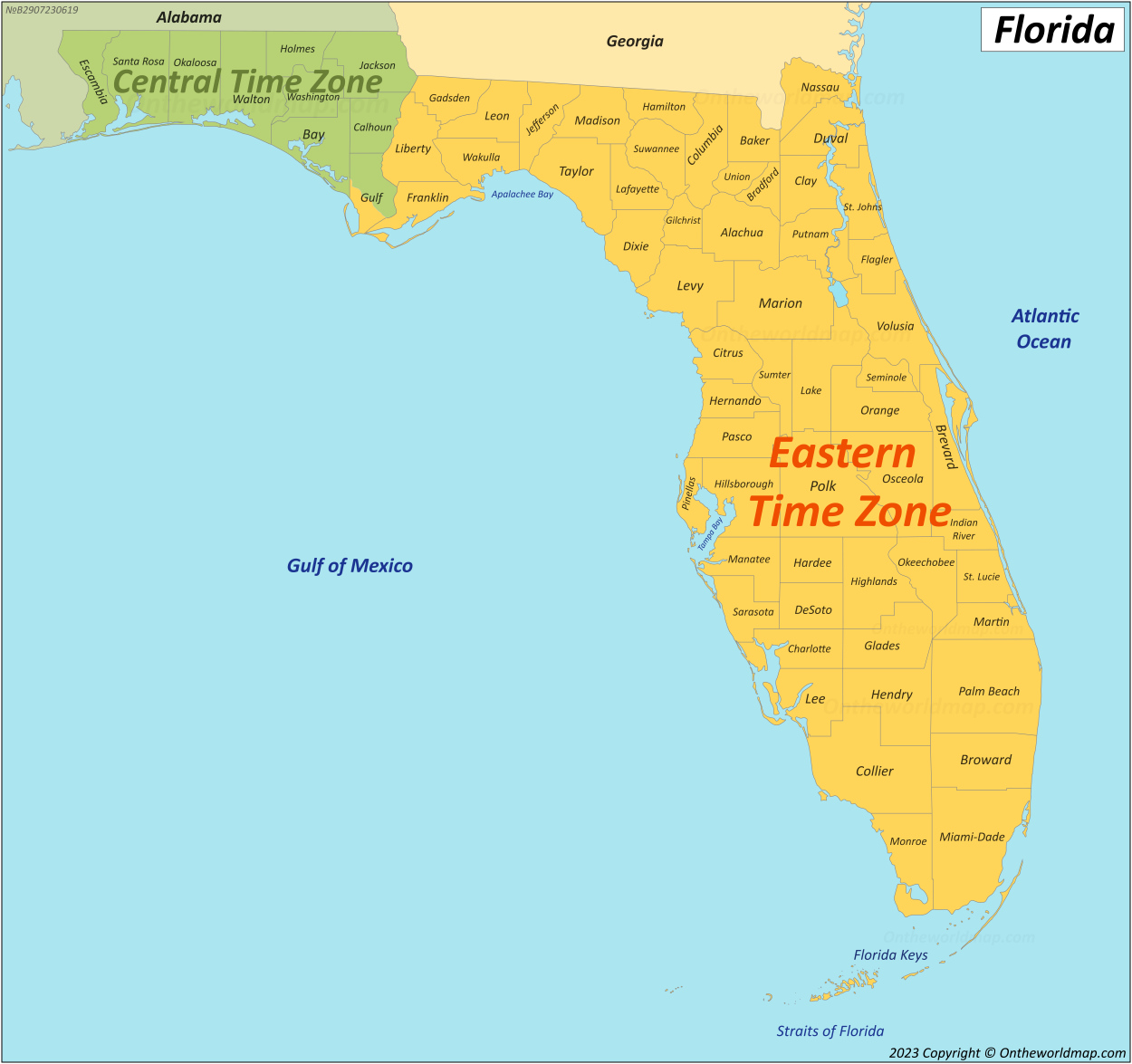
The boundary between the Eastern and Central Time Zones in Florida is not a straight, clearly marked line across a map. Instead, it’s a somewhat irregular border that follows county lines. Generally, the division occurs west of the Apalachicola River. Counties to the east of this river, even those in the Panhandle, observe Eastern Time. Counties to the west of it, however, are in Central Time.
Understanding the Counties
To provide a more precise understanding, let’s outline the counties that fall on either side of this time zone divide.
Eastern Time Zone Counties in the Panhandle
Several counties in the Florida Panhandle are still part of the Eastern Time Zone, despite their geographical western location. These include:
- Franklin County: Home to the charming town of Apalachicola, this county experiences Eastern Time.
- Liberty County: A more rural county, it also adheres to Eastern Time.
- Gadsden County: Including the state capital, Tallahassee, this county is firmly in the Eastern Time Zone.
- Jackson County: While bordering the Central Time Zone, much of Jackson County is in ET.
- Calhoun County: Similar to Jackson County, a significant portion of Calhoun County observes Eastern Time.
- Bay County: Home to the popular tourist destination of Panama City Beach, Bay County is a key area where travelers need to be aware of the time zone difference.
It’s important to note that even within these counties, local businesses and establishments might subtly acknowledge the time difference, though official clocks will be set to Eastern Time.
Central Time Zone Counties in the Panhandle
The counties that observe Central Time are situated further west. These include:
- Escambia County: This is the westernmost county in Florida, and its major city, Pensacola, operates on Central Time.
- Santa Rosa County: Directly east of Escambia County, Santa Rosa County also falls within the Central Time Zone.
- Okaloosa County: A popular destination for its beautiful beaches, Fort Walton Beach and Destin are located in Okaloosa County, which observes Central Time.
- Walton County: This county forms the western edge of the Panhandle before the border with Alabama, and it is also in the Central Time Zone.
The geographical border between ET and CT in Florida closely aligns with the border between Florida and Alabama for much of its western extent.
Navigating Travel and Accommodation Across the Divide
For travelers, understanding this time zone shift is crucial for avoiding confusion and ensuring smooth transitions.
Impact on Travel Planning
If your itinerary involves crossing this time zone boundary, whether for a budget travel adventure or a more extensive exploration, it’s essential to factor in the one-hour difference. For instance, if you’re driving from Tallahassee (ET) to Pensacola (CT), you’ll gain an hour. This can be advantageous if you’re trying to maximize daylight hours or reach a destination before a particular event. Conversely, if you’re traveling from Pensacola to Tallahassee, you’ll lose an hour, meaning you’ll arrive at a later local time than you might expect.
When booking flights, this distinction is usually handled automatically by airline systems. However, if you’re arranging ground transportation, tours, or dining reservations, it’s always wise to confirm the local time zone of your destination. For those staying in hotels, most will display the local time. However, if you’re checking into a hotel in the Panhandle, be mindful of which time zone it falls into.
Accommodation Considerations
When searching for accommodation like resorts, apartments, or villas, especially in the western Panhandle, pay attention to the specific location. A hotel in Panama City Beach, for example, will be in the Central Time Zone, while a resort just a short drive east in Apalachicola will be in the Eastern Time Zone. This could affect your check-in times, dining reservations, and any planned activities.
For longer stays, such as long-term stay arrangements, this one-hour difference becomes a regular part of your daily life. It can influence your work schedule if you’re collaborating with people in different time zones, or simply your decision on when to start your day or wind down.
Local Culture and Activities
The time zone division also subtly influences local culture and activities in the Panhandle. Communities west of the Apalachicola River have developed their rhythms and routines in sync with Central Time. This means that local events, festivals, and even daily business hours will operate on CT.
For example, if you’re attending a sunrise service on the beach in Pensacola, it will be an hour later by your watch if you’ve just come from Miami. Similarly, if you plan to catch a sunset cruise from Destin, the timing might feel different compared to what you’re accustomed to if you’re from the Eastern Time Zone.
When exploring attractions and engaging with local culture, it’s always best to double-check operating hours and event times. Most tourism websites and guides for the western Panhandle will clearly indicate Central Time. However, if you’re relying on general Florida travel information, always verify the specific time zone.

Tips for a Smooth Transition
To ensure your trip to Florida is as enjoyable and hassle-free as possible, here are a few practical tips regarding the time zone change:
- Consult Maps: Before your trip, use online maps to pinpoint the exact location of your destination within the Panhandle. This will help you confirm whether you’ll be in the Eastern or Central Time Zone.
- Set Your Devices: Most smartphones and smartwatches automatically adjust to local time. However, it’s a good habit to manually check and confirm that your devices have synced correctly upon arrival, especially if you’re crossing the time zone line.
- Communicate Clearly: If you’re traveling with others who are in a different time zone, be explicit about the time when making plans. For example, instead of saying “Let’s meet at 10 AM,” say “Let’s meet at 10 AM Eastern Time” or “Let’s meet at 10 AM Central Time.”
- Check Local Listings: For events, tours, and restaurant bookings, always refer to the official times listed by the local providers. If there’s any ambiguity, don’t hesitate to call and clarify.
- Embrace the Experience: While a time zone change can seem like a minor inconvenience, it’s also a part of the unique geography of Florida. Enjoy exploring different regions and experiencing their distinct local times.
Whether you’re marveling at the historic architecture in St. Augustine, experiencing the thrill of the theme parks in Orlando, or relaxing on the pristine beaches of the Panhandle, a little awareness of Florida’s time zones will go a long way in ensuring a perfectly timed vacation. From the vibrant nightlife of South Beach to the serene natural beauty of the Everglades, Florida offers a diverse range of experiences, and understanding its temporal map is just another way to enhance your journey through this captivating state.
LifeOutOfTheBox is a participant in the Amazon Services LLC Associates Program, an affiliate advertising program designed to provide a means for sites to earn advertising fees by advertising and linking to Amazon.com. Amazon, the Amazon logo, AmazonSupply, and the AmazonSupply logo are trademarks of Amazon.com, Inc. or its affiliates. As an Amazon Associate we earn affiliate commissions from qualifying purchases.