
The notion of time zones often conjures images of stark lines on maps, delineating vast swathes of territory where clocks are collectively nudged forward or backward. In the United States, these zones are largely governed by federal law, creating a predictable rhythm across the continent. However, the geographical and political realities of the American South, particularly in states like Alabama, can introduce subtle nuances and historical quirks to how time is observed. While Alabama officially resides within the Central Time Zone, understanding the “where” of time change isn’t solely about geographical boundaries; it’s also about local history, economic factors, and the very human desire to synchronize with neighboring communities and major economic hubs.
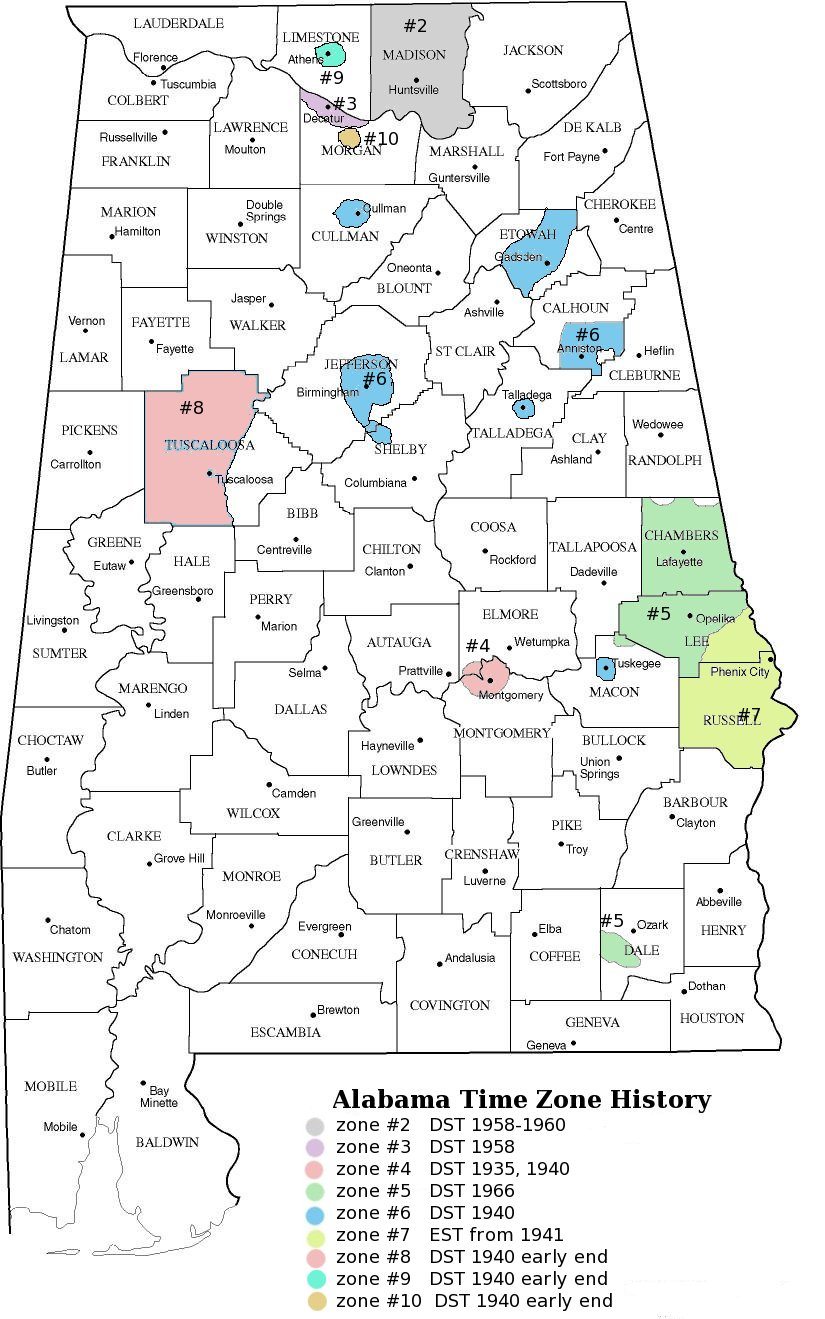
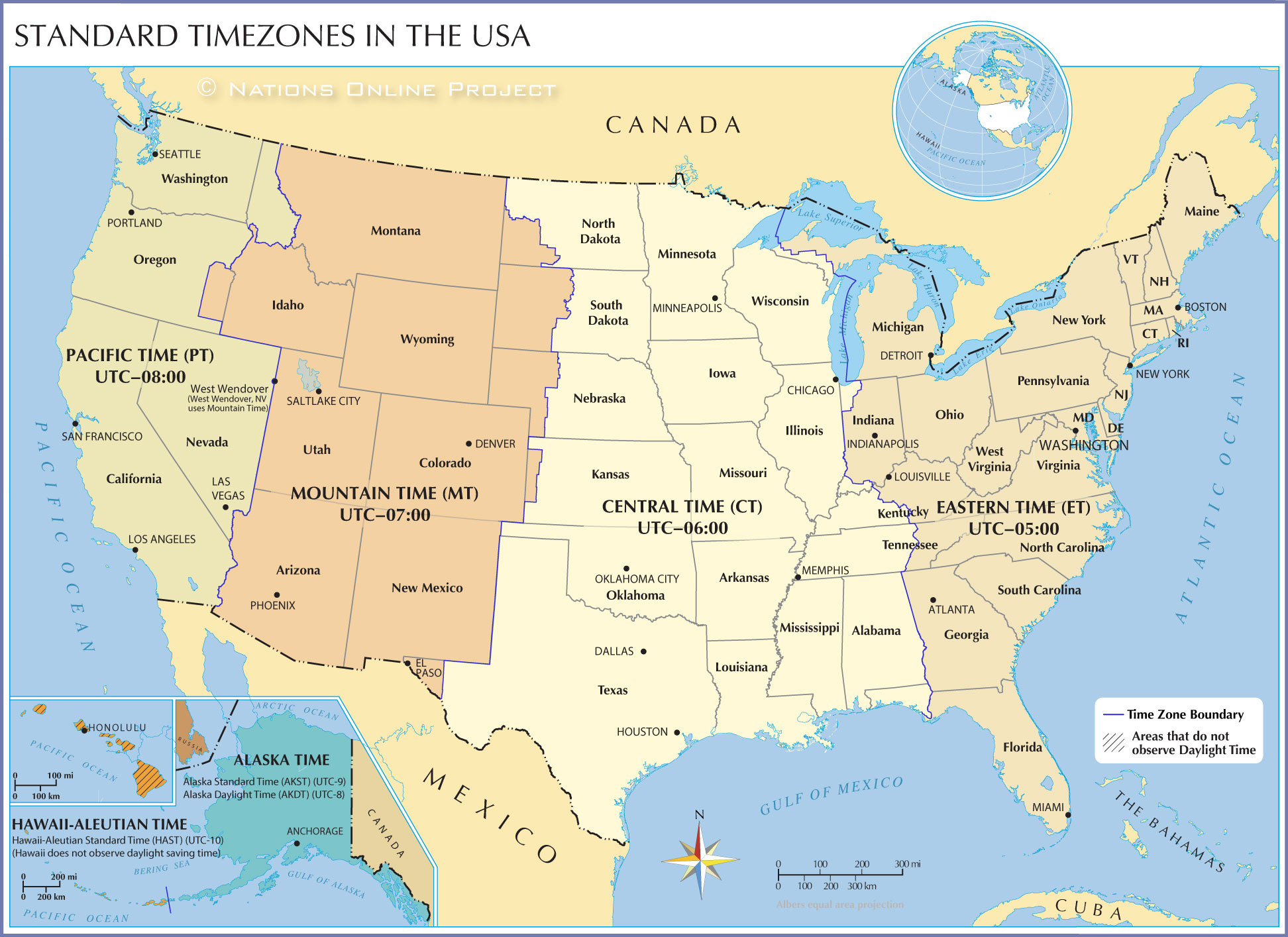
The primary temporal demarcation for Alabama is the Central Time Zone. This zone observes Central Standard Time (CST) during the winter months, which is UTC-6, and Central Daylight Time (CDT) during the warmer months, which is UTC-5. Daylight Saving Time (DST) begins on the second Sunday in March and ends on the first Sunday in November. This shift is a nationwide phenomenon, intended to maximize daylight in the evenings during spring and summer.
Navigating the Central Time Zone: Alabama’s Temporal Landscape
Within Alabama, the experience of the Central Time Zone is largely uniform, thanks to federal regulations and the state’s geographical position. The vast majority of the state operates under this time. This uniformity is crucial for facilitating commerce, transportation, and communication. Imagine the logistical nightmares if neighboring cities within the same state observed different times! Businesses would struggle with scheduling, and travelers would face constant confusion.
The Eastern Edge: Proximity to Time Zone Borders
While Alabama is firmly rooted in the Central Time Zone, its eastern border presents an interesting point of temporal proximity. The state of Georgia, immediately to its east, operates entirely within the Eastern Time Zone. This means that cities and towns situated directly along the Alabama-Georgia border, such as those in the vicinity of Columbus, Georgia and Phenix City, Alabama, are perpetually one hour apart from their counterparts across the state line.
The economic and social implications of this one-hour difference are significant. For residents of Phenix City, commuting to work in Columbus means adjusting their clocks. Businesses that operate across the border must carefully manage their operating hours to ensure seamless service. This geographical quirk, while subtle, highlights how temporal boundaries can influence daily routines and economic interactions, even when the physical distance is negligible.
Historically, the decision of which time zone a region adopts has often been influenced by its primary economic and transportation links. Communities that found themselves more closely aligned with the business cycles and schedules of cities in the Eastern Time Zone might have historically felt the pull towards observing Eastern Time. However, in modern Alabama, the federal mandate for time zones, coupled with the state’s overall economic orientation towards the wider Central Time region, has solidified its position.
Daylight Saving Time: The Seasonal Shift
The most noticeable “time change” experienced by most Alabamians is the annual observance of Daylight Saving Time. This practice, while established by federal law, can sometimes be a point of contention or confusion for residents.
The Rationale Behind DST
The primary purpose of Daylight Saving Time is to make better use of natural daylight. By shifting the clocks forward by an hour in the spring, evenings are extended, theoretically leading to energy savings and increased opportunities for outdoor activities. Proponents argue that it reduces traffic accidents and crime by providing more light during peak commuting hours.
Debates and Proposed Changes

Despite its long-standing implementation, Daylight Saving Time has faced increasing scrutiny in recent years. Discussions and even legislative proposals have emerged across the United States, including in Alabama, regarding whether to make DST permanent or to revert to permanent Standard Time.
Arguments against DST often cite disruptions to sleep patterns, potential negative impacts on health, and the inconvenience of the twice-yearly clock change. Some studies suggest that the benefits of energy savings are minimal and that the disruption to daily routines outweighs the advantages. For businesses, particularly those with operations across multiple time zones or with international clients, the shifting of clocks can add a layer of complexity to scheduling and communication.
However, advocates for permanent DST point to the extended evening daylight as a boon for recreation, tourism, and local economies that benefit from longer, brighter evenings. They also highlight potential reductions in crime and traffic accidents.
As of now, Alabama continues to observe Daylight Saving Time in accordance with federal law. Any permanent change would require either federal legislative action or a state-level decision to opt out of DST and remain on Standard Time year-round, or to adopt permanent DST if federal law permitted it. The “where” of this time change is, therefore, not just a point on a map but a living debate that reflects evolving societal priorities and scientific understanding.
Beyond the Clock: Understanding Time in Alabama’s Context
When we ask “Where does time change in Alabama?”, it’s important to consider that time is not merely an abstract measurement but a social construct deeply intertwined with culture, economy, and historical development.
Historical Timekeeping in Alabama
Before the widespread adoption of standardized time zones in the late 19th and early 20th centuries, timekeeping was largely local. Each town or city often set its own time based on solar noon or the schedules of its most important institutions, like railway stations. This led to considerable confusion, especially for long-distance travelers and commerce. The push for standardized time was driven by the burgeoning railroad industry, which required precise scheduling for its complex networks. Alabama, like other states, gradually adopted standard time to align with national transportation and business interests.
Cultural and Economic Synchronization
The primary driver for adherence to the Central Time Zone and Daylight Saving Time in Alabama is economic and cultural synchronization. The state’s major trading partners and population centers are largely within the Central Time Zone and Eastern Time Zone. Maintaining alignment with these dominant temporal frameworks facilitates business operations, financial transactions, and communication flows.
For example, the stock markets in New York City operate on Eastern Time, and businesses in Alabama that engage with these markets must be keenly aware of the one-hour difference. Similarly, airlines and national logistics companies operate on standardized schedules that dictate departure and arrival times across the country, requiring all states to conform to established time zones.
The Case of Small Communities and Border Towns
While the state as a whole adheres to federal time zone regulations, the practical application of time can sometimes feel different in smaller communities or along the borders of time zones. Residents in border towns between Alabama and Georgia, or even closer to the Florida Panhandle which observes both Central and Eastern time depending on the county, might have more frequent interactions with different time zones. This can lead to a more nuanced understanding and perhaps even a greater awareness of the temporal divide.
In essence, the “change” in time within Alabama is not marked by a physical line on the ground that one crosses and immediately experiences a temporal shift, as might be the case with some international borders. Instead, it’s a systemic adherence to federal regulations that dictates a uniform temporal experience across the state, with the most pronounced “change” being the seasonal shift of Daylight Saving Time. The proximity to the Eastern Time Zone along its eastern border serves as a constant, albeit subtle, reminder of the temporal divisions that shape our interconnected world.
LifeOutOfTheBox is a participant in the Amazon Services LLC Associates Program, an affiliate advertising program designed to provide a means for sites to earn advertising fees by advertising and linking to Amazon.com. Amazon, the Amazon logo, AmazonSupply, and the AmazonSupply logo are trademarks of Amazon.com, Inc. or its affiliates. As an Amazon Associate we earn affiliate commissions from qualifying purchases.