
Florida, often lauded as the Sunshine State, is a beacon for travelers seeking everything from vibrant city life and thrilling theme parks to serene beaches and lush natural landscapes. Most visitors, and even many residents, typically associate the entire state with Eastern Standard Time (EST) or Eastern Daylight Time (EDT) during the summer months. It’s a common assumption that a state under one unified government would adhere to a single time zone. However, if you’re planning a trip, booking accommodations, or coordinating activities in the western reaches of the state, you might be in for a surprise. There’s an invisible line, a temporal boundary, that divides a significant portion of the Florida Panhandle from the rest of the state, placing it firmly in the Central Standard Time (CST) or Central Daylight Time (CDT) zone.
This seemingly minor detail can have profound implications for travelers, affecting everything from flight schedules and hotel check-ins to dinner reservations and event timings. Understanding where this time change occurs, and why, is not just a matter of geographical curiosity but a crucial piece of information for a seamless and stress-free Florida getaway. Our guide aims to illuminate this often-overlooked aspect of Florida travel, ensuring you’re perfectly synchronized for your next adventure in the diverse and beautiful Sunshine State.
Unraveling Florida’s Time Zone Divide
The concept of time zones itself is a fascinating one, designed to standardize time across vast geographical areas, primarily for the sake of transportation and communication. While most of the continental United States is neatly divided into four major time zones, the boundaries often follow state lines or significant geographical features. Florida, however, presents a unique situation where a portion of its territory aligns more closely with its western neighbors in terms of time.
The Invisible Line: Eastern vs. Central Time
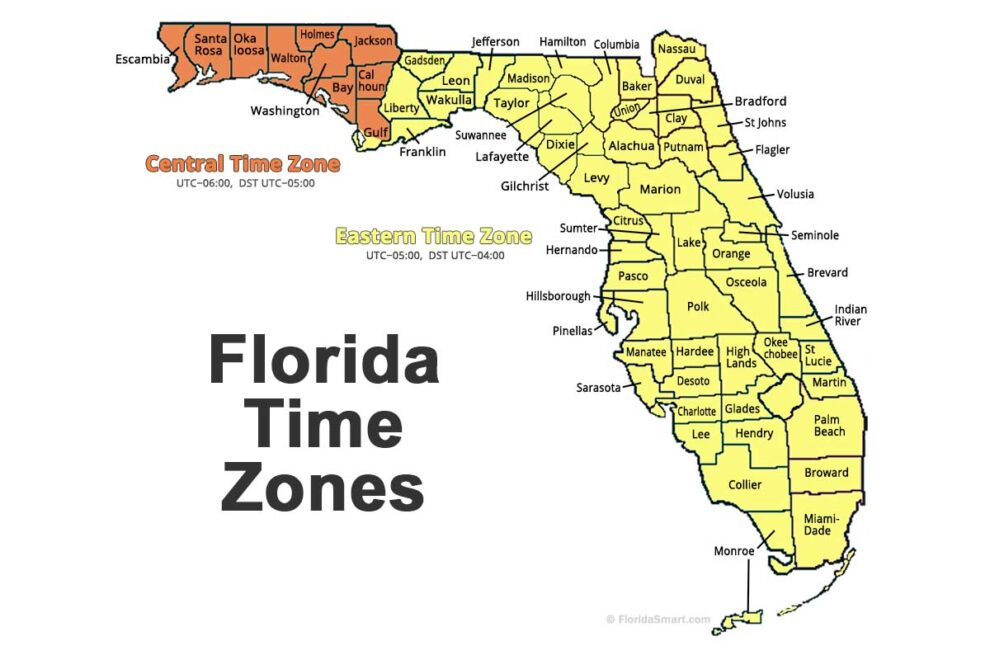
The vast majority of Florida operates on Eastern Standard Time, which is UTC-5 during standard time and UTC-4 during Daylight Saving Time. This includes major metropolitan areas like Miami, Orlando, Tampa, and even the state capital, Tallahassee. However, as you venture further west into the Panhandle, you cross into the Central Time Zone.
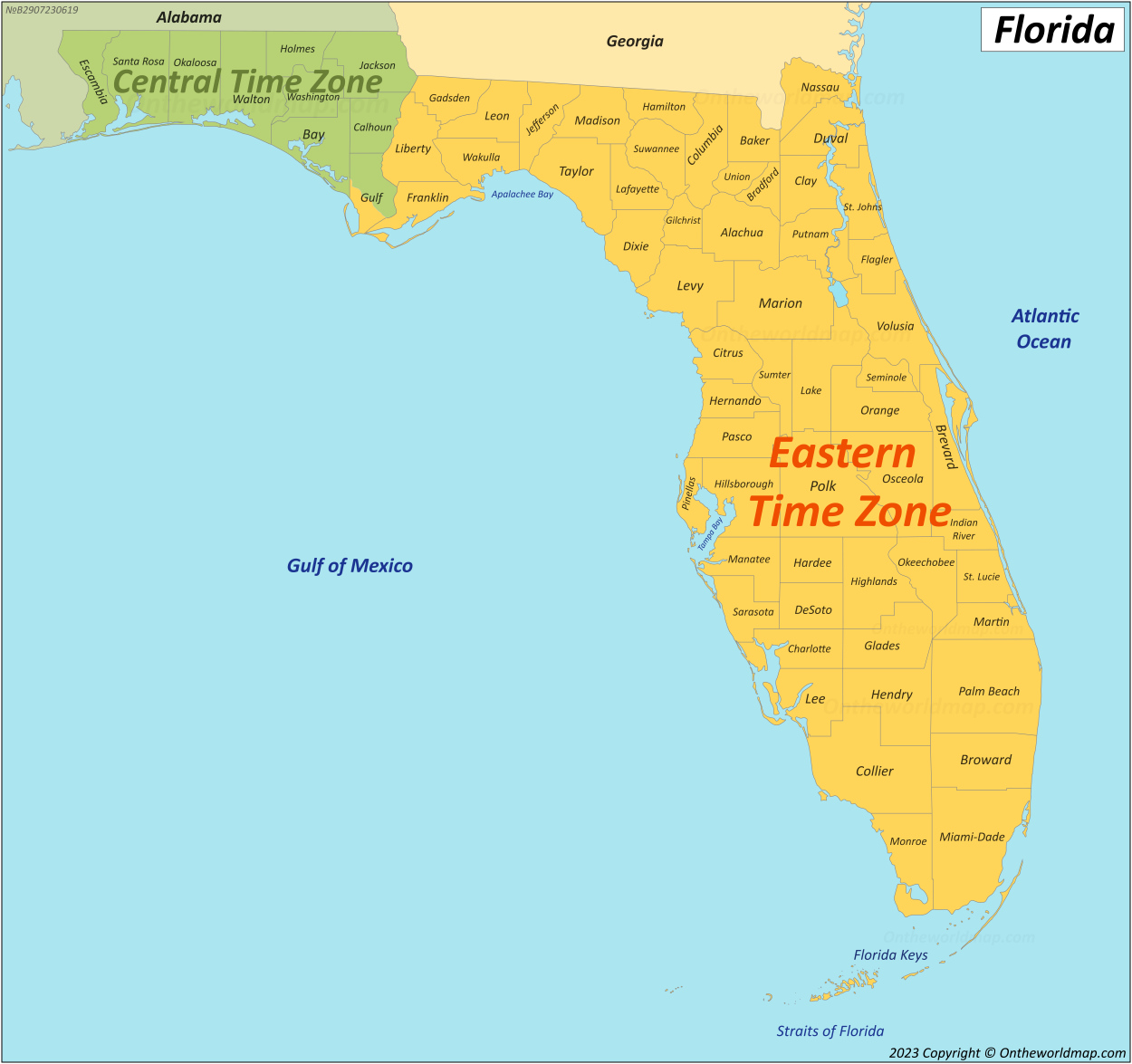
Specifically, the following nine counties in the western Florida Panhandle observe Central Standard Time (UTC-6 during standard time, UTC-5 during Daylight Saving Time):
- Bay County
- Calhoun County
- Escambia County
- Holmes County
- Jackson County
- Okaloosa County
- Santa Rosa County
- Walton County
- Washington County
The situation becomes even more nuanced with Gulf County. This county is uniquely split, with the western portion, west of the Apalachicola River, observing Central Time, while the eastern part remains in Eastern Time. This means that a short drive within Gulf County could necessitate a time adjustment. For instance, the charming town of Port St. Joe is generally considered to be in EST, while the popular beach community of Mexico Beach, just a short distance west, is in CST. This makes Gulf County a prime example of where vigilance regarding local time is paramount for travelers.
A Historical and Geographical Perspective
The reason for Florida’s time zone split is primarily geographical and historical, stemming from its proximity to Alabama and other states that predominantly fall within the Central Time Zone. The Florida Panhandle juts out westward, aligning more naturally with the timekeeping practices of its western neighbors. For communities near the border, observing the same time zone as their immediate economic and social partners across state lines simplifies everything from commerce to communication and even television scheduling.
The Apalachicola River often serves as a practical, albeit unofficial, demarcation line for many. This natural boundary has long influenced settlement patterns and regional identities, making it a logical, if not perfectly consistent, point for the time zone shift. The decision to place these western counties in Central Time was largely a pragmatic one, aiming to streamline daily life for residents who frequently interact with neighboring states. For travelers, this means that while you’re technically still in Florida, the rhythm of life in places like Pensacola or Panama City Beach will operate an hour behind Miami or Orlando.
Navigating the Time Warp: Practical Advice for Travelers
For visitors, understanding Florida’s time zone nuances is more than just a trivial fact; it’s a vital piece of information that can significantly impact the success and enjoyment of their trip. Overlooking this detail can lead to missed flights, late check-ins, or confusing communication.
Planning Your Itinerary and Bookings
One of the most critical aspects of dealing with a time zone change is in the planning and booking phases of your travel. Whether you’re arranging a luxury travel experience or a budget-friendly trip, precision is key.
- Flights and Transportation: If your journey involves flying into or out of an airport in the Florida Panhandle, such as Northwest Florida Beaches International Airport (ECP) in Panama City Beach or Pensacola International Airport (PNS), always double-check the time zone specified on your ticket. An arrival time of 3:00 PM EST might actually mean 2:00 PM local time if you’re landing in CST, potentially leaving you an hour early. Conversely, an airport transfer booked for 3:00 PM local time could mean 4:00 PM to a driver coming from an EST area. When booking bus tickets or car rentals, confirm all pick-up and drop-off times are aligned with the local time zone of the service provider.
- Accommodation: When reserving hotels, resorts, or villas in the Panhandle, remember that check-in and check-out times will be based on Central Time. If you’re driving from Orlando (EST) to Destin (CST), a 3:00 PM check-in will effectively be 4:00 PM EST for you. This extra hour on your journey could mean you arrive “earlier” than expected, or if you miscalculate, you could be late. When comparing accommodation options, always factor in this time difference, especially if you have pre-booked activities or tours tied to your arrival.
- Restaurant Reservations and Events: A seemingly simple dinner reservation can become complicated. If you book a table for 7:00 PM in Pensacola, it’s 6:00 PM for someone coming from Tallahassee. For tours, concerts, or any scheduled activities, confirm the time zone with the vendor to avoid missing out on your planned experiences.
Technology and Timekeeping
In our increasingly connected world, technology often handles time zone changes seamlessly, but it’s wise to exercise caution, especially in border areas.
- Smartphones and GPS: Most modern smartphones and GPS devices are designed to automatically update their time based on network signals and location data. However, in areas with weak signals or precisely on the time zone boundary, they might occasionally lag or display incorrect information. It’s a good practice to manually check your phone’s time settings or simply verify the time with a local resident or business upon arrival.
- Manual Clocks: Don’t forget the older, less “smart” devices. Your car’s clock, a traditional wristwatch, or an alarm clock will need to be manually adjusted when you cross the time zone line.
- Communication: When calling or texting friends and family, be mindful of the time difference. A call at 9:00 PM from Miami to someone in Panama City Beach is effectively an 8:00 PM call for them.

Lifestyle and Leisure Considerations
The time change can also subtly influence your overall lifestyle and leisure while on your trip, whether it’s a family trip, a business stay, or a relaxing vacation.
- Family Trips: Managing children’s schedules and bedtimes can be tricky with a sudden hour shift. Factor in the adjustment period, especially if you’re traveling with very young children.
- Business Stays: For those on a business stay, conference calls or virtual meetings with colleagues in EST will require careful scheduling to avoid missing important engagements.
- Leisure Activities: An hour’s difference can change your perception of daylight. If you’re chasing sunsets, remember that a 6:00 PM sunset in EST will be 5:00 PM local time in CST, effectively giving you an “earlier” evening. Similarly, if you enjoy early morning activities, you’ll gain an hour of sleep relative to EST, allowing for a more relaxed start.
Exploring Florida’s Time-Split Destinations
Despite the minor logistical considerations, the Florida Panhandle offers some of the state’s most stunning and unique tourism experiences. From sugar-white sand beaches to historic landmarks, these Central Time Zone destinations are well worth the temporal adjustment.
Coastal Gems and Panhandle Paradise
The Emerald Coast is famous for its shimmering green waters and pristine beaches, and much of it lies within the Central Time Zone.
- Panama City Beach: One of Florida’s most iconic beach destinations, Panama City Beach (PCB) is a vibrant hub known for its lively atmosphere, especially during spring break, and its family-friendly attractions. Visitors flock to Pier Park for shopping and entertainment, or to the natural beauty of St. Andrews State Park, consistently ranked among the nation’s best beaches. Its lively nightlife and diverse culinary scene operate on CST.
- Destin & Fort Walton Beach: These twin cities form the heart of the Emerald Coast, celebrated for their world-class fishing, championship golf courses, and breathtaking beaches. Destin is often called the “World’s Luckiest Fishing Village,” offering unparalleled deep-sea fishing experiences. Nearby, Henderson Beach State Park provides tranquil dunes and boardwalks for nature lovers.
- Pensacola: As Florida’s westernmost major city, Pensacola is steeped in history, boasting a rich blend of Spanish, French, British, and American heritage. Its historic downtown features charming architecture and the Pensacola Historic District. The city is also home to the renowned National Naval Aviation Museum, a must-visit for aviation enthusiasts, and is famous for being the home base of the Blue Angels flight demonstration squadron. All of Pensacola’s attractions, from its historic landmarks to its beautiful beaches on Pensacola Beach, operate on CST.
- Seaside and 30A: Along Scenic Highway 30A in Walton County, you’ll find a collection of charming, master-planned communities like Seaside, Rosemary Beach, and Alys Beach. Known for their distinctive architecture, upscale amenities, and serene coastal beauty, these destinations offer a more refined and relaxed beach vacation experience, all within the Central Time Zone.
The Unique Case of Gulf County and Beyond
Gulf County offers a fascinating microcosm of Florida’s time zone complexities. The Apalachicola River serves as a rough boundary. To its east, you find Port St. Joe, a quaint coastal town known for its relaxed pace and gateway to the St. Joseph Bay Preserve. Port St. Joe observes Eastern Time. Drive a mere 15-20 minutes west to Mexico Beach, a community celebrated for its beautiful beaches and charming small-town feel, and you’ll cross into Central Time. This means that a casual visit between these two towns requires a mental (or actual) clock adjustment, adding a unique quirk to local interactions. This area, less developed than some of its western counterparts, offers a truly tranquil escape for those seeking quiet natural beauty.
Beyond the Clock: Embracing Florida’s Diverse Offerings
While the time zone boundary in Florida’s Panhandle is a practical consideration, it’s essential to remember that it’s just one small detail in the grand tapestry of experiences the Sunshine State offers. The temporary adjustment of your clock pales in comparison to the lasting memories you’ll create.
From Time Zones to Timeless Experiences
The necessity of switching your watch back an hour when entering the Panhandle should not overshadow the incredible range of timeless experiences available. Florida is a land of contrasts, from the vibrant, bustling cities to the tranquil, untouched wilderness. The Central Time Zone section of the state, with its unique blend of Southern charm and Gulf Coast beauty, is a perfect embodiment of this diversity.
Our website, Life Out Of The Box, is dedicated to helping you discover these incredible facets of travel. Whether you are seeking detailed guides to Florida destinations, comprehensive reviews of the best hotels and resorts—from luxury suites to apartments and villas with exceptional amenities—or insights into local culture, food, and activities, we’re your go-to resource. We understand that every traveler has a unique lifestyle, from those planning family vacations to individuals on business trips or couples seeking romantic getaways. Our content covers everything from budget travel tips to curated luxury experiences, ensuring you find the perfect fit for your needs.
Exploring the Florida Panhandle allows you to delve into a different side of the Sunshine State, characterized by its stunning natural landmarks like the Gulf Islands National Seashore and the historical richness of cities like Pensacola. This region’s unique geography and cultural influences offer a distinctive flavor that complements the more widely known attractions of South Florida and Central Florida.
Planning Your Perfect Florida Getaway
Ultimately, the goal is to make your Florida trip as enjoyable and hassle-free as possible. Being aware of the time zone boundary is merely a tool to achieve that. Use the resources available on Life Out Of The Box to compare accommodation options, read reviews, and find booking tips that align with your specific travel style. Whether you’re seeking a long-term stay in a beachfront villa or a short business trip in a city hotel, our guides are designed to help you navigate every aspect of your journey.
Embrace the subtle quirk of Florida’s time zone split as part of the adventure. It’s a testament to the state’s vastness and its connection to broader regional dynamics. With a little foresight and an awareness of the clock, you can confidently explore every corner of this incredible state, from the theme park thrills of Orlando to the tranquil, Central Time Zone beaches of the Emerald Coast.
In conclusion, while most of Florida observes Eastern Time, a significant portion of its western Panhandle operates on Central Time. This temporal divide impacts travel planning, from flights and hotels to daily activities and communications. By understanding where and why this time change occurs, you can plan a smoother, more enjoyable trip, fully immersing yourself in the diverse beauty and experiences that Florida has to offer. So, set your watches, double-check your bookings, and get ready to explore the extraordinary Florida Panhandle without missing a beat! Discover more about planning your perfect Florida adventure by exploring the extensive resources at Life Out Of The Box.
LifeOutOfTheBox is a participant in the Amazon Services LLC Associates Program, an affiliate advertising program designed to provide a means for sites to earn advertising fees by advertising and linking to Amazon.com. Amazon, the Amazon logo, AmazonSupply, and the AmazonSupply logo are trademarks of Amazon.com, Inc. or its affiliates. As an Amazon Associate we earn affiliate commissions from qualifying purchases.