
For many travelers planning a quintessential Florida escape, the idea of a time zone change within the state might seem unexpected. Yet, as diverse and sprawling as the Sunshine State is, it remarkably spans two distinct time zones: Eastern Time (ET) and Central Time (CT). Understanding where this invisible line carves through the landscape is not just a geographical curiosity but a crucial piece of information for seamless travel planning, especially when venturing into the state’s picturesque Panhandle region. This guide will illuminate the precise locations of Florida’s time zone shift, offering insights for a smoother, more enjoyable journey through its varied landscapes.
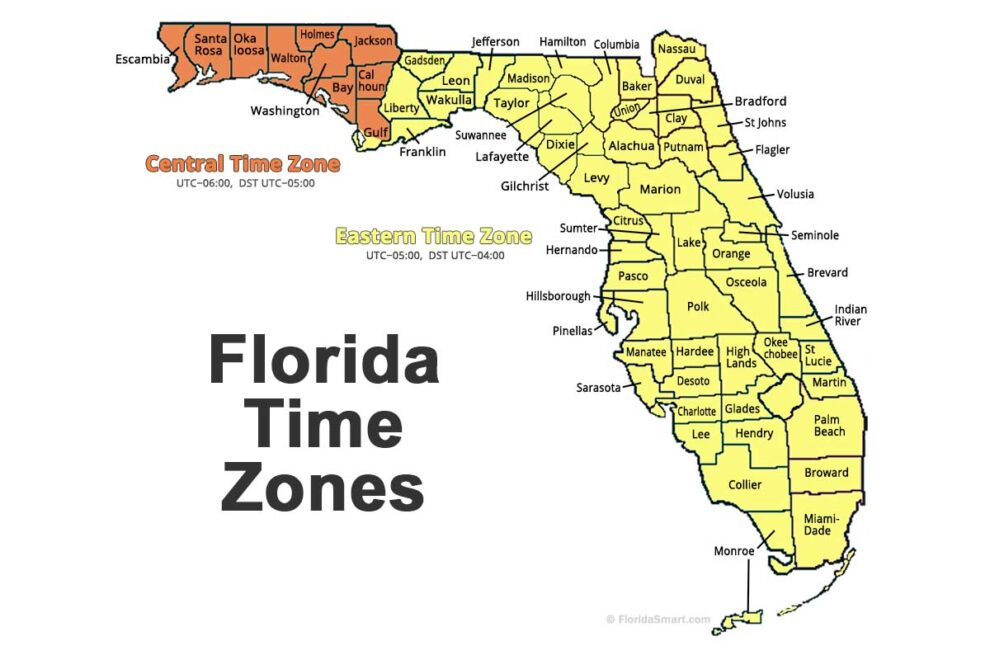
Florida’s Dual Time Zones: A Geographical Overview
Florida, celebrated for its sun-drenched beaches, vibrant cities, and unique ecosystems, operates predominantly on Eastern Time (ET). This encompasses the vast majority of its population centers, world-famous attractions, and bustling metropolitan areas. However, as one ventures westward into the slender stretch of land often referred to as the Panhandle, a significant portion observes Central Time (CT). This unique geographical characteristic, born from historical and practical considerations related to neighboring states, creates an interesting logistical wrinkle for visitors.
Eastern Time (ET): The Sunshine State’s Primary Standard
Eastern Time (UTC-5 during standard time, UTC-4 during Daylight Saving Time) is the default time zone for most of Florida. This includes major hubs like Miami, Orlando, Tampa, and Jacksonville. If your travel plans are centered around these popular destinations or any point south of the Panhandle, you can confidently set your watch to ET. This uniformity across the peninsula simplifies planning for theme park visits, beach excursions, and city explorations, ensuring that a vast network of services and attractions operates on a synchronized schedule. The consistency of ET across the majority of the state facilitates everything from flight schedules at major international airports to the opening hours of retail establishments and government offices. For the typical tourist, unless they specifically head to the western Panhandle, their entire Florida experience will unfold entirely within the Eastern Time Zone.
Central Time (CT): The Panhandle’s Unique Observation
The Central Time Zone (UTC-6 during standard time, UTC-5 during Daylight Saving Time) governs a distinct part of Florida, specifically the western segment of its Panhandle. This region aligns with neighboring states like Alabama and Mississippi, an alignment that historically made practical sense for commerce, communication, and transportation across state lines. For travelers exploring destinations like Pensacola, Destin, and Panama City, knowing about this time zone shift is paramount. The Central Time zone in Florida is characterized by its stunning Gulf Coast beaches, charming coastal towns, and significant military presence. It offers a slightly different pace and cultural flavor compared to the peninsula, and its adherence to CT is a key identifier of this unique regional identity. The one-hour difference can easily lead to missed appointments, late arrivals, or confusion if not accounted for.
Pinpointing the Time Zone Divide: The Invisible Line
Identifying the exact boundary between Eastern and Central Time in Florida is crucial for anyone navigating the Panhandle. While not marked by physical signs on every road, the transition follows clear geographical and county lines, making it predictable for informed travelers.
The Apalachicola River: A Natural Boundary
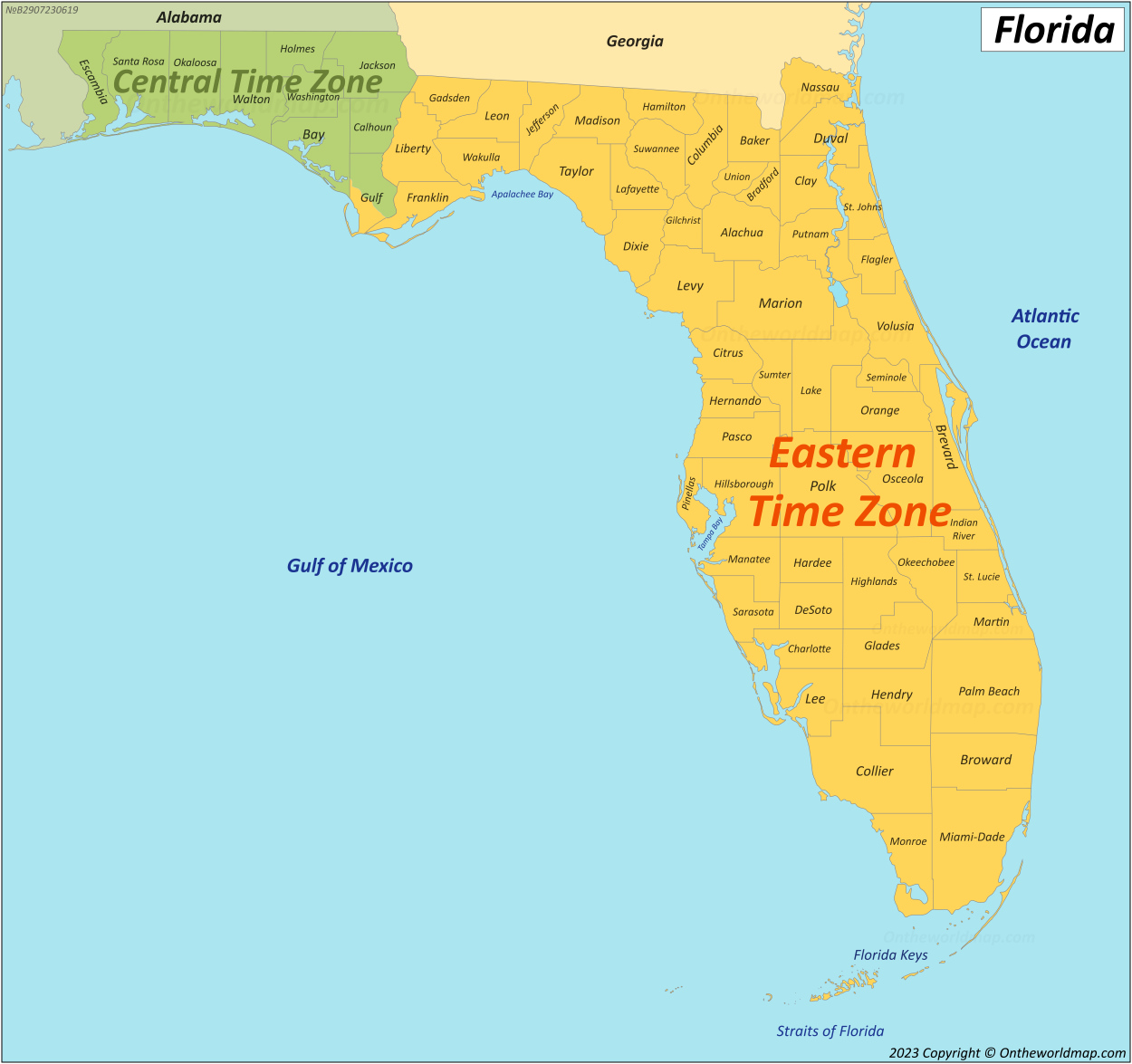
The primary natural demarcation for the time zone change is the Apalachicola River. This significant waterway, flowing south into Apalachicola Bay and the Gulf of Mexico, historically served as a practical and recognizable dividing line. To the east of the Apalachicola River, Florida observes Eastern Time. To its west, the Central Time Zone begins. This river not only forms a natural boundary but also holds ecological importance, making the area surrounding it a fascinating place to explore, often coinciding with the time zone shift itself.
Specific Counties and Cities: Navigating the Change
While the Apalachicola River is the general marker, the time zone boundary is officially defined by county lines, sometimes with slight deviations. For practical purposes, here’s a breakdown:
- Eastern Time Counties near the Divide: Franklin County, Liberty County, Gadsden County, and Leon County (where Tallahassee is located) are firmly in Eastern Time. The city of Apalachicola itself, located at the mouth of the river, is in ET.
- Central Time Counties: Moving west from the Apalachicola River, Gulf County generally marks the transition. Specifically, the easternmost parts of Gulf County, including Port St. Joe and Mexico Beach, famously observe Eastern Time. However, the western portion of Gulf County, west of the Apalachicola River, along with all of Bay County (home to Panama City and Panama City Beach), Walton County, Okaloosa County (where Destin is), Santa Rosa County, and Escambia County (containing Pensacola) are all firmly in Central Time.
- Northern Panhandle Counties: Further north, counties like Calhoun County, Jackson County, Washington County, and Holmes County are primarily in Central Time.
It is important to note that while Port St. Joe and Mexico Beach are technically in Gulf County, they have historically operated on Eastern Time, even though much of the rest of Gulf County to their west observes Central Time. This creates a fascinating and somewhat confusing pocket of ET just west of the Apalachicola River before definitively switching to CT further west. This is a crucial detail that travelers should be aware of, as digital devices might automatically adjust but may not always recognize these specific local nuances.
Navigating the Shift: When Does the Clock Change?
When traveling by car, you’ll physically cross the time zone line. As you drive westbound on U.S. Highway 98 from Apalachicola towards Port St. Joe or Mexico Beach, you generally remain in Eastern Time. However, if you continue west past these points and enter the bulk of Gulf County (west of the Port St. Joe area), your clock will effectively ‘fall back’ by one hour (e.g., 2 PM ET becomes 1 PM CT). Conversely, traveling eastbound from Panama City towards Apalachicola will see your clock ‘spring forward’ by one hour. Many modern smartphones and GPS devices will automatically adjust, but it’s always wise to confirm, especially when the boundary is less distinct, or in areas where a city might opt to remain in ET despite its county technically being in CT, as with Port St. Joe.
Practical Implications for Travelers
Understanding Florida’s time zone quirk is more than just trivia; it has tangible implications for travel logistics, potentially impacting everything from flight connections to dining reservations.
Planning Flights and Transportation
For travelers flying into or out of regional airports in the Panhandle, such as Northwest Florida Beaches International Airport (near Panama City) or Pensacola International Airport, it’s crucial to confirm whether the displayed flight times are in local Central Time or the time zone of your origin/destination. Misjudging this can lead to missed flights or long waits. Similarly, bus and train schedules, car rental pickup/drop-off times, and even ferry services to islands like St. Vincent Island need careful verification regarding the local time zone of each leg of your journey.
Accommodation and Booking Considerations
Hotel check-in and check-out times, spa appointments, and restaurant reservations will always operate on the local time zone of the establishment. If you’ve booked a hotel in Panama City Beach while mentally operating on Eastern Time, you might arrive an hour late for your check-in or miss a crucial reservation. Always double-check the time zone specified in your booking confirmations, especially when making arrangements from a different time zone.
Event Schedules and Attractions
From local festivals and live music events to golf tee times and tour departures, all scheduled activities will adhere to the local time. If you plan to visit attractions like Eglin Air Force Base or Tyndall Air Force Base in the Panhandle, their operational hours will be in Central Time. Missing a dolphin watching tour by an hour due to a time zone oversight can be a frustrating, albeit avoidable, experience.
Digital Devices and Automatic Adjustments
Most modern smartphones, smartwatches, and GPS navigation systems are designed to automatically adjust to the local time zone as you travel. This is generally reliable, but it’s not foolproof. In transitional areas, or if your device’s settings are not configured for automatic updates, you might find yourself out of sync. It’s always a good practice to manually verify your device’s time when you cross into a new time zone, especially if you see any conflicting signs or clocks. Having a traditional watch set to local time can also provide a reliable backup.
Exploring the Panhandle: A Region Bridging Time
The Florida Panhandle, with its unique time zone arrangement, offers a distinct travel experience, blending natural beauty with historical richness. Understanding its time zones enhances the exploration of its key destinations.
Destinations in Central Time
The western and central Panhandle are a treasure trove of destinations operating on Central Time, renowned for their stunning Gulf Coast beaches and emerald waters.
- Panama City and Panama City Beach: Famous for their vibrant spring break scene, beautiful white-sand beaches, and family-friendly attractions like St. Andrews State Park and Pier Park. All activities here, from dolphin cruises to dining reservations, will be in Central Time.
- Destin: Known as the “World’s Luckiest Fishing Village,” Destin boasts spectacular fishing charters, pristine beaches, and various water sports. Its lively harborwalk and numerous seafood restaurants also operate on CT.
- Pensacola: As Florida’s westernmost major city, Pensacola is rich in history, from its Spanish colonial past to the National Naval Aviation Museum and the legendary Blue Angels. All cultural sites and attractions here adhere to Central Time.
- Other CT towns: Smaller towns like Niceville, Fort Walton Beach, and Miramar Beach also observe Central Time, offering a plethora of coastal charm and recreational opportunities.
Destinations in Eastern Time Near the Divide
While largely in Central Time, the Panhandle also includes significant Eastern Time destinations, particularly as you approach the Apalachicola River and head inland.
- Tallahassee: As Florida’s state capital, Tallahassee is a hub of political activity, higher education, and historical sites. It operates firmly on Eastern Time, serving as a gateway to both the Panhandle and the peninsula. Visitors here can explore the Old Florida State Capitol or Mission San Luis without time zone concerns from the East.
- Apalachicola: This charming historic town, famous for its oysters and preserved Victorian architecture, sits squarely in Eastern Time, on the eastern bank of the Apalachicola River. It’s a perfect spot to experience the old Florida charm before or after crossing into CT.
- Port St. Joe and Mexico Beach: These coastal communities, while geographically west of the Apalachicola River, have traditionally opted to remain on Eastern Time. This is a vital detail, as a short drive west from these towns would take you into a definitive Central Time area, potentially causing confusion.
Maximizing Your Florida Travel Experience
Navigating Florida’s dual time zones might seem like a minor detail, but a little foresight can significantly enhance your travel experience, preventing unnecessary stress and ensuring you make the most of your adventure.
Always Confirm Local Times
The golden rule for travel across time zones is to always confirm local times for all critical appointments, bookings, and departure/arrival schedules. When making reservations, it’s prudent to explicitly ask or look for clarity on which time zone the listed times adhere to. This simple step can save you from a missed flight, a late check-in, or a closed attraction. Don’t solely rely on automatic device adjustments, especially in the nuanced boundary areas.

Embrace the Time Shift as Part of the Adventure
Instead of viewing the time zone change as a potential hassle, consider it another unique aspect of exploring the diverse geography of Florida. The Panhandle itself offers a distinct atmosphere, different from the bustling theme parks or the vibrant South Florida scene. The one-hour shift is a subtle reminder of the vastness and varied connections of the state. With a little planning and awareness, you can smoothly transition between time zones, allowing you to fully immerse yourself in every part of your Florida journey, from the Atlantic coast to the Gulf shores. The logistical considerations simply add another layer of preparation to an otherwise unforgettable trip to one of America’s most beloved travel destinations.
LifeOutOfTheBox is a participant in the Amazon Services LLC Associates Program, an affiliate advertising program designed to provide a means for sites to earn advertising fees by advertising and linking to Amazon.com. Amazon, the Amazon logo, AmazonSupply, and the AmazonSupply logo are trademarks of Amazon.com, Inc. or its affiliates. As an Amazon Associate we earn affiliate commissions from qualifying purchases.