
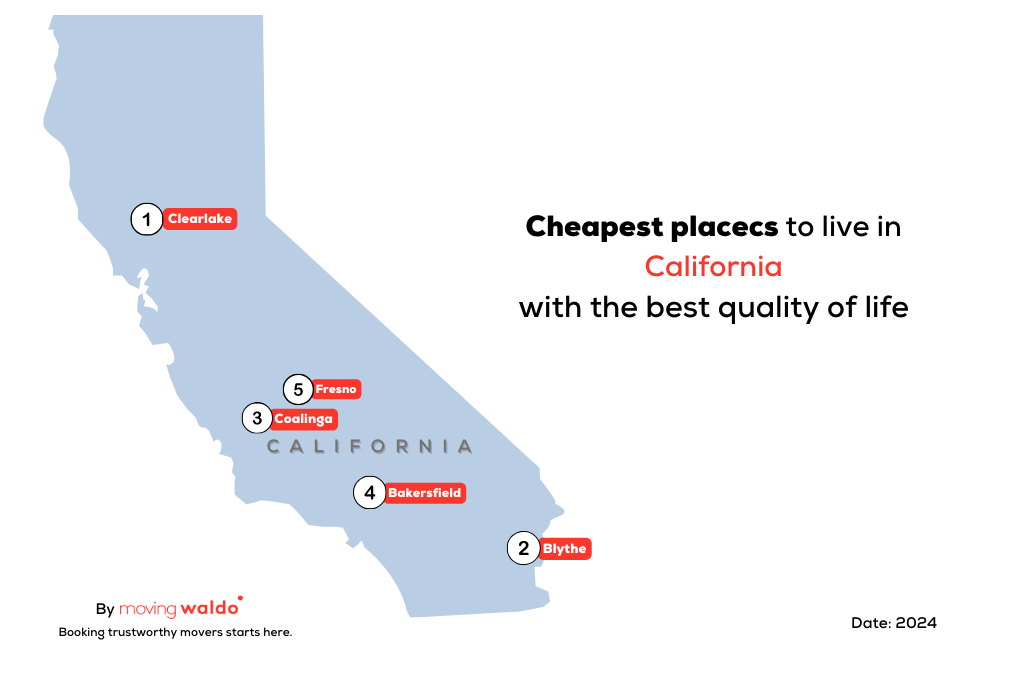
California, often romanticized as the land of endless sunshine and opportunity, comes with a notorious reputation for its exorbitant cost of living. While major metropolitan areas like San Francisco and Los Angeles indeed command some of the highest housing prices in the nation, the Golden State is vast and diverse. Beneath the glitz and glamour, a thoughtful examination reveals pockets where a more affordable lifestyle is not only possible but thriving. Achieving a budget-conscious life in California requires a strategic approach, often balancing urban amenities with quieter, more rural settings, or accepting longer commutes to major job centers. This exploration focuses on identifying these elusive, cheaper locales and understanding the lifestyle trade-offs involved.
Unpacking the Cost of Living in California
The allure of California is undeniable: a vibrant economy, diverse landscapes from pristine beaches to majestic mountains, and a generally progressive culture. However, this popularity has driven up demand, particularly for housing. Housing costs, whether rental or ownership, are the primary driver of California’s high cost of living index. Beyond shelter, other expenses such as transportation, utilities, and even groceries can be higher than the national average. For individuals and families seeking an affordable lifestyle, the key lies in understanding that “cheap” is relative within California’s context. It rarely means rock-bottom prices seen in other states, but rather significantly lower costs compared to its most expensive cities, often while retaining access to much of what makes California desirable. The trade-offs frequently involve geographic distance from major hubs, slower paces of life, and potentially fewer direct job opportunities in highly specialized fields.
Defining “Affordable” in the Golden State
“Affordable” in California is a spectrum. For someone relocating from New York City or Seattle, even a moderately priced California city might seem like a bargain. For others, it means finding a place where the median home price or rental rate is significantly below the state average, which hovers well above half a million dollars for homes and thousands for rent in urban centers. Our focus here is on areas where median housing costs are generally under the state average, offering more breathing room for a wider range of budgets. These areas typically allow residents to enjoy a comfortable lifestyle without the constant financial strain often associated with living in the state’s most prominent cities.
The Central Valley: California’s Affordability Hub
Stretching roughly 450 miles through the heart of California, the Central Valley is the state’s agricultural powerhouse and arguably its most affordable region for living. Characterized by vast farmlands, a more conservative political leaning than the coastal areas, and a climate that can be intensely hot in summer, the Central Valley offers significantly lower housing costs. This region presents a unique lifestyle: a blend of rural charm with growing urban centers.
Fresno and Bakersfield: Urban Comfort at a Lower Price Point
As the largest cities in the San Joaquin Valley portion of the Central Valley, Fresno and Bakersfield consistently rank among California’s most affordable major cities. Both offer a diverse economy, including agriculture, energy, and logistics, alongside an expanding array of amenities like cultural institutions, dining, and educational facilities.
- Fresno: Located centrally, Fresno is often praised for its relatively affordable housing, especially compared to the coastal areas. It boasts a burgeoning downtown area, several universities, and convenient access to national parks like Yosemite, Sequoia, and Kings Canyon. The lifestyle here is laid-back, community-oriented, and offers a good balance of urban conveniences with proximity to nature.
- Bakersfield: Further south in the Central Valley, Bakersfield offers a similar value proposition. Its economy is heavily influenced by the oil and gas industry, alongside agriculture. Housing costs remain low, making it an attractive option for those seeking homeownership in California. While culturally distinct, Bakersfield provides a family-friendly environment and an authentic California experience away from the bustling coast.
Other Central Valley Options: Sacramento and Beyond
While slightly pricier than Fresno or Bakersfield, the state capital, Sacramento, still offers significantly better value than coastal metros. As a growing urban center with a strong job market in government, healthcare, and technology, Sacramento provides a vibrant lifestyle, an evolving food scene, and access to outdoor recreation along the American River. Smaller cities like Chico, Yuba City, and Marysville in the northern Central Valley also present affordable living options, often with a stronger small-town feel and close-knit communities. These areas appeal to those who prioritize a slower pace, community engagement, and direct access to outdoor activities like fishing, hiking, and hunting.
Northern California’s Overlooked Affordable Havens
Beyond the glittering Bay Area, Northern California harbors regions that offer stunning natural beauty and a more manageable cost of living. These areas often trade immediate proximity to major tech hubs for serene environments and a distinct sense of community.
The North Coast and Inland North: Eureka and Redding
The far North Coast, especially Humboldt County, provides a unique, temperate rainforest climate and a laid-back, artsy vibe.
- Eureka: As the largest city on California’s North Coast, Eureka offers a strikingly different California experience. Surrounded by redwood forests and situated on Humboldt Bay, it boasts Victorian architecture, a thriving local arts scene, and a strong sense of community. Housing costs are considerably lower than the state average, though job opportunities can be more limited, often centered around logging, fishing, tourism, and local government/services. The lifestyle here is for those who cherish nature, a slower pace, and a strong sense of local identity.
- Redding: Located further inland in the Shasta Cascade region, Redding serves as a regional hub for Northern California and offers even lower housing costs than Eureka. Positioned near the Sacramento River, Redding is a gateway to numerous outdoor activities, including fishing, hiking, and boating at Shasta Lake. The city has a growing healthcare sector and a more conservative, family-oriented atmosphere. It’s an excellent choice for those seeking an active outdoor lifestyle combined with very affordable housing.
Southern California’s Accessible Pockets
While Southern California is dominated by the sprawling metropolis of Los Angeles and the expensive coastal communities of Orange County and San Diego, there are still areas where the cost of living is significantly lower, albeit often with trade-offs in commute times or amenities.
The Inland Empire and High Desert: Proximity Without the Premium
East of Los Angeles, the Inland Empire region, encompassing cities like Riverside and San Bernardino, offers a more affordable entry point into Southern California living. While rapidly growing and facing increasing housing costs, these areas are still more attainable than coastal cities.
- Riverside & San Bernardino: These cities serve as major population centers within the Inland Empire, offering diverse economies, universities, and cultural attractions. Many residents commute to Orange County or Los Angeles for work, balancing longer travel times with substantially lower housing expenses. The lifestyle here is suburban, family-focused, and enjoys a drier, warmer climate than the coast.
Further north in the desert, areas like the Antelope Valley provide some of the lowest housing costs in Southern California.
- Lancaster & Palmdale: These twin cities in the Antelope Valley offer an aerospace-driven economy and a more rugged, desert landscape. Housing is remarkably affordable compared to most of Southern California. While summers are hot and amenities might be less diverse than in larger cities, residents enjoy spacious living, clear skies, and a strong sense of community. Commuting to parts of Los Angeles is common but can be lengthy.
- Victorville, Hesperia, & Barstow: These high desert communities further east along the I-15 corridor offer even more budget-friendly options. They are quieter, with a focus on local services, logistics, and retail. While further from major urban centers, they provide a very accessible entry point into California homeownership and a more relaxed pace of life.
Navigating the Budget-Friendly California Lifestyle
Choosing a cheap place to live in California is not merely about finding low rent or home prices; it’s about embracing a lifestyle that prioritizes certain amenities and compromises on others. Moving to the Central Valley, the far North Coast, or the high desert of Southern California often means accepting hotter summers, a slower pace of life, and potentially fewer direct high-paying job opportunities compared to the tech or entertainment industries of the coastal hubs.
However, these regions offer immense value. Residents often enjoy:
- More Space: Larger homes, bigger yards, and less dense populations.
- Stronger Community Ties: Smaller towns often foster a closer-knit community feel.
- Access to Nature: Proximity to national parks, forests, rivers, and outdoor recreation without the crowds or premium prices.
- Reduced Overall Expenses: While housing is the biggest factor, ancillary costs like dining out, entertainment, and even local services can be more budget-friendly.
Ultimately, a cheap place to live in California exists for those willing to look beyond the heavily promoted coastal image. It’s about finding a balance between affordability, desired lifestyle, and career opportunities. By considering the Central Valley, the rugged North Coast, or the expansive Inland Empire and high desert, individuals and families can discover that the dream of a California lifestyle is within reach, even on a budget.
LifeOutOfTheBox is a participant in the Amazon Services LLC Associates Program, an affiliate advertising program designed to provide a means for sites to earn advertising fees by advertising and linking to Amazon.com. Amazon, the Amazon logo, AmazonSupply, and the AmazonSupply logo are trademarks of Amazon.com, Inc. or its affiliates. As an Amazon Associate we earn affiliate commissions from qualifying purchases.