
Often revered as the “Crown Jewel of the North Atlantic Coast,” Acadia National Park in Maine stands as a testament to nature’s enduring beauty. When travelers inquire, “Where is Acadia Maine?”, they’re not just asking for a location on a map; they’re seeking the gateway to a world of dramatic landscapes, rugged coastlines, dense forests, and pristine lakes. This iconic national treasure is a significant draw for tourists worldwide, offering a myriad of experiences that blend outdoor adventure with cultural richness. Understanding its precise location and what makes it so special is the first step in planning an unforgettable journey.

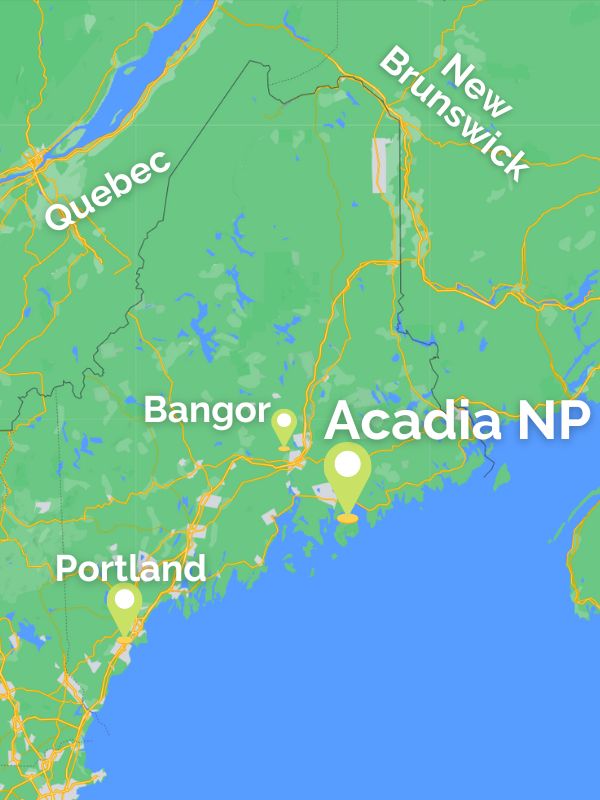
Acadia National Park is primarily situated on Mount Desert Island along the central coast of Maine, in Hancock County. While the bulk of the park, including its most famous attractions, resides on Mount Desert Island, smaller sections extend to the Schoodic Peninsula on the mainland and parts of Isle au Haut, a remote outer island accessible by ferry. This unique geographical spread contributes to Acadia’s diverse ecosystems and landscapes, making it a multifaceted destination for every kind of traveler.
Unveiling Acadia: Location and Landscape
Acadia National Park’s location is as captivating as its natural beauty. Nestled against the vast expanse of the Atlantic Ocean, it offers a stunning fusion of coastal charm and mountainous grandeur. Its position in Down East Maine makes it a relatively accessible, yet wonderfully wild, escape within New England.
The Jewel of Mount Desert Island
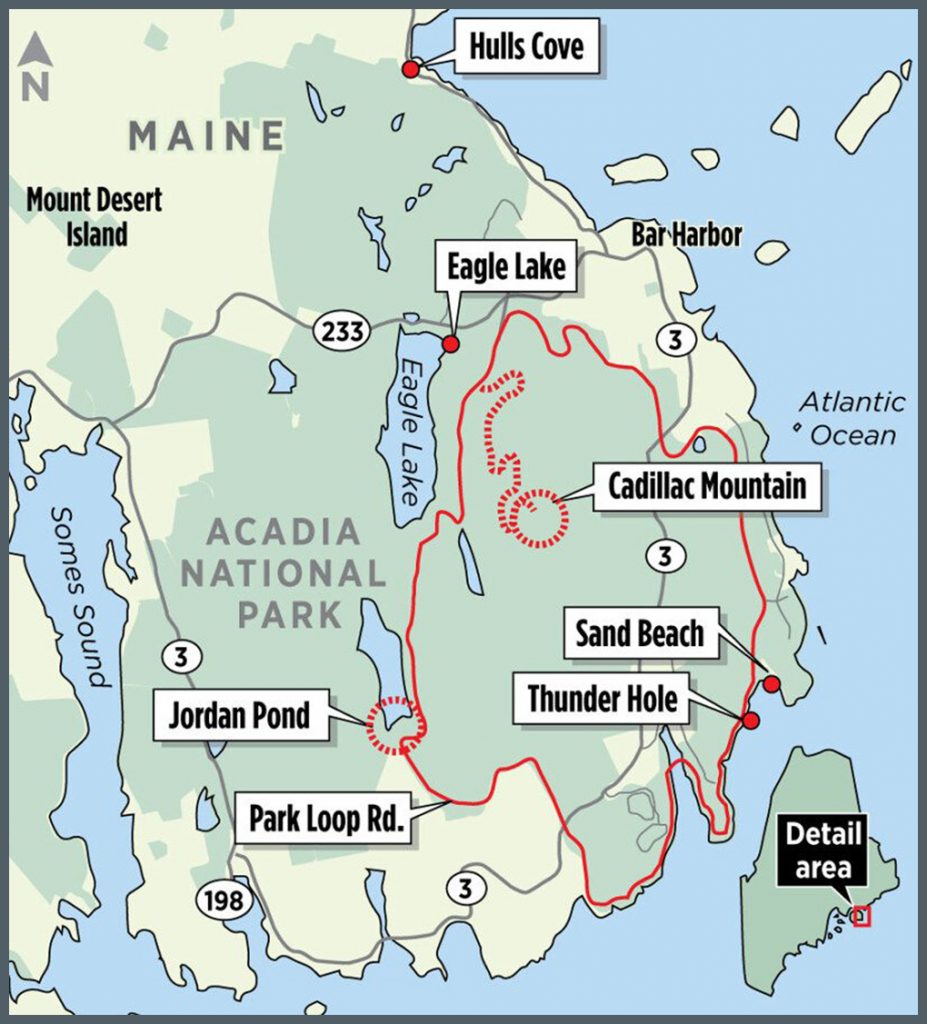
The heart of Acadia National Park lies on Mount Desert Island, the largest island off the Maine coast. This island hosts the bustling town of Bar Harbor, which serves as the primary gateway to the park and its surrounding attractions. Bar Harbor is a vibrant hub offering a wide array of accommodation options, dining experiences, and cultural activities, making it an ideal base for exploring the park.
Beyond Bar Harbor, Mount Desert Island is dotted with charming smaller villages such as Northeast Harbor, Southwest Harbor, and Bass Harbor. Each of these communities possesses its own distinct character, from the yacht-filled marinas of Northeast Harbor to the working fishing village vibe of Bass Harbor, home to the iconic Bass Harbor Head Light. These villages offer diverse lodging choices, from historic inns to quaint bed and breakfasts, catering to those seeking a quieter retreat away from Bar Harbor’s lively atmosphere.
The island’s landscape is characterized by its dramatic contrasts: rugged, granite shorelines carved by ancient glaciers, forested valleys, and some of the highest mountains on the U.S. Atlantic coast, including Cadillac Mountain. These geological features create a stunning backdrop for outdoor pursuits and provide panoramic views that are simply unparalleled.
Geographical Context and Accessibility
Acadia National Park’s location in Maine positions it as a premier destination for those traveling through New England. For most visitors, reaching Acadia involves a scenic drive. The closest major city is Bangor, Maine, home to Bangor International Airport (BGR), which is approximately an hour’s drive from Mount Desert Island. Larger international airports in Boston, Massachusetts, and Portland, Maine, offer more flight options, typically requiring a 4-5 hour and 3-hour drive, respectively, to reach the park.
Driving to Acadia is part of the adventure, with routes passing through picturesque New England towns and scenic coastal stretches. From major East Coast cities like New York, Philadelphia, or Washington D.C., the journey offers a gradual immersion into the region’s distinct charm before arriving at the dramatic beauty of Acadia. Once on Mount Desert Island, the Park Loop Road provides a comprehensive driving tour of many of the park’s key attractions, while the free Island Explorer shuttle bus system offers convenient transportation during peak season, reducing traffic and parking woes.
Exploring Acadia’s Natural Wonders and Activities
Acadia National Park is a paradise for nature lovers and adventure seekers, offering a vast array of activities set against some of the most stunning backdrops in the United States. Its unique ecosystem supports diverse flora and fauna, making every visit a chance for discovery.
Iconic Landmarks Not to Miss
The park is home to several natural landmarks that have become synonymous with the Acadia experience.
-
Cadillac Mountain: Standing at 1,530 feet, Cadillac Mountain holds the distinction of being the highest point on the U.S. Atlantic Ocean coast. During certain times of the year, it’s the first place in the United States to witness the sunrise, drawing eager visitors to its summit before dawn. The panoramic views from the top, encompassing the park’s islands, coastline, and inland forests, are breathtaking at any time of day. Reservations are required for vehicle access during peak season, underscoring its popularity.
-
Jordan Pond: This pristine, glacier-formed pond is framed by the “Bubbles,” two dome-shaped mountains, and offers tranquil beauty. The Jordan Pond House is famous for its afternoon tea and popovers, a beloved tradition since the late 1800s. A scenic path encircles the pond, providing an easy and picturesque walk.
-
Ocean Path: Following a dramatic stretch of coastline, the Ocean Path offers stunning views of the Atlantic Ocean. Along this path, you’ll encounter:
- Sand Beach: A rare gem on a rocky coast, this beautiful cove boasts pink sand composed of shell fragments. It’s a popular spot for sunbathing and enjoying the chilly Atlantic waters.
- Thunder Hole: A natural rock inlet where, at certain tides, incoming waves compress air and force water out with a thunderous roar and spray, creating a dramatic spectacle.
- Otter Cliff: Rising 110 feet above the Atlantic, this is one of the highest coastal headlands north of Rio de Janeiro. It offers stunning vistas and is a favorite spot for rock climbers.
- Schooner Head Overlook: Another point along the Park Loop Road offering spectacular views, particularly of the rugged coastline and the small islands offshore.
Adventures for Every Traveler
Acadia caters to all levels of outdoor enthusiasts, from casual strollers to experienced adventurers.
-
Hiking: With over 150 miles of hiking trails, Acadia offers options ranging from gentle coastal strolls to strenuous mountain climbs. Popular trails include the challenging iron-rung routes of the Precipice Trail and Beehive Trail (for experienced hikers with no fear of heights), and the more moderate ascent up Gorham Mountain for incredible ocean views. Family-friendly options abound, such as the Jordan Pond Path or the various sections of the Ocean Path.
-
Biking: A unique feature of Acadia is its 45 miles of historic carriage roads, gifts from John D. Rockefeller Jr.. These gravel roads, free of motor vehicles, wind through the park’s interior, past picturesque stone bridges, lakes, and forests, providing an unparalleled biking experience suitable for all ages.
-
Kayaking and Canoeing: The park’s numerous lakes and ponds, as well as its protected coves, are perfect for paddling. Rent a kayak or canoe in Bar Harbor or one of the other villages and explore the serene waters of Long Lake, Echo Lake, or even venture into the calmer sections of the Atlantic Ocean for a sea kayaking adventure.
Beyond the Trails: Marine and Cultural Experiences
Acadia’s connection to the Atlantic Ocean opens up a world of marine-based activities and cultural insights.
- Whale Watching and Boat Tours: Bar Harbor is a prime departure point for whale watching excursions, where you might spot humpback, finback, or minke whales, along with seals and puffins. Various scenic boat tours also offer different perspectives of the park’s coastline, showcasing its dramatic cliffs and hidden coves from the water.
-
Exploring Bar Harbor: The lively town of Bar Harbor offers more than just a place to sleep. It boasts a charming downtown with boutique shops, art galleries featuring local Maine artists, and a variety of dining options. Stroll along the Bar Harbor Shore Path for easy coastal views or visit the Abbe Museum to learn about the Wabanaki people, the native inhabitants of Maine.
-
Photography and Stargazing: Acadia’s diverse landscapes provide endless photographic opportunities, from the fiery sunrises on Cadillac Mountain to the serene reflections on Jordan Pond. As one of the darkest spots on the East Coast, it’s also an exceptional destination for stargazing, with regular ranger-led astronomy programs.
Planning Your Acadia Getaway: Accommodation, Dining, and Tips
A memorable trip to Acadia National Park requires thoughtful planning, especially concerning where to stay, what to eat, and how to make the most of your visit. Given the website’s focus on travel, hotels, tourism, and accommodation, these aspects are crucial for a fulfilling experience.
Where to Stay: Lodging Options Around the Park
The choice of accommodation significantly impacts your Acadia experience. The region offers a spectrum of lodging to suit various preferences and budgets.
-
Bar Harbor Hotels and Resorts: As the largest town bordering the park, Bar Harbor has the widest selection of hotels, from luxury resorts offering ocean views and spa amenities to mid-range options and family-friendly motels. Many properties provide easy access to downtown attractions and park entrances. Examples might include boutique hotels like the Bar Harbor Inn & Spa or more budget-conscious chains.
-
Charming B&Bs and Inns: For a more intimate and personalized stay, the historic bed and breakfasts scattered throughout Bar Harbor and the quieter villages like Northeast Harbor and Southwest Harbor are excellent choices. These often come with delicious homemade breakfasts and local insights from your hosts.
-
Vacation Rentals: For families or larger groups, vacation rentals—ranging from cozy cottages to expansive waterfront homes—offer flexibility and a home-away-from-home experience. These are prevalent across Mount Desert Island and can be an economical choice for longer stays. Websites like VRBO or Airbnb list numerous options.
-
Camping: For the ultimate outdoor immersion, Acadia National Park offers several campgrounds, including Blackwoods Campground and Seawall Campground on Mount Desert Island, and Schoodic Woods Campground on the Schoodic Peninsula. Reservations, especially during peak season, are essential and can be made via Recreation.gov.
Savoring Maine’s Flavors
No trip to Maine is complete without indulging in its culinary delights. The region around Acadia offers fresh, locally sourced ingredients that define New England cuisine.
-
Lobster, Lobster, Lobster: Maine lobster is world-famous, and you’ll find it prepared in countless ways: steamed, boiled, in a classic lobster roll (hot with butter or cold with mayo), in bisque, or even as part of a gourmet meal. Seek out a traditional lobster pound for an authentic experience.
-
Fresh Seafood: Beyond lobster, the waters off Acadia yield an abundance of fresh seafood, including clams, mussels, scallops, and haddock. Many restaurants in Bar Harbor and the surrounding villages specialize in “boat-to-table” dishes.
-
Blueberries: Maine wild blueberries are renowned for their intense flavor. Enjoy them in pancakes, muffins, pies, jams, or fresh from a local market. Don’t miss the chance to try a slice of warm blueberry pie with a scoop of vanilla ice cream.
-
Local Eateries: From casual diners serving hearty breakfasts to upscale restaurants with sophisticated menus, there’s a dining option for every taste. Consider making reservations for dinner, especially during the busy summer months.
Essential Travel Tips for a Seamless Visit
To ensure a smooth and enjoyable Acadia adventure, keep these practical tips in mind:
- Book Early: Accommodation, especially in Bar Harbor, fills up quickly during peak season (July-August and fall foliage). Book hotels, campgrounds, and popular activities like whale watching well in advance.
- Park Pass: Purchase your Acadia National Park entrance pass online or at visitor centers. This pass supports park maintenance and services.
- Dress in Layers: Weather in Acadia can change rapidly. Layers are essential for comfort, regardless of the season.
- Stay Hydrated and Pack Snacks: Especially when hiking, carry plenty of water and energy-rich snacks.
- Leave No Trace: Help preserve the park’s natural beauty by packing out everything you pack in, staying on marked trails, and respecting wildlife.
- Utilize the Island Explorer: This free, propane-powered shuttle bus operates from late June through Columbus Day, connecting Bar Harbor and other villages to various park attractions. It’s an excellent way to navigate the park without the hassle of parking.
- Cell Service: While generally good in towns, cell service can be spotty in certain areas of the park. Download offline maps and information if needed.
The Best Time to Visit and What to Expect
The beauty of Acadia National Park transforms with each season, offering distinct experiences and appeals. Choosing the right time to visit depends on your preferences for crowds, weather, and available activities.
Seasonal Splendor: Choosing Your Perfect Time
- Spring (May to Early June): Characterized by cooler temperatures and fewer crowds, spring is ideal for those seeking solitude. Wildflowers begin to bloom, and migratory birds return, making it a great time for birdwatching. However, some park roads and facilities may still be closed, and the weather can be unpredictable.
- Summer (Late June to August): This is peak season in Acadia, offering the warmest weather and longest days, perfect for all outdoor activities. All park facilities, tours, and restaurants are fully operational. Expect significant crowds, especially in Bar Harbor and at popular attractions like Cadillac Mountain and Sand Beach. Advance bookings are crucial.
- Fall (September to Mid-October): Arguably the most picturesque time to visit, as Acadia’s deciduous trees explode in vibrant hues of red, orange, and gold. The crisp air and stunning foliage create a magical atmosphere for hiking and photography. Crowds can still be substantial, especially during peak foliage weekends, but generally less intense than in summer. Services begin to scale back in mid-October.
- Winter (Late October to April): Acadia in winter offers a serene, snow-covered landscape for hardy adventurers. Most roads are closed to vehicular traffic (including sections of the Park Loop Road), but open for cross-country skiing, snowshoeing, and winter hiking. Services are very limited, and many businesses in Bar Harbor close for the season, but the quiet beauty is unparalleled for those seeking a true wilderness experience.
Navigating the Park: Transportation and Fees
Getting around Acadia is straightforward with a few key considerations:
- Park Loop Road: This 27-mile scenic road is a must-drive, offering access to many of the park’s most famous sites. A significant portion of it is one-way, making navigation easy. Vehicle reservations are often required for Cadillac Mountain summit access during peak season.
- Island Explorer: As mentioned, this free shuttle service is an invaluable resource for navigating Mount Desert Island during the warmer months. It connects towns with park attractions and reduces traffic congestion.
- Park Entrance Fees: Acadia National Park charges an entrance fee per vehicle, per person, or per motorcycle. This fee contributes directly to the park’s preservation and visitor services. Annual passes are also available for frequent visitors to national parks.
In essence, “Where is Acadia Maine?” is an invitation to discover one of America’s most cherished national parks, a place where the mountains meet the sea in a spectacular display of natural grandeur. From its precise location on Mount Desert Island to its diverse activities and welcoming communities, Acadia promises an enriching travel experience for every visitor.
LifeOutOfTheBox is a participant in the Amazon Services LLC Associates Program, an affiliate advertising program designed to provide a means for sites to earn advertising fees by advertising and linking to Amazon.com. Amazon, the Amazon logo, AmazonSupply, and the AmazonSupply logo are trademarks of Amazon.com, Inc. or its affiliates. As an Amazon Associate we earn affiliate commissions from qualifying purchases.