
The Mile High City, a vibrant hub nestled against the majestic Rocky Mountains, is renowned for its burgeoning craft beer scene, thriving arts and culture, and its status as a gateway to some of the nation’s most stunning natural landscapes. But beyond its modern allure and proximity to outdoor adventures, the city of Denver, Colorado, holds a rich history rooted in the Wild West and the fervor of the Gold Rush. A crucial element of this history, and indeed the very identity of the city, is its name. Understanding where Denver, Colorado, gets its name is to delve into the early days of settlement, the ambitions of prominent figures, and the political landscape that shaped the American West.

The Genesis of a City: From Auraria to Denver
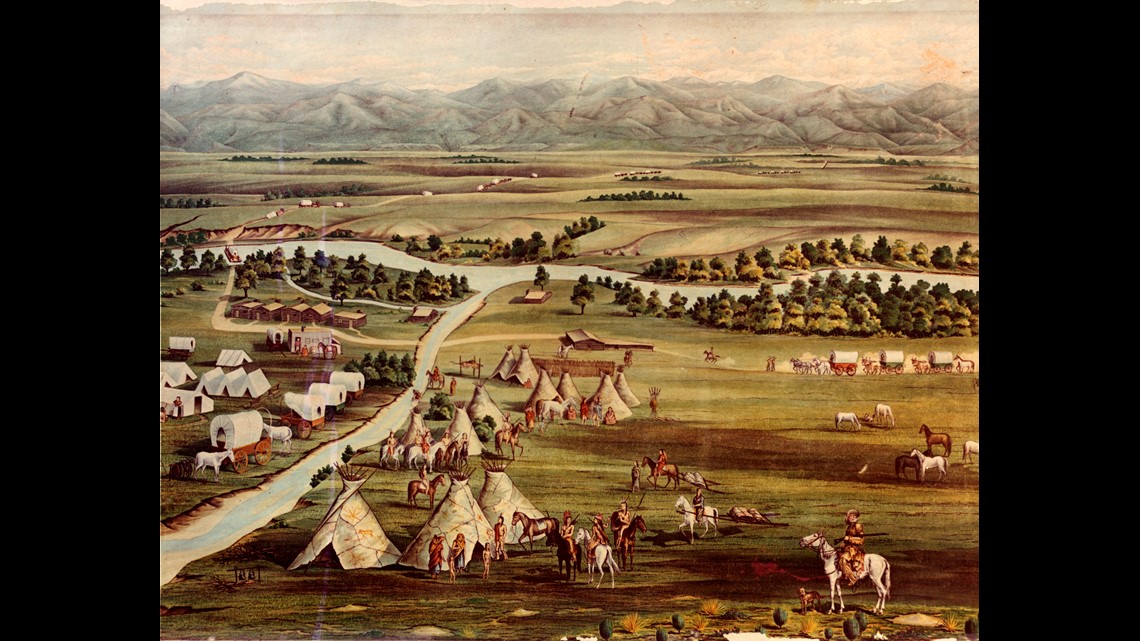
The story of Denver’s naming is intrinsically tied to the establishment of settlements in the area during the Pike’s Peak Gold Rush of 1858. Prospectors, drawn by the promise of gold, flocked to the confluence of the South Platte River and its tributary, the Cherry Creek. Two distinct settlements quickly emerged, staking their claims in this fertile, albeit rugged, territory.
Auraria: The First Foothold
The first of these settlements was Auraria, founded in November 1858 by prospectors led by William Green Russell. Auraria was named after the Latin word for gold, “aurum,” reflecting the very reason for the miners’ presence. This nascent town quickly grew, boasting a post office, saloons, and rudimentary living quarters, becoming a focal point for the thousands of fortune-seekers arriving in the region. It was a raw, untamed outpost, buzzing with the energy and uncertainty of a gold rush town.
St. Charles City: A Brief Rivalry
Shortly after Auraria’s establishment, another group of prospectors, including General William Larimer, arrived and laid out a rival townsite across Cherry Creek. They initially named their settlement St. Charles City, hoping to establish it as the primary community in the area. However, Larimer and his associates recognized the strategic advantage of controlling the ferry crossing over the South Platte River, a vital artery for transportation and commerce.
The Pivotal Decision: A City Named for a Governor
The fate of these twin settlements hinged on a critical decision that would forever imprint a name upon this developing region. General Larimer, a shrewd businessman and politician, understood the importance of governmental recognition and favor. At the time, the Colorado Territory was still organizing, and the appointment of territorial officials held significant weight.

Larimer and his partners learned that James W. Denver, a former U.S. Congressman from Missouri and the current Governor of the Kansas Territory, was instrumental in the organization of the new Colorado Territory. In an act of calculated political maneuvering, and with an eye toward securing favorable dealings with the territorial government, Larimer and his associates decided to rename their settlement in honor of Governor Denver.
The Name Change: A Strategic Alliance
In November 1858, the residents of St. Charles City, under the influence of Larimer, voted to rename their burgeoning town “Denver City” in honor of Governor James W. Denver. This was not a purely sentimental gesture; it was a strategic move designed to curry favor with the territorial governor, who had the power to influence land claims, infrastructure development, and the overall direction of the new territory. By naming the city after him, they hoped to ensure Denver’s support and potentially gain an advantage over their rivals in Auraria.
Interestingly, Governor Denver himself was not present for this honorific renaming. In fact, he had already resigned his position as governor of the Kansas Territory by the time Denver City was officially christened. However, his influence and the political climate surrounding his administration were such that the gesture was deemed highly beneficial by the Denver City founders.
The Unification of Denver and Auraria
The rivalry between Denver City and Auraria was short-lived. The practicalities of operating two separate towns so close to each other, coupled with the desire for a stronger, unified presence, soon led to discussions of amalgamation. The two settlements officially merged on April 9, 1860, forming a single municipality. While the name “Denver City” had been established by the more politically astute founders of the St. Charles City site, it was this unified entity that ultimately became the prominent settlement. The original settlement of Auraria, though a pioneer in its own right, was absorbed into the growing Denver City.
The merged city, now simply known as Denver, quickly began to grow in significance. Its location at the confluence of major waterways and its strategic position as a transportation hub, particularly with the advent of the railroad, solidified its importance. The initial hope of gold quickly faded for many, but the city itself, named in honor of a political figure, was destined for a different kind of prosperity, one built on trade, governance, and its role as a gateway to the West.
The Legacy of Governor James W. Denver
While Governor James W. Denver may not have personally founded the city that bears his name, his role in the political organization of the Colorado Territory was undeniable. He was a significant figure in the westward expansion and the establishment of governmental structures in the developing territories. His appointment and tenure as governor, even if brief, provided a crucial point of reference for those seeking to establish legitimacy and order in a rapidly changing landscape.
The naming of Denver is a testament to the interplay of settlement, ambition, and political influence. It highlights how early American cities were often shaped not just by geography and resources, but by the personalities and strategic decisions of those who sought to carve out their place in a new frontier. The city that emerged from the dusty plains of the West, named for a governor whose actions helped lay the groundwork for territorial governance, would go on to become a major metropolis, a center of commerce and culture, and a beloved destination for travelers from around the globe. The name “Denver” thus carries with it a dual legacy: the pioneering spirit of the gold rush and the foundational political machinations that gave it its enduring identity.
LifeOutOfTheBox is a participant in the Amazon Services LLC Associates Program, an affiliate advertising program designed to provide a means for sites to earn advertising fees by advertising and linking to Amazon.com. Amazon, the Amazon logo, AmazonSupply, and the AmazonSupply logo are trademarks of Amazon.com, Inc. or its affiliates. As an Amazon Associate we earn affiliate commissions from qualifying purchases.