
For any traveler embarking on a journey to or through the vibrant heart of the Midwest, understanding the precise location and operational nuances of their arrival or departure point is paramount. Detroit Metropolitan Wayne County Airport (DTW), commonly known as Detroit Metro Airport, serves as a critical nexus for both domestic and international air travel. Far more than just a place where planes land and take off, DTW is a bustling gateway, deeply integrated into the fabric of the region’s economy and lifestyle. This comprehensive guide will illuminate its exact position, significance, and what travelers can expect when navigating this key aerial thoroughfare.
Locating Detroit’s Primary Air Gateway
Pinpointing Detroit Metro Airport on a map reveals its strategic placement, which contributes significantly to its role as a major travel hub. While its name suggests a direct location within the city of Detroit, its actual coordinates place it just outside the city’s immediate urban core, a common characteristic for many large international airports designed to manage vast expanses of land and noise considerations.
Geographical Position and Surrounding Areas
Detroit Metro Airport is situated in the city of Romulus, Wayne County, Michigan, approximately 18 miles (29 km) southwest of downtown Detroit. This location provides excellent accessibility to the broader metropolitan area while mitigating the direct impact of airport operations on the dense urban environment.
Its proximity to key population centers extends beyond Detroit itself. The airport is conveniently located near major suburban communities and is within a reasonable driving distance of other significant cities in the region. For instance, the university town of Ann Arbor is just a 45-minute drive to the west, while the city of Toledo, Ohio, is about an hour’s drive south. Furthermore, its location places it strategically close to the United States border with Canada, making it a viable option for travelers commuting to and from Windsor, Ontario, and other parts of Southwestern Ontario. This regional connectivity underscores its importance not just for Michigan residents, but for a broader populace across the Great Lakes region.
Understanding the Airport Code: DTW
Every major airport in the world is assigned a unique three-letter code by the International Air Transport Association (IATA), which is critical for flight scheduling, baggage handling, and ticketing. For Detroit Metro Airport, this code is DTW. The “DTW” identifier is derived from “Detroit Wayne,” a nod to the metropolitan area and Wayne County in which the airport is situated. Travelers will consistently see this code on their boarding passes, flight information screens, and when booking flights. Knowing this code is essential for accurately identifying the airport, especially when differentiating it from other regional airports that might serve smaller cities or private aviation.
Navigating to and From DTW
Given its significant size and status as a major international gateway, Detroit Metro Airport is well-served by a robust network of transportation options designed to connect travelers efficiently to and from various destinations.
Ground Transportation Options
Travelers have a plethora of choices for ground transportation upon arrival at Detroit Metro Airport. Car rental agencies, including all major international brands, have dedicated facilities at the airport, making it convenient for those who prefer the flexibility of driving themselves. Taxis are readily available outside both terminals, offering direct service to Detroit and surrounding areas. For those seeking a more personalized experience, a variety of limousine and private car services can be pre-booked or arranged on-site.
Major Roadways and Commute Times
The airport’s strategic location ensures excellent connectivity to the regional highway system. The primary access route is via Interstate 94 (I-94), which runs directly past the airport and connects to downtown Detroit to the east and Ann Arbor and beyond to the west. Another critical artery is Interstate 275 (I-275), which intersects with I-94 near the airport, providing access to the northern and southern suburbs of Detroit.
Commute times can vary based on traffic conditions, but typically:
- Downtown Detroit: 25-35 minutes
- Ann Arbor: 40-50 minutes
- Toledo, Ohio: 60-75 minutes
- Windsor, Canada: 45-60 minutes (excluding border crossing times)
It’s always advisable for travelers to factor in potential traffic delays, especially during peak hours, and to utilize real-time navigation apps for the most accurate travel estimates.
Public Transit and Ride-Sharing Services
For budget-conscious travelers or those preferring not to drive, public transportation options are available, though they may require transfers. The SMART Bus service provides routes connecting the airport to various points in the metro Detroit area. While not as direct as some other major airports, these services offer an economical alternative. Additionally, popular ride-sharing services like Uber and Lyft operate legally at Detroit Metro Airport, with designated pick-up zones clearly marked at both terminals, offering a convenient and often cost-effective door-to-door service.
The Significance of Detroit Metro Airport
Beyond its geographical coordinates, Detroit Metro Airport holds immense strategic importance, both as a critical aviation hub and as an economic engine for the entire region.
A Major Hub for Delta Air Lines
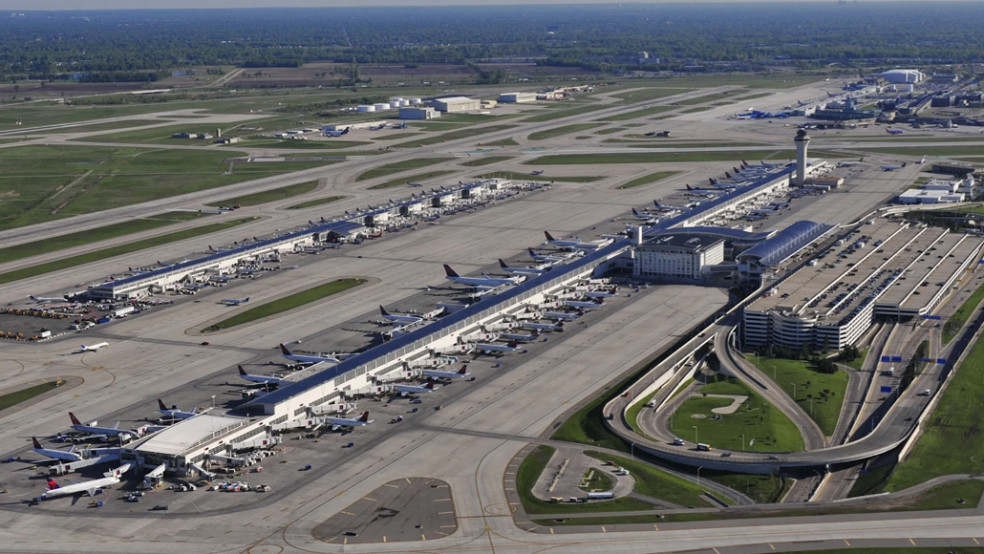
Detroit Metro Airport serves as one of the largest and most significant hubs for Delta Air Lines. This designation means that a substantial portion of Delta’s flight operations, including connections and maintenance, are routed through DTW. This partnership brings a vast network of domestic and international flights, making it easy for travelers to reach destinations across North America, Europe, and Asia directly or with minimal layovers. The presence of a major airline hub also translates into more frequent flights, a wider array of destinations, and competitive pricing for travelers.
Connecting the Midwest to the World
As the busiest airport in Michigan and one of the largest in the United States, Detroit Metro Airport plays a vital role in connecting the industrial and cultural heart of the Midwest to the rest of the globe. Its strategic location, coupled with its extensive flight network, facilitates business travel, tourism, and cargo transport, underscoring Detroit’s role in global commerce and cultural exchange. Travelers from surrounding states like Ohio and Indiana often utilize DTW due to its superior connectivity and service offerings compared to smaller regional airports.
Economic Impact on Metro Detroit
The operations of Detroit Metro Airport generate a colossal economic impact for the Metro Detroit area and the entire state of Michigan. It supports tens of thousands of direct and indirect jobs, ranging from airline personnel and airport staff to transportation providers, hospitality workers, and concessionaires. The airport also attracts significant business investment and facilitates trade, contributing billions of dollars annually to the regional economy. Its continuous expansion and modernization projects reflect an ongoing commitment to enhancing travel experiences while also driving economic prosperity.
Services and Amenities for Travelers
Detroit Metro Airport is renowned for its modern facilities and comprehensive range of services, designed to make the travel experience as comfortable and efficient as possible for its millions of annual passengers.
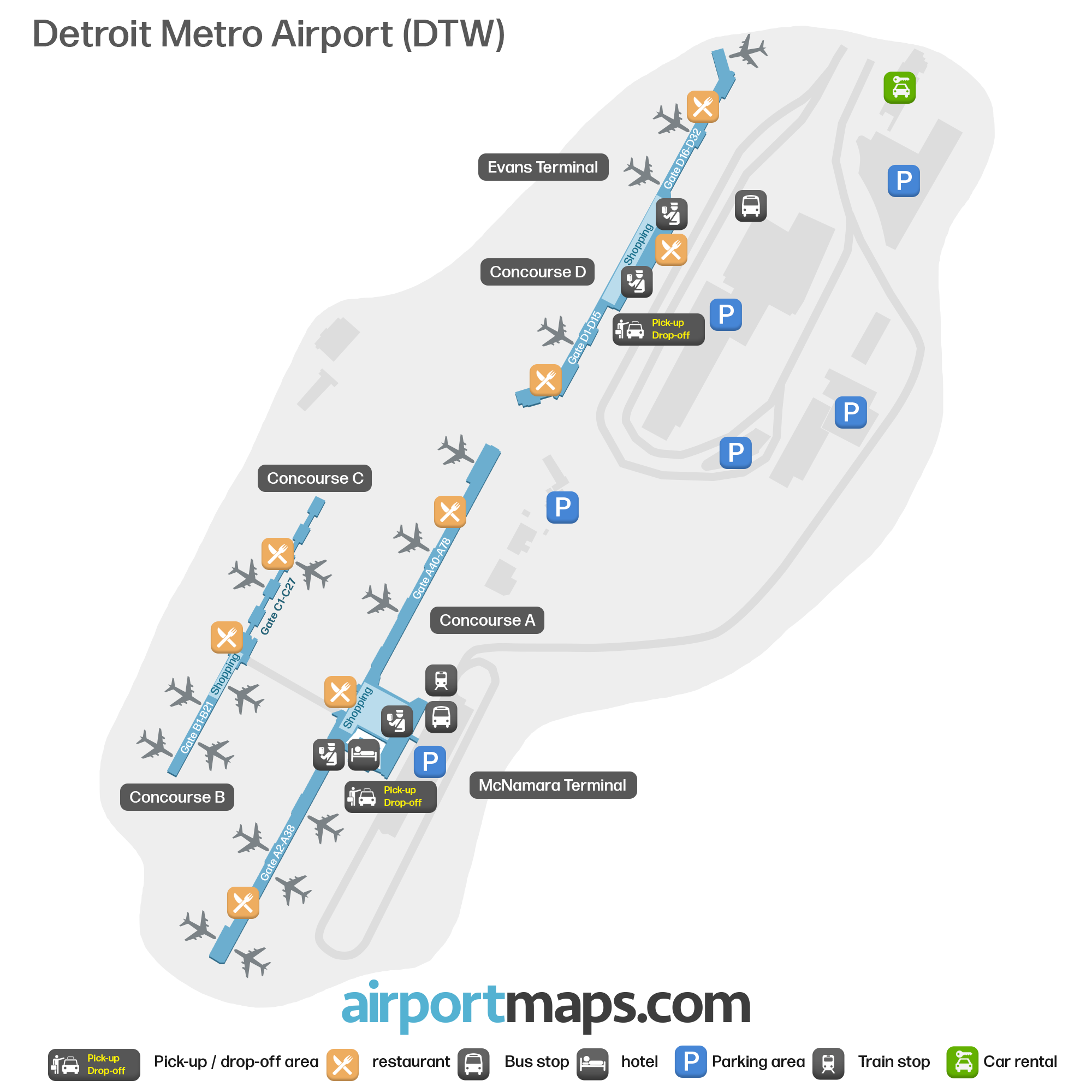
Terminals: McNamara and Evans
DTW operates two main terminals: the McNamara Terminal and the Evans Terminal (formerly known as the North Terminal).
- McNamara Terminal: This state-of-the-art terminal is primarily used by Delta Air Lines, along with its SkyTeam partners such as Air France and KLM. It is celebrated for its efficiency, spacious design, and a unique automated tram system that runs the length of the concourse, facilitating easy transfers between gates. The terminal also features a stunning water feature and extensive dining and retail options.
- Evans Terminal: Serving all other airlines, including American Airlines, United Airlines, Southwest Airlines, and international carriers, the Evans Terminal is also modern and well-equipped. It offers a wide array of amenities, though it does not feature an internal tram system. Inter-terminal transportation is provided by a free shuttle bus service that runs frequently between the two terminals.
Dining, Shopping, and Lounges
Both terminals at DTW boast an impressive selection of dining and shopping opportunities to cater to diverse tastes and needs. From fast-food favorites to sit-down restaurants offering local flavors and international cuisine, travelers will find ample choices. Retail outlets range from newsstands and souvenir shops to high-end boutiques and duty-free stores. Additionally, premium lounges, including Delta Sky Clubs and other airline-specific lounges, offer comfortable spaces for relaxation, work, and complimentary refreshments for eligible travelers. Free Wi-Fi is also available throughout the airport.
Parking and Rental Car Facilities
Detroit Metro Airport provides extensive parking options, including short-term, long-term, and valet services, with clear signage directing drivers to available spaces. All parking facilities are secure and regularly patrolled. The airport also features a consolidated rental car center, accessible via a dedicated shuttle service from both terminals, streamlining the process of picking up and dropping off rental vehicles.
Planning Your Trip Through DTW
Preparing for your journey through Detroit Metro Airport involves more than just knowing its location; it’s about leveraging its resources and understanding its surroundings to enhance your overall travel experience.
Nearby Attractions and Destinations
For travelers with layovers or those planning an extended stay in Detroit, the city and surrounding areas offer a rich tapestry of attractions. Within a short drive, visitors can explore:
- The Henry Ford Museum of American Innovation and Greenfield Village: A sprawling complex celebrating American ingenuity and history, located in Dearborn.
- Motown Museum: The historic Hitsville U.S.A. building, where the iconic Motown sound was born, offering a nostalgic journey through music history.
- Detroit Institute of Arts: Home to a world-class art collection, including Diego Rivera’s famous “Detroit Industry Murals.”
- Sports Arenas: Catch a game at Comerica Park (Detroit Tigers baseball), Little Caesars Arena (Detroit Red Wings hockey, Detroit Pistons basketball), or Ford Field (Detroit Lions football).
- Downtown Detroit: Explore revitalized districts with vibrant dining, entertainment, and a growing arts scene.
Tips for a Smooth Airport Experience
To ensure a seamless journey through Detroit Metro Airport, consider these practical tips:
- Arrive Early: Especially for international flights or during peak travel seasons, arriving at least 2-3 hours before your scheduled departure is advisable to account for security checks and potential delays.
- Check Terminal Information: Confirm your airline and flight are operating from the correct terminal (McNamara or Evans) well in advance.
- Utilize Airport Apps: Many airlines and the airport itself offer apps that provide real-time flight updates, terminal maps, and estimated security wait times.
- Stay Informed: Be aware of current TSA guidelines for baggage and carry-on items.
- Inter-Terminal Shuttle: If connecting between terminals, allow ample time for the free shuttle service.
In conclusion, Detroit Metro Airport is much more than a dot on the map; it’s a dynamic and essential component of modern travel, offering excellent connectivity, state-of-the-art facilities, and a crucial link for travelers to and from the diverse and vibrant Midwest. Understanding its location and features empowers travelers to make the most of their journey through this significant aerial gateway.
LifeOutOfTheBox is a participant in the Amazon Services LLC Associates Program, an affiliate advertising program designed to provide a means for sites to earn advertising fees by advertising and linking to Amazon.com. Amazon, the Amazon logo, AmazonSupply, and the AmazonSupply logo are trademarks of Amazon.com, Inc. or its affiliates. As an Amazon Associate we earn affiliate commissions from qualifying purchases.