
Hillsborough County, a vibrant and diverse region nestled in the heart of Florida’s west coast, stands as a significant economic, cultural, and recreational hub. Its strategic location, encompassing major cities and offering access to the Gulf of Mexico, makes it a prime destination for both residents and tourists. Understanding its geographical placement and the broader context of Florida’s landscape is key to appreciating its unique offerings. This exploration delves into the county’s precise location within the Sunshine State, its defining geographical features, and the surrounding areas that contribute to its dynamic character.
Geographical Positioning Within Florida
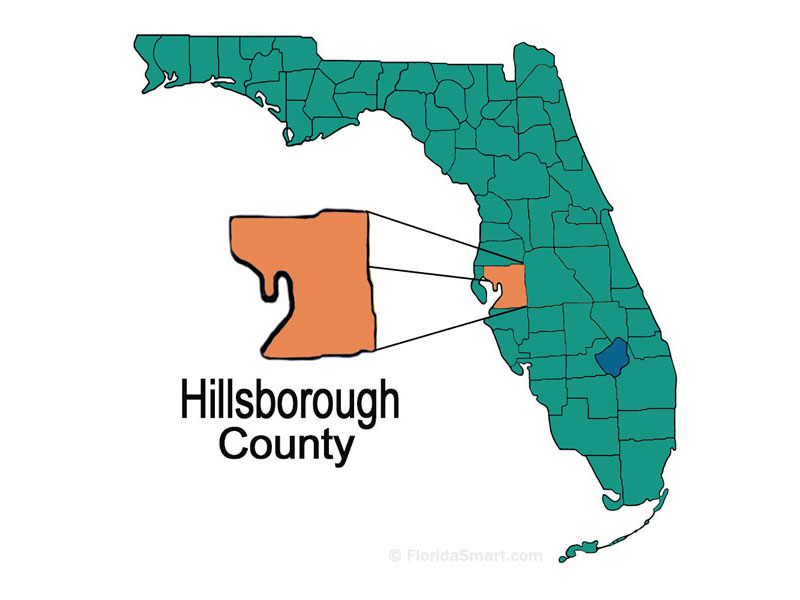
Hillsborough County is strategically situated on the west coast of Florida, a region renowned for its beautiful beaches, thriving cities, and abundant natural resources. It is one of the 67 counties that comprise the state of Florida. To understand its exact placement, one must consider its proximity to other key Floridian landmarks and bodies of water.
Neighboring Counties and Boundaries
To the north, Hillsborough County shares a border with Pasco County. To the east, it is bounded by Polk County. To the south, the county’s territory extends to Manatee County and Hardee County. The western boundary of Hillsborough County is defined by its extensive coastline along Tampa Bay, a large natural harbor and estuary that opens into the Gulf of Mexico. This strategic waterfront position is fundamental to the county’s historical development and its modern-day economic significance, particularly in areas like Port Tampa Bay.
Its Place on the Florida Map
Visually, Hillsborough County is located in the central-west part of Florida, often considered part of the larger Tampa Bay Area. This area is a major metropolitan region that extends across several counties, with Hillsborough County being one of its principal components. Its position is south of the panhandle region and north of South Florida, placing it in a climatically favorable zone characterized by warm temperatures year-round and distinct wet and dry seasons.
Defining Geographical Features
Hillsborough County boasts a diverse geography, shaped by its coastal proximity, its river systems, and its inland plains. These features not only define its landscape but also influence its climate, ecosystems, and the activities available to its inhabitants and visitors.
Coastal Influence and Tampa Bay
The presence of Tampa Bay is arguably the most defining geographical feature of Hillsborough County. This vast body of water significantly impacts the county’s climate, moderating temperatures and contributing to its humid subtropical climate. The bay also provides critical habitats for marine life, supports a thriving fishing industry, and offers numerous opportunities for water-based recreation. Several barrier islands and peninsulas fringe the bay, further shaping the coastline and providing unique ecological zones. St. Petersburg and Clearwater, located across the bay in Pinellas County, are visible from many points within Hillsborough County, emphasizing the interconnectedness of the bay area.
Inland Topography and Waterways
Moving inland from the coast, the topography of Hillsborough County is characterized by generally low-lying, flat to gently rolling terrain. Elevation changes are subtle, with most of the county lying just a few feet above sea level. However, there are areas of slightly higher ground, particularly towards the eastern and northern parts of the county, which can be advantageous during periods of heavy rainfall or storm surges.
Several rivers and streams crisscross the county, providing important freshwater resources and contributing to the local ecosystem. The Hillsborough River is a prominent waterway, flowing through the heart of the county and eventually emptying into Tampa Bay. It plays a crucial role in providing drinking water for the city of Tampa and supports diverse plant and animal life along its banks. Other significant waterways include the Alafia River and the Plum Creek. These water systems are integral to the county’s natural beauty and offer opportunities for activities like kayaking, canoeing, and fishing.
Natural Habitats and Ecosystems
The varied geography of Hillsborough County supports a range of natural habitats. Coastal areas are characterized by mangrove forests, salt marshes, and sandy beaches, which are vital for coastal protection and serve as nurseries for numerous marine species. Inland, one can find pine flatwoods, oak hammocks, and wetlands, each supporting unique flora and fauna.
These natural areas are preserved in various parks and nature preserves throughout the county, offering residents and visitors a chance to experience Florida’s native biodiversity. For instance, the Hillsborough River State Park showcases the beauty of the Hillsborough River and its surrounding woodlands. The presence of these natural environments is a significant draw for ecotourism and provides essential ecological services.
Key Cities and Their Locations Within the County

Hillsborough County is home to several prominent cities, each with its own unique character and contribution to the county’s overall identity. The distribution and importance of these urban centers are intrinsically linked to the county’s geography.
Tampa: The Urban Heartbeat
Tampa, the largest city in Hillsborough County and the fourth-largest in Florida, is situated on the western edge of the county, directly on the shores of Tampa Bay. Its location at the mouth of the Hillsborough River has historically made it a vital port city. Today, Tampa is a bustling metropolis known for its vibrant downtown, diverse cultural attractions like the Tampa Museum of Art, bustling entertainment districts such as Ybor City, and major attractions like Busch Gardens Tampa Bay. Its airport, Tampa International Airport, serves as a major gateway for the region.
Other Significant Municipalities
Beyond Tampa, Hillsborough County encompasses other important cities and communities, each contributing to the county’s fabric.
Brandon
Located to the east of Tampa, Brandon is a large, unincorporated community that functions as a significant commercial and residential center. Its inland location, away from the immediate coast, has contributed to its growth as a suburban hub, offering a blend of residential neighborhoods and commercial developments.
Plant City
Situated further east, near the border with Polk County, Plant City is known for its agricultural heritage, particularly its role as the winter strawberry capital of America. Its location inland, at a higher elevation than the coastal areas, has fostered its development as a hub for agriculture and related industries. The annual Florida Strawberry Festival is a major draw for visitors.
Temple Terrace
To the north of Tampa, Temple Terrace is a city characterized by its tree-lined streets, parks, and the presence of the University of South Florida. Its location offers a more serene residential atmosphere while remaining closely connected to the amenities of the greater Tampa Bay Area.
Connectivity and Transportation Networks
The geographical positioning of Hillsborough County, particularly its role as a gateway to Florida’s west coast, necessitates robust transportation infrastructure. Its connectivity is a critical factor for its economic vitality and its appeal as a travel destination.
Major Roadways
Several major interstate highways traverse Hillsborough County, facilitating efficient movement of people and goods. Interstate 4 (I-4) runs east-west, connecting the county to Orlando and the Atlantic coast. Interstate 75 (I-75) provides a north-south artery, linking the county to North Florida and South Florida. Interstate 275 (I-275) serves as a crucial loop, primarily serving the Tampa urban core and connecting to the Sunshine Skyway Bridge. Numerous U.S. highways and state roads further enhance the local and regional road network.
Air, Sea, and Rail Access
As mentioned, Tampa International Airport is a primary air travel hub for the region, offering direct flights to numerous domestic and international destinations. Port Tampa Bay is one of the largest seaports in Florida and a significant port of call for cruise ships, as well as a major hub for cargo. The county is also served by a freight rail network, contributing to its logistical importance. Public transportation within the county is primarily managed by the Hillsborough Area Regional Transit Authority (HART), providing bus services throughout the county, including connections to neighboring areas.

Conclusion: A Hub of Activity in the Sunshine State
In conclusion, Hillsborough County is a dynamic and geographically significant area located on Florida’s picturesque west coast. Its strategic placement along Tampa Bay, bordered by several other Florida counties, and its diverse landscape of coastal plains, rivers, and inland habitats, define its unique character. Anchored by the vibrant city of Tampa, and encompassing other important municipalities like Brandon, Plant City, and Temple Terrace, the county offers a rich tapestry of experiences. Its well-developed transportation networks further solidify its position as a key destination and a thriving center of commerce and culture within the Sunshine State.
LifeOutOfTheBox is a participant in the Amazon Services LLC Associates Program, an affiliate advertising program designed to provide a means for sites to earn advertising fees by advertising and linking to Amazon.com. Amazon, the Amazon logo, AmazonSupply, and the AmazonSupply logo are trademarks of Amazon.com, Inc. or its affiliates. As an Amazon Associate we earn affiliate commissions from qualifying purchases.