
The Overlook Hotel remains one of the most haunting architectural icons in cinematic history. For decades, fans of horror and architecture alike have asked the same question: Where is the hotel from The Shining? The answer is not as straightforward as a single GPS coordinate. Instead, the “Overlook” is a composite landmark, a spectral entity born from the fusion of several distinct locations across the United States and even soundstages in England.
From the rugged peaks of the Rocky Mountains to the dense forests of the Cascade Range, the landmarks associated with this story have become sites of pilgrimage. To understand where the hotel is, one must look at three specific real-world structures: the literary inspiration, the cinematic exterior, and the architectural blueprint for the interiors.

The Literary Birthplace: The Stanley Hotel
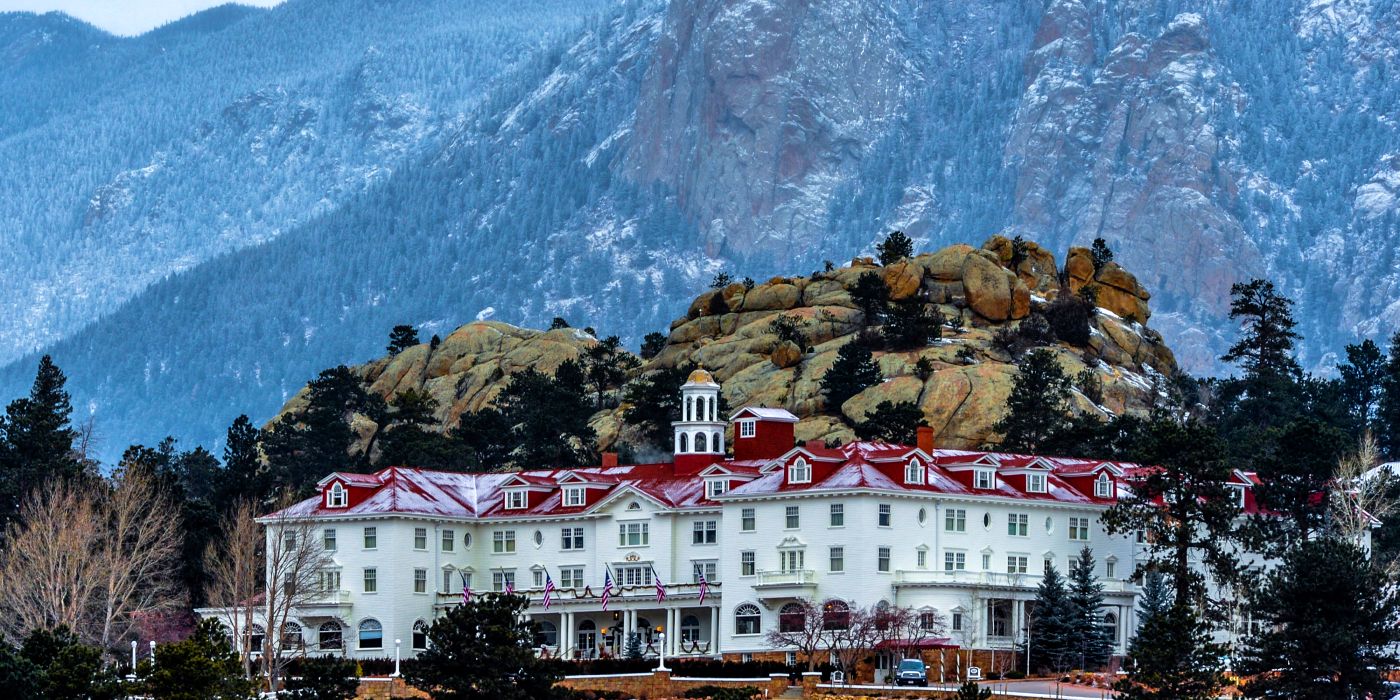
The history of the Overlook Hotel begins not with a camera, but with a nightmare. In 1974, the celebrated author Stephen King and his wife Tabitha King decided to spend a night at a grand, isolated resort in Estes Park, Colorado. That landmark was the Stanley Hotel.
The Vision of F.O. Stanley
The Stanley Hotel is a stunning example of Neo-Georgian architecture. It was opened in 1909 by F.O. Stanley, the co-inventor of the Stanley Steamer automobile. Having been diagnosed with tuberculosis, F.O. Stanley sought the dry, crisp air of the Colorado highlands, and he built the hotel to reflect the elegance and sophistication of the East Coast.
When Stephen King arrived, the hotel was on the verge of closing for the winter season. As the only guests in the cavernous building, the Kings felt the weight of the empty corridors and the silence of the Longs Peak views. This eerie atmosphere inspired the novel, specifically after King had a vivid dream about his son being chased through the hallways by a sentient fire hose.
A National Historic Landmark
Today, the Stanley Hotel is listed on the National Register of Historic Places. While Stanley Kubrick did not film his 1980 adaptation here, the hotel remains the spiritual home of the story. Visitors can tour the grounds, see the hedge maze (which was added later to satisfy film fans), and even stay in Room 217—the very room where King stayed. The history of this landmark is inextricably linked to the “ghost stories” that surround it, making it a cornerstone of literary and architectural tourism in the United States.
The Cinematic Exterior: Timberline Lodge
When Stanley Kubrick set out to film his version of the story, he wanted a facade that looked more imposing and rugged than the elegant Stanley Hotel. He found his “Overlook” in the Timberline Lodge, located on the south slope of Mount Hood in Oregon.
Architecture of the Great Depression
The Timberline Lodge is a masterpiece of mountain architecture and a testament to the Works Progress Administration. Built during the Great Depression, the lodge was a project designed to provide employment for local artisans, stonemasons, and woodworkers. The structure is built from local stone and timber, blending seamlessly into the volcanic landscape of Mount Hood.
Its heavy, rustic aesthetic provided the perfect visual for the film’s exterior shots. The massive stone chimneys and the peaked roofs covered in snow created a sense of isolation that was essential to the film’s tone. Interestingly, while the exterior of Timberline Lodge is iconic, the management of the hotel requested that Stanley Kubrick change the haunted room number from 217 (as it is in the book) to Room 237. They feared that future guests would be afraid to stay in a room associated with horror; ironically, Room 237 is now the most requested room in the lodge’s history.

The Majestic Setting of Mount Hood
The surrounding nature of Mount Hood adds to the landmark’s allure. The lodge sits at an elevation of 6,000 feet, often shrouded in clouds or buried under feet of snow. This natural drama served the film’s opening sequence, although the actual driving shots of the Torrance Family in their yellow Volkswagen Beetle were filmed further east. Those famous aerial shots of the winding roads and the island in the lake were captured at Saint Mary Lake within Glacier National Park, Montana, specifically along the Going-to-the-Sun Road.
The Interior Blueprints: The Ahwahnee Hotel
While the exterior was in Oregon, the interiors of the Overlook—with their vast lounges, Native American motifs, and dizzying hallways—were inspired by a landmark in California. Stanley Kubrick and his production designer, Roy Walker, modeled many of the film’s sets after the Ahwahnee Hotel in Yosemite National Park.
Art Deco and Native American Influence
The Ahwahnee Hotel is one of the most significant architectural landmarks in the National Park Service portfolio. Built in 1927, the hotel was designed to attract wealthy tourists to the Yosemite Valley. Its design is a unique blend of Art Deco, Native American patterns, and “National Park Service Rustic” style.
If you visit the Ahwahnee Hotel today, the sense of déjà vu is overwhelming. The Great Lounge, with its high ceilings, massive windows, and enormous stone fireplace, was the direct inspiration for the Colorado Lounge where Jack Nicholson character, Jack Torrance, famously typed his repetitive manuscript. The red-and-gold elevators of the Ahwahnee Hotel also served as the model for the infamous “blood elevator” scene, though the real elevators are far less menacing.
Constructing a Psychological Maze
Kubrick’s choice to use the Ahwahnee Hotel as a blueprint was intentional. He wanted the interiors to feel impossibly large and psychologically disorienting. By taking the real-world layouts of a grand park lodge and recreating them on a massive scale at EMI Elstree Studios in Borehamwood, just outside London, Kubrick created an “impossible” building. The sets were designed with architectural inconsistencies—doors that lead nowhere and windows that shouldn’t exist—to subconsciously unnerve the audience.
The Global Legacy of the Overlook Locations
The question of “where” the hotel is ultimately leads us to a map that spans several states and even continents. Each of these landmarks carries its own history, independent of the fame brought by The Shining.
Preserving Architectural History
Whether it is the Stanley Hotel in Colorado or the Timberline Lodge in Oregon, these buildings are significant for their contributions to American history. They represent different eras of development in the United States, from the early 20th-century luxury resorts to the hard-fought progress of the Great Depression public works.
The Timberline Lodge, in particular, remains a functioning ski resort and a National Historic Landmark, showcasing the durability of handcrafted timber and masonry. Meanwhile, the Ahwahnee Hotel continues to serve as the crown jewel of Yosemite National Park, proving that great architecture can coexist harmoniously with the most spectacular natural wonders of California.
The Influence on Modern Design
The “Overlook Hotel” has transcended the film and influenced modern architecture and interior design. The use of bold geometric patterns, specifically the “hexagonal” carpet design seen in the film’s hallways, has become a cult favorite in interior design circles. Furthermore, the concept of “liminal spaces”—hallways and lobbies that feel stuck between worlds—owes much to the way these real-world landmarks were framed by the lens of Stanley Kubrick.
For the traveler looking to find the hotel from The Shining, the journey is a tour of some of the most beautiful and historically significant sites in the United States. You may not find a single hotel that contains the ghosts of Jack Torrance or the twins, but you will find a collection of landmarks that define the spirit of American architecture and the power of the landscape.
From the Estes Park views to the snowy slopes of Mount Hood, the hotel exists in the intersection of real history and cinematic legend. Whether you are visiting for the architecture, the history, or the thrill of the supernatural, these locations offer an experience that is as grand and enduring as the Overlook itself.
LifeOutOfTheBox is a participant in the Amazon Services LLC Associates Program, an affiliate advertising program designed to provide a means for sites to earn advertising fees by advertising and linking to Amazon.com. Amazon, the Amazon logo, AmazonSupply, and the AmazonSupply logo are trademarks of Amazon.com, Inc. or its affiliates. As an Amazon Associate we earn affiliate commissions from qualifying purchases.