
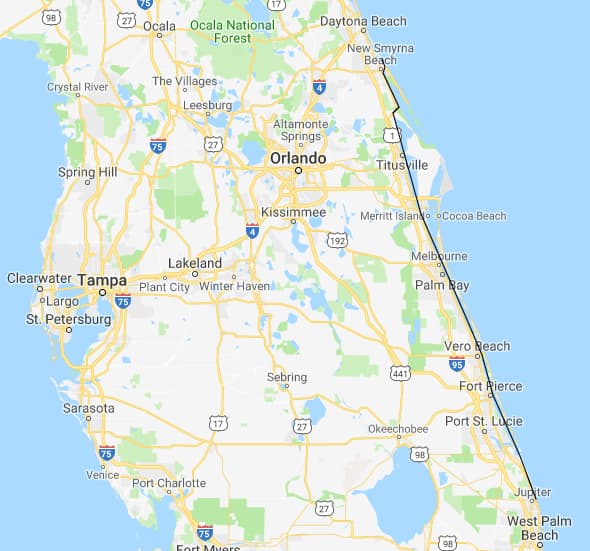
To understand the location and significance of Indian River, one must first look toward the eastern seaboard of Florida. Contrary to what the name might suggest to a casual observer, Indian River is not a singular, traditional flowing river, but rather a massive coastal lagoon system that serves as one of the most significant natural landmarks in the United States. It spans nearly one-third of Florida’s Atlantic Ocean coastline, serving as a boundary between the mainland and a series of barrier islands.
Geographically, the Indian River Lagoon system encompasses three distinct bodies of water: the Mosquito Lagoon, the Banana River, and the Indian River itself. This vast expanse touches five different counties, including Volusia County, Brevard County, Indian River County, St. Lucie County, and Martin County. This landmark is central to the identity of the Treasure Coast and the Space Coast, acting as both a biological wonder and a historical corridor.
The Geography and Natural Scope of the Indian River Lagoon
The Indian River Lagoon is an estuary, a place where salt water from the Atlantic Ocean mixes with fresh water from land runoff and small tributaries. This specific landmark is unique because it sits on the transition zone between temperate and subtropical climates. This positioning has turned the lagoon into the most biologically diverse estuary in North America.
A Coastal Estuary Stretching Across Five Counties
The northern terminus of the system begins at the Ponce de Leon Inlet in New Smyrna Beach. From there, it stretches approximately 156 miles south to the Jupiter Inlet in Palm Beach County. Within this stretch, the lagoon varies in width from a few hundred yards to several miles. The Indian River County segment is particularly famous for its scenic beauty, where the waters are often calm and serves as a backdrop for the cities of Vero Beach and Sebastian.
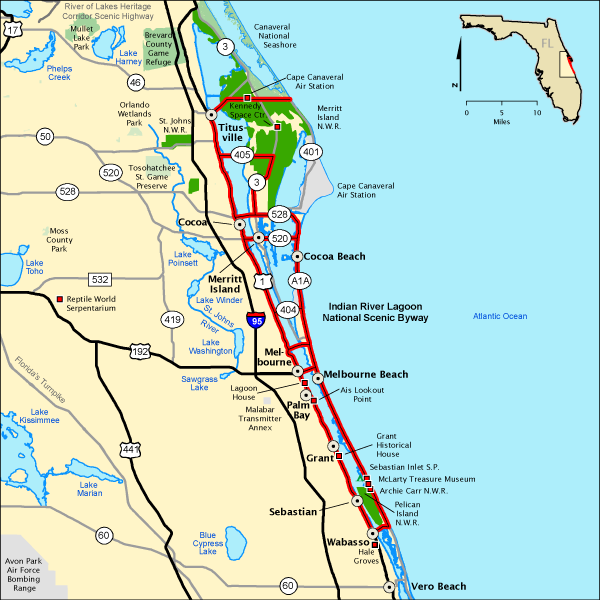
Because the lagoon is separated from the ocean by narrow barrier islands, it creates a protected environment. These barrier islands house famous landmarks like Canaveral National Seashore and the Merritt Island National Wildlife Refuge. The lagoon is connected to the ocean via five main inlets: Ponce de Leon Inlet, Sebastian Inlet, Fort Pierce Inlet, St. Lucie Inlet, and Jupiter Inlet.
The Intracoastal Waterway Connection
A major defining feature of Indian River is its integration with the Atlantic Intracoastal Waterway. This landmark engineering feat allows for a navigable inland route for boats traveling along the coast without the need to enter the open ocean. In Florida, the Indian River portion of the waterway is essential for maritime transport and serves as a primary landmark for sailors and yachting enthusiasts moving between Miami and Jacksonville.
Historical Significance and the Birth of the Treasure Coast
The history of Indian River is as deep and layered as its waters. Long before European explorers arrived, the area was the territory of the Ais people. These indigenous inhabitants relied on the lagoon for sustenance, building massive shell middens that still exist today as archaeological landmarks along the shorelines of Sebastian and Vero Beach.
The 1715 Spanish Treasure Fleet
Perhaps the most legendary historical event tied to the location of Indian River occurred just offshore. In 1715, a Spanish Treasure Fleet carrying vast amounts of silver and gold was struck by a hurricane. Eleven of the twelve ships were wrecked along the reefs between Sebastian Inlet and Fort Pierce. Survivors established salvage camps along the shores of the Indian River, and to this day, gold coins and artifacts occasionally wash up on the beaches. This event gave the region its permanent moniker: the Treasure Coast. The McClarty Treasure Museum, located within the Sebastian Inlet State Park, stands as a landmark dedicated to this history.
The Development of the Citrus Industry
In the late 19th and early 20th centuries, the Indian River region became synonymous with the finest citrus in the world. The unique mineral content of the soil and the tempering effect of the lagoon’s waters created the perfect microclimate for growing grapefruit and oranges. The Indian River Citrus brand became a global landmark in agriculture. Historic packing houses, such as those in Vero Beach, remain as architectural reminders of the era when the Indian River was the citrus capital of the world.
Iconic Landmarks Within the Indian River Region
The Indian River area is home to several specific landmarks that draw visitors from around the globe. These sites highlight the intersection of natural beauty, scientific achievement, and historical preservation.
Pelican Island National Wildlife Refuge
Located within the waters of the Indian River Lagoon near Sebastian, Pelican Island National Wildlife Refuge holds the prestigious title of being the first federal bird reservation in the United States. Established by President Theodore Roosevelt in 1903, this landmark was created to protect brown pelicans and other egrets from plume hunters. Today, it remains a sanctuary for dozens of bird species and stands as a testament to the early conservation movement in America.
Sebastian Inlet State Park

One of the most visited landmarks in the region is Sebastian Inlet State Park. This park straddles the inlet that connects the Indian River to the Atlantic Ocean. It is a premier location for surfing, fishing, and coastal observation. The Sebastian Inlet itself is a man-made cut through the barrier island, and its jetties are iconic landmarks for those who navigate the Florida coastline.
McKee Botanical Garden
In the heart of Vero Beach, along the banks of the Indian River, lies the McKee Botanical Garden. Originally known as McKee Jungle Gardens, it was one of Florida’s earliest roadside attractions. This landmark features a stunning collection of water lilies, native plants, and historic structures designed by William Lyman Phillips. It represents the lush, tropical landscape that originally defined the Indian River area before modern development.
Ecological Diversity and Conservation Landmarks
The status of Indian River as a landmark is largely tied to its ecological health. The lagoon is home to more than 4,300 species of plants and animals, including the West Indian Manatee, Green Sea Turtles, and the Atlantic Bottlenose Dolphin.
The Manatee Observation and Education Center
Located in Fort Pierce, the Manatee Observation and Education Center is a landmark dedicated to the protection of the lagoon’s most famous resident. The center overlooks Moore’s Creek, a freshwater tributary that feeds into the Indian River. During the winter months, manatees congregate here for the warm water, providing a unique vantage point for researchers and the public to observe these gentle giants in their natural habitat.
The Environmental Learning Center
In Wabasso, the Environmental Learning Center serves as a primary educational landmark for the Indian River Lagoon. Situated on a 64-acre island within the lagoon, this facility offers boardwalks through mangrove forests and interactive exhibits that explain the complex hydrology of the Indian River. It plays a crucial role in advocating for the restoration of the lagoon’s water quality, which has faced challenges due to urban development and agricultural runoff.
Urban Landmarks Along the Waterfront
The cities that border the Indian River are characterized by their waterfront architecture and historic districts. These urban landmarks provide a cultural anchor to the natural expanse of the lagoon.
Historic Downtown Vero Beach
Vero Beach is often cited as the “Gateway to the Tropics.” Its historic downtown and the Vero Beach Hotel and Spa are prominent landmarks that reflect the city’s blend of coastal elegance and small-town charm. The Driftwood Resort, built entirely out of driftwood and salvaged materials from the beach and the Indian River, is an architectural landmark that captures the eccentric spirit of early Florida tourism.
The National Navy UDT-SEAL Museum
Just north of Fort Pierce on North Hutchinson Island is the National Navy UDT-SEAL Museum. This landmark is located on the very site where the first “Frogmen” trained during World War II. The museum preserves the history of the United States Navy SEALs and offers a somber and inspiring look at the military history associated with the Indian River coastline.
Fort Pierce City Marina
The Fort Pierce City Marina is a landmark of modern engineering. After being devastated by hurricanes, the marina was rebuilt with an innovative “storm protection” system consisting of artificial islands and breakwaters. These islands not only protect the boats but also create new habitats for birds and marine life within the Indian River, showing how human landmarks can coexist with the natural environment.
Connectivity and the Future of the Indian River Landmarks
Where is Indian River Florida heading in the future? The landmark is currently the subject of one of the largest environmental restoration projects in the United States. Efforts to restore the Everglades and redirect water flows through the St. Lucie River are intrinsically linked to the health of the Indian River Lagoon.
The region is also becoming a landmark for the burgeoning space industry. From many points along the northern Indian River, particularly near Titusville and Cocoa Beach, the towers of the Kennedy Space Center are visible on the horizon. The reflection of rocket launches off the surface of the lagoon has become a modern landmark experience, merging the ancient natural beauty of the water with the cutting edge of human exploration.
In summary, the Indian River is more than a location; it is a 156-mile-long landmark that defines the geography, history, and ecology of East Central Florida. From the treasure-laden sands of Sebastian to the mangrove-lined shores of Melbourne and Fort Pierce, it remains a vital artery of the Sunshine State. Whether viewed as a biological sanctuary like Pelican Island or a historical site of Spanish shipwrecks, the Indian River stands as a monumental landmark in the American landscape.
LifeOutOfTheBox is a participant in the Amazon Services LLC Associates Program, an affiliate advertising program designed to provide a means for sites to earn advertising fees by advertising and linking to Amazon.com. Amazon, the Amazon logo, AmazonSupply, and the AmazonSupply logo are trademarks of Amazon.com, Inc. or its affiliates. As an Amazon Associate we earn affiliate commissions from qualifying purchases.