
Nestled in the high desert of northern Arizona lies one of the planet’s most striking and best-preserved impact craters, a geological marvel known officially as Barringer Crater, but more commonly as Meteor Crater. This immense, bowl-shaped depression in the Earth’s surface stands as a profound testament to the power of cosmic forces and offers an unparalleled window into the history of our solar system. Its very existence, a deep, silent scar, has captivated scientists, geologists, and the public for over a century, contributing significantly to our understanding of extraterrestrial impacts.
The Astonishing Genesis of a Natural Landmark
The story of Meteor Crater began approximately 50,000 years ago, during the Pleistocene Epoch. At that time, a nickel-iron meteorite, estimated to be about 150 feet (45 meters) across and weighing several hundred thousand tons, hurtled through the Earth’s atmosphere at speeds of up to 26,000 miles per hour (42,000 km/h). The impact was cataclysmic, unleashing an explosive force equivalent to 20 million tons of TNT.
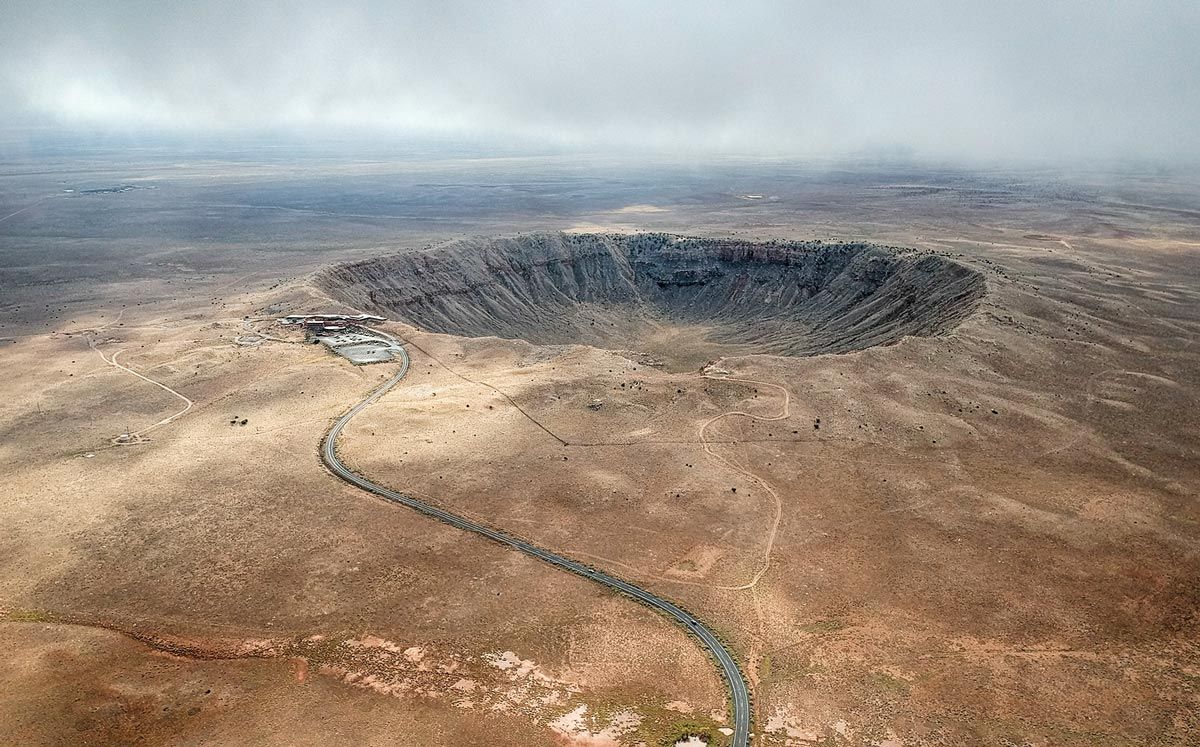
A Cosmic Impact and Earth’s Enduring Scar
The immense energy released upon impact instantly vaporized the meteorite and much of the surrounding rock, creating a massive explosion that excavated over 175 million tons of rock. This force formed a crater approximately 4,000 feet (1,200 meters) in diameter and 570 feet (175 meters) deep, with a rim rising 150 feet (45 meters) above the surrounding plain. The ejecta blanket, composed of pulverized rock and meteorite fragments, extends for several miles around the crater, further testament to the scale of the event. The layered rock strata in the crater walls are dramatically overturned and faulted, a clear signature of the immense pressures and shockwaves that rippled through the Earth’s crust. Unlike many other impact sites that have been eroded or obscured by geological processes, Meteor Crater has remained remarkably pristine, largely due to the arid climate of Arizona, which limits erosion, and the crater’s relatively young age. This exceptional preservation makes it an invaluable site for scientific study, offering direct evidence of impact mechanics.
The Barringer Family’s Legacy and Scientific Breakthroughs
For many years after its “discovery” by Western settlers in the 19th century, Meteor Crater was mistakenly attributed to volcanic activity. The idea of meteoric impacts shaping the Earth’s surface was not widely accepted at the time. It was mining engineer and geologist Daniel Moreau Barringer who, in the early 20th century, championed the theory of its extraterrestrial origin. Driven by scientific curiosity and the hope of finding a massive meteorite underground, Barringer purchased the crater and its surrounding land in 1903. He spent decades meticulously studying and drilling the site, despite facing skepticism from the scientific establishment. Though he never found the main body of the meteorite (which had largely vaporized upon impact), his persistent efforts and the subsequent work of scientists like Eugene Shoemaker provided irrefutable evidence for the impact theory. The discovery of shocked quartz, coesite, and stishovite—minerals formed only under extreme pressures characteristic of impact events—finally settled the debate. Today, the Barringer Crater Company, still owned by the Barringer family, continues to manage the site as a private scientific and educational landmark, ensuring its preservation and public accessibility.
Pinpointing Meteor Crater on the Arizona Map
Meteor Crater’s location is as distinctive as its geological features, situated in a relatively remote but accessible part of northern Arizona. Its position contributes to its remarkable preservation and makes it a striking feature against the backdrop of the Painted Desert landscape.
Geographic Coordinates and Regional Context
The crater is precisely located at approximately 35.0272° N latitude and 111.0225° W longitude. It lies roughly 37 miles (60 km) east of Flagstaff and 18 miles (29 km) west of Winslow, placing it conveniently between two significant towns in Northern Arizona. The surrounding landscape is typical of the Colorado Plateau, characterized by vast, flat plains punctuated by mesas, buttes, and distant mountain ranges like the San Francisco Peaks to the west. The area is semi-arid, with sparse vegetation, which only serves to highlight the stark geological feature of the crater itself. This unique combination of accessible remoteness and arid conditions has played a crucial role in maintaining the crater’s impressive form over millennia.
Accessibility and Travel Routes
Accessing Meteor Crater is straightforward, thanks to its proximity to major transportation arteries. The site is just a few miles south of Interstate 40 (I-40), the main east-west highway traversing northern Arizona. Visitors typically exit I-40 at Exit 233 (Meteor Crater Road) and follow the well-marked paved road south for about 6 miles (10 km) to the crater’s visitor center. For those journeying along the historic Route 66, the crater is an easily reachable detour, embodying a piece of both natural and historical Americana. Its strategic location makes it an ideal stop for those traveling between Flagstaff, the Petrified Forest National Park, or the Grand Canyon, offering a distinct geological experience that complements other iconic Arizona landmarks.

Exploring the Crater’s Depths and Perimeter
Visiting Meteor Crater is an immersive experience, designed to educate and inspire. The privately owned landmark offers a range of facilities and perspectives that allow visitors to fully appreciate its scale and scientific importance.
The Visitor Center Experience
The modern, state-of-the-art Visitor Center provides an essential introduction to the crater’s history and geology. It houses interactive exhibits, a museum dedicated to the crater and meteorites, and a discovery center. Visitors can learn about the impact event, the geological evidence, Daniel Barringer’s pioneering work, and the ongoing scientific research. A significant highlight is the display of the world’s largest Holsinger meteorite fragment, a 1,406-pound (638 kg) piece of the very asteroid that created the crater, found nearby in Canyon Diablo. The center also features an award-winning film that vividly re-enacts the impact event and its aftermath. From the observation decks at the visitor center, unparalleled panoramic views of the entire crater bowl are available, allowing guests to grasp its immense scale. Guided rim tours offer a more intimate look at the crater’s features, providing detailed insights into the geology, meteoritics, and local environment.
Geological Significance and Research
Beyond its visual grandeur, Meteor Crater remains a critical site for scientific research. It is considered the best-preserved terrestrial impact structure on Earth and serves as the benchmark for impact crater studies worldwide. Geologists, planetary scientists, and astronomers continue to study the crater’s unique features, including the overturned rock layers, the presence of shock metamorphism, and the distribution of meteorite fragments. The crater provides an accessible, tangible laboratory for understanding impact events, which are fundamental processes in the formation and evolution of planets and moons throughout the solar system. The data gathered here helps scientists interpret images from other planetary bodies, such as the Moon and Mars, which are heavily scarred by similar, albeit often larger, impact features. The ongoing research ensures that Meteor Crater continues to contribute to humanity’s understanding of cosmic forces.
Historical Resonance and Cultural Impact
The profound scale and unique nature of Meteor Crater have ensured its place not only in scientific annals but also in broader human history and culture, particularly regarding our ventures into space.
Native American Heritage
Long before Western scientists pondered its origins, Meteor Crater was known and likely revered by indigenous peoples of the region. Fragments of the Canyon Diablo meteorite, which created the crater, have been found in ancient Native American sites, indicating they collected and possibly utilized these metallic pieces. While specific traditional narratives about the crater’s formation might be lost or sacred, its imposing presence undoubtedly inspired awe and integrated into the spiritual and practical lives of early inhabitants. The area around the crater, including nearby sites like Wupatki National Monument and Sunset Crater Volcano National Monument, bears witness to centuries of human activity, placing the crater within a rich tapestry of cultural heritage.
A Training Ground for Astronauts and Space Exploration
The remarkable similarity of Meteor Crater to craters found on the Moon made it an invaluable training site for the Apollo astronauts in the 1960s. Prior to their missions, astronauts like Neil Armstrong and Buzz Aldrin walked the crater floor and rim, learning to identify geological features, collect rock samples, and navigate cratered terrain under conditions that mimicked the lunar surface. This practical experience was crucial for preparing them for their historic lunar explorations, underscoring the crater’s significance not just as an Earth landmark, but as a stepping stone to understanding other worlds. The United States Geological Survey (USGS) even established an Impact Cratering Research Facility nearby, further solidifying the crater’s role in advancing planetary science and space exploration.
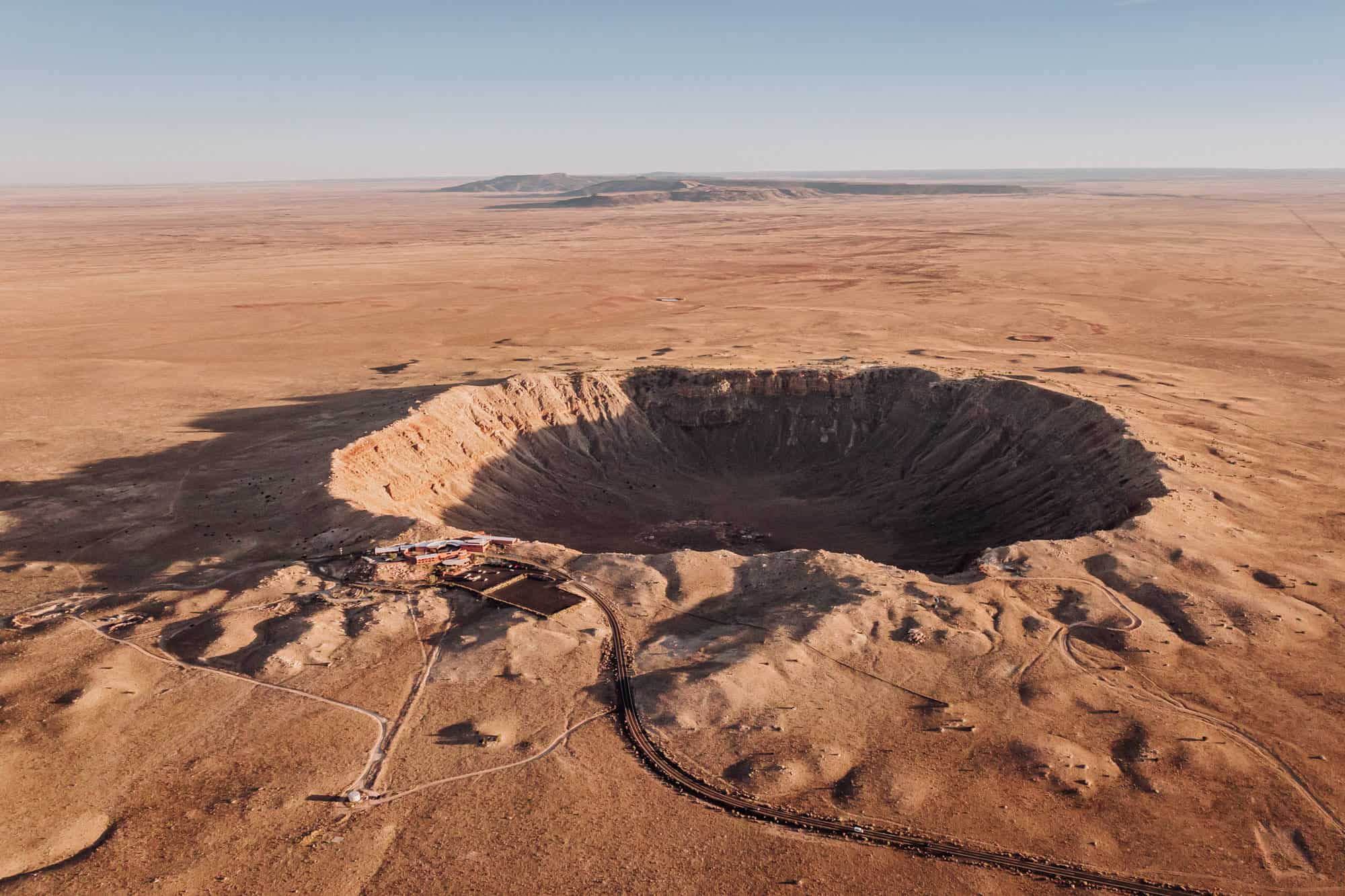
Preserving a Geological Marvel for Future Generations
Meteor Crater is not only a site of profound scientific interest and a popular visitor destination but also a protected natural landmark. Its designation on the National Register of Historic Places underscores its importance to both natural and scientific history. The efforts of the Barringer Crater Company in maintaining the site are commendable, balancing public access with conservation. The arid environment of Arizona naturally aids in its preservation, but responsible management ensures that its delicate geological features are protected from human impact. Furthermore, in an age of increasing light pollution, the region around Meteor Crater benefits from relatively dark skies, contributing to the broader appeal of Northern Arizona as an International Dark-Sky Park area, where one can truly appreciate the cosmos that delivered this impressive landmark to our planet. The continuing dedication to research, education, and conservation ensures that Meteor Crater will remain a source of wonder and knowledge for countless generations to come, standing as a permanent monument to a fleeting, yet immensely powerful, cosmic event.
LifeOutOfTheBox is a participant in the Amazon Services LLC Associates Program, an affiliate advertising program designed to provide a means for sites to earn advertising fees by advertising and linking to Amazon.com. Amazon, the Amazon logo, AmazonSupply, and the AmazonSupply logo are trademarks of Amazon.com, Inc. or its affiliates. As an Amazon Associate we earn affiliate commissions from qualifying purchases.