
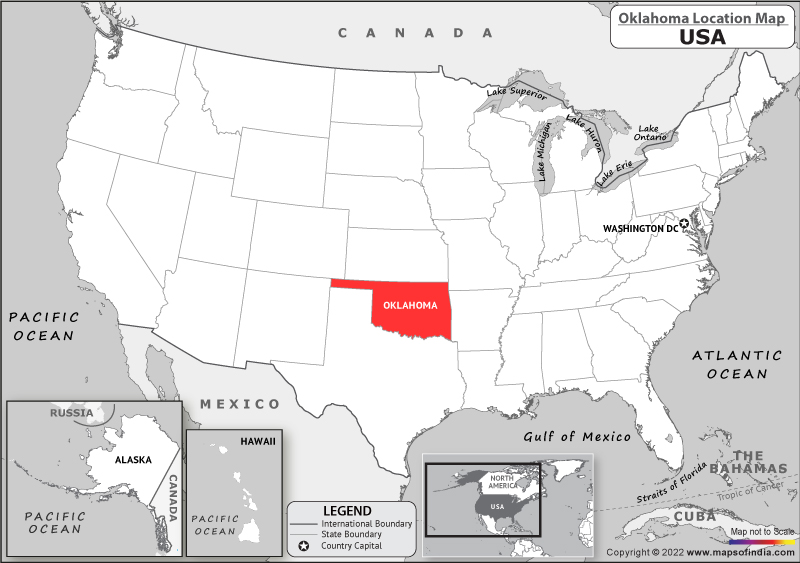
For travelers and geography enthusiasts alike, understanding the placement of Oklahoma is the first step toward appreciating its unique position in the heart of the United States. Situated in the South Central region of the country, this state acts as a pivotal bridge between the American South, the Great Plains, and the Southwest. Its location is not merely a set of coordinates; it is a crossroads of history, culture, and diverse natural landscapes that define the American experience.
The Geographical Identity of the Sooner State
To visualize where Oklahoma sits on a map, imagine the center of the United States and look slightly south. The state is landlocked, sharing borders with six other states, each contributing to its multifaceted personality.

Bordering States and Regional Influence
Oklahoma is bordered by Kansas to the north, which provides the transition into the vast Great Plains. To the east, it touches Missouri and Arkansas, where the landscape begins to lean into the lush, mountainous terrains of the Ozark Mountains. The southern border is defined by the Red River, which separates the state from the sprawling expanses of Texas. Finally, to the west, Oklahoma meets the Texas Panhandle and New Mexico, where the geography shifts toward the arid beauty of the high desert.
This central position makes Oklahoma a true melting pot. Travelers passing through on a cross-country journey will notice the subtle shifts in vegetation, climate, and local dialect as they navigate from the humid, forest-heavy eastern regions to the high-plains, semi-arid western territories.
Landscapes Across the Horizon
Oklahoma is frequently underestimated in its topographical diversity. Because of its strategic location, it hosts a variety of ecosystems that are rarely found in such close proximity elsewhere.
Eastern Forests and Western Plains
The eastern portion of the state is characterized by rugged, timbered hills and deep valleys. This area, particularly the Ouachita Mountains, offers a green, rolling landscape that feels worlds away from the flat, wheat-growing plains of the west. In contrast, as one travels west, the land flattens significantly. The High Plains region is characterized by wide-open skies and a horizon that seems to stretch forever, a hallmark of the American West.
The state’s central corridor is where these two worlds collide. This is home to the Cross Timbers, a unique ecoregion of oak-covered hills and prairies that acts as a natural buffer, creating a diverse transition zone that supports a vast array of wildlife and unique outdoor recreational opportunities.
Navigating the Urban Hubs

While the rural expanses provide the state’s character, its cities serve as the cultural anchors of the region. Understanding the location of these urban centers helps in planning an itinerary that traverses the state efficiently.
The Major Metropolitan Corridors
Oklahoma City, the state capital, sits almost directly in the center of the state, functioning as the primary hub for business, government, and tourism. It is where the spirit of the Old West meets modern urban revitalization, notably in districts like Bricktown.
To the northeast, Tulsa serves as a distinct alternative to the capital. Located in the Green Country region, Tulsa is famous for its Art Deco architecture and its proximity to the Arkansas River. The city represents a historical shift toward oil-rich prosperity and continues to be a center for arts, music, and innovation.
Norman, located just south of Oklahoma City, brings a vibrant collegiate atmosphere, while smaller, historic towns like Guthrie provide a window into the state’s frontier roots, featuring well-preserved Victorian architecture that reminds visitors of the territory’s expansionist past.
Connecting the Dots: Transport and Travel
Positioned as it is, Oklahoma has always been a transit state. Historically, the Chisholm Trail cut through these lands during the cattle drives of the 19th century, and today, the legacy of travel continues through a massive network of highways and the iconic Route 66.
The Spirit of the Road
For travelers exploring the United States, Oklahoma contains one of the longest remaining stretches of Route 66. This historic highway cuts diagonally across the state, passing through iconic small towns and neon-lit attractions. It is the best way to experience the geography of the state up close, moving from the forested valleys of the east through the rolling center and into the high, western plains.
Because of its central location, Oklahoma is remarkably accessible. It serves as a natural stopover for those traveling between Chicago and Los Angeles, or between Dallas and Denver. Its location makes it an ideal spot for road-trippers to experience a “middle ground” of American culture, offering a unique blend of Southern hospitality and Western grit.
A Destination Defined by Diversity
Ultimately, asking “Where is Oklahoma?” is the beginning of a much deeper exploration into what the state represents. It is a place where the Native American heritage—a central pillar of the state’s identity—is woven into the very fabric of the landscape. From the Black Kettle National Grassland in the west to the Wichita Mountains Wildlife Refuge in the southwest, the geography of the state serves as a constant reminder of the natural wonders that exist in the heart of North America.
Whether you are seeking the urban energy of Tulsa, the history of Oklahoma City, or the quiet solitude of the Great Plains, understanding that Oklahoma is a confluence of regional identities is essential. It is not merely a flyover state; it is a destination that captures the essence of the transition between the lush East and the rugged West. By acknowledging its place on the map, travelers can better appreciate the layers of history and the breathtaking variety of terrain that make this state a hidden gem within the American landscape. Whether navigating by GPS or by following the historic path of early settlers, those who take the time to stop in Oklahoma find that the center of the country holds more than enough to capture the imagination and warrant a visit.
LifeOutOfTheBox is a participant in the Amazon Services LLC Associates Program, an affiliate advertising program designed to provide a means for sites to earn advertising fees by advertising and linking to Amazon.com. Amazon, the Amazon logo, AmazonSupply, and the AmazonSupply logo are trademarks of Amazon.com, Inc. or its affiliates. As an Amazon Associate we earn affiliate commissions from qualifying purchases.