
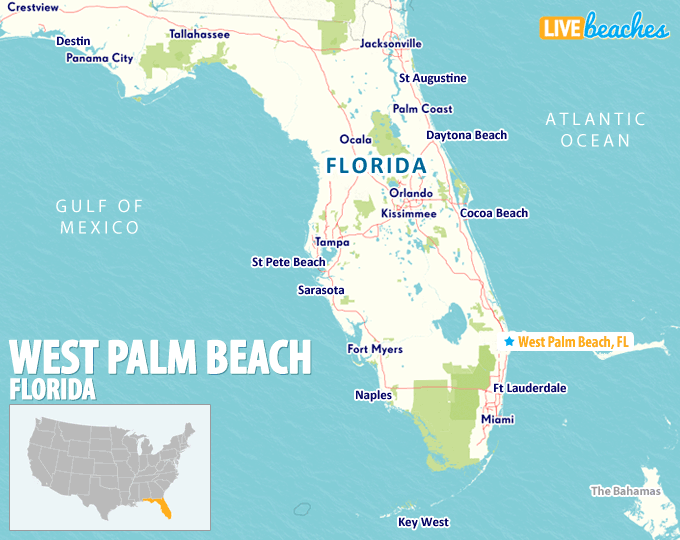
To locate Palm Beach on a map, one must look toward the southeastern coast of Florida in the United States. This iconic town is situated on a narrow barrier island that stretches approximately 16 miles in length, positioned between the vast expanse of the Atlantic Ocean to the east and the Lake Worth Lagoon to the west. While it is often conflated with its larger neighbor, West Palm Beach, which sits directly across the water on the mainland, Palm Beach maintains a distinct geographical and cultural identity as one of the most significant historical and architectural landmarks in North America.

Defining the Geography of a Landmark Island
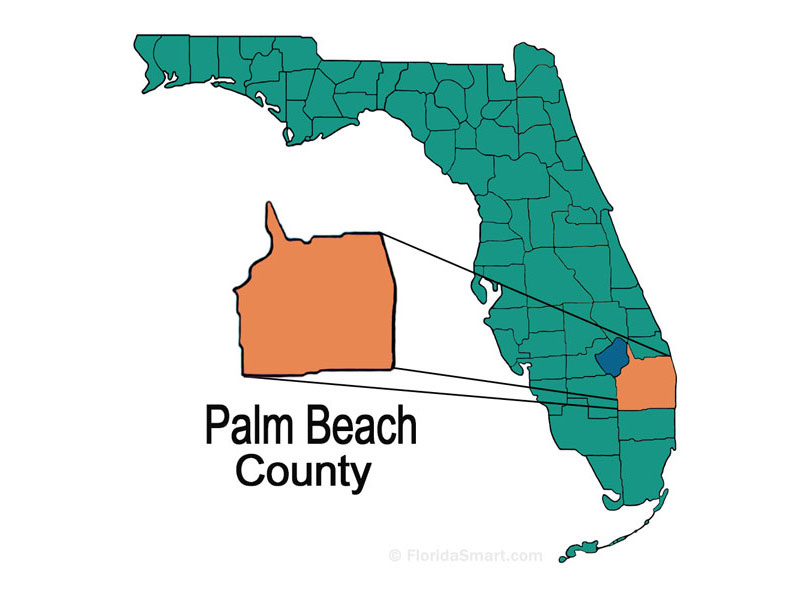
The physical location of Palm Beach is defined by its unique relationship with the water. Located within Palm Beach County, the island is roughly 65 miles north of Miami and 45 miles north of Fort Lauderdale. Its position on the map is not merely a matter of coordinates but a result of geological and man-made influences that have shaped its identity as a premier landmark destination.
The Barrier Island and the Lake Worth Lagoon
The Lake Worth Lagoon, which separates the island from the mainland, is a key geographical feature. Although it is referred to as a lagoon, it functions as part of the Intracoastal Waterway. Access to the island is restricted to several key bridges, including the Royal Park Bridge and the Flagler Memorial Bridge. This separation has historically allowed the town to preserve its secluded, manicured character, making the entire island feel like a singular, continuous landmark of landscape architecture and urban planning.
Proximity to the Gulf Stream and Oceanic Influence
Perhaps the most significant geographical factor affecting Palm Beach is its proximity to the Gulf Stream. The warm ocean current flows closer to the coast here than almost anywhere else in the United States. This proximity results in a temperate climate that originally attracted early developers and naturalists. On a map, the “elbow” of the Florida coastline brings the island remarkably close to the Bahamas, influencing everything from the local flora to the clarity of the turquoise waters that lap against the town’s eastern shores.
The Historical Landmarks of the Gilded Age
The map of Palm Beach is dotted with structures that serve as physical manifestations of the American Gilded Age. The development of the island as a world-class destination was spearheaded by Henry Flagler, the Standard Oil tycoon and visionary behind the Florida East Coast Railway. His influence transformed a remote coconut grove into a sophisticated enclave of monumental architecture.
The Flagler Museum: Florida’s First Great Estate
One of the most essential landmarks on the island is the Flagler Museum, also known as Whitehall. Completed in 1902, this 73-room, 100,000-square-foot mansion was described by the New York Herald as “more wonderful than any palace in Europe, grander and more magnificent than any other private dwelling in the world.” Designed in the Beaux-Arts style by architects Carrere and Hastings, Whitehall features a massive central courtyard and an interior filled with period rooms reflecting various historical European styles. Today, it stands as a National Historic Landmark, anchoring the northern end of the island’s historical corridor.
The Breakers: A Monument to Resilience and Grandeur
Further south along the coast lies The Breakers, a resort landmark that has come to define the skyline of Palm Beach. The current iteration of the hotel, completed in 1926, was modeled after the Villa Medici in Rome. It represents the Italian Renaissance style, featuring twin towers and a magnificent 200-foot-long lobby decorated with hand-painted ceilings. The history of The Breakers is a story of persistence; the original structure burned down twice before the current fireproof concrete version was erected. As a landmark, it serves as a testament to the enduring luxury and architectural ambition that Henry Flagler introduced to the region.
Architectural Landmarks and the Mediterranean Influence
If Henry Flagler provided the foundation for Palm Beach, it was Addison Mizner who provided its soul. In the 1920s, Addison Mizner introduced the Mediterranean Revival style, which would become the town’s signature aesthetic. His work emphasized stucco walls, red-tiled roofs, and intricate wrought-iron details, creating a visual language that harmonized with the tropical environment.
Worth Avenue: The Pinnacle of Design
Worth Avenue is more than just a retail destination; it is a sprawling architectural landmark. Stretching from the Lake Worth Lagoon to the Atlantic Ocean, the avenue is famous for its “vias”—hidden courtyards and pedestrian walkways that branch off the main street. Sites like Via Mizner and Via Parigi are masterclasses in scale and texture, featuring spiral staircases, bougainvillea-draped balconies, and tiled fountains. At the eastern terminus of the avenue stands the Palm Beach Clock Tower, a frequently photographed landmark that serves as a gateway to the beach.
Ecclesiastical Architecture: Bethesda-by-the-Sea
Another significant landmark is Bethesda-by-the-Sea, the oldest Protestant congregation in Southeast Florida. The current church building, completed in 1925, is a stunning example of Gothic Revival architecture. Built from local coquina stone, the church features a serene cloister, a sunken garden, and stained-glass windows that rival those found in major European cathedrals. The landmark is surrounded by lush tropical gardens, providing a peaceful contrast to the opulent estates nearby.
Cultural and Natural Landmarks of Significance
Beyond the mansions and churches, the map of Palm Beach includes landmarks dedicated to the arts and the preservation of the island’s natural beauty. These sites provide insight into the community’s commitment to culture and the environment.
The Society of the Four Arts and Sculpture Gardens
The Society of the Four Arts is a premier cultural landmark located near the Royal Park Bridge. The campus includes a gallery building, a library, and some of the most beautiful public gardens on the island. The Philip Hulitar Sculpture Garden and Pan’s Garden are highlights, showcasing a blend of contemporary sculpture and native Florida flora. Pan’s Garden, specifically, is a landmark of environmental education, as it was the first garden in the state to be planted exclusively with native species, designed to protect local pollinators and birds.
Mar-a-Lago and the Post-War Estate Era
One cannot discuss the landmarks of Palm Beach without mentioning Mar-a-Lago. Completed in 1927 for cereal heiress Marjorie Merriweather Post, the estate is a sprawling example of Hispano-Moresque architecture. Its name, which is Spanish for “Sea-to-Lake,” describes its unique geographical position spanning the entire width of the island. The landmark is notable for its use of antique Dorton House stone and thousands of ancient Spanish tiles. It remains one of the most famous and architecturally complex private residences in the United States.
Preservation of Nature at Phipps Ocean Park
On the southern end of the island, Phipps Ocean Park serves as a natural landmark that preserves the original coastal landscape of Florida. This park is home to the Little Red Schoolhouse, which was the first schoolhouse in Palm Beach County, built in 1886. The structure was moved to the park to serve as a historical landmark, reminding visitors of the island’s humble beginnings as a pioneer settlement before it became a playground for the wealthy. The park’s rugged dunes and native sea grapes offer a glimpse into the wilder side of the island that existed long before the manicured lawns of North County Road were established.
Mapping the Cultural Significance of Palm Beach
Locating Palm Beach on the map is only the first step in understanding its importance. As a landmark, it functions as a living museum of American history and architectural evolution. From the Gilded Age ambition of Whitehall to the refined Mediterranean Revival alleys of Worth Avenue, every street corner offers a piece of the past.
The town’s geography—a slim ribbon of land protected by the Lake Worth Lagoon—has allowed these landmarks to survive and thrive. While other parts of Florida underwent rapid and often disjointed modernization, Palm Beach maintained a strict adherence to its aesthetic and historical roots. This dedication is overseen by the Palm Beach Landmarks Preservation Commission, ensuring that the “Place on the Map” known as Palm Beach remains an enduring symbol of architectural excellence and historical significance for generations to come. Whether viewed from a satellite or walked on foot, the island is a meticulously preserved jewel of the Atlantic coast.
LifeOutOfTheBox is a participant in the Amazon Services LLC Associates Program, an affiliate advertising program designed to provide a means for sites to earn advertising fees by advertising and linking to Amazon.com. Amazon, the Amazon logo, AmazonSupply, and the AmazonSupply logo are trademarks of Amazon.com, Inc. or its affiliates. As an Amazon Associate we earn affiliate commissions from qualifying purchases.