
Slab City, often referred to as “The Last Free Place,” is a truly unique and unconventional destination that sparks curiosity and intrigue among travelers. Nestled in the vast, arid landscape of the Sonoran Desert in Southern California, this off-grid community stands as a testament to alternative living, artistic expression, and radical self-reliance. For those seeking to venture beyond the conventional tourist trails and delve into a world unlike any other, understanding where Slab City is located, what it represents, and how to respectfully experience its vibrant, albeit rough-around-the-edges, culture is essential.
This comprehensive guide aims to demystify Slab City, providing insights into its exact location, fascinating history, the distinct lifestyle of its inhabitants, and the compelling attractions that draw visitors from around the globe. Whether you’re a seasoned adventurer, an art enthusiast, or simply curious about counter-culture phenomena, preparing for a visit to this extraordinary corner of California requires a certain mindset and practical knowledge. From the colorful art installations to the stark realities of desert living, Slab City promises an unforgettable experience that challenges perceptions of modern society and freedom itself.
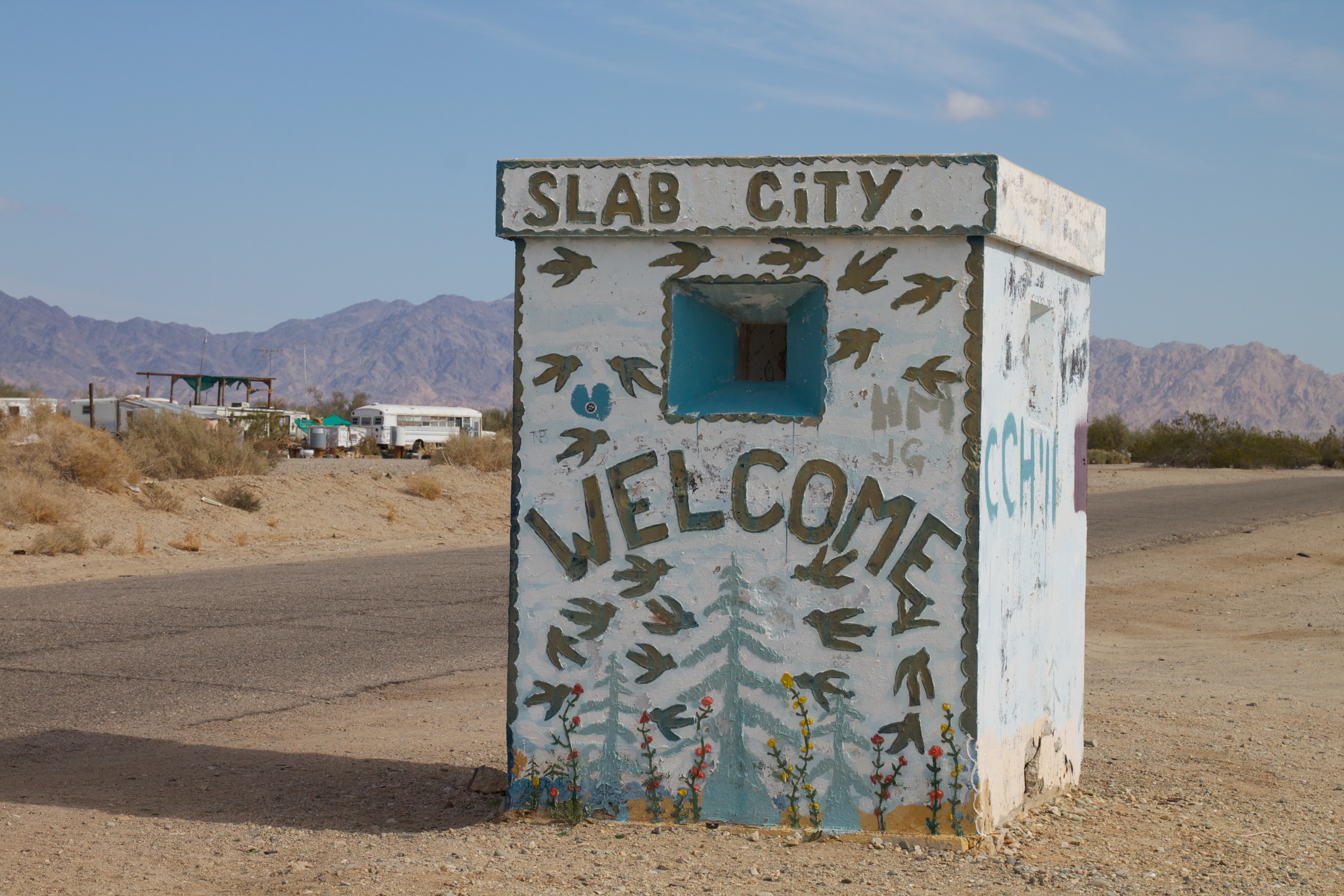
Unveiling the “Last Free Place”
Slab City’s allure lies not just in its physical location but also in its profound identity as a sanctuary for those who choose to live outside the traditional systems. It’s a place where individuality is celebrated, and the spirit of independence thrives amidst the harsh desert environment. Before diving into the specifics of its unique culture and attractions, let’s pinpoint exactly where this fascinating settlement can be found on the map and trace its intriguing origins.
Geographical Coordinates: Finding Slab City on the Map
Slab City is situated in Imperial County, California, approximately 150 miles east of San Diego and about 50 miles south of Palm Springs. More precisely, it lies just east of the small town of Niland, near the southeastern shore of the infamous Salton Sea. The exact coordinates are roughly 33°15′08″N 115°27′08″W, placing it deep within the Colorado Desert section of the larger Sonoran Desert.
To reach Slab City, most visitors travel east from Niland on a road known as Bumfuck Road (though its official name is sometimes Slab City Road), which eventually transitions into a network of unpaved, dusty tracks. There are no official signs pointing the way, adding to its mystique and the sense of discovery for those who seek it out. This remote location, far from urban centers and readily available services, is integral to its identity as a haven for drifters, artists, snowbirds, and those simply seeking an alternative way of life. It exists on unincorporated, state-owned land, meaning there are no government services, no running water, no electricity grid, and no formal infrastructure. This complete lack of regulation is precisely what attracts its diverse population, offering unparalleled freedom, albeit with significant challenges.
A Glimpse into its History and Origins
The story of Slab City begins with the remnants of Camp Dunlap, a World War II Marine Corps training base. Established in 1942, Camp Dunlap served as an artillery training facility, housing thousands of Marines and contributing significantly to the war effort. After the war concluded in 1945, the base was decommissioned and largely dismantled. What remained were concrete slabs – the foundations of barracks, mess halls, and other structures – scattered across the desert floor. These “slabs” gave the nascent community its name.
In the decades that followed, these abandoned concrete foundations became a magnet for individuals seeking an inexpensive place to live, particularly snowbirds (seasonal visitors from colder climates) and people looking to escape the strictures of conventional society. By the 1960s and 70s, a rudimentary community began to form. Over time, it evolved from a simple seasonal encampment into a year-round settlement, attracting a permanent population alongside its winter influx of temporary residents. The lack of land ownership, taxes, or utilities created an environment where people could live freely and creatively, without the pressures and costs associated with modern urban living. This unique genesis from a military outpost to a haven for the counter-culture is a critical part of Slab City’s enduring legend.
The Unique Culture and Lifestyle of the Slabs
Life in Slab City is a stark contrast to the typical Californian experience. It’s a world defined by ingenuity, resourcefulness, and a strong sense of community, interwoven with a fiercely independent spirit. This section delves into the daily realities and cultural nuances that define “the Slabs.”
Life Off-Grid: Surviving in the Sonoran Desert
The most defining characteristic of Slab City is its complete lack of official infrastructure. Residents live entirely off-grid, meaning they generate their own power, often through solar panels, and manage their own waste. Water is a precious commodity, usually hauled in from nearby towns or collected and stored in large tanks. Sanitation facilities are basic, typically involving composting toilets or outhouses. The extreme desert climate presents significant challenges: scorching temperatures often exceeding 100°F (38°C) in the summer, and surprisingly cold nights during winter.
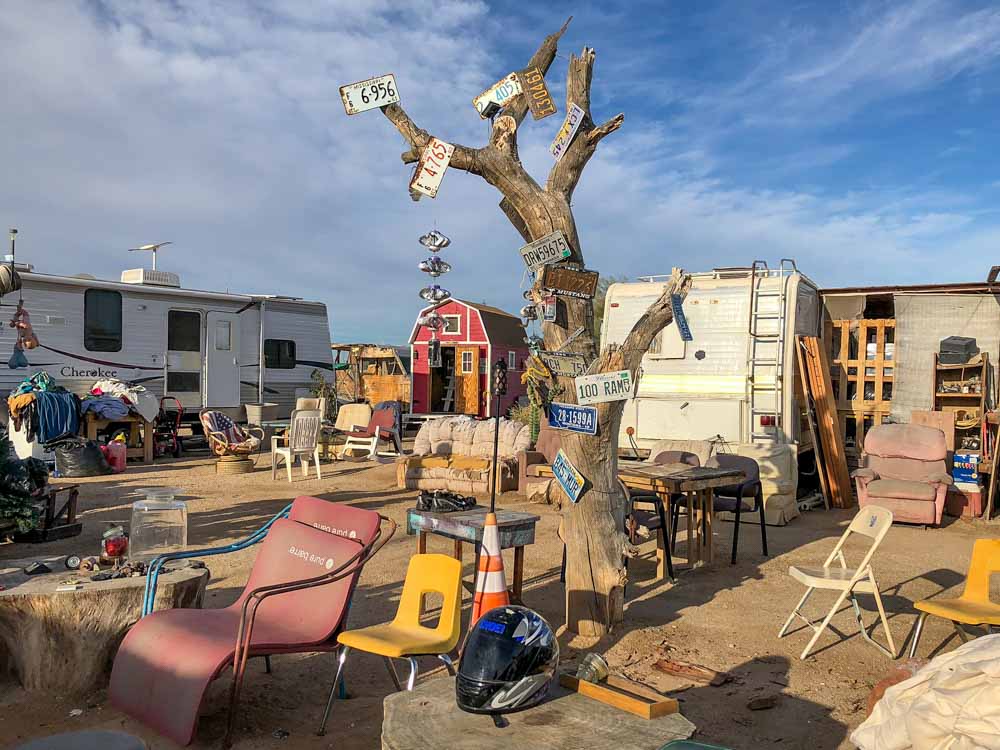
Despite these hardships, or perhaps because of them, the residents display remarkable resilience and self-sufficiency. Homes range from elaborately decorated RVs and trailers to makeshift shanties constructed from salvaged materials. There’s a constant hum of generators and the sight of clotheslines swaying in the desert breeze, reflecting the practicalities of daily life. This challenging environment fosters a strong sense of adaptability and innovation, as “Slabbers” find creative solutions to meet their basic needs, often relying on bartering, sharing resources, and mutual aid. This reliance on community and individual resourcefulness is a cornerstone of the Slab City lifestyle.
The Community and its Unwritten Rules
The population of Slab City is incredibly diverse, encompassing artists, musicians, veterans, retirees, travelers, and those simply seeking refuge from the rat race. While transient, especially during the sweltering summer months when many head north, there is a dedicated core of year-round residents. This eclectic mix of individuals creates a vibrant social fabric, yet also one that values personal space and autonomy.
There are no formal laws or governing bodies in Slab City, but an unwritten code of conduct prevails. Respect for one another, self-sufficiency, and a commitment to not infringing upon others’ freedom are paramount. While some areas are more organized and communal, others are fiercely independent homesteads. Visitors are generally welcomed, but respect for residents’ privacy and property is crucial. Engaging with locals often provides the most authentic insights into this unique way of life, offering stories and perspectives rarely found elsewhere. The spirit of live and let live, coupled with a surprising degree of mutual support, defines the social landscape of the Slabs.
Must-See Attractions and Artistic Expressions
Beyond its unconventional lifestyle, Slab City is renowned for its incredible outdoor art installations, which serve as vibrant expressions of its residents’ creativity and freedom. These artistic landmarks are the primary draw for most tourists and photographers, making Slab City a significant cultural and artistic destination in the desert.
Salvation Mountain: A Colorful Testament of Love
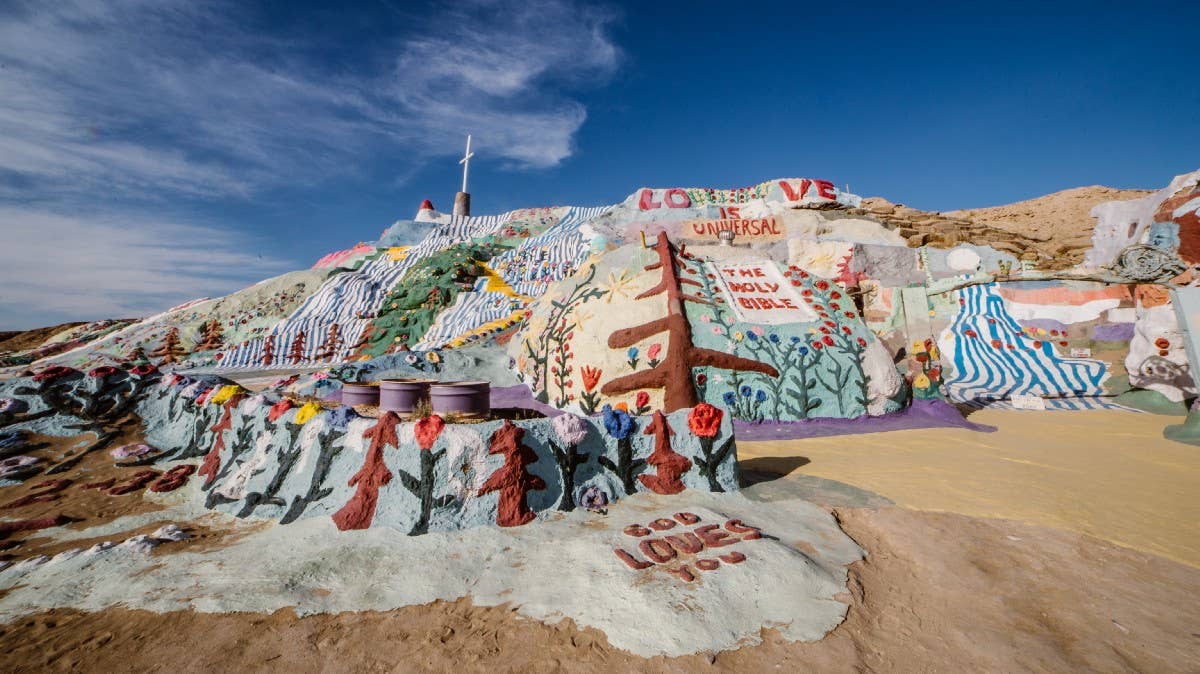
Undoubtedly the most famous landmark in Slab City, and indeed a recognized folk art environment, is Salvation Mountain. Created by the late Leonard Knight over nearly three decades, this monumental, vibrantly painted hillside is a testament to his unwavering faith and his message of “God Is Love.” Constructed from adobe, straw, and thousands of gallons of lead-free paint, the mountain features colorful murals, biblical verses, and heartfelt messages.
Salvation Mountain is an awe-inspiring spectacle, a striking contrast to the drab desert landscape surrounding it. Visitors can walk on the “Yellow Brick Road” path that winds up the mountain, explore its various painted caves and structures, and admire the sheer dedication and vision that went into its creation. It has been declared a national folk art site by the Folk Art Society of America and remains a powerful symbol of artistic expression and devotion. The site is now maintained by a dedicated group of volunteers who continue Leonard Knight’s legacy, ensuring its preservation for future generations.
East Jesus: The Outdoor Art Museum
Just a short distance from Salvation Mountain lies another extraordinary artistic enclave: East Jesus. This sprawling, post-apocalyptic sculpture garden and outdoor art museum is a stark reflection of the desert’s DIY ethos. Founded by the late Charlie Russell, East Jesus is a constantly evolving collection of sculptures, installations, and structures made almost entirely from discarded materials, junk, and found objects.
Visitors can wander through a labyrinth of imaginative creations, from bizarre vehicle modifications to intricate sculptures fashioned from tires, bottles, and scrap metal. There’s a library, a stage, and various living quarters, all built with an anarchic, creative spirit. East Jesus challenges conventional notions of art and beauty, inviting contemplation on consumerism, waste, and the boundless potential of human creativity. It’s a truly immersive experience that encourages exploration and independent interpretation, maintained by a rotating group of artists and caretakers who continue to contribute to its growth and transformation.
The Range: Entertainment in the Desert
For a taste of Slab City’s social life and community spirit, a visit to The Range is a must. This outdoor, informal music venue and community gathering space comes alive on Saturday nights during the cooler winter months. The stage, constructed from salvaged materials, hosts open mic nights, talent shows, and impromptu musical performances.
Complete with bleacher seating, a dance floor, and a bonfire, The Range offers a unique form of desert entertainment. It’s a place where residents and visitors mingle, share stories, and enjoy the diverse talents of the community. It embodies the vibrant, free-spirited atmosphere of Slab City, showcasing how even in the absence of traditional amenities, a thriving cultural scene can emerge. Participating in a Saturday night at The Range offers a truly authentic and memorable Slab City experience, providing a glimpse into the joyful camaraderie that exists within this unconventional settlement.
Planning Your Visit: What to Expect and How to Prepare
Visiting Slab City is not like a typical trip to a resort or a curated tourist attraction. It requires preparation, respect, and an open mind. Understanding the conditions and nuances of this unique destination will ensure a more enjoyable and responsible experience.
When to Visit: Navigating the Desert Climate
The best time to visit Slab City is during the cooler months, typically from October to April. During this period, daytime temperatures are pleasant, ranging from the 60s to 80s Fahrenheit (15-30°C), making exploration comfortable. Winter evenings can still get quite chilly, so layering is advisable. This is also when the snowbird population swells, and the community is at its most vibrant, with events like those at The Range in full swing.
Conversely, the summer months (May to September) are extremely hot, with temperatures often soaring well above 100°F (38°C) and sometimes exceeding 120°F (49°C). Many residents temporarily leave during this intense heat, and services, though already minimal, become even scarcer. Visiting in summer is strongly discouraged due to the health risks associated with extreme heat and dehydration.
Accommodation and Amenities (or Lack Thereof)
It’s crucial to understand that there are no hotels, resorts, or formal accommodation options within Slab City itself. The entire premise of the “Last Free Place” is its unregulated nature. Visitors wishing to stay overnight typically do so by camping in RVs, vans, or tents on the concrete slabs or open desert land, embracing the off-grid experience. However, this is for the truly adventurous and self-sufficient.
For those preferring more conventional lodging, the closest town with hotels and basic amenities is Niland, though options are very limited. A broader range of hotels, motels, and restaurants can be found in larger nearby cities like Brawley or El Centro, which are about an hour’s drive away. Some travelers opt to stay in Palm Springs or Borrego Springs and make a day trip to Slab City, offering a comfortable base before venturing into the rugged environment. Regardless of your chosen accommodation, ensure you have all necessary supplies for your visit, including plenty of water, food, fuel, and sun protection.
Safety, Supplies, and Respecting the Locals
When visiting Slab City, safety and preparedness are paramount.
- Water: Bring more water than you think you’ll need. Dehydration is a serious risk in the desert.
- Sun Protection: Wear hats, sunglasses, and high-SPF sunscreen.
- Footwear: Sturdy, closed-toe shoes are essential for navigating uneven terrain and discarded materials.
- Vehicle: A reliable vehicle, ideally with good clearance, is recommended for the unpaved roads. Ensure your fuel tank is full.
- First Aid: Carry a comprehensive first-aid kit.
- Navigation: While there’s no official map, having offline maps or GPS can be helpful.
Most importantly, approach Slab City with respect and an open mind. Remember, this is people’s home.
- Ask Permission: Before taking photos of residents or their property, always ask for permission.
- Private Property: Respect the boundaries of individual camps; what might look like an abandoned structure could be someone’s home.
- Leave No Trace: Pack out everything you pack in, including all trash. The desert environment is fragile.
- Be Aware: While generally welcoming, be mindful of your surroundings, especially after dark.
Engaging with residents respectfully can lead to fascinating conversations and a deeper understanding of this unique community. Many Slabbers are happy to share their stories and insights with curious and courteous visitors.
Beyond Slab City: Nearby Attractions and Destinations
While Slab City is a captivating destination in its own right, its location in the Imperial Valley places it near several other intriguing, albeit often desolate, points of interest. These nearby sites offer additional layers of exploration, revealing more about the diverse and often stark landscapes of Southern California.
The Salton Sea and its Eerie Beauty
Just west of Slab City lies the Salton Sea, California’s largest lake. Once a booming resort destination in the mid-20th century, a series of ecological challenges, including increased salinity and pollution from agricultural runoff, led to its decline. Today, the Salton Sea is an eerie, beautiful, and somewhat apocalyptic landscape. The decaying resorts, abandoned marinas, and vast stretches of bleached fish bones along the shoreline create a hauntingly picturesque scene, popular with photographers and those interested in environmental history.
The air around parts of the Salton Sea can be pungent due to decaying organic matter, but the panoramic views, especially at sunrise or sunset, are mesmerizing. It’s a significant stop for birdwatchers, as despite its ecological issues, the Salton Sea remains a critical stopover point for migratory birds along the Pacific Flyway. Exploring the ghost towns and beaches around the Salton Sea offers a poignant counterpoint to the vibrancy of Slab City, showcasing different facets of human interaction with the desert environment.
Exploring Niland and Bombay Beach
The small, unincorporated community of Niland serves as the closest point of civilization to Slab City. While it offers limited services (a gas station, a small market, and perhaps a diner), it’s often the last stop for provisions before heading into the Slabs. Niland itself provides a glimpse into the rural, agricultural life of Imperial County.
Further west along the Salton Sea is Bombay Beach, another fascinating ghost town that has experienced a modern resurgence as an art destination. Once a thriving resort town, Bombay Beach also fell victim to the Salton Sea’s environmental decline. However, in recent years, artists have begun to inhabit the abandoned homes and create unique installations and sculptures, particularly for the annual Bombay Beach Biennale. This blend of decay and creative revival makes Bombay Beach another compelling, offbeat attraction in the region, offering a distinct artistic vibe that complements the spirit of Slab City. The juxtaposition of its past glory with its present artistic renaissance makes it a truly thought-provoking visit.
In conclusion, Slab City is much more than just a dot on the California map; it’s a living, breathing experiment in freedom, resilience, and unconventional living. For those prepared to embrace its unique challenges and wonders, it offers a travel experience unlike any other, revealing the depth of human ingenuity and the enduring allure of “the last free place” in America.
LifeOutOfTheBox is a participant in the Amazon Services LLC Associates Program, an affiliate advertising program designed to provide a means for sites to earn advertising fees by advertising and linking to Amazon.com. Amazon, the Amazon logo, AmazonSupply, and the AmazonSupply logo are trademarks of Amazon.com, Inc. or its affiliates. As an Amazon Associate we earn affiliate commissions from qualifying purchases.