
The Tenderloin district in San Francisco is a vibrant, often misunderstood, and historically significant neighborhood. Located squarely in the heart of the city, its central positioning makes it both easily accessible and a focal point for many of San Francisco‘s urban narratives. Understanding its geography is the first step to appreciating its complex character, from its rich cultural past to its present-day challenges and ongoing revitalization efforts.
Geographic Heart of San Francisco
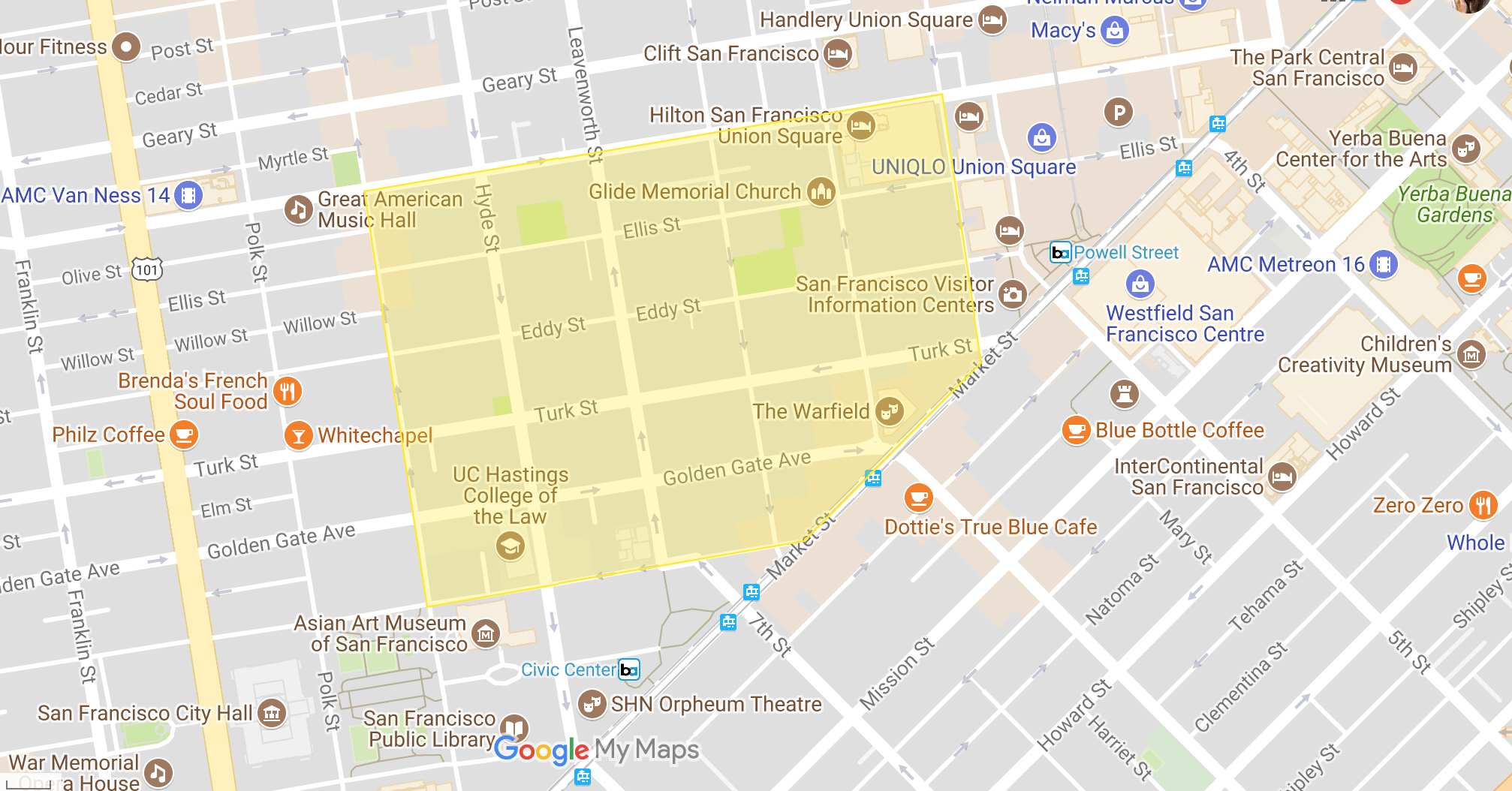
The Tenderloin occupies a prime location within San Francisco‘s grid system. It is generally bordered by Market Street to the south, Geary Street to the north, Van Ness Avenue to the west, and Mason Street to the east. This means it sits just a stone’s throw from some of the city’s most iconic landmarks and bustling commercial centers. Its proximity to Union Square, Civic Center, and the Financial District places it at the nexus of San Francisco‘s economic, cultural, and civic life.
Navigating the Central Location
Its central placement is a defining feature. To the south, Market Street acts as a major artery, separating the Tenderloin from the downtown shopping and business districts. To the north, Geary Street leads towards the upscale shopping of Maiden Lane and further into neighborhoods like the Nob Hill area. Van Ness Avenue, a broad boulevard to the west, serves as a gateway to the Hayes Valley and Japantown areas. To the east, Mason Street delineates the boundary with neighborhoods like Chinatown and the Tenderloin’s immediate eastern neighbors. This highly urban setting means that navigating to and from the Tenderloin is straightforward, with numerous public transportation options readily available.
Key Street Names and Boundaries
Within its defined borders, several prominent streets cut through the Tenderloin, each with its own character. Larkin Street and Hyde Street are notable north-south thoroughfares that offer distinctive views of the city, particularly from their higher elevations where they approach Nob Hill. Eddy Street and Turk Street are major east-west streets that bisect the district, carrying significant local traffic and commercial activity. Understanding these key streets is crucial for anyone trying to orient themselves within the neighborhood and to grasp its internal layout.
Historical Layers and Evolution
The Tenderloin‘s history is as layered and complex as its urban fabric. Originally a more residential and affluent area in the late 19th and early 20th centuries, it underwent significant transformation over the decades, especially following the 1906 earthquake and fire. The influx of new residents and businesses, coupled with evolving social and economic conditions, reshaped its identity. It became known for its vibrant nightlife, jazz clubs, and a bohemian atmosphere that attracted artists and performers.
Post-Earthquake Transformation
Following the devastating 1906 earthquake, San Francisco experienced a period of rapid rebuilding. The Tenderloin, being centrally located, absorbed many displaced residents and businesses. This period also saw a shift in the neighborhood’s character, with some of the more affluent residences being replaced by commercial establishments and apartment buildings. This era laid the groundwork for the district’s reputation as a hub for entertainment and a melting pot of diverse communities.
The Rise and Fall of its Golden Age
The mid-20th century is often considered the Tenderloin‘s “golden age,” characterized by a thriving entertainment scene. Legendary music venues hosted iconic performers, and the streets buzzed with energy. However, changing urban landscapes, economic shifts, and societal transformations led to a decline in certain areas, contributing to some of the challenges the neighborhood faces today. Despite these shifts, the spirit of creativity and resilience has always remained a part of the Tenderloin‘s narrative.
A Neighborhood of Contrasts and Culture

The Tenderloin is a district defined by its striking contrasts. It is a place where grand, historic architecture stands alongside more utilitarian buildings, where bustling commercial corridors give way to quieter residential streets, and where diverse communities coexist. This dynamic environment fosters a unique cultural landscape that is a significant part of San Francisco‘s broader identity.
Architectural Tapestry
The architecture of the Tenderloin is a testament to its history. You can find elegant Victorian-era buildings, ornate Beaux-Arts structures, and mid-century modern apartment complexes. Many of the older buildings, though sometimes showing their age, possess a timeless charm and speak to the district’s past grandeur. The Warfield and the Orpheum Theatre are prime examples of the district’s historic entertainment venues, showcasing the architectural styles of their respective eras.
Cultural Melting Pot
The Tenderloin has long been a destination for immigrants and diverse communities, contributing to its rich cultural tapestry. It has historically been a center for African American culture, Filipino American life, and a refuge for various subcultures. This has resulted in a vibrant mix of businesses, restaurants, and community organizations that reflect the neighborhood’s diverse population. Walking through the Tenderloin, one encounters a sensory experience of different languages, cuisines, and traditions.
Experiencing the Tenderloin Today
Visiting the Tenderloin offers a unique perspective on San Francisco that differs from the more polished tourist hotspots. It’s a place that requires an open mind and a willingness to engage with its complexities. While it faces social and economic challenges, it also possesses an undeniable energy, a rich history, and a growing movement towards positive change.
Arts and Entertainment Hub
Despite its challenges, the Tenderloin remains a significant hub for arts and entertainment. Numerous theaters, music venues, and art galleries operate within its boundaries, continuing its legacy as a cultural center. The SF Sketchfest and other independent film and theater festivals often utilize venues in the Tenderloin, drawing audiences from across the city. The Castro Theatre, though just outside the strictest definition, is a short journey away and represents the broader LGBTQ+ cultural scene that has historical ties to the area.
Culinary Delights and Local Eateries
The Tenderloin offers a diverse and often affordable culinary scene. From authentic Vietnamese pho and Filipino adobo to classic American diners and emerging global eateries, the neighborhood is a paradise for adventurous eaters. Exploring the smaller, family-run establishments can lead to some of the most memorable dining experiences San Francisco has to offer. The area around Civic Center Plaza also sees a range of food trucks and casual dining options.
Navigating Safely and Respectfully
Like many urban centers, the Tenderloin has areas that require awareness and caution. Visitors are encouraged to stay on well-lit, populated streets, especially after dark, and to be mindful of their surroundings. Using ride-sharing services or public transportation to and from the Tenderloin can be a convenient and safe option. Respecting the local community and understanding its dynamics are key to a positive experience. The presence of social services and the unhoused population is a visible aspect of the neighborhood’s challenges, and approaching these realities with empathy is important.

Opportunities for Engagement and Support
For those interested in understanding San Francisco beyond its postcard-perfect image, the Tenderloin offers invaluable insights. Engaging with local community organizations, visiting its cultural institutions, and patronizing its businesses can provide a deeper appreciation for the district’s resilience and ongoing transformation. The Tenderloin Museum offers a dedicated space to explore the neighborhood’s history and contemporary issues, serving as a vital resource for visitors and residents alike. Its location at 150 Golden Gate Avenue makes it an accessible starting point for exploration.
In conclusion, the Tenderloin is more than just a location on a map; it’s a dynamic, historically rich, and culturally significant neighborhood at the very core of San Francisco. Its central positioning makes it a critical piece of the city’s urban puzzle, and understanding its geography is the gateway to appreciating its multifaceted character and enduring spirit.
LifeOutOfTheBox is a participant in the Amazon Services LLC Associates Program, an affiliate advertising program designed to provide a means for sites to earn advertising fees by advertising and linking to Amazon.com. Amazon, the Amazon logo, AmazonSupply, and the AmazonSupply logo are trademarks of Amazon.com, Inc. or its affiliates. As an Amazon Associate we earn affiliate commissions from qualifying purchases.