
The Boston Marathon Finish Line is more than just a painted stripe on asphalt; it is a legendary landmark steeped in history, perseverance, and triumph, etched into the very fabric of Boston’s urban landscape. For runners, spectators, and history enthusiasts alike, its precise location holds immense significance, marking the culmination of an arduous 26.2-mile journey and standing as a symbol of human spirit. This iconic spot can be found on Boylston Street, nestled squarely in the heart of the city’s historic Copley Square district.
The official coordinates place the finish line near 671 Boylston Street, directly across from the famed Boston Public Library and adjacent to the stately Fairmont Copley Plaza hotel. This precise point serves as the grand finale of the world’s oldest annual marathon, the Boston Marathon, drawing millions of eyes and thousands of participants each year. Beyond race day, the finish line, often marked by a permanent medallion or plaque, remains a profound place of pilgrimage, inviting contemplation of the monumental feats achieved on its hallowed ground.
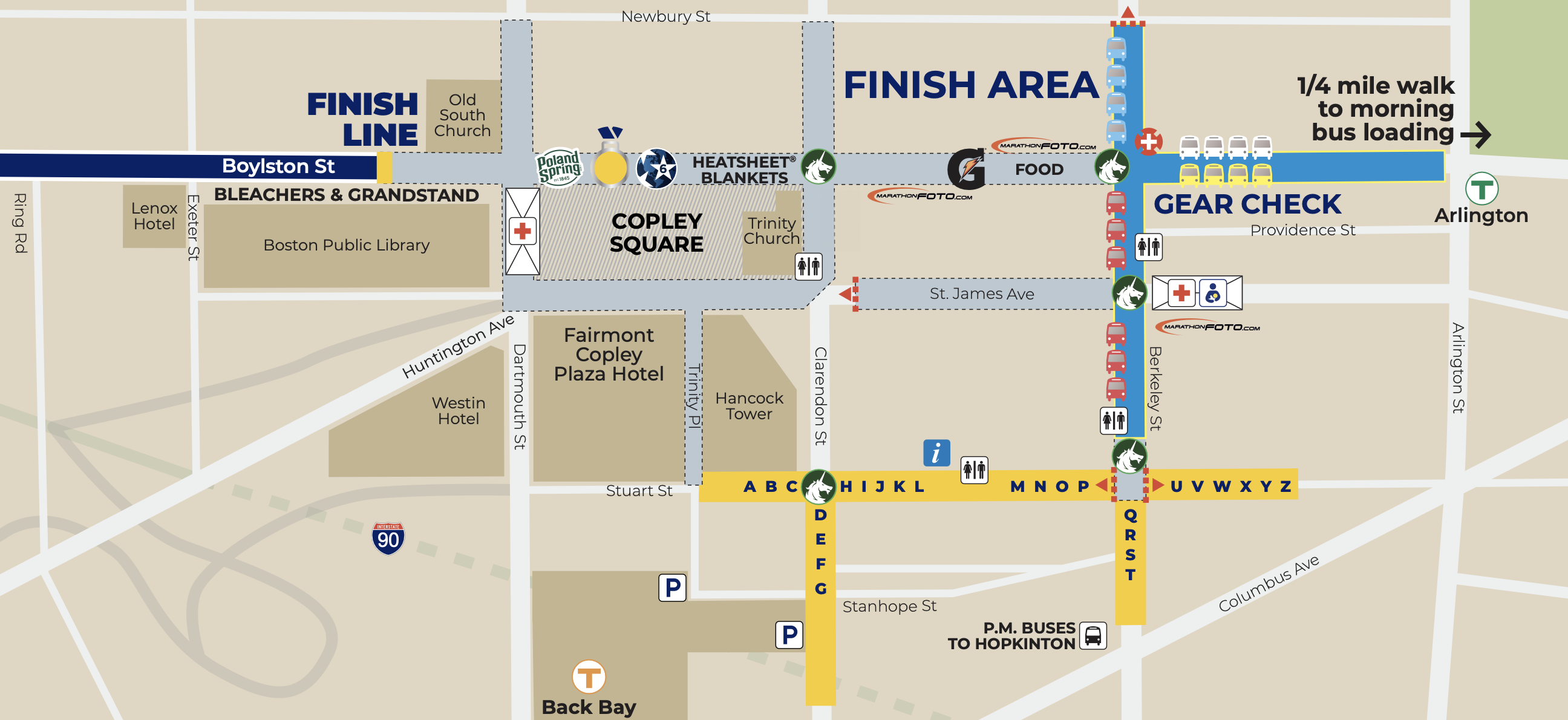
The Iconic Location: Boylston Street and Copley Square
The choice of Boylston Street and Copley Square as the finish line for the Boston Marathon is no accident; it is a deliberate placement that capitalizes on both the historical grandeur and practical advantages of this prominent urban intersection. Copley Square itself is a designated historic district, offering a visually stunning backdrop that elevates the finish line from a mere sports marker to a significant civic landmark.
A Beacon of Urban Design
Boylston Street is one of Boston’s most vibrant thoroughfares, known for its bustling shops, restaurants, and cultural institutions. Its relatively flat and wide expanse in the Back Bay area provides ample space for the elaborate setup required for a major sporting event, including spectator stands, media platforms, and essential medical facilities. For the rest of the year, it is a commercial artery, a testament to the city’s dynamic urban planning. The finish line’s position allows for an uninterrupted view of the final few hundred yards, giving spectators a clear vantage point to witness history unfold.
Copley Square’s Architectural Ensemble
The landmark status of the finish line is inextricably linked to its immediate surroundings in Copley Square. This square is an architectural marvel, featuring a stunning collection of buildings that represent different periods and styles of Boston’s development. The Romanesque revival style of the Trinity Church, designed by Henry Hobson Richardson, stands in stark contrast yet harmonious balance with the majestic Italian Renaissance Revival architecture of the Boston Public Library (McKim Building), an institution widely considered one of the finest examples of public library architecture in the United States. Further contributing to the skyline are the sleek, modern lines of the former John Hancock Tower (now 200 Clarendon Street) and the imposing Prudential Tower, creating a compelling visual narrative of old and new. This rich architectural tapestry provides a dramatic and truly iconic setting for the finish line, embedding it within a landscape that is itself a landmark.
A Historical Tapestry: The Legacy of the Finish Line
The Boston Marathon Finish Line’s history is as rich and enduring as the race it signifies. While the marathon itself began in 1897, the finish line’s exact placement has evolved over the decades, eventually finding its permanent home on Boylston Street in 1986. This move solidified its status as a consistently recognizable landmark, deeply intertwined with the marathon’s narrative.
Evolution of a Landmark
Initially, the Boston Marathon concluded on the grounds of the Irvington Oval and later at the Exeter Street YMCA and then the Prudential Center. However, the move to Boylston Street was transformative. It brought the finish line into the very public eye, making it accessible to larger crowds and integrating it into the city’s vibrant urban core. This relocation enhanced its visibility and amplified its significance as a public landmark, a place where shared triumphs and tribulations unfold against a backdrop of historic Boston architecture.
Moments Etched in Memory

Over the years, the Boston Marathon Finish Line has witnessed countless historical moments. It was here that Kathrine Switzer famously completed the race as an officially registered woman in 1967, challenging gender barriers in sports. It is the site where countless records have been broken, personal bests achieved, and dreams realized. Each year, it embodies the spirit of resilience and community, particularly reinforced in the wake of the 2013 tragedy, when the finish line became a symbol of global solidarity and unwavering resolve. The permanent markings on the street serve as a subtle yet powerful reminder of these events, transforming a simple piece of pavement into a living monument.
More Than a Line: The Finish Line as a Cultural Beacon
The Boston Marathon Finish Line transcends its primary function as an end point for a race; it operates as a profound cultural beacon, radiating significance that extends far beyond the athletic realm. It embodies the human drive for excellence, the power of community, and the spirit of a city that embraces both its storied past and its dynamic present.
A Symbol of Achievement and Perseverance
For thousands of runners who embark on the challenging 26.2-mile course from Hopkinton, the finish line represents the culmination of months, if not years, of dedicated training, sacrifice, and an unyielding commitment to personal goals. Overcoming obstacles like Heartbreak Hill and the demanding final miles through Brookline and Commonwealth Avenue, reaching that stripe on Boylston Street is a testament to extraordinary human endurance. This makes the finish line a universal symbol of achievement, inspiring individuals worldwide to push their limits and strive for their own personal finish lines in life.
A Place of Collective Memory and Resilience
The area around the Boston Marathon Finish Line has become hallowed ground, particularly in the aftermath of the 2013 Boston Marathon bombing. In the face of adversity, this landmark transformed from merely a site of athletic triumph to a powerful emblem of resilience, unity, and unwavering spirit. Flowers, messages, and tokens of remembrance often appear at this spot, especially around the anniversary of the event, turning it into an impromptu memorial and a place for quiet reflection. This collective memory imbues the finish line with a gravitas that makes it a landmark not just of sport, but of human fortitude and communal healing. It reminds visitors of the profound capacity for strength and solidarity in the face of challenge.
Visiting the Landmark: What to Expect Beyond Race Day
While the most vibrant time to experience the Boston Marathon Finish Line is undoubtedly on Patriots’ Day, the third Monday in April, its significance as a landmark persists throughout the year. Visiting this iconic location outside of race day offers a different, often more contemplative, perspective on its history and impact.
The Permanent Marker
Even when the temporary banners and scaffolding of race week are gone, a permanent marker embedded in the sidewalk near 671 Boylston Street denotes the exact location of the finish line. This subtle yet powerful brass plaque, installed by the Boston Athletic Association, allows visitors to stand precisely where legends have crossed and where momentous chapters in marathon history have concluded. It’s a popular spot for photographs, a quiet moment of reflection, and a tangible connection to the spirit of the Boston Marathon.

Exploring the Surrounding Copley Square District
A visit to the finish line naturally includes an immersion into the vibrant Copley Square neighborhood. The proximity to the Boston Public Library and Trinity Church allows for a seamless transition from contemplating athletic achievement to appreciating architectural masterpieces. The square itself is a lively public space, often hosting farmers’ markets, art installations, and community events, maintaining its status as a central gathering point in Boston. The Fairmont Copley Plaza offers a glimpse into Boston’s elegant past, a grand hotel that has hosted dignitaries and witnessed countless marathon finishes from its stately windows.
Strolling along Boylston Street and into Copley Square provides an opportunity to absorb the atmosphere of one of Massachusetts’s most celebrated urban landmarks. The finish line may be a modest stripe on the road, but its location within such a historically rich and architecturally stunning environment elevates it to a landmark of national, and indeed international, significance. It is a place where history is made, remembered, and perpetually celebrated, inviting all who visit to connect with its enduring legacy.
LifeOutOfTheBox is a participant in the Amazon Services LLC Associates Program, an affiliate advertising program designed to provide a means for sites to earn advertising fees by advertising and linking to Amazon.com. Amazon, the Amazon logo, AmazonSupply, and the AmazonSupply logo are trademarks of Amazon.com, Inc. or its affiliates. As an Amazon Associate we earn affiliate commissions from qualifying purchases.