
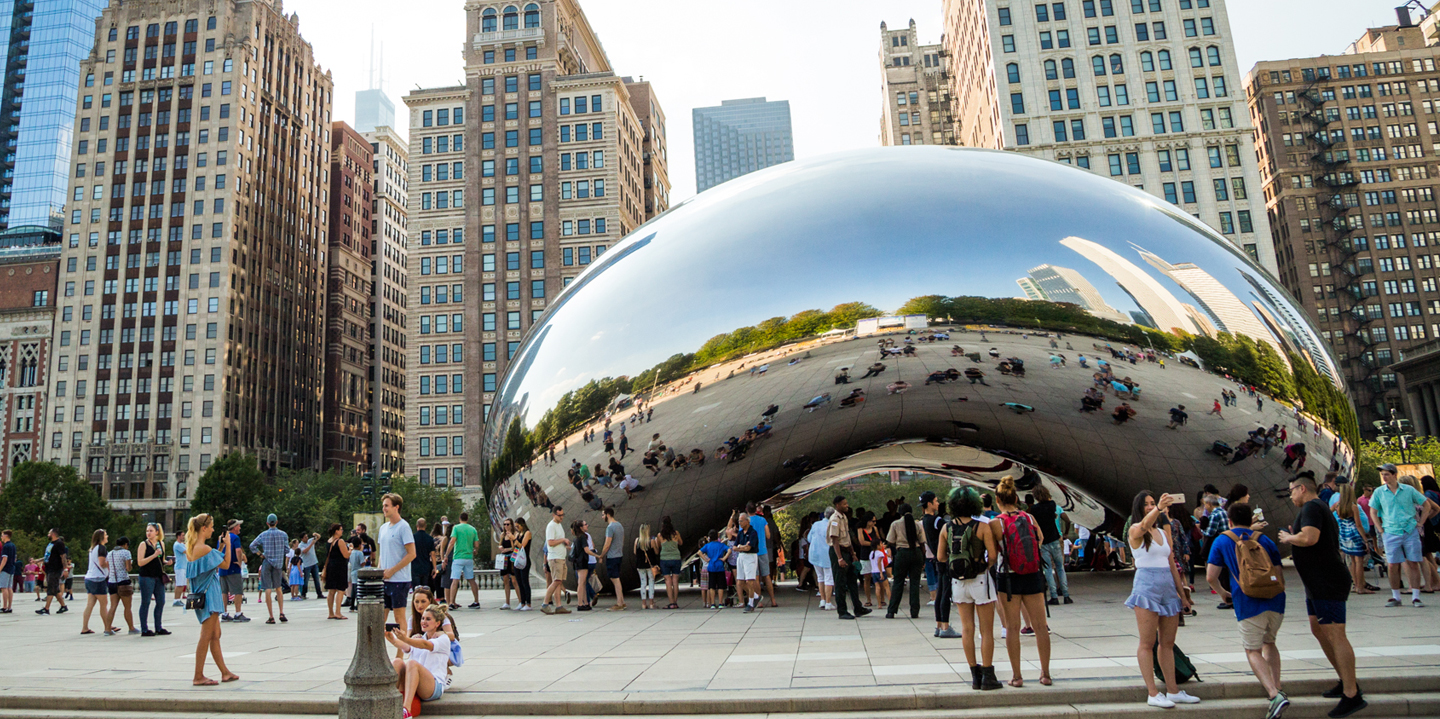
The iconic sculpture universally known as “The Chicago Bean” — officially titled “Cloud Gate” — is a centerpiece of modern public art, firmly embedded within the vibrant urban landscape of Downtown Chicago. This monumental work, famous for its reflective surface and unique form, is situated in Millennium Park, one of the most significant public parks in the United States. Its precise location within the park is AT&T Plaza, a paved public space that functions as both a thoroughfare and a gathering point for visitors from around the globe. This strategic placement ensures that Cloud Gate is not merely a static object but an interactive element that draws the surrounding cityscape into its mirrored exterior, reflecting the towering architecture and ever-changing sky of Chicago.
The Iconic Location: Millennium Park‘s Crown Jewel
Cloud Gate resides majestically within the sprawling 24.5-acre expanse of Millennium Park, which itself is a part of the larger Grant Park complex in the city’s historic Loop community area. Unveiled to the public in 2004, Millennium Park quickly transformed a former industrial brownfield site into a cutting-edge green space replete with innovative architecture, landscape design, and public art installations. The park’s design intentionally integrates a series of interconnected landmarks, with Cloud Gate serving as its undisputed focal point.
Positioned at AT&T Plaza, the sculpture is easily accessible and forms a natural nexus for pedestrian traffic flowing through the park. To its north lies the critically acclaimed Jay Pritzker Pavilion, an outdoor concert venue designed by architect Frank Gehry. To the south, visitors find the lush, perennial beauty of the Lurie Garden. The reflective surface of the Bean captures distorted, dynamic images of these adjacent architectural and natural elements, creating a perpetual dialogue between the sculpture and its surroundings. Furthermore, the Crown Fountain, another popular public art piece, is situated just a short walk southwest, reinforcing Millennium Park’s status as a veritable outdoor museum. This thoughtful arrangement places Cloud Gate not in isolation, but as a central component of a larger landmark experience, encouraging exploration of the entire park’s diverse offerings. Its immediate urban context is defined by the impressive Chicago skyline to the west and the expansive views towards Lake Michigan to the east, both of which are dramatically mirrored on its polished exterior.
Accessibility and Proximity to Other Chicago Landmarks
The location of Cloud Gate makes it exceptionally accessible to both local residents and tourists. Public transportation options abound, with numerous Chicago Transit Authority (CTA) bus routes and ‘L’ train stations (specifically the Loop ‘L’ lines) within easy walking distance. This integration into the city’s transport network underscores its role as a premier public landmark.
Beyond its immediate Millennium Park neighbors, the Bean is also conveniently located near several of Chicago’s other renowned cultural institutions. The prestigious Art Institute of Chicago is directly across Michigan Avenue, making a visit to both landmarks a common itinerary for art enthusiasts. The theatre district, world-class dining, and shopping are also mere blocks away, solidifying Cloud Gate’s position as an anchoring landmark within a dense cultural hub.
Unpacking the “Bean”: Art, Architecture, and Engineering
While its location is central to its public identity, the very form and construction of Cloud Gate are triumphs of modern landmark design and engineering. Created by renowned British artist Anish Kapoor, this monumental sculpture weighs approximately 110 tons, stands 33 feet high, 42 feet wide, and 66 feet long. Its seamless, highly polished stainless steel exterior gives it the appearance of a massive, liquid mercury drop, reflecting and distorting the urban environment.
Anish Kapoor’s Vision and Architectural Execution
Kapoor’s design for Cloud Gate was inspired by liquid mercury, aiming to create a public sculpture that would evoke a sense of wonder and interact dynamically with its surroundings. The technical challenges in realizing this vision were immense. The sculpture is composed of 168 individual stainless steel plates, each precisely cut and shaped, then meticulously welded together and polished to an almost invisible seam. This painstaking process, which took several years to complete, required unprecedented levels of precision and craftsmanship, pushing the boundaries of what was thought possible in large-scale metal fabrication.
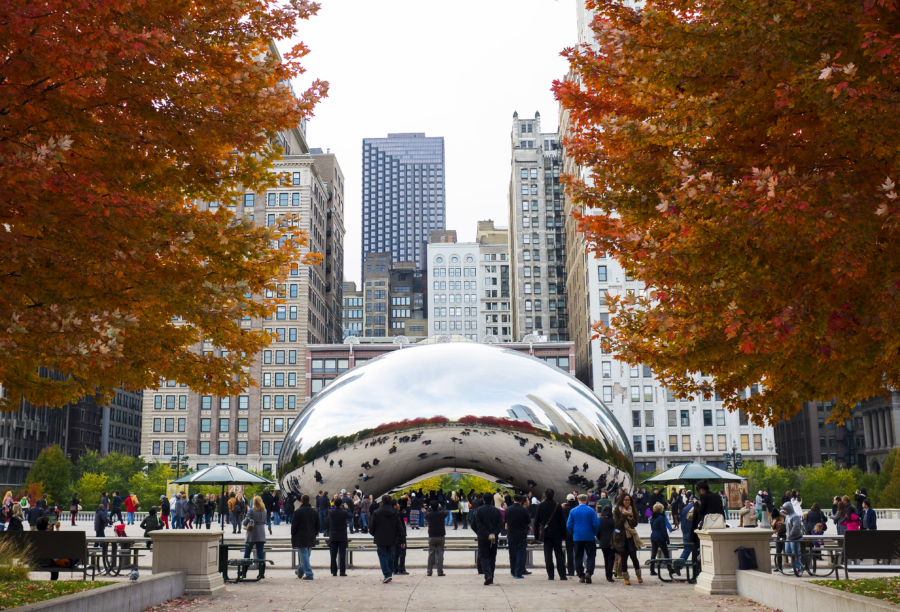
The structural integrity of the Bean is maintained by a complex internal steel framework that supports its immense weight. This framework is anchored to a concrete foundation beneath AT&T Plaza. The seamless exterior, devoid of visible bolts or fastenings, creates an illusion of effortless perfection, a testament to the collaborative effort between the artist, fabricators, and engineers. From an architectural perspective, Cloud Gate is not just a sculpture but an engineered marvel, combining artistic vision with sophisticated structural solutions to create a landmark that is both beautiful and enduring.
A Symbol of Chicago: Cultural Impact and Urban Integration
Beyond its physical location and architectural prowess, Cloud Gate has rapidly evolved into an indispensable symbol of Chicago. Its unique visual appeal and interactive qualities have cemented its status as one of the most photographed landmarks in North America.
Reflecting Chicago’s Identity
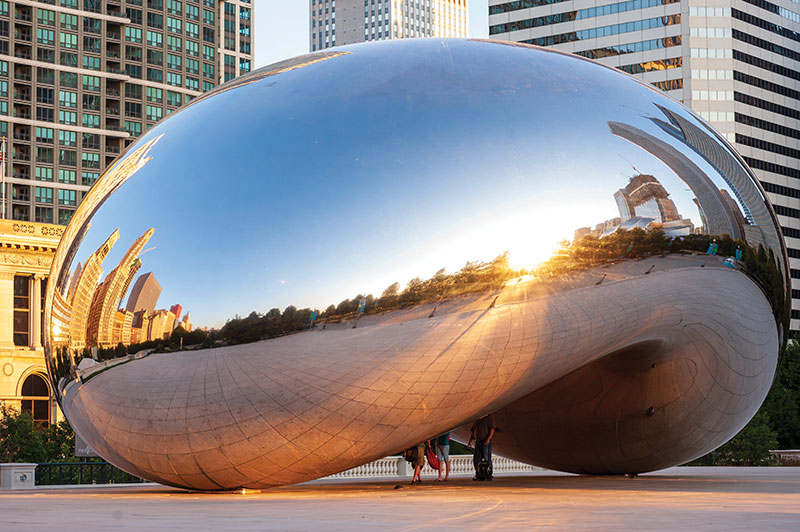
The sculpture’s mirrored surface famously reflects Chicago’s magnificent skyline, presenting a continually changing, kaleidoscopic view of the city’s architectural grandeur. This interactive reflection allows visitors to see the city in a new, often surreal light, effectively making the urban environment an intrinsic part of the artwork itself. It embodies a sense of dynamism and modernity that aligns perfectly with Chicago’s reputation as a city of architectural innovation and cultural vitality. The public can walk underneath the sculpture’s 12-foot-high arch, where the concave underside creates a “navel” or “omphalos” effect, multiplying and inverting reflections, drawing visitors further into its immersive experience. This creates an intimate space within a grand public work, fostering a deeper personal connection to the landmark.
The nickname “The Bean” itself speaks to its accessibility and endearing quality, transcending its formal artistic title to become a beloved local icon. It has become a reference point in popular culture, appearing in films, television shows, and countless social media posts, further solidifying its place in the collective consciousness as a definitive Chicago landmark. Its presence acts as a modern-day town square, attracting diverse groups of people for gatherings, photographs, and moments of shared wonder.
Experiencing the Cloud Gate: Visitor Insights and Landmark Photography
Visiting Cloud Gate is an experience in itself, offering myriad opportunities for engagement and unique photographic perspectives, making it a quintessential landmark experience.
Optimizing Your Landmark Visit
The beauty of Cloud Gate is its year-round accessibility and universal appeal. To fully appreciate its reflective qualities and the interactions it facilitates, timing can be key. Early mornings often provide fewer crowds and a softer light for photography, capturing the serene reflections of the sunrise and the awakening city. Conversely, late afternoons and evenings offer dramatic sunset reflections and the sparkle of the Chicago skyline lights. The city lights shimmering on the Bean’s surface create a particularly magical atmosphere after dark.
Photographers are particularly drawn to Cloud Gate due to its unparalleled reflective properties. The curved surfaces provide endless opportunities for distorted reflections, selfies, and panoramic shots that incorporate the surrounding architectural marvels. Walking underneath the arch offers a unique, disorienting, and mesmerizing experience, where your own reflection multiplies infinitely. This interactivity is fundamental to the artwork, encouraging visitors not just to observe, but to become a part of the art piece itself. The juxtaposition of the dynamic reflections against the static, polished surface ensures that no two views of the Bean are ever quite the same, making each visit a unique encounter with this modern landmark.
In conclusion, the Chicago Bean, officially “Cloud Gate,” is not merely located in Millennium Park; it is an integral, living part of the park’s identity and the broader urban fabric of Chicago. Its design, location, and cultural impact collectively establish it as a premier global landmark, inviting constant interaction and reflection on art, architecture, and the city itself.
LifeOutOfTheBox is a participant in the Amazon Services LLC Associates Program, an affiliate advertising program designed to provide a means for sites to earn advertising fees by advertising and linking to Amazon.com. Amazon, the Amazon logo, AmazonSupply, and the AmazonSupply logo are trademarks of Amazon.com, Inc. or its affiliates. As an Amazon Associate we earn affiliate commissions from qualifying purchases.