
The haunting image of a secluded mountain resort, buried under a blanket of snow and isolation, is one of the most enduring motifs in cinematic history. For fans of The Shining, the Overlook Hotel is more than just a setting; it is a malevolent character in its own right. However, for those seeking to visit this iconic location, the answer is more complex than a single address. The “hotel” from the movie is actually a composite of three distinct landmarks: one that inspired the original novel, one that provided the chilling exterior vistas, and a massive set where the terrifying interiors were brought to life.

Understanding where The Shining was filmed requires a journey through the United States and across the Atlantic Ocean to England. Each location contributed a layer to the legend, blending Colonial Revival elegance, Cascadian rustic architecture, and meticulous studio craftsmanship into a singular, nightmare-inducing landmark.
The Stanley Hotel: The Spark of Stephen King’s Imagination
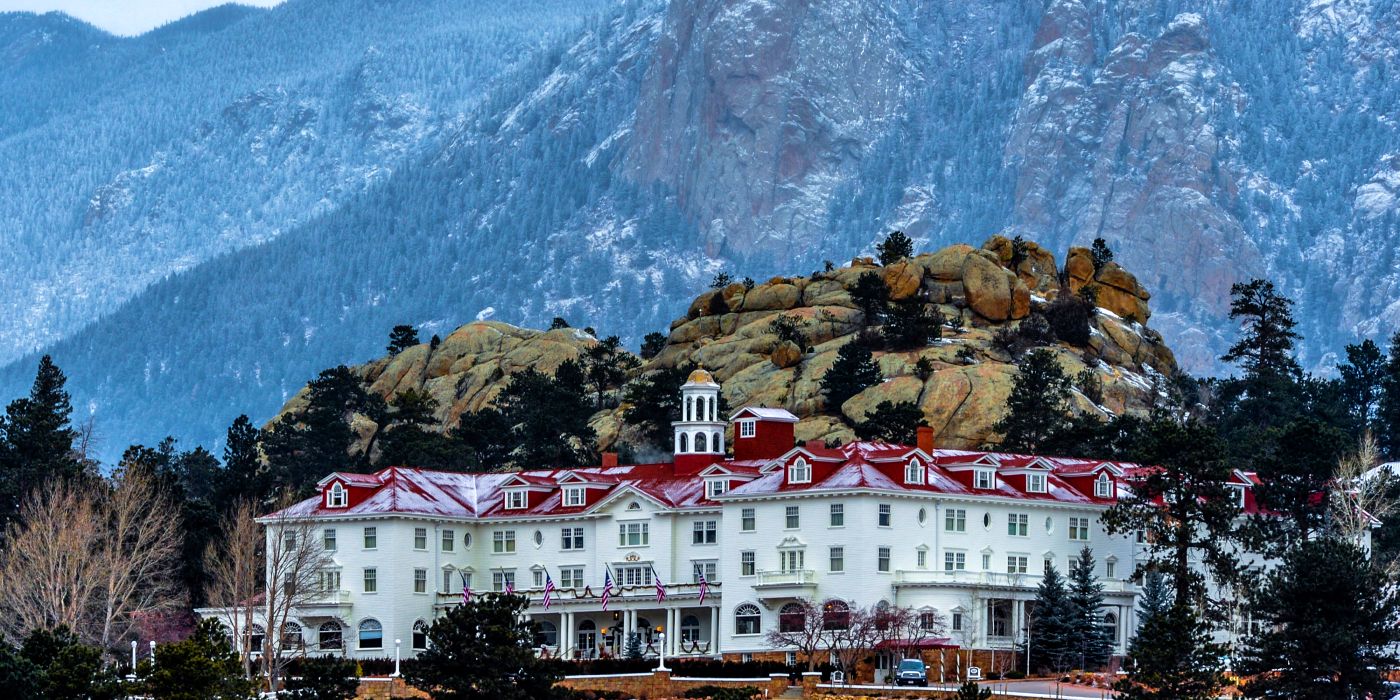
While Stanley Kubrick transformed the story into a visual masterpiece, the soul of the Overlook Hotel began with the master of horror, Stephen King. In 1974, Stephen King and his wife, Tabitha King, spent a night at the Stanley Hotel in Estes Park, Colorado. As the season was ending, they were the only guests in the sprawling, grand building. This eerie solitude, combined with the hotel’s long corridors and the silence of the Rocky Mountains, birthed the concept of the haunted resort.
A Fateful Night in Estes Park
The Stanley Hotel opened its doors in 1909, founded by Freelan Oscar Stanley, the co-inventor of the Stanley Steamer automobile. Located just outside the Rocky Mountain National Park, the hotel was designed to bring East Coast luxury to the rugged wilderness of the West. When Stephen King arrived, the hotel was facing financial decline and was on the verge of closing. During his stay in Room 217, he reportedly had a nightmare about his young son being chased through the halls by a fire hose, which provided the narrative thrust for his breakthrough novel.
Architectural Elegance of the Colonial Revival
Architecturally, the Stanley Hotel is a stunning example of Colonial Revival design. Its bright white exterior and red gambrel roof stand in stark contrast to the dark, moody aesthetics Stanley Kubrick would later employ. The interior features ornate woodwork, a grand staircase, and a sprawling veranda that offers panoramic views of Longs Peak. Although Stanley Kubrick chose not to film here, the Stanley Hotel remains the spiritual home of the story and was eventually used as the filming location for the 1997 television miniseries adaptation, which Stephen King felt was more faithful to his book.
Paranormal Legacy and the “Stephen King Suite”
Today, the Stanley Hotel is a major tourist landmark. It fully embraces its association with The Shining, offering ghost tours and maintaining Room 217 as one of the most requested bookings in the world. Visitors can explore the Concert Hall, where footsteps are often heard, or the MacGregor Ballroom, where the ghosts of former owners are said to linger. The landmark has transitioned from a struggling resort to a cultural icon, proving that sometimes, a good scare is the best form of preservation.
Timberline Lodge: The Cinematic Face of the Overlook
When viewers see the wide shots of the Overlook Hotel nestled against the snowy peaks in the 1980 film, they are looking at Timberline Lodge. Located on the south slope of Mount Hood in Oregon, this lodge provided the imposing exterior that Stanley Kubrick required to establish the film’s sense of isolation and grandeur.
Mount Hood’s Majestic Backdrop
Timberline Lodge is an architectural masterpiece of the Great Depression era. Built by the Works Progress Administration, it was dedicated in 1937 by President Franklin D. Roosevelt. The lodge is constructed from local stone and timber, embodying a style known as Cascadian architecture. Its heavy, rustic aesthetic and its location at an elevation of 6,000 feet made it the perfect visual stand-in for a remote hotel in the Colorado high country.

Why Kubrick Chose the Oregon Exterior
Stanley Kubrick was notorious for his perfectionism and his reluctance to travel far from his home in England. However, he sent a second-unit crew to Oregon to capture the establishing shots of Timberline Lodge. The director was particularly drawn to the lodge’s massive roofline and its ability to look both welcoming and fortress-like. The opening sequence of the film, featuring Jack Torrance driving up the Going-to-the-Sun Road in Glacier National Park, Montana, eventually leads the viewer to the front doors of Timberline Lodge, creating a seamless, albeit geographically impossible, journey.
The Room 217 vs. Room 237 Controversy
A fascinating piece of trivia regarding Timberline Lodge is the naming of the haunted room. In the novel, the horror occurs in Room 217. However, the management of Timberline Lodge requested that Stanley Kubrick change the room number to a non-existent one so that future guests wouldn’t be afraid to stay there. Thus, the infamous Room 237 was born. Ironically, Room 217 remains the most requested room at the Stanley Hotel, while Timberline Lodge continues to enjoy its status as a National Historic Landmark and a premier destination for skiing and hiking.
Elstree Studios: Recreating Grandeur on a London Soundstage
While the exteriors are found in Oregon, the vast majority of The Shining was filmed inside Elstree Studios in Borehamwood, England. Because Stanley Kubrick wanted total control over the lighting and set design, he chose to build the Overlook Hotel interiors from scratch. These sets were so large they required the use of several soundstages, including the massive EMI Elstree Studios complex.
The Ahwahnee Hotel Influence
To design the interiors, Stanley Kubrick and production designer Roy Walker drew heavy inspiration from the Ahwahnee Hotel (now known as the Majestic Yosemite Hotel) in Yosemite National Park, California. The Great Hall of the Overlook Hotel, where Jack Torrance types his repetitive manuscript, is almost a mirror image of the Ahwahnee Hotel lobby, featuring Native American motifs and massive floor-to-ceiling windows. The elevator lobby, famous for the “blood waterfall” scene, was also modeled after the Ahwahnee Hotel.
Constructing the Impossible Interior
The sets at Elstree Studios were designed with a deliberate sense of “impossible architecture.” Stanley Kubrick wanted the audience to feel disoriented, so the layout of the hotel doesn’t physically make sense—hallways lead to nowhere, and windows appear in rooms that should be in the middle of the building. This psychological use of a landmark’s interior space added to the feeling of the hotel being a maze. The Colorado Lounge and the Gold Room were masterpieces of set construction, capturing the faded 1920s glamour that is central to the film’s haunting atmosphere.
The Great Fire of 1979
Toward the end of production, a massive fire broke out at Elstree Studios, destroying several of the Overlook Hotel sets. Interestingly, there is a famous photograph of Stanley Kubrick laughing in front of the charred remains of the sets. The fire was so intense it required a total rebuild of some sections, but it also added to the dark lore surrounding the production. Today, Elstree Studios remains a legendary landmark in the British film industry, having hosted everything from Star Wars to The Crown.
Visiting the Legends Today
For the ultimate fan of The Shining, a pilgrimage involves visiting multiple landmarks to piece together the full experience. Each site offers a different perspective on how a physical location can be transformed by art and storytelling.
Exploring Colorado and Oregon
A trip to the Stanley Hotel in Colorado offers the literary history. You can walk the same halls that Stephen King walked and see the Hedge Maze that was added to the property in 2015 as a tribute to the film (ironically, the novel featured topiary animals, and the film featured a maze). Meanwhile, a visit to Timberline Lodge in Oregon provides the cinematic thrill. Standing outside the lodge, you can look up at the windows and imagine the Torrance family looking out at the snow-covered Mount Hood.
The Impact on Cinema Tourism
These locations have become primary examples of “cinema tourism,” where a landmark’s identity is forever linked to a piece of fiction. The Ahwahnee Hotel in California still sees visitors who come just to see the elevators and the grand fireplace that inspired Stanley Kubrick. This intersection of architecture, history, and pop culture ensures that these buildings are preserved not just for their original purpose, but for their role in our collective imagination.
The hotel from The Shining doesn’t exist in one place, but its components—the Stanley Hotel, Timberline Lodge, and the sets of Elstree Studios—are very real. Together, they form a landmark that transcends geography, living forever in the shadowy halls of cinematic history. Whether you are an architecture enthusiast or a horror aficionado, these sites offer a fascinating look at how a place can become a legend.
LifeOutOfTheBox is a participant in the Amazon Services LLC Associates Program, an affiliate advertising program designed to provide a means for sites to earn advertising fees by advertising and linking to Amazon.com. Amazon, the Amazon logo, AmazonSupply, and the AmazonSupply logo are trademarks of Amazon.com, Inc. or its affiliates. As an Amazon Associate we earn affiliate commissions from qualifying purchases.