
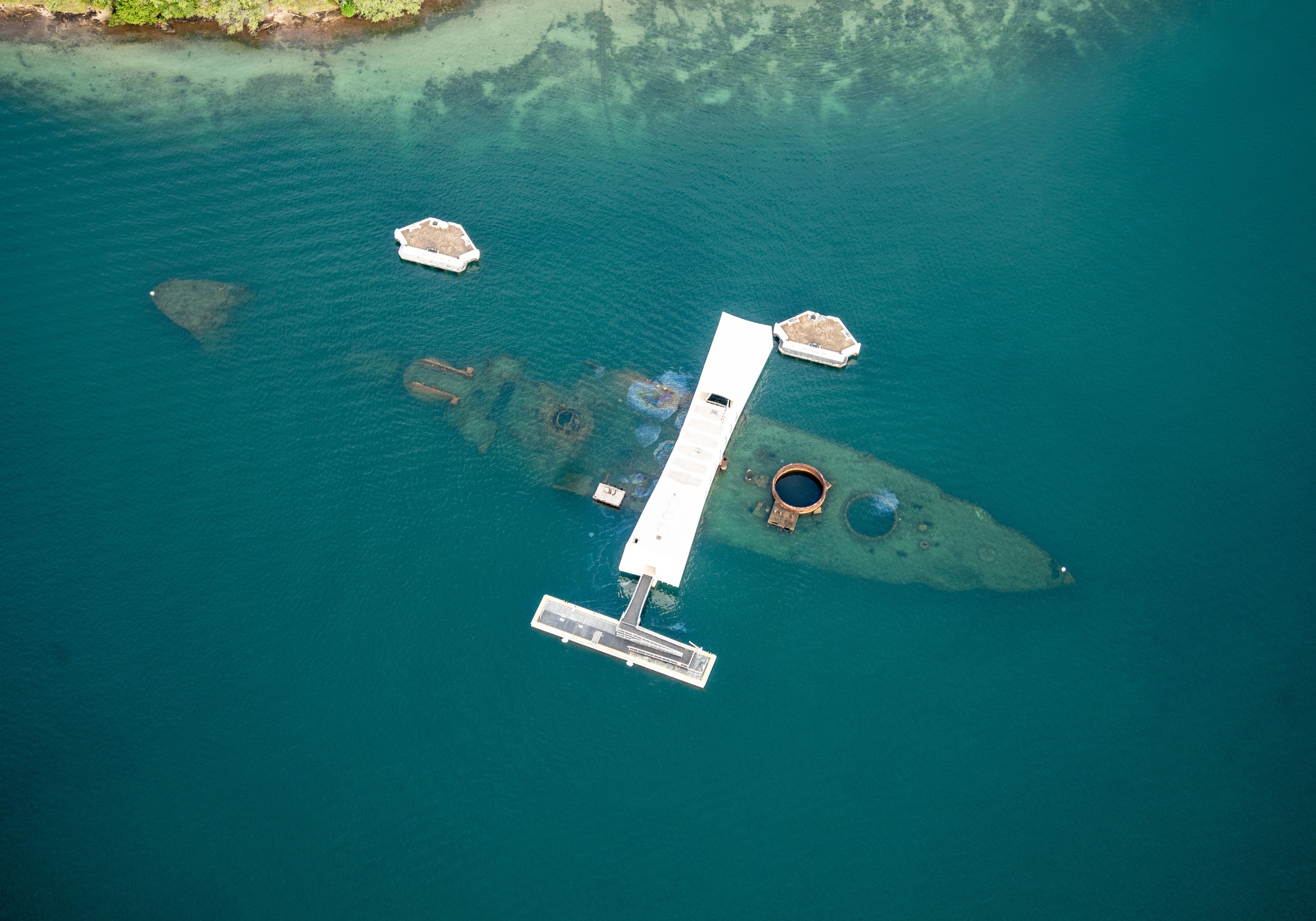
The fate of the USS Arizona is one etched into the annals of United States history, a poignant narrative of conflict, sacrifice, and enduring memory. Far from being lost to obscurity, the mighty battleship rests precisely where it fell on December 7, 1941, at the bottom of Pearl Harbor, Oahu, Hawaii. This hallowed underwater grave serves not as a tomb of forgotten history, but as the foundation for one of the most significant and emotionally resonant landmarks in the nation: the USS Arizona Memorial, part of the larger Pearl Harbor National Memorial. Its location is both a physical coordinates and a profound historical touchstone, drawing millions annually to reflect on the events of World War II and the ultimate cost of freedom.
The Enduring Resting Place of an American Icon
The question of “where is the USS Arizona” is answered not merely by a point on a map, but by understanding its status as a permanent, living memorial. Unlike many sunken vessels salvaged or forgotten, the USS Arizona was purposefully left undisturbed, transforming its wreck into a powerful symbol of remembrance and a testament to those who perished. It is a landmark unique in its nature, a sunken ship serving as the primary structure of a memorial built above it.
A Symbol of Sacrifice at Pearl Harbor
On that fateful Sunday morning, the USS Arizona became the epicenter of the surprise attack by Japan, an event that irrevocably altered the course of United States engagement in World War II. Moored along Battleship Row off Ford Island, the battleship sustained a direct hit from an armor-piercing bomb that ignited its forward magazine. The resulting catastrophic explosion tore the ship apart, causing it to sink within minutes, taking with it 1,177 of its crew members. The vast majority of these brave individuals remain entombed within the ship’s hull, making the wreck a mass grave and a sacred site. The decision to leave the ship in situ was driven by both the impracticality of salvaging such a severely damaged vessel and, more importantly, the profound desire to honor the fallen by preserving their final resting place. This choice elevated the wreck from a mere piece of naval history to an enduring monument, embodying the courage and sacrifice of those who died. The oil that continues to seep from the sunken hull, often referred to as “black tears,” serves as a constant, tangible reminder of the ship’s tragic fate and the lives lost, adding another layer of solemnity to this remarkable landmark.
The USS Arizona Memorial: A Sacred Landmark
The physical structure of the USS Arizona Memorial itself is an architectural marvel designed to span the sunken hull without touching it, thereby preserving the integrity of the wreck. Dedicated in 1962, the memorial was designed by Alfred Preis, who described his creation as “a bridge between the past and present.” The clean, stark white structure contrasts sharply with the dark waters below, providing a contemplative space for visitors. It consists of three main sections: an entry ramp, an assembly room overlooking the ship, and a shrine room. The assembly room features seven large open windows on either side, representing the date of the attack. In the shrine room, a marble wall bears the names of all 1,177 crew members who perished on the USS Arizona during the attack. The memorial’s design fosters introspection, guiding visitors through a journey of remembrance, from the initial shock of the attack to the somber reflection on the ultimate sacrifice made. As a landmark, it is not merely a static monument but an interactive historical experience, where the very structure of the memorial is an extension of the history it seeks to preserve.
Visiting the Memorial: A Journey of Remembrance
The USS Arizona Memorial stands as one of the most visited landmarks in Hawaii, a pilgrimage site for those seeking to connect with a pivotal moment in American history. Managed by the National Park Service, the memorial complex offers a comprehensive and deeply moving educational experience, drawing millions from around the globe to pay their respects and understand the profound impact of the Pearl Harbor attack.
Planning Your Trip to Oahu
Located on the island of Oahu, the Pearl Harbor National Memorial is easily accessible from the capital city of Honolulu and the popular resort area of Waikiki. Public transportation, ride-sharing services, and guided tours all provide convenient options for reaching the site. Given its popularity, advance planning is highly recommended, especially for securing tickets to the USS Arizona Memorial program, which includes a documentary film and a boat ride to the memorial structure. The National Park Service provides valuable resources online for visitors, including information on operating hours, reservation procedures, and what to expect during their visit. Understanding the layout of the memorial complex, which also includes the USS Bowfin Submarine Museum & Park, the Battleship Missouri Memorial, and the Pearl Harbor Aviation Museum, helps in planning a comprehensive visit to fully appreciate this expansive landmark district.
The Pearl Harbor National Memorial Experience
A visit to the Pearl Harbor National Memorial is a multi-faceted experience, designed to immerse visitors in the history of the attack. The interpretive museum exhibits provide a detailed timeline of events leading up to December 7, 1941, the attack itself, and its aftermath. Personal stories, artifacts recovered from the site, and archival footage offer a powerful, human perspective on the conflict. The centerpiece of the experience is the boat trip to the USS Arizona Memorial. As the boat approaches the white structure hovering over the sunken battleship, a palpable sense of reverence descends upon visitors. The journey across the tranquil waters of Pearl Harbor provides a crucial transition, preparing minds for the solemnity of the memorial. This careful sequencing of information and experience ensures that the landmark’s profound historical and emotional significance is fully conveyed, creating an impactful and unforgettable visit.
What to Expect During Your Visit
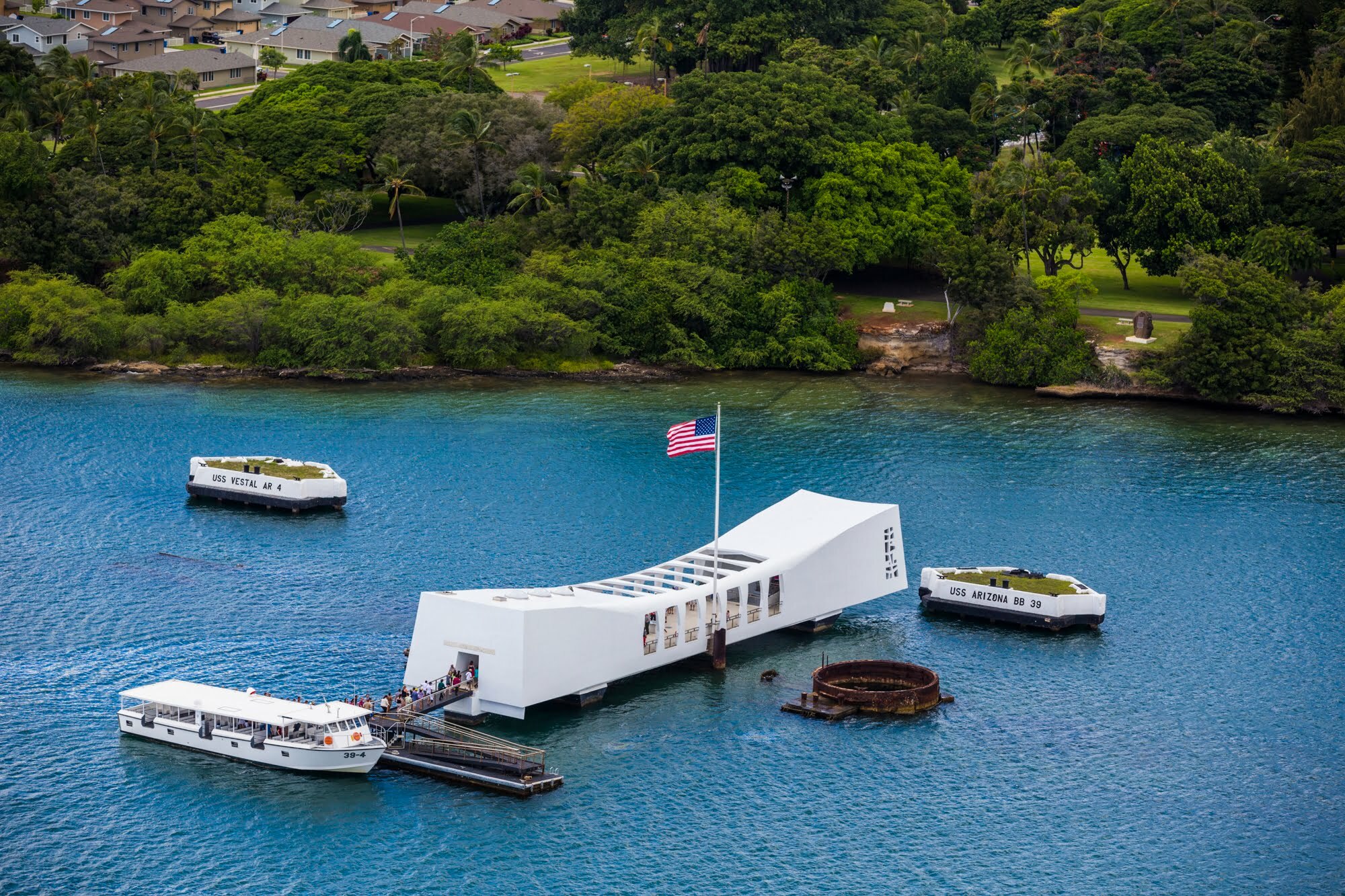
Upon arrival at the USS Arizona Memorial structure, visitors are encouraged to maintain a respectful silence. The open design of the memorial allows for clear views of the sunken battleship just beneath the water’s surface. Portions of the USS Arizona, including its rusted barbettes and superstructure, are visible, a stark and haunting reminder of the ship’s violent demise. The shimmering oil slicks, the “tears of the Arizona,” are often visible on the water’s surface, a poignant symbol of the ongoing presence of the tragedy. Inside the shrine room, the wall of names is a deeply moving focal point. Visitors often pause to locate specific names, sometimes leaving leis or flowers in tribute. The overall atmosphere is one of profound respect and quiet contemplation, underscoring the memorial’s role not just as a historical site, but as a place of active mourning and reflection. It is a landmark that speaks volumes through its silence and its profound visual impact.
The History Etched Beneath the Waves
The decision to leave the USS Arizona where it sank was not merely pragmatic but symbolic, transforming a battlefield into a permanent landmark. This choice underscores the reverence for the site and the desire to forever honor the sacrifice made. The ship’s location is not just a geographical point but a continuous narrative, an underwater museum that tells a story of heroism and loss.
The Attack on Pearl Harbor and Its Aftermath
The attack on Pearl Harbor was a pivotal moment that thrust the United States into World War II. On December 7, 1941, over 350 Japanese aircraft descended upon the U.S. Pacific Fleet, anchored in Pearl Harbor. Within a few devastating hours, eight battleships were damaged, with four — including the USS Arizona — sunk. The attack claimed the lives of 2,403 Americans, including civilians, and wounded 1,178 others. President Franklin D. Roosevelt famously declared December 7th “a date which will live in infamy,” galvanizing the nation and leading to an immediate declaration of war. The decision regarding the USS Arizona and other sunken vessels became a critical consideration in the immediate aftermath. While ships like the USS Oklahoma and the USS Utah also suffered heavy losses and remain largely where they sank, the USS Arizona bore the brunt of the devastation, its destruction so complete that salvaging it for recommissioning was deemed impossible and impractical.
The Decision to Leave Her At Rest
Following the attack, massive salvage operations began to refloat and repair damaged vessels. Most of the battleships, including the USS California, USS West Virginia, USS Nevada, USS Tennessee, and USS Maryland, were eventually returned to service. However, the USS Arizona was an exception. The intense fire from the explosion and subsequent sinking had caused structural damage beyond repair. More significantly, the realization that over a thousand men remained entombed within its hull led to the decision to declare it a permanent memorial. This preserved the ship as a sacred grave and a powerful, undisturbed reminder of the ultimate sacrifice. This decision marked a turning point in how war losses were commemorated, transforming a sunken wreck into a consecrated ground, an eternal landmark that speaks volumes without uttering a single word.
Engineering a Memorial Above Water
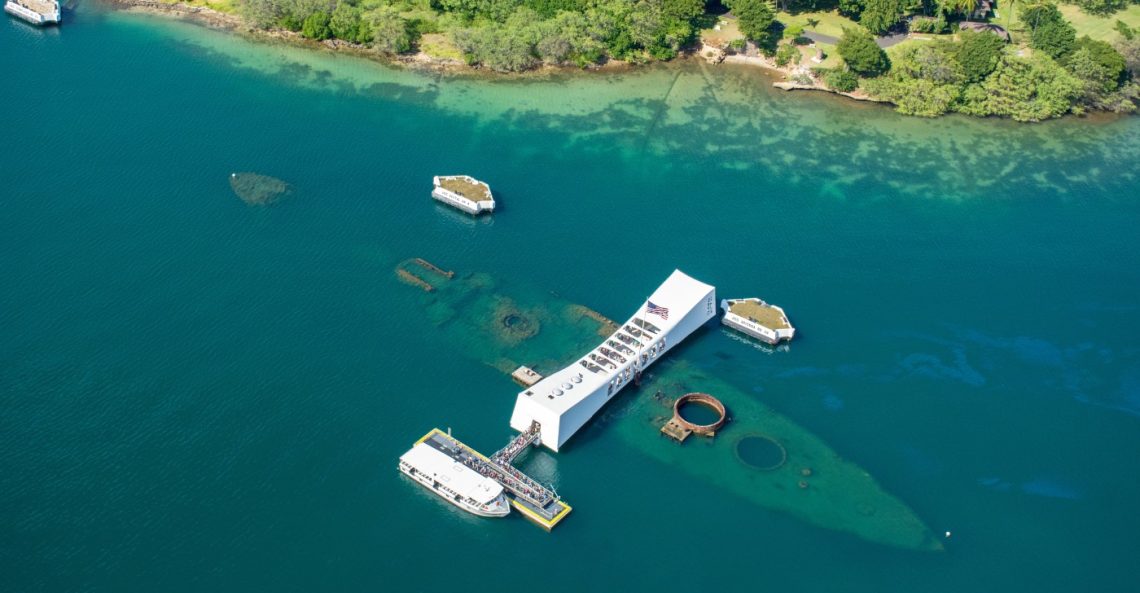
The challenge of creating a memorial that honored the sunken battleship without disturbing its sacred contents led to the innovative design by Alfred Preis. The resulting structure is not merely a building but an engineering feat, a monument to human ingenuity rising above human tragedy. The memorial’s design is deeply symbolic: its concave ends represent initial defeat, while its strong, upward-pointing center signifies ultimate victory and enduring peace. It embodies the balance between grief and triumph, a fundamental aspect of its enduring power as a landmark. The concrete structure floats above the USS Arizona without touching it, ensuring that the ship remains an undisturbed grave. This careful consideration of both historical significance and architectural sensitivity makes the USS Arizona Memorial a unique and powerful landmark that continues to captivate and educate visitors.
The Legacy and Ongoing Significance
The USS Arizona, in its submerged state beneath Pearl Harbor, transcends its identity as a mere naval vessel to become an eternal landmark. Its enduring presence ensures that the lessons of December 7, 1941, and the sacrifices made, are never forgotten. It serves as a continuous reminder of the fragility of peace and the immense cost of conflict, an educational beacon for generations present and future.
Preserving History for Future Generations
The conservation of the USS Arizona as an underwater landmark is an ongoing endeavor. The National Park Service monitors the wreck, managing its slow deterioration and the environmental impact of the oil it continues to release. Regular scientific surveys and preservation efforts aim to ensure that the ship remains intact as a historical artifact for as long as possible. The memorial itself undergoes periodic maintenance to sustain its structural integrity and aesthetic. These preservation efforts are crucial because the USS Arizona is more than just a historical relic; it is a physical connection to a pivotal moment in global history. Its continued presence allows future generations to witness, understand, and learn directly from the site of the attack, making it an invaluable educational landmark. The stories of those aboard, the decisions made, and the consequences of war are all encapsulated within this submerged vessel and the memorial that hovers above it.
The Human Stories Behind the Memorial
Beyond its architectural and historical significance, the USS Arizona Memorial is a profoundly human landmark. It represents the lives of the 1,177 men who died there, their hopes, dreams, and sacrifices. Over the years, survivors of the attack have continued to visit, sharing their stories and keeping the memory of their fallen comrades alive. A unique tradition allows surviving crew members of the USS Arizona to have their ashes interred within the ship’s wreckage upon their passing, joining their shipmates in their eternal resting place. This practice further solidifies the memorial’s status as a personal and sacred landmark, a final reunion point for those who served together. Each name on the marble wall in the shrine room represents a family, a community, and a life cut short, lending an deeply personal dimension to this powerful historical site. The “Where is the USS Arizona?” question, then, is answered with: it is in a place of honor, of remembrance, and of profound historical weight, an indelible landmark anchored forever in the heart of Pearl Harbor and the collective memory of a nation.
LifeOutOfTheBox is a participant in the Amazon Services LLC Associates Program, an affiliate advertising program designed to provide a means for sites to earn advertising fees by advertising and linking to Amazon.com. Amazon, the Amazon logo, AmazonSupply, and the AmazonSupply logo are trademarks of Amazon.com, Inc. or its affiliates. As an Amazon Associate we earn affiliate commissions from qualifying purchases.