
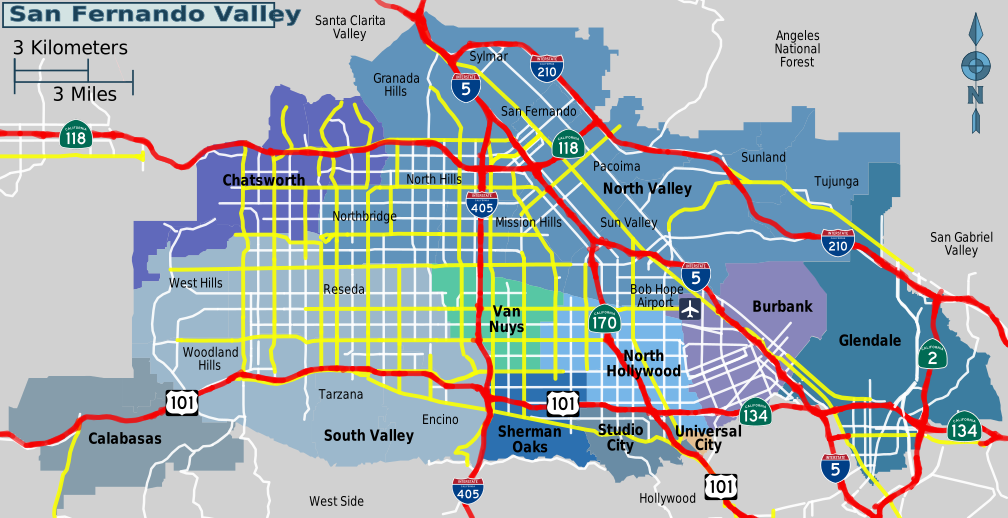
The term “The Valley” frequently surfaces in conversations about Los Angeles, often evoking a sense of a distinct, almost separate, entity from the bustling urban core. For visitors and even some residents, its exact location and defining characteristics can remain somewhat enigmatic. Far from being a mere suburb, “The Valley” refers primarily to the San Fernando Valley, a vast, sprawling basin nestled within the larger metropolitan area of Los Angeles County. This expansive region, encompassing numerous diverse cities and neighborhoods, offers a unique blend of suburban tranquility, urban amenities, and significant cultural and entertainment landmarks, making it a destination in its own right for travelers seeking a different facet of the Southern California experience.

Unveiling the San Fernando Valley: A Distinct Los Angeles Region
The San Fernando Valley is not just a geographical feature; it’s a vibrant, multifaceted region that plays a crucial role in the economic and cultural fabric of Los Angeles. Understanding its placement and evolution is key to appreciating its unique appeal.
Geographical Heartbeat of Southern California
Geographically, the San Fernando Valley is a large, flat sedimentary basin bordered by several mountain ranges. To the north, the Santa Susana Mountains and San Gabriel Mountains provide a dramatic backdrop, while the Santa Monica Mountains form its southern boundary, effectively separating it from the Los Angeles Basin and the coastal communities. To the east, the Verdugo Mountains demarcate its edge, and to the west, it stretches towards the Simi Hills. This natural enclosure gives the Valley its distinct microclimate, often warmer and drier than areas closer to the ocean, especially during summer months.
The Valley is predominantly urbanized, home to over 1.8 million people, making it more populous than many U.S. states. While many of its communities are officially part of the City of Los Angeles, independent cities like Burbank, San Fernando, and Calabasas also reside within its boundaries, each contributing to its unique character.
From Agricultural Roots to Urban Sprawl
The history of the San Fernando Valley is a compelling narrative of transformation. Originally inhabited by the Tongva people, it became a vast agricultural powerhouse in the late 19th and early 20th centuries, renowned for its citrus groves and wheat fields, largely thanks to the completion of the Los Angeles Aqueduct in 1913, which brought vital water resources.
Post-World War II, a boom in suburban development, fueled by the automobile and a desire for more spacious living, rapidly converted farmlands into residential neighborhoods. This era also saw the rise of the entertainment industry’s footprint in the Valley, with major studios establishing themselves in cities like Burbank and Studio City. Today, the Valley stands as a testament to Los Angeles’s relentless expansion, a dynamic region that has seamlessly integrated its past with a forward-looking urban identity.
A Mosaic of Valley Neighborhoods and Their Allure
What truly defines the San Fernando Valley for travelers is its kaleidoscope of distinct communities, each offering a unique atmosphere and set of attractions. Exploring these neighborhoods provides a deeper understanding of the Valley’s diverse appeal.
Studio City and Sherman Oaks: Upscale Charm and Dining
Nestled at the base of the Santa Monica Mountains, Studio City is often seen as the gateway to the Valley from Hollywood. It boasts a sophisticated vibe, renowned for its trendy boutiques, upscale restaurants along Ventura Boulevard, and a strong connection to the entertainment industry, with CBS Studio Center located within its bounds. Just west, Sherman Oaks offers a similar blend of refined suburban living and vibrant commercial corridors. Its leafy streets, excellent schools, and diverse dining scene make it a popular spot for both residents and visitors looking for quality shopping and culinary experiences.
North Hollywood’s Arts District and Cultural Renaissance
Once a more industrial area, North Hollywood has undergone a remarkable revitalization, particularly its Arts District (NoHo Arts District). This energetic hub is a magnet for artists, performers, and creative professionals. Travelers can discover dozens of live theaters, art galleries, dance studios, and music venues. The streets are adorned with colorful murals, and the area pulsates with an alternative, bohemian energy. It’s an excellent destination for those seeking independent theater productions, intimate jazz clubs, and a thriving local arts scene.
Burbank: The Media Capital
Situated at the eastern end of the Valley, Burbank proudly wears the mantle of “Media Capital of the World.” It’s home to some of the biggest names in entertainment, including Warner Bros. Studios, Walt Disney Studios, and Nickelodeon Animation Studio. Visitors can take fascinating studio tours, peek behind the scenes of movie and TV production, and even catch live tapings of popular shows. Beyond the studios, Burbank offers a charming downtown area with shops, restaurants, and the historic Starlight Bowl outdoor amphitheater.
Woodland Hills and Encino: West Valley Serenity and Shopping
Moving west, communities like Encino and Woodland Hills offer a more expansive, yet equally appealing, Valley experience. Encino is known for its upscale residential areas, the beautiful Sepulveda Basin Recreation Area, and its array of dining options. Further west, Woodland Hills serves as a significant commercial and retail hub for the western Valley, featuring large shopping centers like Westfield Topanga & The Village. These areas provide a taste of quintessential Southern California suburban life, with easy access to hiking trails in the nearby hills.
Diverse Communities and Hidden Gems
Beyond these prominent areas, the San Fernando Valley is dotted with numerous other vibrant neighborhoods. Reseda, Canoga Park, and Pacoima offer a rich tapestry of cultures, reflecting Los Angeles’s global diversity through their authentic eateries, local markets, and community events. Sylmar on the northern fringe is home to the Nethercutt Collection, a stunning museum of classic cars and musical instruments, while Chatsworth boasts unique rock formations and equestrian trails. Each corner of the Valley holds its own secrets and attractions waiting to be discovered.
Exploring The Valley’s Rich Tapestry of Attractions
The San Fernando Valley is far more than just a residential expanse; it’s a treasure trove of attractions that cater to a wide range of interests, from thrill-seekers to culture enthusiasts.
Entertainment Industry Icons and Studio Experiences
No visit to The Valley is complete without immersing oneself in the magic of moviemaking. Universal Studios Hollywood is arguably its most famous attraction, offering a full-day theme park experience with thrilling rides, shows, and its iconic studio tour. Nearby, Warner Bros. Studio Tour Hollywood provides an intimate look at the sets, props, and soundstages where countless films and TV shows have been created. For those fascinated by animation, tours at Walt Disney Studios in Burbank (though less publicly accessible) offer glimpses into the history of Disney.
Outdoor Escapes and Recreational Pursuits
Despite its urban density, the Valley offers abundant opportunities for outdoor recreation. The Sepulveda Basin Recreation Area in Encino is a sprawling urban park featuring a wildlife reserve, golf courses, sports fields, and walking trails. Hiking trails abound in the hills surrounding the Valley, including paths in the Santa Monica Mountains National Recreation Area accessible from Woodland Hills and Tarzana. The California State University, Northridge (CSUN) campus also features expansive green spaces and botanical gardens. For those seeking aquatic fun, the Tujunga Wash Greenway offers a scenic path for cycling and walking, while several public pools provide respite during warmer months.
Culinary Journeys and Shopping Destinations
The Valley’s culinary scene is a vibrant reflection of Los Angeles’s diverse population. From high-end dining experiences on Ventura Boulevard in Studio City and Sherman Oaks to authentic ethnic eateries in North Hollywood, Reseda, and Canoga Park, there’s a taste for every palate. Food trucks are also a popular fixture, offering gourmet street food across various neighborhoods.
Shopping enthusiasts will find their paradise in the Valley. Large retail centers like Westfield Fashion Square in Sherman Oaks and Westfield Topanga & The Village in Canoga Park provide a full spectrum of brands, while smaller, independent boutiques thrive in areas like the NoHo Arts District and along Ventura Boulevard.
Arts, History, and Vibrant Nightlife
Beyond its entertainment industry ties, the Valley boasts a growing arts and culture scene. The NoHo Arts District is a cultural hub, particularly for live theater. Historical sites like the Mission San Fernando Rey de España offer a glimpse into early California history. For those seeking evening entertainment, the Valley offers a range of options, from lively bars and pubs in Studio City and North Hollywood to comedy clubs and music venues that host local and national acts.
Navigating The Valley: Essential Travel Insights
Exploring the San Fernando Valley efficiently requires some planning, especially for visitors accustomed to walking or relying solely on public transport in more compact cities.
Accessibility and Getting Around
While a car is often recommended for maximum flexibility in Los Angeles, including The Valley, public transportation options are available and continually improving. The Metro Orange Line (now the G Line) is a dedicated bus rapid transitway that traverses the Valley horizontally, connecting North Hollywood to Canoga Park with stops at major destinations. The Metro Red Line (now the B Line) subway connects North Hollywood directly to Hollywood and Downtown Los Angeles, making it relatively easy to travel between the Valley and other parts of the city without a car. Ride-sharing services are also widely available and often convenient for shorter distances or specific destinations.
Optimal Times for Your Visit
The San Fernando Valley experiences typical Southern California weather, with warm, dry summers and mild winters. Spring (March to May) and Fall (September to November) are often considered the best times to visit, offering pleasant temperatures perfect for outdoor activities and sightseeing. Summers can be hot, with temperatures frequently reaching into the 90s Fahrenheit (30s Celsius), though air-conditioned attractions and pools provide relief. Winters are generally mild, with occasional rain, and remain a viable time to explore without the intense heat or crowds.

Embracing the Local Vibe and Practical Advice
To truly experience The Valley, embrace its unique pace. It offers a more relaxed atmosphere than the coastal cities or dense urban core, often characterized by its expansive boulevards and a strong sense of community. Don’t shy away from exploring local diners, independent shops, and neighborhood parks. Check local events calendars for farmers’ markets, street fairs, and live performances, particularly in the NoHo Arts District. While it may not always receive the same spotlight as Hollywood or Santa Monica, the San Fernando Valley holds a wealth of experiences for the curious traveler, revealing a vital and compelling side of Los Angeles.
LifeOutOfTheBox is a participant in the Amazon Services LLC Associates Program, an affiliate advertising program designed to provide a means for sites to earn advertising fees by advertising and linking to Amazon.com. Amazon, the Amazon logo, AmazonSupply, and the AmazonSupply logo are trademarks of Amazon.com, Inc. or its affiliates. As an Amazon Associate we earn affiliate commissions from qualifying purchases.