
The West Village stands as one of the most enchanting and historically significant neighborhoods in New York City. Located on the west side of the Manhattan borough, it is a sub-neighborhood of the larger Greenwich Village. While many visitors find the grid system of the city intuitive, this particular enclave offers a delightful departure from the standard numbered streets and avenues, making it a labyrinth of charm that requires a bit of local knowledge to navigate properly.
Defining the Geography and Boundaries
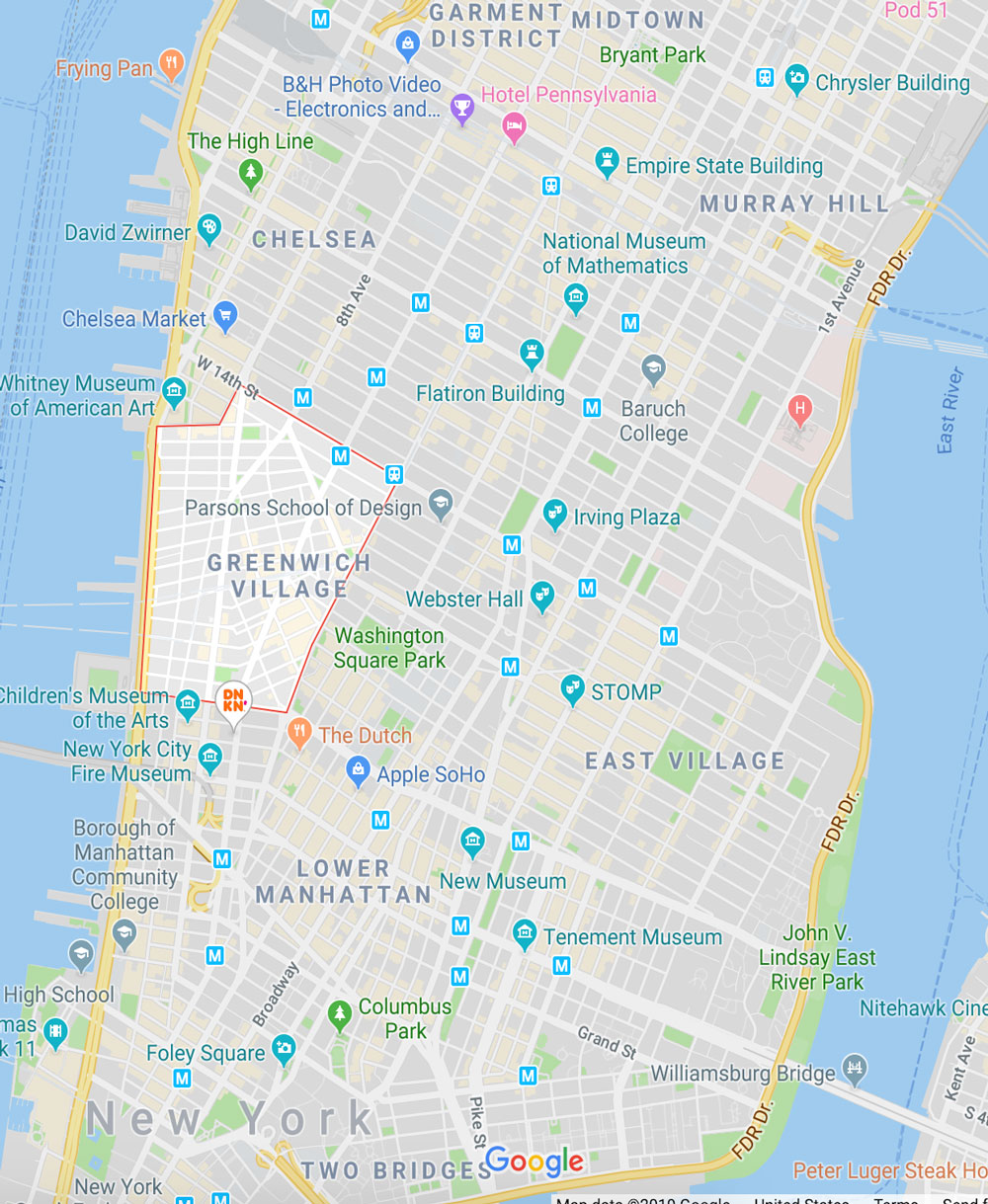
To understand where the West Village is, one must look toward the waterfront of the Hudson River. The neighborhood is generally bordered by 14th Street to the north, Seventh Avenue to the east, and Houston Street to the south. To the west, the neighborhood spills out into the expansive greenery of Hudson River Park, which serves as a scenic boundary between the urban density and the water.

The Charm of Non-Linear Streets
Unlike the rigid street grid plan established in 1811 for much of the city, the West Village retains the original colonial-era layout of New York City. Streets like Waverly Place and West 4th Street are notorious for intersecting in ways that defy the expected numerical progression. For the first-time traveler, this means that walking through the neighborhood is less about following a map and more about embracing a sense of discovery. You might walk along Grove Street or Bedford Street and find yourself suddenly turned around, only to stumble upon a hidden courtyard or a historic brownstone that seems frozen in time.
A Destination of Cultural Significance
Beyond its precise coordinates, the West Village is defined by its cultural footprint. It has long been a sanctuary for artists, writers, and musicians who sought refuge from the rapid pace of Midtown Manhattan.
Historical Landmarks and Literary Roots
The area is home to iconic sites that have cemented its place in history. Fans of classic television often flock to the intersection of Grove Street and Bedford Street to see the building famously featured as the exterior of the apartments in the hit show Friends. A short walk away is the Cherry Lane Theatre, a cornerstone of the Off-Broadway movement that has hosted some of the most influential playwrights of the 20th century. For those interested in the architecture of the early 19th century, the Jefferson Market Library—a stunning example of High Victorian Gothic design—serves as an unmistakable landmark that anchors the northern end of the neighborhood.
The Pulse of Local Life
The atmosphere of the West Village is distinctly different from the corporate towers of Financial District or the high-energy neon of Times Square. Instead, life here moves at the pace of a quiet cafe morning or an evening jazz performance. Residents enjoy a lifestyle defined by small, independent businesses, boutique shopping, and an abundance of green spaces like Abingdon Square Park. This park, located near the intersection of Hudson Street and Eighth Avenue, is a perfect example of the neighborhood’s ability to weave pockets of tranquility into the middle of a bustling metropolis.
Navigating Like a Local
If you are planning a trip to New York City with the intent of exploring this specific area, the best way to arrive is via the New York City Subway.
Transportation Tips
The West Village is exceptionally well-connected. The 1 train stops at Christopher Street, which lands you right in the heart of the action. Alternatively, the A, C, E, and B, D, F, M lines serve West 4th Street-Washington Square, providing easy access from almost anywhere in Manhattan or Brooklyn.
Once you emerge from the station, the best advice for exploring the neighborhood is to wander without a rigid agenda. Start your journey near Washington Square Park, which serves as a gateway between the academic world of New York University and the residential charm of the village. From there, head west toward the river. You will pass by some of the most sought-after real estate in the United States, characterized by narrow tree-lined streets and ornate ironwork balconies.
Seasonal Experiences
While the West Village is a year-round destination, it takes on a different character with each season. In the spring, the cherry blossoms on Charles Street create a canopy of color that is arguably the most photogenic spot in the city. During the autumn, the ivy-covered brick buildings provide a quintessential New England-style aesthetic right in the middle of New York City. If you visit during the month of October, you might find yourself in the middle of the Village Halloween Parade, a massive cultural event that showcases the creative spirit of the neighborhood’s residents.
Why This Neighborhood Remains Timeless
The West Village has managed to resist the homogenization that often comes with urban development. While nearby areas like Chelsea and SoHo have seen massive shifts toward large-scale retail and luxury high-rises, the West Village has largely maintained its low-slung, intimate architecture. This preservation is largely due to the New York City Landmarks Preservation Commission, which has designated much of the area as a protected historic district.

Sustainability and the Future
As more travelers prioritize walking-friendly destinations, the West Village continues to shine as a model for urban sustainability. By favoring smaller storefronts over massive shopping malls and relying on the density of the existing historic streetscape, the neighborhood proves that beauty and function can coexist. For those visiting New York City, a trip to this part of Manhattan is not just a sightseeing opportunity—it is a lesson in how a city can honor its past while remaining a vibrant, living center for its inhabitants. Whether you are looking for a quiet place to read in Abingdon Square Park or a historic tavern to experience the local culture, the West Village offers an unparalleled experience that feels distinctly, and uniquely, New York.
LifeOutOfTheBox is a participant in the Amazon Services LLC Associates Program, an affiliate advertising program designed to provide a means for sites to earn advertising fees by advertising and linking to Amazon.com. Amazon, the Amazon logo, AmazonSupply, and the AmazonSupply logo are trademarks of Amazon.com, Inc. or its affiliates. As an Amazon Associate we earn affiliate commissions from qualifying purchases.