
Deciding where to stay in New York City can be as crucial to your trip’s success as picking the attractions you’ll visit. The city, a sprawling metropolis of distinct neighborhoods, offers an accommodation for every taste, budget, and travel style. From the iconic energy of Midtown to the bohemian charm of the West Village, understanding the nuances of each area will help you secure a base that enhances your New York experience. This guide navigates the most popular locales, highlighting their unique characteristics and the types of travelers they best suit.

Navigating Manhattan’s Iconic Neighborhoods
Manhattan, the heart of New York City, is often the first place visitors consider. Its density of world-famous landmarks and vibrant atmosphere makes it a prime location. However, within this island lie vastly different districts, each offering a unique flavor.
Midtown: The Epicenter of Action
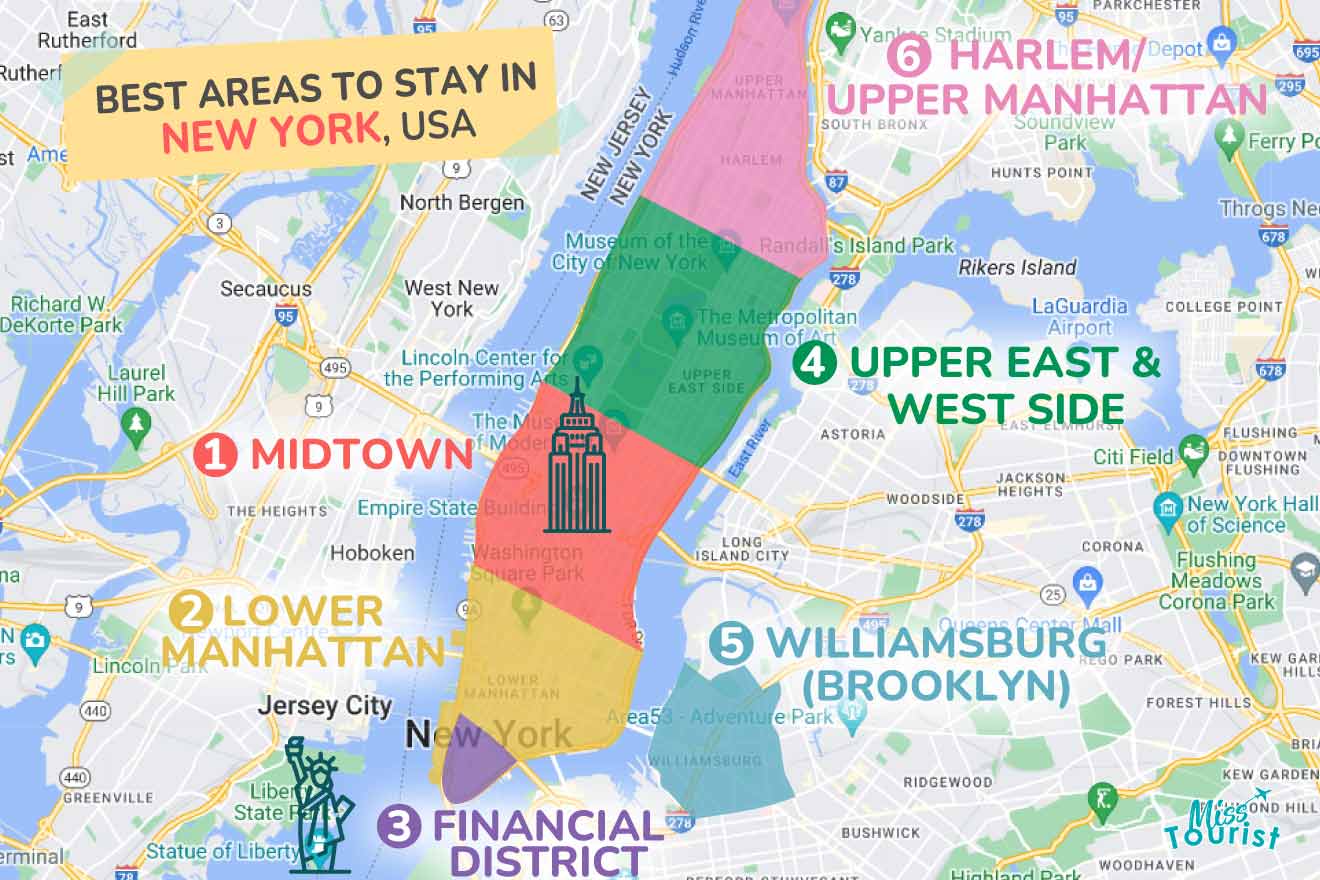
For first-time visitors or those who want to be in the middle of everything, Midtown is an unparalleled choice. Here, you’re within walking distance of legendary sites like Times Square, the Empire State Building, Rockefeller Center, and the Museum of Modern Art (MoMA). The sheer volume of hotels here ranges from grand, historic establishments to modern, budget-friendly options.
Pros:
- Unbeatable access to major attractions and public transportation hubs.
- Vast selection of hotels catering to all budgets.
- Lively atmosphere with abundant dining and entertainment options.
Cons:
- Can be overwhelmingly crowded and noisy, especially around Times Square.
- Accommodations can be pricier due to the prime location.
- May feel less like a local experience and more like a tourist hub.
Ideal for: First-time visitors, families with children, travelers prioritizing convenience and proximity to iconic sights, and those seeking a high-energy experience.
The Upper East Side: Elegance and Culture
If your New York sojourn is focused on world-class museums and sophisticated shopping, the Upper East Side beckons. This elegant neighborhood is home to Museum Mile, featuring institutions like the Metropolitan Museum of Art and the Guggenheim Museum. Staying here offers a more serene, upscale environment, with designer boutiques lining Madison Avenue and charming residential streets.
Pros:
- Proximity to renowned museums and cultural institutions.
- Quiet, upscale, and safe atmosphere.
- Excellent for shoppers seeking luxury brands.
Cons:
- Can be expensive, with hotel prices reflecting the area’s exclusivity.
- Less nightlife and fewer casual dining options compared to other Manhattan neighborhoods.
- Further from some downtown attractions, though well-connected by subway.
Ideal for: Art and culture enthusiasts, shoppers, couples seeking a romantic getaway, and those who prefer a quieter, more refined lodging experience.
The Upper West Side: A Blend of Serenity and Culture
Adjacent to Central Park, the Upper West Side offers a more relaxed, residential feel while still being incredibly close to major attractions. It’s a fantastic base for exploring Central Park, visiting the American Museum of Natural History, and enjoying Lincoln Center’s performing arts scene. The neighborhood boasts beautiful architecture, family-friendly amenities, and a genuine community feel.
Pros:
- Close proximity to Central Park and major cultural institutions.
- More residential and less frenetic than Midtown.
- Good range of dining options, from casual eateries to upscale restaurants.
Cons:
- Hotel selection might be slightly smaller than in Midtown.
- Can still be pricey, though generally less so than the Upper East Side.
Ideal for: Families, culture lovers, nature enthusiasts, and travelers seeking a balance between city excitement and a peaceful retreat.
SoHo and Tribeca: Trendy and Chic
For those drawn to cutting-edge fashion, art galleries, and a sophisticated urban vibe, SoHo and Tribeca are premier choices. These neighborhoods, characterized by their cast-iron architecture, cobblestone streets, and trendy boutiques, offer boutique hotels and luxurious loft-style accommodations. They are also known for their excellent restaurants and vibrant nightlife.
Pros:
- Prime locations for shopping, dining, and art galleries.
- Stylish, boutique hotel options and loft rentals.
- Walkable with a chic, upscale ambiance.
Cons:
- Accommodations can be very expensive.
- Can be noisy due to popular nightlife and dining scenes.
- Less direct access to major landmarks compared to Midtown.
Ideal for: Fashion-forward travelers, art aficionados, foodies, and those seeking a luxurious and fashionable stay.
Greenwich Village and the West Village: Bohemian Charm
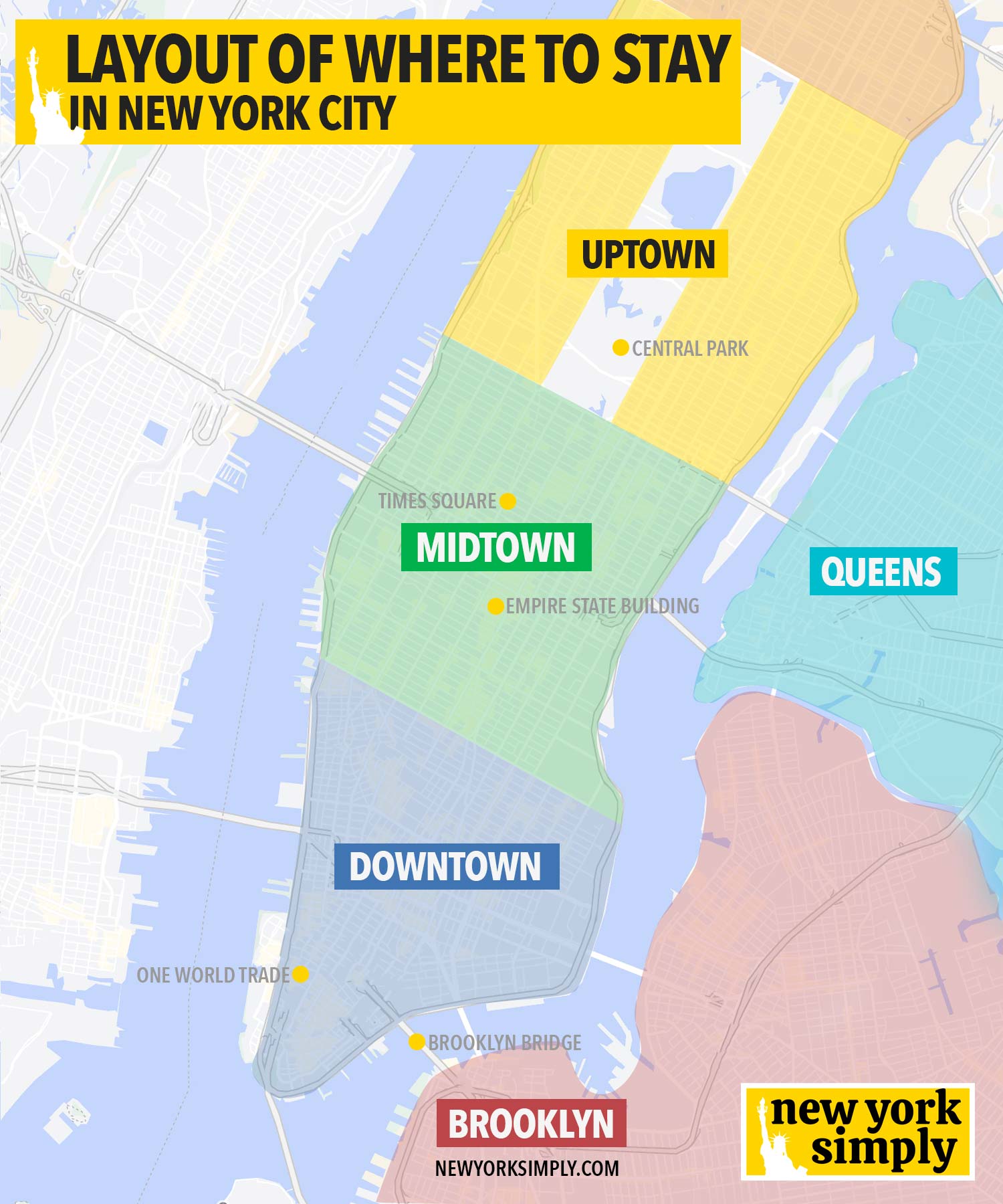
Greenwich Village and its adjacent West Village offer a quintessential New York experience with their leafy streets, historic brownstones, and lively, artistic atmosphere. These neighborhoods are perfect for travelers who want to immerse themselves in the city’s bohemian spirit, enjoy live music venues, cozy cafes, and independent shops. The charm lies in getting lost in its winding streets.
Pros:
- Incredibly charming and picturesque streets.
- Abundant independent boutiques, cafes, and restaurants.
- Vibrant cultural scene with music venues and theaters.
Cons:
- Hotel options are often limited to smaller boutique properties or guest houses, which can book up quickly.
- Accommodations can be pricey, and often lack the amenities of larger hotels.
- Navigating without a map can be a challenge due to the irregular street grid.
Ideal for: Couples, artists, musicians, foodies, and travelers seeking an authentic, bohemian New York experience.
Beyond Manhattan: Exploring Other Boroughs
While Manhattan is the most frequented destination, New York City’s other boroughs offer unique stays that can provide a different perspective on city life, often at a more accessible price point.
Brooklyn: Hipster Havens and Brownstone Beauty
Brooklyn has transformed into a vibrant destination in its own right. Neighborhoods like Williamsburg and Dumbo offer trendy hotels with stunning Manhattan skyline views, boutique accommodations, and a thriving arts and culinary scene. Further into Brooklyn, areas like Park Slope provide a more residential, family-friendly atmosphere with beautiful brownstones and access to Prospect Park.
Pros:
- Often more affordable than Manhattan.
- Offers a more local, authentic New York experience.
- Thriving independent food and art scenes.
- Spectacular views of the Manhattan skyline.
Cons:
- Commuting to Manhattan attractions can take longer, depending on the specific neighborhood.
- Hotel selection may be more limited in certain areas.
Ideal for: Travelers seeking a more local vibe, budget-conscious visitors, food and art enthusiasts, and those interested in exploring a different side of New York City.
Long Island City, Queens: Views and Value
Long Island City, in Queens, has emerged as a popular lodging choice, particularly for its value and proximity to Manhattan. It boasts modern hotels, many offering breathtaking views of the Manhattan skyline, and excellent subway connections that whisk you into the city in minutes. The area is also home to a growing number of restaurants and galleries.
Pros:
- Excellent value for money, with modern hotels at competitive prices.
- Fantastic views of the Manhattan skyline.
- Superb public transportation links to Midtown and beyond.
- Emerging cultural and dining scene.
Cons:
- Less of a distinct neighborhood character compared to Manhattan or parts of Brooklyn.
- Can feel more like a transit hub than a destination itself.
Ideal for: Budget-conscious travelers, business travelers, and those who want easy access to Manhattan without the premium price tag.
Choosing Your Accommodation Type
Beyond neighborhood, the type of accommodation can significantly shape your stay.
Boutique Hotels: Intimate and Stylish
For a more personalized and unique experience, boutique hotels offer character and curated design. They are often found in trendy neighborhoods like SoHo, the West Village, and parts of Brooklyn. These hotels typically offer fewer rooms, allowing for more attentive service and a distinct sense of place.
Major Chain Hotels: Convenience and Familiarity
If consistency, a wide range of amenities, and loyalty program benefits are important, large chain hotels are plentiful throughout Manhattan, especially in Midtown and near major airports. They offer reliable comfort and often have on-site restaurants, fitness centers, and business services.
Extended-Stay or Apartment Rentals: For Longer Visits
For stays exceeding a week, or for those who prefer the flexibility of preparing some of their own meals, apartment rentals or extended-stay hotels are excellent options. These can be found across various neighborhoods and offer amenities like full kitchens and living spaces, providing a home-away-from-home feel.
Ultimately, the ideal place to stay in New York City depends on your priorities. Whether you seek the pulsing heart of Manhattan, the artistic allure of Brooklyn, or the strategic convenience of Queens, understanding these diverse neighborhoods and accommodation styles will empower you to find the perfect home base for your unforgettable New York City adventure.
LifeOutOfTheBox is a participant in the Amazon Services LLC Associates Program, an affiliate advertising program designed to provide a means for sites to earn advertising fees by advertising and linking to Amazon.com. Amazon, the Amazon logo, AmazonSupply, and the AmazonSupply logo are trademarks of Amazon.com, Inc. or its affiliates. As an Amazon Associate we earn affiliate commissions from qualifying purchases.