
The Florida Project, directed by the acclaimed Sean Baker, is a critically lauded film that offers a vibrant yet poignant glimpse into the lives of a group of children and their families living in budget motels on the outskirts of Walt Disney World in Orlando, Florida. The movie has resonated deeply with audiences and critics alike, not only for its powerful performances, especially from young Brooklynn Prince and the veteran Willem Dafoe, but also for its stunningly authentic portrayal of its unique setting. Far from the polished, fantastical image often associated with Central Florida, the film immerses viewers in a parallel reality, just a stone’s throw from “The Most Magical Place on Earth.” For travelers, filmmakers, and social observers alike, understanding “Where was The Florida Project filmed?” is key to appreciating the film’s impact and the often-overlooked facets of one of the world’s premier tourist destinations.
The genius of The Florida Project‘s setting lies in its deliberate choice to film almost exclusively on location, bringing an unparalleled level of realism to the story. This article delves into these specific filming locations, exploring how they shaped the narrative, the lifestyle they represent, and what they mean for tourism and accommodation in the Orlando-Kissimmee corridor. From the iconic purple motel that serves as the children’s imaginative playground to the often-unseen local spots that define their daily lives, we embark on a journey through the authentic Florida that inspired this unforgettable film.

The Poignant Setting: East of Disney’s Magic Kingdom
The core of The Florida Project‘s narrative is inextricably linked to its physical environment. The film masterfully uses its backdrop to contrast childhood innocence with the harsh realities of poverty, all unfolding in the shadow of grand tourist attractions. This deliberate juxtaposition is central to its power, making the filming locations not just scenery, but characters in themselves.
The Heart of the Story: Kissimmee’s Route 192 Corridor
The vast majority of The Florida Project was filmed in and around Kissimmee, Florida, specifically along the bustling US Highway 192, also known as the Irlo Bronson Memorial Highway. This stretch of road, often overlooked by tourists rushing to theme parks, is a fascinating and often challenging landscape. It’s characterized by a seemingly endless array of brightly colored, independently owned motels, discount souvenir shops, fast-food restaurants, and mini-golf courses. For decades, Route 192 has served as a haven for budget travelers seeking affordable accommodation near Disney World. However, the film illuminates its other, more somber role: a long-term residence for low-income families, often referred to as the “hidden homeless,” who live week-to-week in these motels, unable to afford traditional housing.
The choice of Kissimmee and Route 192 as the primary backdrop was a deliberate artistic decision by Sean Baker and his team. They aimed to portray a side of Florida rarely seen on screen, one that exists in stark contrast to the nearby opulence of Disney’s Grand Floridian Resort & Spa or the fantastical realms of Universal Orlando Resort. The neon signs, sun-faded facades, and the constant hum of traffic provide an authentic, almost documentary-like feel to the film, grounding its emotional intensity in a very real, tangible place. This corridor, while not a conventional tourist attraction, offers a unique window into the socio-economic complexities that exist alongside one of the world’s most lucrative tourism industries.
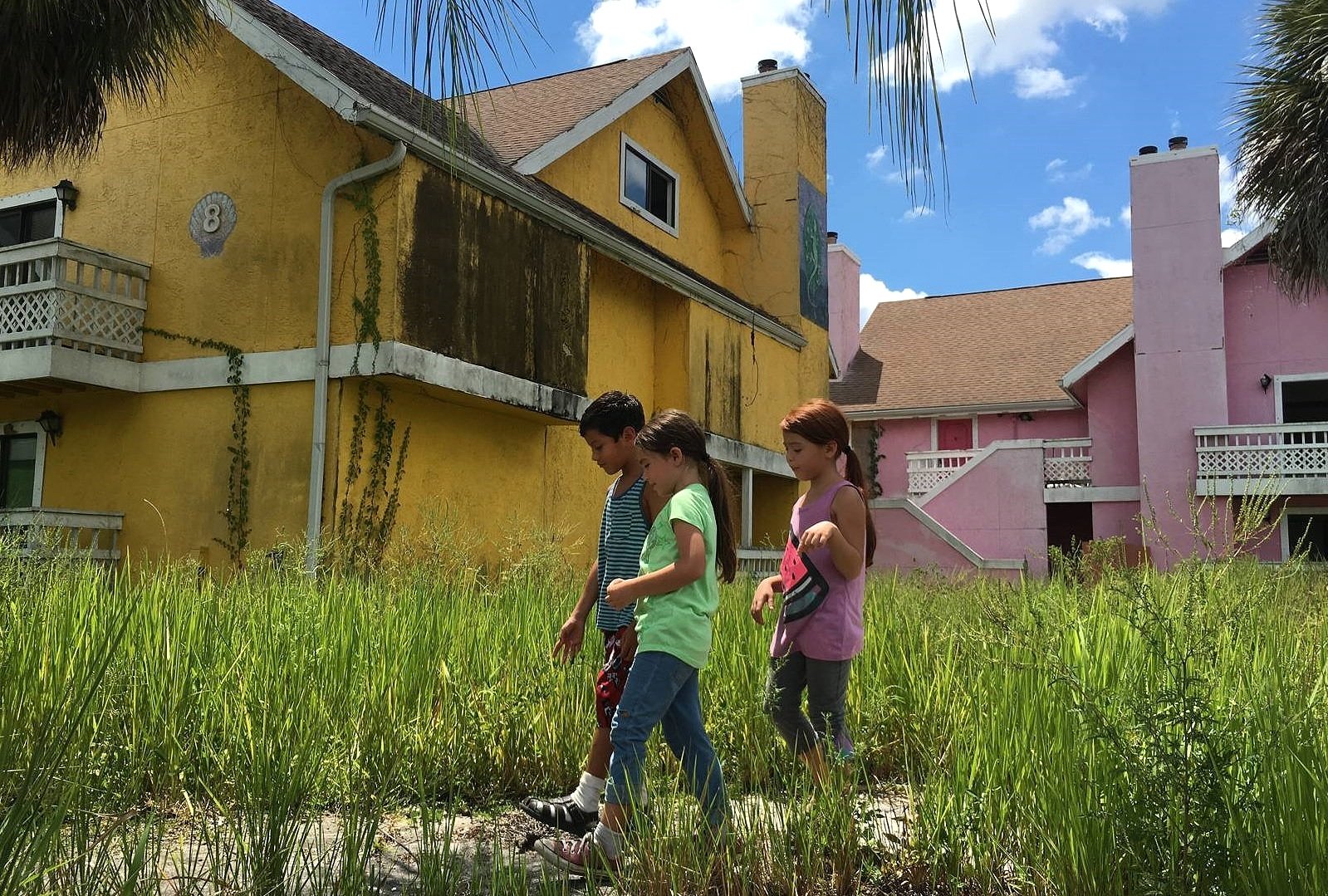
The Magic Castle Inn & Suites: A Star Location
Undoubtedly the most iconic and recognizable filming location from The Florida Project is the Magic Castle Inn & Suites. This vibrant purple motel, with its distinctive turret-like structures and somewhat faded grandeur, serves as the primary home for Moonee, her mother Halley, and many of the other children and families in the film. Located at 5558 W Irlo Bronson Memorial Hwy in Kissimmee, the motel has since undergone a change of ownership and name, now operating as the Magic Castle Hotel, though its characteristic purple hue remains.
The Magic Castle Inn & Suites is more than just a backdrop; it’s an integral part of the narrative. Its exterior and interior shots lend an incredible sense of realism to the children’s daily adventures and the struggles of their parents. The film extensively uses the motel’s grounds: the swimming pool, the walkways, the small, cramped rooms, and the manager’s office. Willem Dafoe’s character, Bobby Hicks, the stern but compassionate motel manager, is constantly navigating the challenges of maintaining order and offering a semblance of stability to the transient residents. His interactions with the families provide a humanizing perspective on the motel’s role in their lives.

Beyond the Magic Castle Inn & Suites, other motels along Route 192 also made appearances or inspired specific scenes. The Futureland Inn (with its whimsical name evoking the nearby theme parks), the Legacy Inn & Suites, and even generic chains like Motel 6 contribute to the film’s authentic portrayal of this unique lodging landscape. These accommodations, with their budget-friendly rates and often extended-stay options, are vital resources for those experiencing economic hardship, making them crucial elements in the film’s social commentary.
Beyond the Motels: Exploring Local Landmarks and Attractions
While the motels form the bedrock of the film’s setting, The Florida Project also ventures out to capture the broader environment of Kissimmee and the immediate vicinity of Orlando. These additional locations further paint a picture of the children’s world, where everyday spots become arenas for adventure and discovery.
Other Key Filming Spots in Kissimmee and Orlando
The children in The Florida Project, particularly Moonee, Scooty, and Jancey, roam freely, transforming mundane surroundings into their playgrounds. This meant filming in various local establishments and open spaces that are characteristic of the Route 192 corridor. Scenes were shot in actual fast-food restaurants, such as a Burger King, where the kids would beg for fries, and ice cream parlors, where they’d manage to snag a free cone. These locations, with their brightly colored, often slightly worn exteriors, perfectly encapsulate the commercialized yet accessible environment for children who find entertainment wherever they can.
Discount stores, convenience stores, and souvenir shops also feature prominently, highlighting the consumer culture that thrives alongside the theme parks. The film captures the children’s ingenuity in finding ways to entertain themselves amidst these commercial landscapes, whether it’s through simple games, mischief, or exploring abandoned buildings. While specific names are often generic or fictionalized for the film, the ambiance is undeniably that of Kissimmee’s bustling commercial strips. The famous Old Town Kissimmee, with its classic car cruises and amusement park rides, embodies a certain type of nostalgia and local entertainment that coexists with the more modern attractions. Although not explicitly a major filming location, the spirit of such local landmarks informs the overall atmosphere.
Furthermore, the film’s visual narrative often includes shots of the vast, undeveloped fields and wooded areas adjacent to the busy roads. These natural spaces provide a contrasting sense of freedom and danger for the children, who treat them as their personal wilderness. Most strikingly, the distant glimpses of the Magic Kingdom fireworks, shimmering in the night sky over the motel, serve as a constant, bittersweet reminder of the proximity to a world of fantasy that remains tantalizingly out of reach for Moonee and her friends. This visual motif powerfully underscores the film’s central theme of dreams versus reality in Florida.
A Glimpse into the ‘Hidden Homeless’ Community
One of the most profound aspects of The Florida Project‘s choice of filming locations is its ability to shed light on the often-invisible “hidden homeless” community in Central Florida. By situating its narrative within these real motels and local areas, the film elevates the social issue of families living in precarious housing situations directly into the public consciousness. Many families in the region, particularly those working low-wage jobs in the service industry that supports the enormous tourism sector, cannot afford the high cost of traditional housing. Motels along Route 192 become their last resort, offering a temporary, albeit unstable, roof over their heads.
The film serves as a powerful piece of social realism, using the familiar landscape of a major tourist hub to expose an underlying crisis. It challenges the conventional image of Orlando as solely a vacation paradise, revealing the struggles that exist just beyond the elaborate gates of attractions like Epcot, Hollywood Studios, or Animal Kingdom. The children’s resilience and imaginative play, set against the backdrop of their parents’ daily fight for survival, create a deeply moving and thought-provoking experience. For travelers and tourists, understanding these filming locations means gaining a deeper, more nuanced appreciation of the destination, moving beyond superficial attractions to understand the broader social fabric that supports them.
Travel & Accommodation: Experiencing The Florida Project’s World
For those inspired by The Florida Project to explore its unique setting, the Kissimmee-Orlando area offers a spectrum of travel experiences. Whether seeking to understand the film’s realism firsthand or simply planning a trip to the region, knowing about the diverse accommodation options and attractions is crucial.
Planning a Trip to the Kissimmee-Orlando Area
Visiting the areas depicted in The Florida Project offers a distinct travel experience compared to a typical theme park vacation. To explore Kissimmee and the Route 192 corridor, renting a car is highly recommended. This allows for flexibility to drive along the historic highway, observe the motels, and explore local businesses. While you won’t find designated “film set tours” for The Florida Project, the act of driving along Irlo Bronson Memorial Highway and stopping at local eateries or shops will give you an authentic feel for the film’s atmosphere.
Beyond the film’s specific locations, the broader Orlando area remains a major tourist draw. Visitors can combine an exploration of the film’s real-world setting with visits to world-renowned attractions. From the magical realms of Walt Disney World and the thrilling rides of Universal Studios Florida and Seaworld Orlando to the vibrant entertainment complex of International Drive, there’s an abundance of activities. Day trips to the Kennedy Space Center on the Space Coast or even further afield to cities like Tampa or Miami are also feasible, offering a comprehensive Florida experience.
Finding Your Stay: From Budget Motels to Luxury Resorts
Accommodation in the Kissimmee-Orlando region is incredibly diverse, catering to every budget and travel style. For those specifically interested in experiencing the type of accommodation featured in The Florida Project, there are numerous budget-friendly motels along Route 192. These typically offer basic amenities, often including a swimming pool, and are designed for short-term or extended-stay guests. When booking, it’s advisable to read recent reviews carefully to ensure the motel meets your comfort expectations. While staying in a similar motel can offer a unique perspective, travelers should be aware that the conditions depicted in the film reflect a specific socio-economic reality.
Conversely, for those seeking more luxurious or family-oriented stays, Orlando boasts an unparalleled selection of resorts and hotels. From the immersive experiences offered by hotels within Walt Disney World and Universal Orlando Resort to upscale independent hotels along International Drive, options abound. These accommodations often feature extensive amenities, including multiple pools, fine dining, spas, and shuttle services to theme parks. Travelers can compare booking platforms, read guest reviews, and consider amenities like complimentary breakfast, suite options, or pet-friendly policies to find the perfect fit. The contrast between these high-end options and the budget motels of Route 192 underscores the economic disparities that The Florida Project so vividly portrays.
The Lifestyle Reflected: A Unique Florida Perspective
The Florida Project doesn’t just show where it was filmed; it reveals a lifestyle, a subculture existing within the broader tapestry of Florida’s tourism industry. It offers a profound counter-narrative to the glossy brochures and curated experiences, inviting travelers to consider a more complex reality.
Beyond Theme Parks: The Authentic Florida Experience
The film encourages a shift in perspective, moving “beyond theme parks” to explore a more authentic, albeit challenging, Florida experience. For travelers seeking cultural immersion and a deeper understanding of a destination, visiting the areas depicted in The Florida Project can be incredibly insightful. It’s an opportunity to observe local life, engage with communities that exist outside the tourist bubbles, and recognize the diverse experiences that shape a region. This might involve dining at local, non-chain restaurants, visiting community parks, or simply driving through neighborhoods that tell a different story than the meticulously planned resorts.
This “alternative tourism” approach aligns with a lifestyle of conscientious travel, where one seeks to understand the social and economic landscapes of a place, not just its advertised attractions. It’s about recognizing the human stories that underpin the tourism machine and appreciating the resilience and creativity of communities like the one portrayed in the film. While the film highlights poverty, it also showcases the strong bonds, humor, and unwavering spirit of its characters, reminding viewers that even in challenging circumstances, life finds a way to flourish.
Impact on Tourism and Social Awareness
The Florida Project has had a significant impact on both cinematic discourse and broader social awareness regarding tourism’s less glamorous side. By bringing the “hidden homeless” issue into the spotlight, the film has sparked conversations about affordable housing, social welfare, and the responsibility of the tourism industry in supporting its local workforce. It serves as a powerful reminder that while tourism drives economies, it also creates unique social challenges that often go unseen by visitors.
For the tourism industry itself, the film prompts reflection on destination branding and the narratives we choose to tell about popular locales. It challenges the sole promotion of idyllic images, suggesting that a more holistic and honest portrayal of a destination, including its complexities, can lead to a richer and more meaningful travel experience for visitors. Ultimately, The Florida Project contributes to a growing trend of responsible tourism, where travelers are encouraged to engage with local cultures, understand social issues, and make choices that benefit the communities they visit. It transforms the act of asking “Where was The Florida Project filmed?” into an inquiry about the broader human geography of Florida, inviting a deeper, more empathetic engagement with this fascinating and multifaceted state.
In conclusion, The Florida Project was predominantly filmed in Kissimmee, Florida, along the US Highway 192 corridor, with the Magic Castle Inn & Suites serving as its central, iconic location. These authentic settings were not merely backdrops but essential components of a powerful narrative that revealed the lives of families existing on the fringes of the Walt Disney World fantasy. For travelers, exploring these locations offers a rare and insightful glimpse into a side of Central Florida that is both starkly real and profoundly moving, providing a perspective far removed from the typical tourist experience and enriching one’s understanding of the diverse tapestry of American life and travel.
LifeOutOfTheBox is a participant in the Amazon Services LLC Associates Program, an affiliate advertising program designed to provide a means for sites to earn advertising fees by advertising and linking to Amazon.com. Amazon, the Amazon logo, AmazonSupply, and the AmazonSupply logo are trademarks of Amazon.com, Inc. or its affiliates. As an Amazon Associate we earn affiliate commissions from qualifying purchases.