
The cinematic history of the Overlook Hotel is as complex and multifaceted as the labyrinthine corridors depicted in the film. While the fictional establishment is set in the isolated wilderness of the Rocky Mountains, the reality behind its creation involves a tapestry of different Landmarks across the United States and England. Understanding where the film was staged requires a journey through the architectural history of grand mountain lodges and the technical mastery of studio design.
To explore the filming locations of this horror masterpiece is to explore a collection of some of the most significant architectural Landmarks in North America. From the high-altitude peaks of Oregon to the historic valley of Estes Park, the Overlook Hotel is not a single place, but a composite of several distinct locations, each contributing a specific atmosphere to the final production.

The Architectural Genesis: The Stanley Hotel in Colorado
While much of the actual filming took place elsewhere, the spiritual home of the story is undoubtedly the Stanley Hotel in Colorado. This grand structure served as the primary inspiration for Stephen King, the author of the original novel, after a fateful night spent in the nearly empty hotel just before it closed for the winter season.
A Masterpiece of Colonial Revival Architecture
The Stanley Hotel, located in Estes Park, is a stunning example of Colonial Revival architecture. Opened in 1909 by Freelan Oscar Stanley, the co-inventor of the Stanley Steamer automobile, the hotel was designed to bring the elegance of the East Coast to the rugged wilderness of the Rocky Mountains. The building’s white wooden siding and symmetrical wings make it a striking landmark against the backdrop of Longs Peak.
Its historical significance is cemented by its inclusion in the National Register of Historic Places. The architecture features a grand ballroom, intricate woodwork, and a sprawling veranda that offers panoramic views of the surrounding peaks. For King, the hotel’s long, quiet corridors and the feeling of isolation provided the perfect psychological foundation for his tale of descent into madness.
The Evolution of a Cultural Landmark
Although Stanley Kubrick did not film his 1980 adaptation at this location, the Stanley Hotel has fully embraced its cinematic legacy. It has become a premier destination for those interested in paranormal history and literary Landmarks. The hotel even added a hedge maze—an iconic feature of the film that was not present in the original book or the hotel’s historical grounds—to satisfy the expectations of visiting fans. Today, it stands as a testament to how literature and film can transform a historical site into a global cultural landmark.
The Exterior Icon: Timberline Lodge and Mount Hood
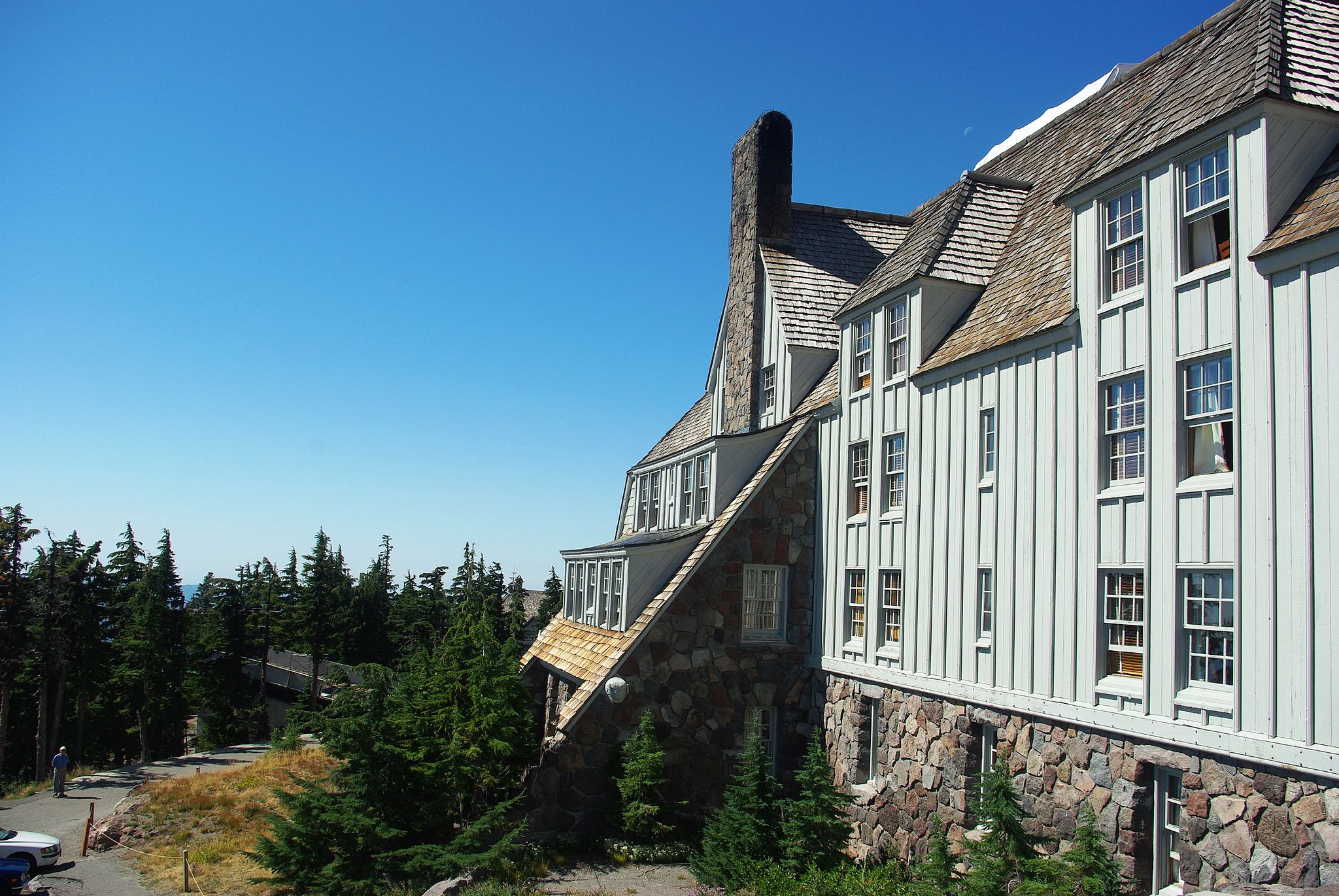
For the exterior shots used in Kubrick’s film, the production moved to the Cascade Range. The imposing, rustic facade that audiences recognize as the Overlook Hotel is actually the Timberline Lodge, situated on the south slope of Mount Hood in Oregon.
Cascadian Style and WPA History
Timberline Lodge is more than just a film set; it is a National Historic Landmark with a rich history rooted in the Great Depression. Built between 1936 and 1938 by the Works Progress Administration (WPA), the lodge is a masterpiece of Cascadian architecture. This style is characterized by the use of native stone and heavy timber, designed to harmonize with the rugged environment of the high mountains.
The craftsmanship within the lodge is legendary. Local artisans carved the massive wooden beams and hand-forged the ironwork, ensuring that the structure felt like an extension of the volcanic landscape. When Kubrick chose Timberline Lodge for his exterior establishing shots, he was utilizing a building that already possessed a sense of ancient, heavy permanence. The lodge’s sharp rooflines and weathered stone walls provided the perfect visual representation of a fortress against the winter elements.
The Mystery of Room 237
A famous piece of trivia regarding this landmark involves the hotel’s management. In the novel, the “haunted” room is number 217. However, the management of Timberline Lodge reportedly requested that Kubrick change the room number to a non-existent one—237—fearing that guests would be too frightened to stay in Room 217. Paradoxically, Room 217 remains one of the most requested rooms at the Stanley Hotel, but at Timberline Lodge, the fictional 237 remains the number forever associated with the film’s haunting.
Interior Design Inspiration: The Ahwahnee Hotel
While the exterior was filmed in Oregon and the inspiration came from Colorado, the interiors seen on screen were largely inspired by a third landmark: The Ahwahnee Hotel in Yosemite National Park.
Native American Influence and Grandeur
Located in the heart of California, The Ahwahnee Hotel is an architectural gem that blends Art Deco, Native American, and Craftsman influences. Kubrick’s set designers meticulously studied the interior of this landmark to recreate its massive Great Lounge and the distinctive color palettes of its rugs and tapestries.
The high ceilings, enormous stone fireplaces, and floor-to-ceiling windows of The Ahwahnee Hotel were echoed in the sets built at EMI Elstree Studios in London. The goal was to create a space that felt both cavernous and claustrophobic—a hallmark of the film’s visual style. The use of Native American motifs, which are prominent in the California landmark, became a central visual theme in the film, leading many critics to analyze the movie as a commentary on the history of the United States.
Recreating Reality at EMI Elstree Studios
Because of the technical requirements of the shoot—including the need for massive amounts of artificial snow and the specialized lighting required for the long tracking shots—the majority of the “Overlook” interiors were constructed on soundstages. The EMI Elstree Studios in Borehamwood housed what was, at the time, the largest indoor set ever built.
Despite being a studio creation, the set was a landmark of production design. The “Colorado Lounge” set was so massive and convincing that it included a full second story and functional lighting fixtures. This allowed the actors to move through the space in a way that felt authentic to a real mountain lodge. However, the blueprints were intentionally designed to be spatially impossible, contributing to the viewer’s sense of disorientation as characters move through the building.
The Geography of the Opening Sequence: Glacier National Park
The sense of isolation that defines the Overlook Hotel is established in the very first minutes of the film. The breathtaking aerial footage of the drive to the hotel was filmed in Glacier National Park in Montana.
The Beauty of Saint Mary Lake and Wild Goose Island
The opening shots follow a yellow Volkswagen Beetle as it winds along the Going-to-the-Sun Road. This road is a marvel of engineering and a National Historic Landmark in its own right, carving a path through some of the most dramatic terrain in the United States. The camera glides over Saint Mary Lake, capturing the tiny Wild Goose Island amidst the turquoise waters.
These vistas provide the necessary scale for the story. By showing the car as a mere speck against the backdrop of the Montana wilderness, the film establishes the landmark as a place completely cut off from civilization. The rugged peaks and glacial valleys of Glacier National Park serve as the atmospheric gateway to the Overlook.
A Legacy of Cinematic Landscapes
The use of Glacier National Park highlights the importance of natural Landmarks in cinema. The Going-to-the-Sun Road remains one of the most popular tourist drives in the world, and many visitors still associate its sweeping turns and precarious cliffs with the chilling opening of the movie. It serves as a reminder that the environment surrounding a landmark is often just as vital to its identity as the architecture itself.

The Enduring Allure of Horror Landmarks
The Overlook Hotel does not exist in a single location, but its presence is felt across several iconic sites. These Landmarks have become pilgrimage sites for film enthusiasts and history buffs alike, bridging the gap between fiction and reality.
Whether it is the historic elegance of the Stanley Hotel, the WPA craftsmanship of Timberline Lodge, or the breathtaking beauty of Yosemite National Park, these locations represent a peak of American architectural and natural history. They are preserved not just for their beauty, but for their ability to evoke deep emotions—from wonder to unease.
The story of “The Shining” is inextricably linked to these places. The way Kubrick and King utilized these Landmarks changed how the public perceives mountain resorts. Today, these buildings are protected, celebrated, and visited by thousands who wish to stand in the shadow of the peaks and imagine the secrets hidden within the walls of the great lodges. Through the lens of cinema, these real-world locations have been transformed into a singular, haunting landmark that continues to captivate the collective imagination.
LifeOutOfTheBox is a participant in the Amazon Services LLC Associates Program, an affiliate advertising program designed to provide a means for sites to earn advertising fees by advertising and linking to Amazon.com. Amazon, the Amazon logo, AmazonSupply, and the AmazonSupply logo are trademarks of Amazon.com, Inc. or its affiliates. As an Amazon Associate we earn affiliate commissions from qualifying purchases.