
Florida, a state renowned for its sun-drenched beaches, vibrant theme parks, and rich cultural tapestry, often finds itself navigating the challenges presented by its unique geographical position and subtropical climate. From the annual hurricane season to unexpected natural phenomena, the declaration of a state of emergency by Florida counties is a critical measure to ensure public safety, facilitate resource allocation, and coordinate response efforts. Understanding which counties are currently under such a declaration is paramount for residents, visitors, and businesses alike, enabling informed decision-making and preparedness.
This article delves into the specifics of states of emergency in Florida counties, exploring the triggers for such declarations, the implications for affected areas, and how to access reliable information regarding current declarations. While the dynamic nature of emergency declarations means this information can change rapidly, understanding the framework provides a valuable perspective for anyone connected to the Sunshine State.
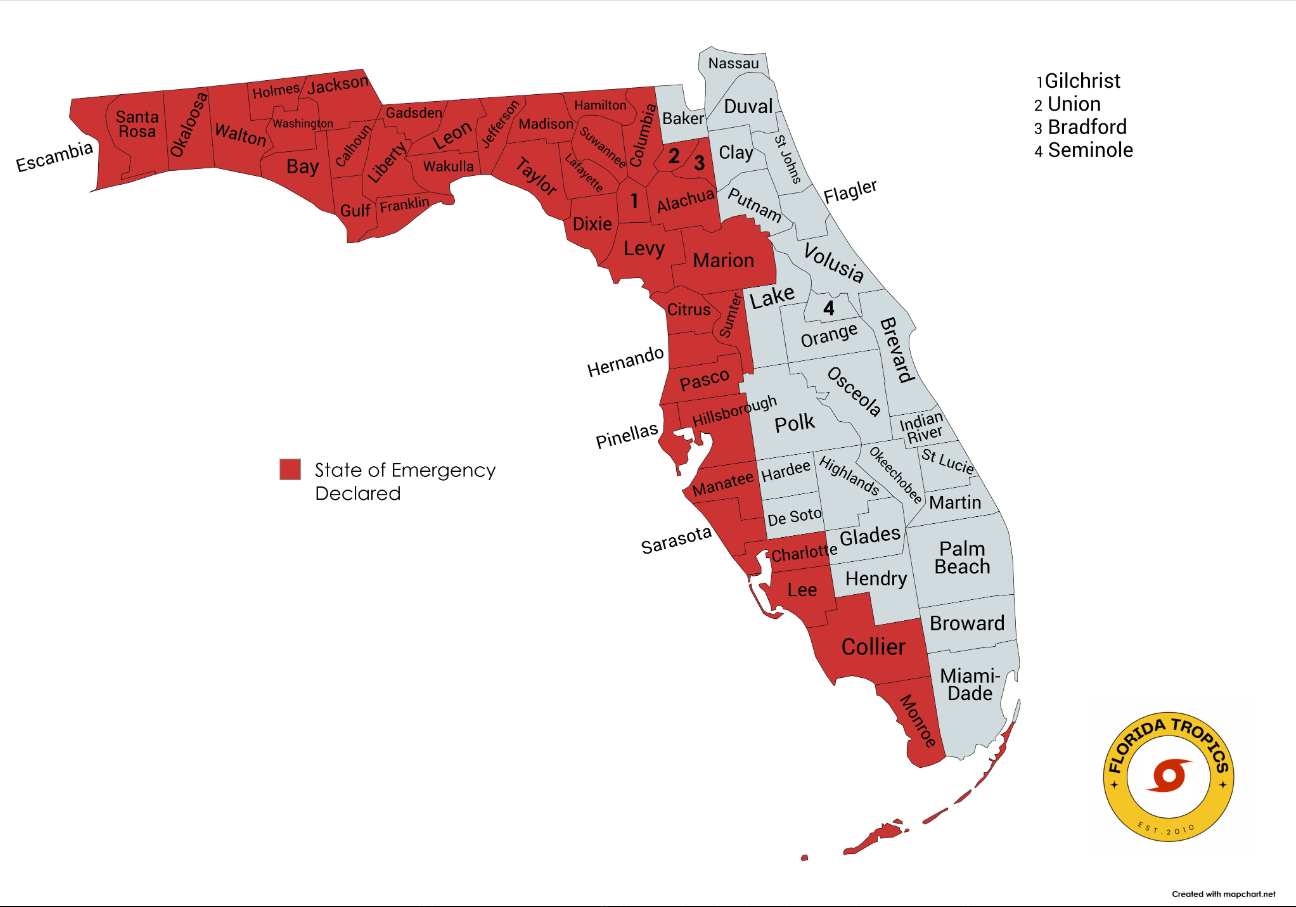
Understanding States of Emergency in Florida
A state of emergency in Florida is a formal declaration made by a governor, county executive, or municipal leader when a disaster or imminent threat to public health, safety, or welfare exists. These declarations are not made lightly; they are typically invoked in response to significant events that overwhelm the normal operational capacity of local government and emergency services.
Triggers for Declaration
The primary triggers for a state of emergency declaration in Florida are diverse and often tied to the state’s vulnerability to natural events. These can include:
- Hurricanes and Tropical Storms: Florida’s extensive coastline makes it a frequent target for tropical cyclones. The approach or impact of a hurricane or significant tropical storm, with its associated high winds, heavy rainfall, and storm surge, is a common catalyst for emergency declarations. This allows for proactive measures like evacuations and the pre-positioning of resources.
- Flooding: Beyond hurricane-induced flooding, prolonged rainfall events or dam failures can lead to widespread inundation, necessitating emergency measures to protect lives and property.
- Wildfires: Especially during dry seasons, large and uncontrolled wildfires can pose a significant threat to communities, requiring coordinated firefighting efforts and potential evacuations.
- Public Health Emergencies: Outbreaks of infectious diseases or other public health crises that strain healthcare systems and necessitate broad public health interventions can also lead to declarations.
- Civil Unrest or Riots: In rare instances, significant civil disturbances that threaten public order and safety may also warrant a state of emergency.
- Man-Made Disasters: Major industrial accidents, infrastructure failures (like bridge collapses), or large-scale hazardous material spills can also trigger such declarations.
Legal Basis and Authority
The authority to declare a state of emergency in Florida is rooted in state statutes and local ordinances. The Florida Emergency Management Act (Chapter 252, Florida Statutes) provides the legal framework for emergency management within the state. This act empowers the Governor to declare a state of emergency for the entire state or specific areas. Similarly, county sheriffs, mayors, and county administrators are typically granted the authority to declare local states of emergency within their jurisdictions, often in consultation with or subject to ratification by their respective county commissions or city councils.
These declarations unlock specific powers and resources. For instance, they can authorize:
- Curfews: To limit movement and facilitate emergency response or maintain order.
- Price Gouging Prohibitions: To prevent exploitation of consumers during times of crisis.
- Mobilization of Resources: Including personnel, equipment, and funding from state and federal agencies.
- Expedited Procurement: To speed up the acquisition of necessary goods and services.
- Evacuation Orders: To safely move residents out of harm’s way.
- Activation of Emergency Support Functions: Coordinating various agencies and organizations to address specific needs.
Identifying Counties Under a State of Emergency
Staying informed about which Florida counties are currently in a state of emergency is crucial for planning and safety. The declaration process is dynamic, and information can change as situations evolve.
Official Sources of Information
The most reliable and up-to-date information regarding states of emergency in Florida comes from official government channels. These include:
- The Florida Division of Emergency Management (FDEM): This state agency is at the forefront of coordinating disaster response and recovery. Their website often features alerts, advisories, and official declarations. For comprehensive statewide information, the FDEM is the primary resource.
- County Emergency Management Agencies: Each of Florida’s 67 counties has its own emergency management agency. These local agencies are responsible for issuing specific declarations for their county and providing localized information on preparedness, evacuation routes, and shelter locations. Their websites and social media feeds are invaluable for county-specific details.
- Governor’s Office: When the Governor declares a statewide state of emergency, press releases and executive orders are issued through the Governor’s office. These are typically widely publicized.
- Local Government Websites and Media: County government websites, municipal websites, and local news outlets are crucial for disseminating information to residents. They often provide real-time updates on emergency declarations, road closures, and essential services.
Navigating Information During a Crisis
During a rapidly developing situation, information overload can be a challenge. It is important to rely on verified sources. When a state of emergency is declared, news media typically cover these announcements extensively. However, for the most precise details, always cross-reference with official county or state emergency management sites.

For example, if a hurricane is projected to impact the Florida Panhandle, a state of emergency might be declared for counties like Escambia County, Santa Rosa County, Okaloosa County, and Walton County. Conversely, a severe cold snap in South Florida might trigger declarations in counties such as Miami-Dade County, Broward County, and Palm Beach County, focusing on protecting vulnerable populations from freezing temperatures.
Implications for Travelers and Residents
A state of emergency declaration has significant implications for both Florida residents and visitors, particularly those planning travel to or within affected areas.
For Travelers
For tourists and business travelers, a state of emergency can disrupt travel plans in several ways:
- Travel Disruptions: Airports and transportation networks may face closures or significant delays. Flight cancellations are common, and road closures can make travel by car impossible or hazardous.
- Accommodation Availability: Hotels, resorts, and vacation rental properties in affected areas may be closed or operating with limited services. Occupancy restrictions might be in place, and some establishments may be commandeered for emergency personnel.
- Attraction Closures: Theme parks like Walt Disney World Resort and Universal Orlando Resort, national parks, beaches, and other tourist attractions may close temporarily for safety reasons or due to damage.
- Evacuation Orders: Travelers may be subject to mandatory or voluntary evacuation orders, requiring them to leave their accommodation and the affected area. It is imperative to comply with these orders immediately.
- Insurance and Refunds: Travelers should familiarize themselves with their travel insurance policies regarding cancellations, interruptions, and reimbursements due to declared emergencies. Many airlines and accommodation providers will offer refunds or rebooking options, but policies vary.
For Residents
For Florida residents, a state of emergency is a call to action and a period of heightened awareness:
- Safety Precautions: Residents are advised to follow guidance from local authorities regarding evacuations, sheltering in place, and securing their homes and properties.
- Access to Resources: During a state of emergency, resources like emergency shelters, food distribution points, and medical assistance become critical. Official channels will provide information on their locations and accessibility.
- Community Support: States of emergency often galvanize community support. Neighbors assist neighbors, and volunteer efforts become vital in the recovery phase.
- Economic Impact: Businesses in affected counties may face temporary closures, leading to economic disruption. The recovery process can be lengthy and requires significant effort.
Preparing for and Responding to Emergency Declarations
Proactive preparation is the cornerstone of resilience when facing potential or declared states of emergency.
Personal Preparedness
Individuals and families should develop and maintain an emergency preparedness plan. This includes:
- Emergency Kit: Assembling a kit with essential supplies such as water, non-perishable food, a first-aid kit, medications, flashlights, batteries, a portable radio, sanitation supplies, and important documents.
- Communication Plan: Establishing a way to communicate with family members if separated, considering out-of-state contacts as local lines may be affected.
- Evacuation Plan: Identifying evacuation routes and potential destinations, and knowing the location of nearby shelters.
- Staying Informed: Regularly checking official sources for updates before, during, and after an emergency event.
Business Continuity
Businesses, especially those in tourism-dependent areas like Miami, Orlando, Tampa, and the Florida Keys, should have robust business continuity plans in place. These plans should address:
- Employee Safety: Protocols for ensuring the safety of staff.
- Property Protection: Measures to secure buildings and assets.
- Operational Continuity: Strategies for maintaining essential services or resuming operations as quickly as possible.
- Customer Communication: How to inform customers about operational status and any changes in services.

Conclusion: A Dynamic Landscape of Preparedness
The declaration of states of emergency in Florida counties is a testament to the state’s proactive approach to managing the inherent risks of its environment. While specific county declarations are fluid and dictated by unfolding events, the underlying principles of preparedness, communication, and coordinated response remain constant. By understanding the triggers, identifying reliable information sources, and adhering to official guidance, both residents and visitors can navigate these challenging periods more safely and effectively. The resilience of Florida and its communities is built upon this foundation of preparedness and shared responsibility.
LifeOutOfTheBox is a participant in the Amazon Services LLC Associates Program, an affiliate advertising program designed to provide a means for sites to earn advertising fees by advertising and linking to Amazon.com. Amazon, the Amazon logo, AmazonSupply, and the AmazonSupply logo are trademarks of Amazon.com, Inc. or its affiliates. As an Amazon Associate we earn affiliate commissions from qualifying purchases.