
The Mississippi River, a colossal artery of North America, is a subject of enduring fascination. Its sheer scale, historical significance, and the vital role it plays in the continent’s ecology and commerce are undeniable. Among the most fundamental questions, and perhaps one that sparks curiosity in travelers, geographers, and history buffs alike, is its direction of flow. Understanding this seemingly simple question unlocks a deeper appreciation for the river’s journey and the landscapes it shapes.
The Grand Journey: From Headwaters to the Gulf
The Mississippi River embarks on an extraordinary voyage, originating from a humble source and culminating in a grand embrace with the ocean. Its path is not a straight line but a winding, serpentine dance across the heartland of the United States.

The Genesis: Lake Itasca and the Northern Source
The journey of the Mississippi River begins in the pristine wilderness of northern Minnesota. Its official source is Lake Itasca, a picturesque body of water within the Itasca State Park. Here, at an elevation of approximately 1,475 feet above sea level, the river is a mere trickle, barely wider than a person can step across. It’s a serene and almost contemplative beginning for a river that will grow to be one of the largest in the world.
This initial section of the river is characterized by its shallow depth, numerous small rapids, and abundant aquatic life. Early explorers and travelers would have encountered a river far different from the broad, powerful waterway known today. The landscape surrounding the headwaters is one of dense forests, bogs, and numerous smaller lakes, all contributing to the initial feeding of the nascent Mississippi.
The Unmistakable Direction: Southward Bound
The definitive answer to the question of the Mississippi River’s flow is unequivocally south. From its source in Lake Itasca, the river’s entire course, spanning over 2,320 miles, is a persistent movement towards the warmer climes of the Gulf of Mexico.
This southward trajectory is a fundamental aspect of its geography, dictated by the topography of the North American continent. The landmass of North America generally slopes from north to south, a phenomenon that guides the flow of major river systems. The Mississippi is no exception, collecting water from a vast watershed that encompasses much of the central United States.
The River’s Transformation: From Stream to Superhighway
As the Mississippi River meanders south, it undergoes a dramatic transformation. Fed by countless tributaries, including major rivers like the Missouri River and the Ohio River, its volume and power increase exponentially. This growth is not just in water volume but also in its significance as a natural and economic landscape.
The Confluence of Giants: Expanding the Flow
The journey south is marked by significant confluences that dramatically alter the river’s character. The most notable is the meeting with the Missouri River near St. Louis, Missouri. The Missouri is actually longer than the Mississippi above their confluence, and upon joining, the combined system is often referred to as the Upper Mississippi River. This merger significantly increases the river’s width and depth, transforming it into a substantial waterway.
Further downstream, near Cairo, Illinois, the Mississippi is joined by the mighty Ohio River. The Ohio brings with it water from a vast drainage basin in the eastern United States, further augmenting the Mississippi’s flow and consolidating its status as a major river. These confluences are not just geographical events; they represent the pooling of resources and the creation of a waterway capable of sustaining extensive human activity.
Shaping the Landscape: Deltas and Floodplains
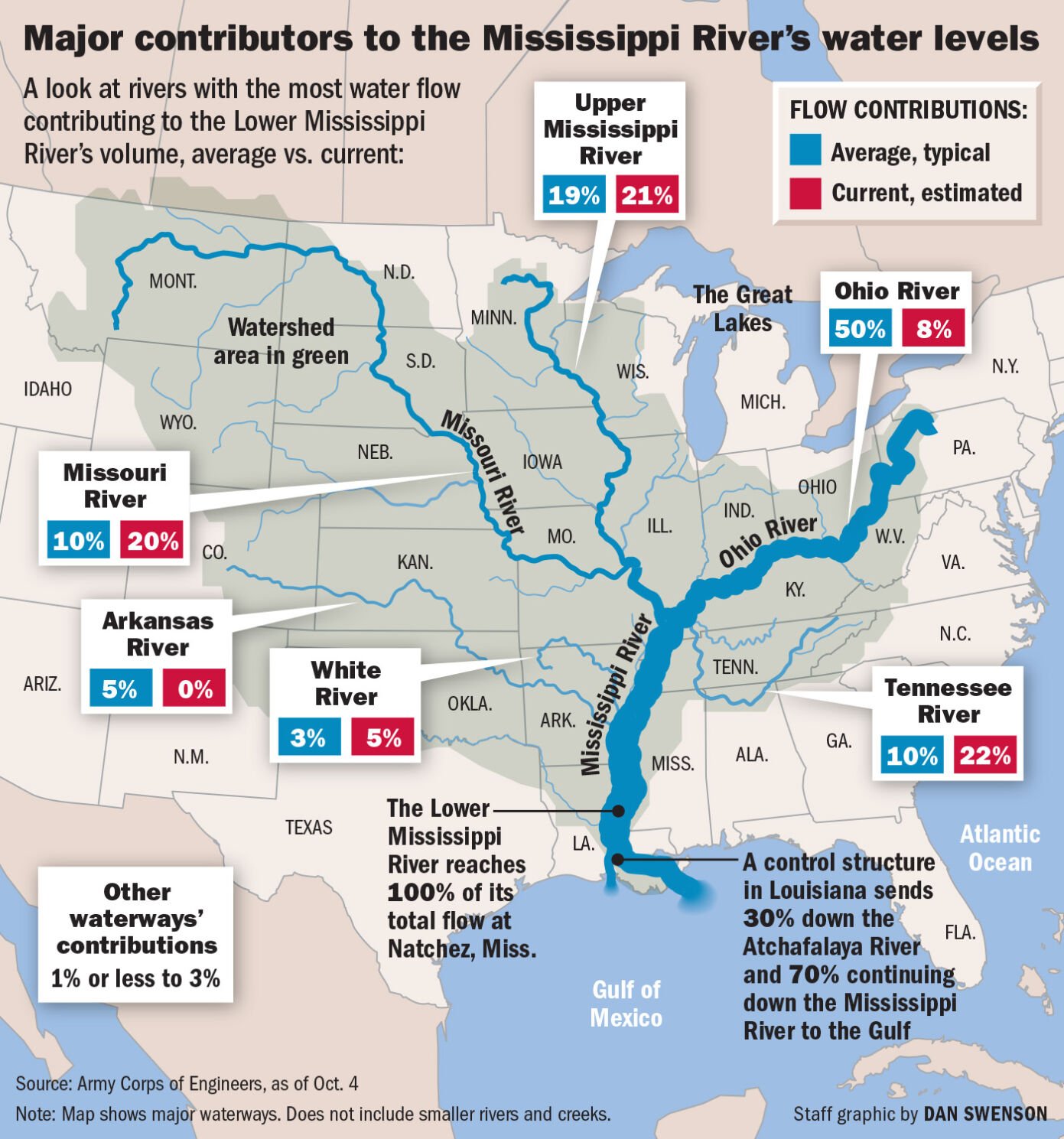
The southward flow of the Mississippi River has profoundly shaped the land it traverses. Over millennia, the river has deposited vast amounts of sediment, creating fertile floodplains and the iconic Mississippi River Delta in Louisiana. This delta, a dynamic and ever-changing landscape, is a testament to the river’s immense power to both create and reclaim land.
The floodplains, characterized by rich alluvial soils, have historically been centers of agriculture, supporting communities and economies for centuries. The river’s natural tendency to flood, while sometimes destructive, is also the source of this fertility. The constant replenishment of the soil ensures that the region remains a breadbasket for the nation. Understanding the river’s flow is key to understanding the very existence and sustenance of these vital ecosystems and human settlements.
Navigating the Flow: Travel and Commerce
The consistent southward flow of the Mississippi River has been fundamental to its role as a critical transportation corridor and a source of inspiration for travelers. From the earliest days of exploration to modern-day leisure cruising, the river’s direction has dictated how humans interact with and utilize this natural wonder.
A Highway of History: Early Exploration and Settlement
The southward flow was the natural pathway for early explorers and settlers venturing into the interior of the continent. Native American tribes utilized the river for trade and travel long before European arrival. Later, figures like Hernando de Soto encountered its power, and subsequent explorers and traders followed its currents. The ability to travel downstream with relative ease facilitated the westward expansion of the United States, allowing for the establishment of numerous cities and towns along its banks, from Minneapolis and St. Paul in the north to Memphis, Vicksburg, and New Orleans further south.
The predictability of its flow provided a natural route for goods and people, connecting the interior to the global marketplace via the Gulf of Mexico. This historical reliance on the river’s southward direction laid the foundation for its continuing importance in the nation’s infrastructure.
Modern Journeys: Cruising and River Exploration
Today, the Mississippi River continues to beckon travelers. Cruising the river, particularly on historic paddlewheel steamboats like those operated by American Cruise Lines or Viking River Cruises, offers a unique perspective on the American landscape and its rich history. These journeys invariably follow the river’s natural southward course, allowing passengers to experience the diverse cultures and scenery of the river valley.
Travelers can embark on voyages that explore the vibrant music scene of New Orleans, the historic Civil War sites near Vicksburg, or the charming river towns of the Midwest. Each stop offers a glimpse into the communities that have thrived because of the river’s presence and its unfailing journey south. The experience of traveling along its waters is a profound connection to the continent’s heart and its enduring story.
The End of the Line: Discharge into the Ocean
The final act of the Mississippi River’s grand journey is its discharge into the saline waters of the Gulf of Mexico. This immense deltaic region is a dynamic estuary where freshwater meets saltwater, creating a unique and biologically rich environment.
A Vital Ecosystem: The Mississippi River Delta
The Mississippi River Delta is one of the most important and productive ecosystems in the United States. The continuous flow of nutrient-rich sediment from the river nourishes coastal wetlands, supporting a diverse array of wildlife, including migratory birds, fish, and shellfish. This region is a critical habitat and nursery ground for many species.
The river’s southward flow is the very force that sustains this delta. Without the constant influx of sediment and freshwater, the delta would erode and disappear. Understanding the river’s direction is therefore crucial for understanding the health and preservation of this vital natural resource.
Connecting Continents: Global Trade Routes
The final destination of the Mississippi River in the Gulf of Mexico connects the heartland of North America to global trade routes. The Port of New Orleans, one of the busiest ports in the United States, leverages the river’s connection to the ocean to facilitate the movement of goods worldwide. This final link in the river’s journey underscores its immense economic significance, a direct consequence of its consistent, unimpeded flow towards the sea.
LifeOutOfTheBox is a participant in the Amazon Services LLC Associates Program, an affiliate advertising program designed to provide a means for sites to earn advertising fees by advertising and linking to Amazon.com. Amazon, the Amazon logo, AmazonSupply, and the AmazonSupply logo are trademarks of Amazon.com, Inc. or its affiliates. As an Amazon Associate we earn affiliate commissions from qualifying purchases.