
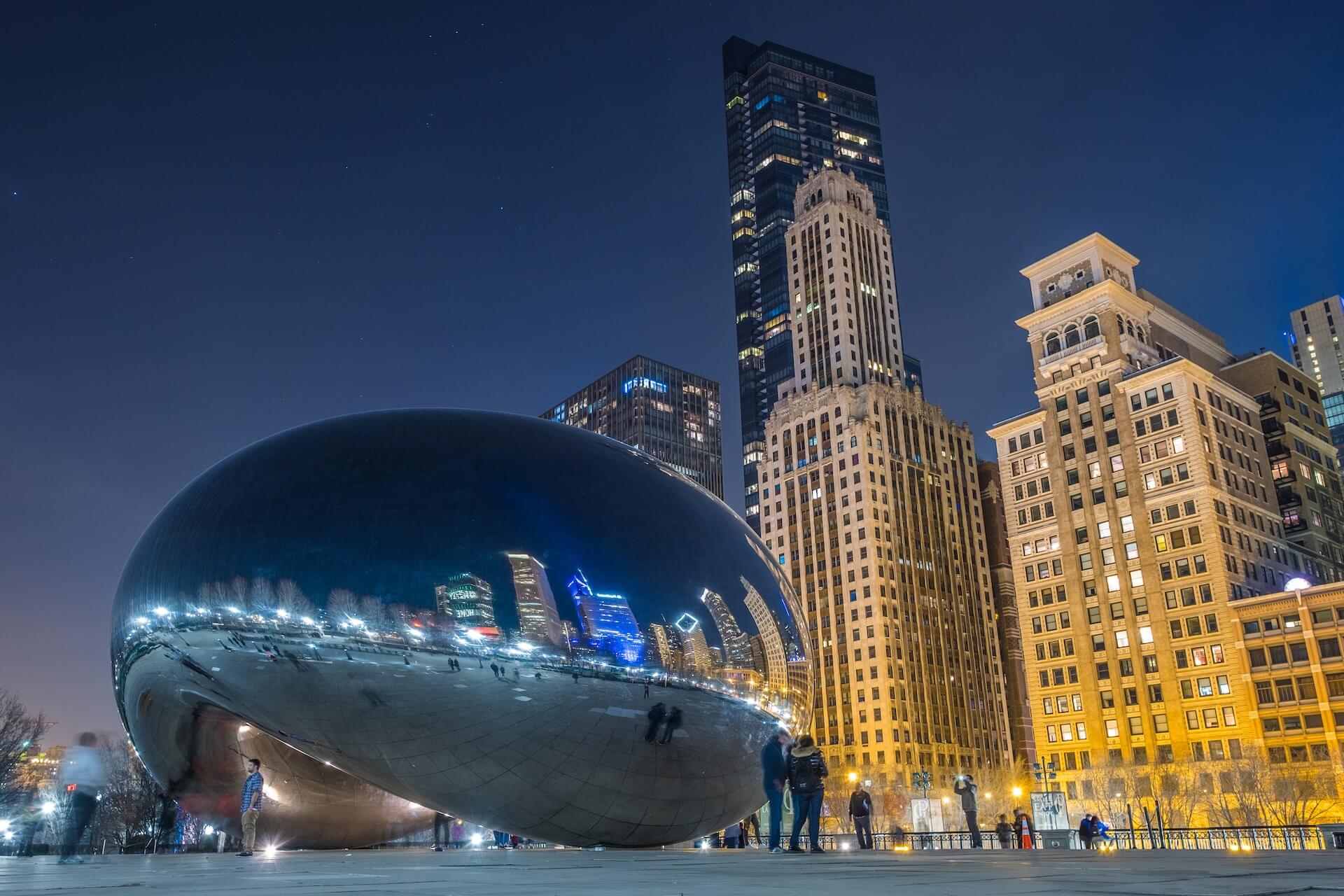
Chicago, a city renowned for its architectural marvels and vibrant cultural landscape, is home to an iconic public sculpture that has captivated millions of visitors: “Cloud Gate,” affectionately known worldwide as “The Bean.” This gleaming, kidney-bean-shaped monument, nestled in the heart of Millennium Park, has become an indispensable part of the Chicago experience. Its reflective surface offers a distorted yet mesmerizing view of the city’s dramatic skyline, making it a must-see landmark for any traveler. But behind this globally recognized work of art lies a fascinating story of inspiration, design, and international collaboration.
The creation of “Cloud Gate” is a testament to visionary artistry and the ambition of a city eager to enhance its public spaces. The idea for a central, iconic sculpture in Millennium Park began to take shape in the late 1990s. As the park was being developed, a competition was launched to find a centerpiece that would embody the spirit of Chicago. The winning proposal came from a British artist whose unique concept would soon become a reality.
The Visionary Behind The Bean: Anish Kapoor’s Innovative Design
The artist responsible for the groundbreaking design of “Cloud Gate” is the internationally acclaimed sculptor Anish Kapoor. Born in Mumbai, India, in 1954, Kapoor is celebrated for his monumental installations that often play with form, material, and the viewer’s perception of space. His work frequently explores themes of presence, absence, reflection, and the sublime.
From Concept to Creation: The Journey of “Cloud Gate”
Anish Kapoor‘s initial submission for the Millennium Park sculpture competition was not immediately “Cloud Gate” as we know it. He presented several concepts, but the one that ultimately resonated most powerfully with the selection committee and the public was a large, highly polished, reflective form. The genesis of “The Bean” can be traced back to his fascination with the reflective properties of liquid mercury and the way it distorts and mirrors its surroundings.
Kapoor’s concept was to create a sculpture that would not only be a beautiful object in itself but would also engage directly with its environment and the people interacting with it. He envisioned a piece that would invite touch, reflection, and play. The choice of stainless steel was crucial. Its polished surface allows “The Bean” to capture the ever-changing sky, the surrounding architecture, and the faces of visitors, transforming them into a dynamic and ever-shifting artwork.
The process of bringing such a massive and intricately shaped sculpture to life was an extraordinary feat of engineering and craftsmanship. The artist worked closely with a team of highly skilled fabricators, engineers, and metalworkers to realize his vision.
The Engineering Marvel of Stainless Steel
The construction of “Cloud Gate” was a complex undertaking. The sculpture is made up of 169 individual stainless steel plates, meticulously welded together and polished to an almost seamless finish. The initial design called for a single, monolithic form, but the sheer scale and the complex curves necessitated a modular approach to fabrication.
The process involved:
- 3D Modeling and Prototyping: Advanced computer modeling was used to perfect the shape and ensure its structural integrity. Small-scale prototypes were created to test various forms and finishes.
- Fabrication of Panels: Each of the 169 steel plates was precisely cut and shaped to fit together. This required an exceptional level of precision to achieve the smooth, flowing surface of the final sculpture.
- Welding and Grinding: The plates were painstakingly welded together, a process that demanded immense skill to avoid warping the thin stainless steel. Following welding, an extensive grinding and polishing process took place to eliminate any visible seams and create the mirror-like finish. This stage alone took thousands of hours of labor.
- Lifting and Installation: The finished sculpture, weighing approximately 110 tons, was transported in sections to Millennium Park and then assembled and installed on its foundation. The scale and weight presented significant logistical challenges, requiring specialized cranes and careful planning.
The chosen material, stainless steel, was not only aesthetically pleasing due to its reflectivity but also chosen for its durability and resistance to weathering, ensuring that “Cloud Gate” would stand the test of time as a lasting monument in Chicago.
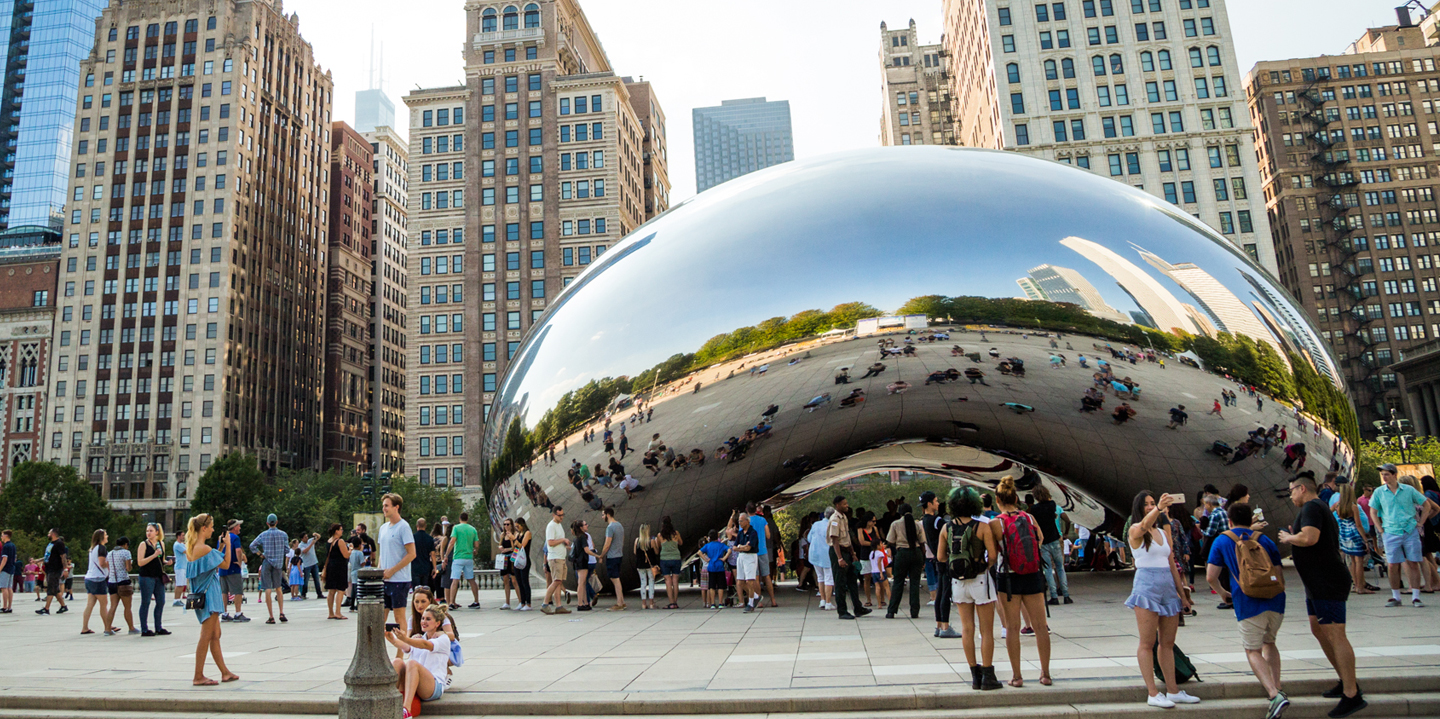
The sculptor’s desire to create an interactive piece was realized through the design of the underside of “The Bean.” This concave section, reminiscent of a funnel, draws visitors underneath the main body of the sculpture. Here, the reflections are even more distorted and amplified, creating a surreal and playful experience. It’s a space where individuals can see themselves and others fragmented and multiplied, fostering a sense of shared experience and wonder.
The name “Cloud Gate” itself speaks to Kapoor’s artistic intent. He saw the sculpture as a gate or portal through which clouds and the sky could pass, linking the earth to the heavens. The reflective surface acts as a literal gate, reflecting the ever-changing celestial canvas above.
“The Bean” as a Landmark: An Icon of Chicago Tourism
Since its unveiling in 2006, “Cloud Gate” has transcended its status as a mere sculpture to become an undeniable icon of Chicago. It is a focal point for tourism, a popular spot for photographers, and a beloved gathering place for locals and visitors alike. Its presence in Millennium Park has contributed significantly to the park’s success as one of the city’s premier attractions.
Experiencing The Bean: Tips for Visitors
Visiting “The Bean” is an experience that can be enjoyed by everyone, from solo travelers to families with children. Its accessibility and engaging nature make it a universally appealing landmark.
- Photography: “The Bean” is a photographer’s dream. The reflective surface offers endless creative possibilities for capturing unique shots of Chicago‘s skyline, including famous buildings like the Willis Tower (formerly the Sears Tower) and the John Hancock Center. Experiment with different angles and times of day for the most striking images. Early mornings often offer softer light and fewer crowds, while evenings provide a dramatic backdrop as the city lights begin to twinkle.
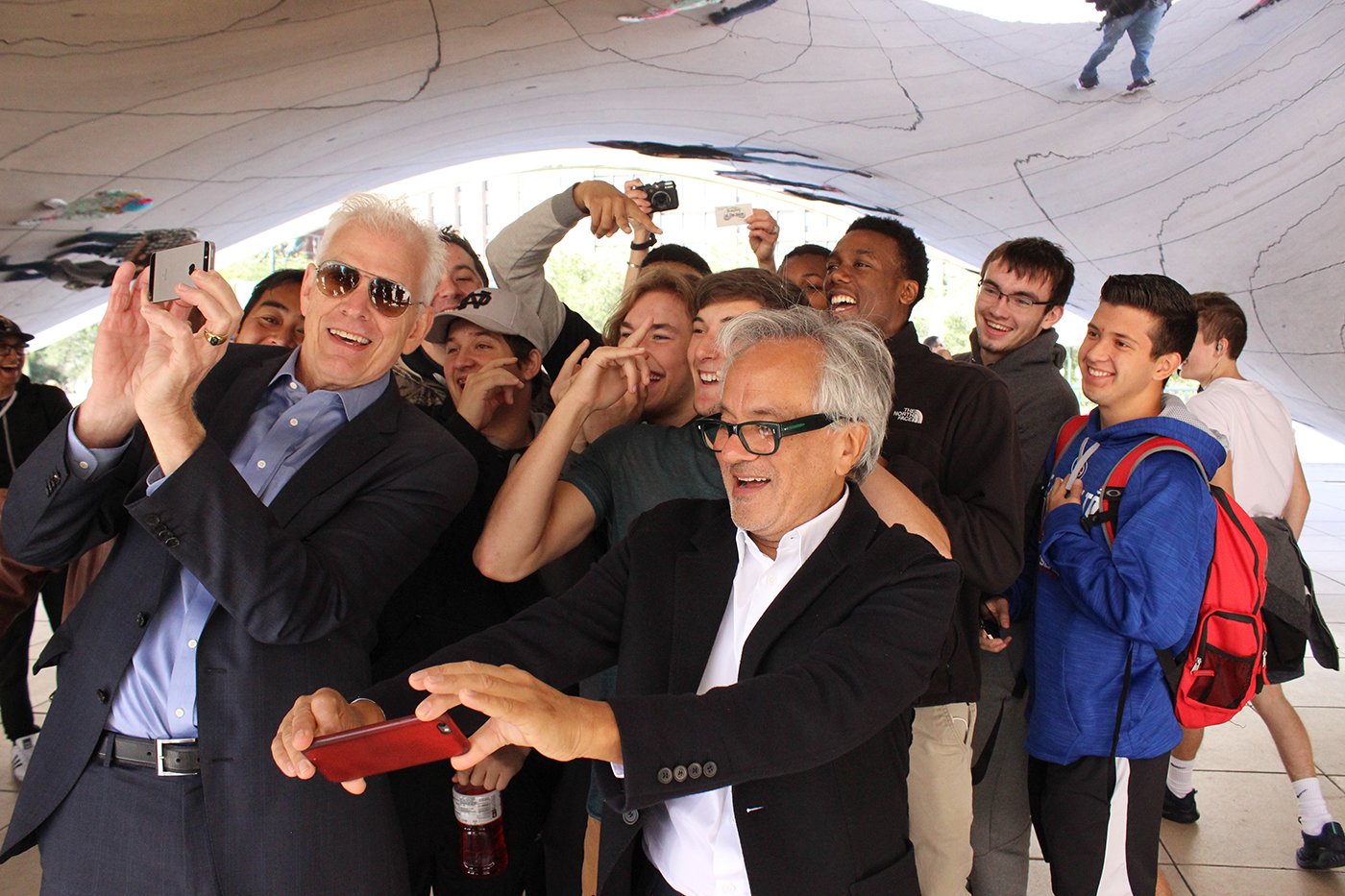
- Interactive Art: Don’t just admire “The Bean” from a distance. Walk up to it, touch its smooth surface, and experience the distortions it creates. Take advantage of the concave underside for fun, distorted selfies and group photos. Children, in particular, often delight in the playful reflections and the sheer scale of the sculpture.
- Location within Millennium Park: “Cloud Gate” is situated in the heart of Millennium Park, a sprawling urban oasis that offers much more than just the iconic sculpture. Plan to spend time exploring other attractions within the park, such as the Crown Fountain, the Pritzker Pavilion, and the Lurie Garden. This allows for a comprehensive Chicago experience.
- Best Times to Visit: To avoid the largest crowds, consider visiting early in the morning on a weekday. However, the sculpture is also a magical sight at night, illuminated by the city lights, offering a different yet equally enchanting perspective.
- Accessibility: “Cloud Gate” is located on the ground level and is easily accessible for individuals with mobility challenges. The pathways around it are smooth and well-maintained.
The enduring popularity of “The Bean” is a testament to its successful integration into the urban fabric of Chicago. It has become more than just a sculpture; it is a symbol of the city’s artistic ambition, its architectural prowess, and its welcoming spirit.
Beyond The Bean: Exploring Chicago’s Architectural and Cultural Landscape
While “The Bean” is undoubtedly a major draw, it serves as an excellent gateway to exploring the broader architectural and cultural offerings of Chicago. The city’s skyline is a living museum of architectural innovation, and its cultural scene is rich and diverse.
Architectural Wonders and Cultural Gems
- Millennium Park: As mentioned, Millennium Park itself is a masterpiece of urban design. Designed by landscape architect Kathryn Gustafson, architect Jacques Herzog, and artist Anish Kapoor, it is a vibrant public space that blends art, architecture, and landscape.
- Art Institute of Chicago: Located adjacent to Millennium Park, the Art Institute of Chicago is one of the oldest and largest art museums in the United States. It houses an impressive collection of Impressionist and Post-Impressionist paintings, as well as works from around the world.
- Architecture Boat Tours: A highly recommended way to appreciate Chicago‘s architectural heritage is by taking an architecture boat tour on the Chicago River. These tours offer unparalleled views of iconic skyscrapers and provide fascinating insights into the city’s history and design.
- The Magnificent Mile: For those interested in shopping, dining, and entertainment, The Magnificent Mile offers a world-class experience, lined with flagship stores, luxury boutiques, and renowned restaurants.
- Museum Campus: The Museum Campus brings together three of Chicago‘s premier cultural institutions: the Field Museum (natural history), the Shedd Aquarium (aquatic life), and the Adler Planetarium (astronomy).
When visiting Chicago, one can find a wide range of accommodation options to suit every budget and travel style. From luxurious downtown hotels offering stunning city views to boutique inns in charming neighborhoods, there are choices for every traveler. Popular areas to stay include the Loop for its proximity to major attractions, River North for its vibrant nightlife, and the Gold Coast for its upscale ambiance. Many hotels offer packages that can include tickets to attractions or discounts on dining, further enhancing the travel experience. For those seeking a more home-like feel, serviced apartments and vacation rentals are also readily available. Whether planning a short weekend getaway or a longer exploratory trip, Chicago provides a diverse array of services and experiences.
In conclusion, “Cloud Gate,” or “The Bean,” is far more than just a shiny sculpture. It is a triumph of artistic vision and engineering ingenuity, a beloved landmark that draws millions to Chicago and offers a unique interactive experience. Designed by Anish Kapoor, it has become an enduring symbol of the city’s dynamic spirit and a must-visit destination for any traveler seeking art, architecture, and memorable moments. Its reflective surface not only mirrors the city’s grandeur but also the joy and wonder of those who come to admire it.
LifeOutOfTheBox is a participant in the Amazon Services LLC Associates Program, an affiliate advertising program designed to provide a means for sites to earn advertising fees by advertising and linking to Amazon.com. Amazon, the Amazon logo, AmazonSupply, and the AmazonSupply logo are trademarks of Amazon.com, Inc. or its affiliates. As an Amazon Associate we earn affiliate commissions from qualifying purchases.