
The crisp, cold air of Boston on March 5, 1770, belied the simmering tensions that had reached a boiling point in the streets of the burgeoning colonial city. What began as a relatively minor altercation between a British soldier and a group of local citizens escalated into a pivotal moment in American history – an event forever etched into the collective memory as the Boston Massacre. Far from being a mere street brawl, this tragic incident resulted in the deaths of five colonists, transforming them from ordinary individuals into martyrs for a cause that would eventually define a nation. For those exploring the rich tapestry of American history, understanding who these individuals were and the circumstances of their demise is crucial to grasping the spirit and sacrifices that fueled the American Revolution.

Visiting Boston today offers a unique opportunity to walk in the footsteps of history. The city, a treasure trove of landmarks and revolutionary sites, allows travelers to connect directly with the past. As you navigate its charming streets, from the historic North End to the bustling waterfront, the story of the Boston Massacre emerges as a powerful narrative. It’s a story not just of conflict, but of the human cost of burgeoning freedom, a testament to the fact that major historical shifts often begin with personal tragedies. Understanding the victims and the context of this event enriches any historical tour of New England, transforming it from a simple sightseeing trip into a profound journey through the origins of the United States.
A Prelude to Revolution: The Tensions in Colonial Boston
To truly appreciate the significance of the Boston Massacre, one must first understand the volatile atmosphere that gripped Boston in the late 1760s. The relationship between the British Crown and its American colonies was rapidly deteriorating, fueled by a series of unpopular tax acts, such as the Stamp Act and the Townshend Acts, imposed by Great Britain to offset the costs of empire. These taxes, perceived as unjust by the colonists who lacked representation in the British Parliament, led to widespread protests, boycotts, and a growing sense of injustice. Boston, a hotbed of revolutionary sentiment and a major port city, was often at the forefront of this dissent.
British Occupation and Mounting Frustration
In response to the escalating unrest and to enforce imperial policies, Great Britain deployed several regiments of British soldiers to Boston in 1768. The presence of these redcoats, quartered among the civilian population, was a constant source of friction. Soldiers, many of whom were poorly paid, often competed with colonists for jobs during their off-duty hours, particularly in the city’s robust maritime industry. This economic competition, coupled with cultural clashes, the perception of an occupying force, and frequent minor altercations, created an environment ripe for confrontation. The sound of fife and drum accompanying military drills, the sight of uniformed soldiers patrolling the narrow streets, and the general arrogance perceived from the British military establishment daily stoked the fires of resentment among the townspeople of Boston. Every interaction, every glance, held the potential for sparks to fly, and on that fateful evening in March 1770, they did.
The Fateful Evening of March 5, 1770
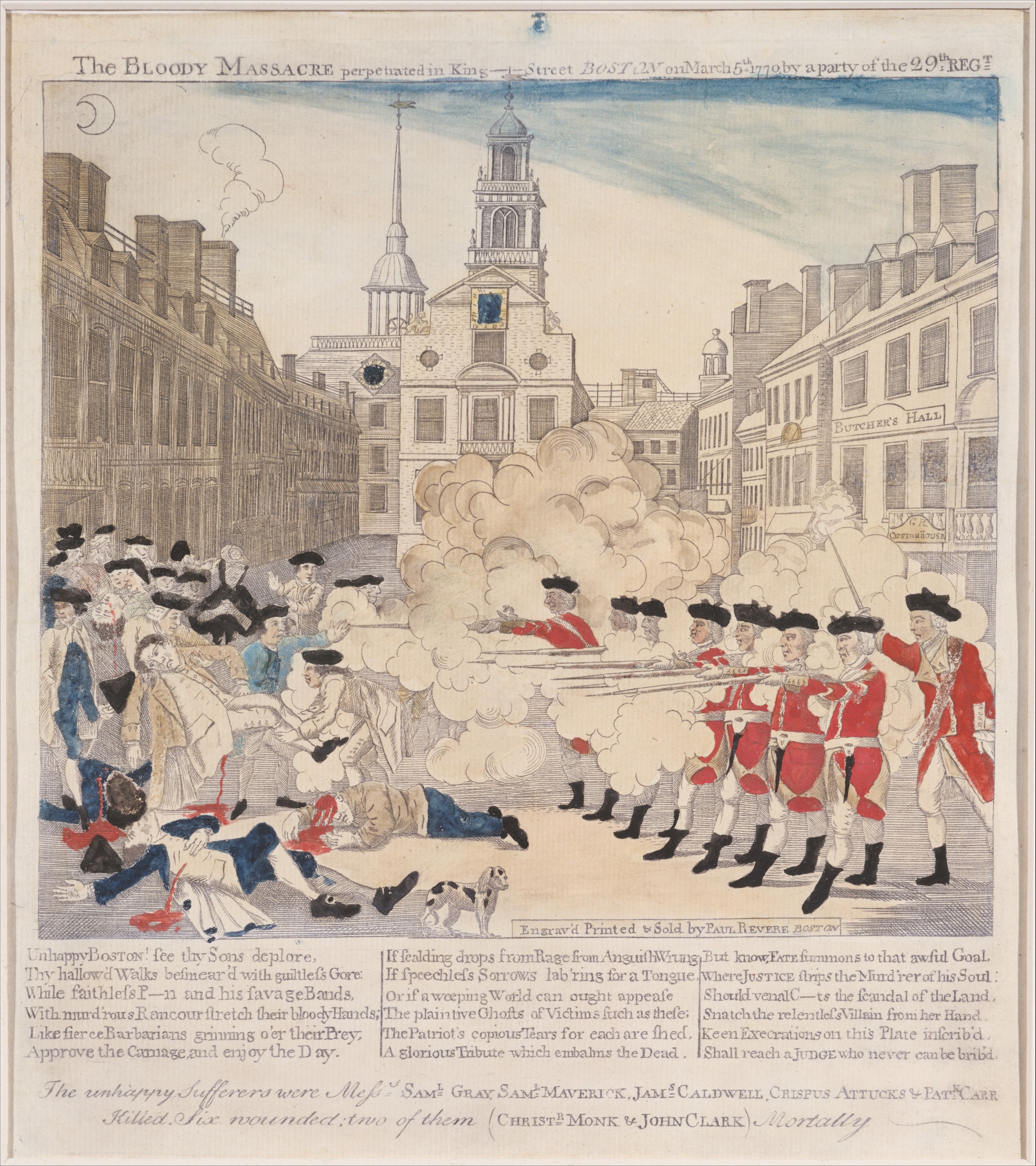
The evening of March 5th began with a relatively minor incident. A young wigmaker’s apprentice named Edward Garrick reportedly insulted a British officer, Captain Lieutenant John Goldfinch, over an unpaid bill. A sentry, Private Hugh White, intervened, striking Garrick with his musket. Word of the confrontation quickly spread through the streets, drawing a growing crowd of colonists who began to harass White with taunts, snowballs, and chunks of ice. The situation rapidly spiraled out of control. Alarmed, Private White called for reinforcements. Captain Thomas Preston arrived with a small squad of seven soldiers, who positioned themselves in a semi-circle in front of the Old State House (then the Custom House), bayonets fixed.
The crowd, now numbering in the hundreds, grew increasingly hostile, pressing in on the soldiers. Shouts of “Fire!” and “Kill them!” mingled with the ringing of church bells, further agitating the already tense situation. Objects were hurled at the soldiers, who were reportedly taunted with racial slurs. Amidst the chaos and confusion, a soldier was struck, causing him to discharge his musket. This single shot triggered a volley from the other soldiers. When the smoke cleared and the crowd dispersed in terror, five men lay dead or dying, marking a bloody stain on Boston’s cobblestones and a turning point in the struggle for American independence.
The Tragic Victims Who Fell
The five individuals who lost their lives on that evening became immediate symbols of British tyranny and colonial suffering. Their names are forever linked to the genesis of the United States:
- Crispus Attucks: Perhaps the most famous of the victims, Crispus Attucks was a sailor of mixed African and Native American descent. He is widely considered the first casualty of the American Revolution. Accounts vary, but many describe him as a prominent figure in the crowd, actively engaging with the soldiers. His death highlighted the diverse composition of colonial society and the shared grievances against British rule. Today, his legacy is celebrated in civil rights movements and historical commemorations, recognizing his pioneering role in the fight for freedom.
- James Caldwell: A young sailor, James Caldwell was also among those killed that night. Details about his life are sparse, but his presence in the crowd reflects the broad participation of ordinary working-class individuals in the growing resistance against British authority. His story is a poignant reminder of the unrecorded lives that often bear the brunt of historical conflict.
- Patrick Carr: An Irish immigrant and a leather breeches maker, Patrick Carr was mortally wounded and died several days later. His testimony, given before his death, was crucial during the subsequent trials, providing insight into the chaotic moments leading up to the firing. Carr’s inclusion among the victims underscores the diverse immigrant population of colonial Boston and their involvement in the nascent revolutionary movement.
- Samuel Gray: A rope maker by trade, Samuel Gray was a known participant in previous protests against British policies. He was shot in the head and died instantly. His occupation placed him squarely within the working-class community that bore the brunt of economic hardship and resentment under British rule, making him a representative figure of the wider colonial populace.
- Samuel Maverick: At just 17 years old, Samuel Maverick was the youngest of the deceased. An apprentice ivory turner, he was shot while observing the commotion and died the following morning. His youth added a particularly tragic dimension to the event, emphasizing the indiscriminate nature of the violence and resonating deeply with the colonial public.
Crispus Attucks: A Symbol of Liberty
While all five victims are revered, Crispus Attucks’s story holds particular resonance. His identity as a man of color, possibly a runaway slave, dying for liberty years before the formal abolitionist movement, makes him a potent symbol of universal freedom. His presence at the forefront of the crowd suggests a man not afraid to stand up against oppression, embodying the spirit of defiance that would sweep through the colonies. For modern visitors to Boston, learning about Crispus Attucks adds a layer of depth to the city’s historical narrative, highlighting the often-overlooked contributions of people of color to the founding of the United States. His legacy continues to inspire discussions about freedom, equality, and the complexities of American identity.
The Aftermath and Enduring Legacy
The immediate aftermath of the Boston Massacre was a whirlwind of outrage, propaganda, and legal proceedings. The event sent shockwaves through the colonies, igniting widespread anger and galvanizing resistance against British rule. The bodies of the victims were paraded through Boston in a somber funeral procession, attracting thousands of mourners and serving as a powerful visual testament to the perceived brutality of British soldiers.
Trials, Propaganda, and a Nation Awakened
In an extraordinary turn of events, the soldiers involved, including Captain Thomas Preston, were arrested and charged with murder. What followed was one of the most remarkable trials in colonial history. Defending the British soldiers, despite being a staunch patriot, was none other than future President John Adams. Adams famously argued that every person, regardless of their actions, deserved a fair trial. His defense team successfully argued that the soldiers were provoked by a riotous mob and fired in self-defense. Ultimately, Captain Preston and six of his soldiers were acquitted, while two others were found guilty of manslaughter, branded on the thumb, and released.
While the legal outcome might have been viewed as a moral victory for justice by some, the public narrative was largely shaped by powerful propaganda. Paul Revere’s famous engraving, “The Bloody Massacre in King Street,” depicted the British soldiers as ruthless murderers, firing indiscriminately into a defenseless crowd. Though historically inaccurate in many details, this image was widely circulated, enflaming anti-British sentiment across the colonies and embedding the event as a symbol of British tyranny in the American consciousness. The Boston Massacre thus became a critical stepping stone on the path to revolution, solidifying the colonists’ resolve to resist and ultimately declare independence from Great Britain.
Experiencing History: The Boston Massacre Site Today
For travelers keen on immersing themselves in American history, the site of the Boston Massacre is a must-see landmark. Located on what was once King Street, now State Street, the exact spot where the tragedy unfolded is marked by a circular cobblestone monument right in front of the Old State House. This iconic building, with its distinctive lion and unicorn statues, served as the seat of colonial government and bears witness to centuries of Boston’s history. Standing on this spot, one can almost hear the echoes of the past, imagining the chaotic scene and the pivotal moments that transpired.
The site is a key stop on the Boston Freedom Trail, a 2.5-mile walking tour that connects 16 historically significant sites. As you follow the red brick path, knowledgeable guides often recount the story of the massacre, bringing the event to vivid life. Nearby, at the Granary Burying Ground, visitors can pay their respects at the common grave of the five victims, alongside other revolutionary figures like Paul Revere, Samuel Adams, and John Hancock. This tangible connection to the individuals who died offers a profound and moving experience, making the abstract concept of revolution deeply personal and human.
Preserving the Narrative: Boston’s Historical Tapestry
Beyond the immediate site, Boston is a city that thrives on its historical narrative. It offers an unparalleled experience for history enthusiasts, providing a living museum of early American life and revolutionary fervor. Exploring these landmarks is more than just sightseeing; it’s an opportunity to understand the lifestyle, the struggles, and the triumphs that shaped the United States. Whether you are on a budget trip or a luxury travel experience, Boston’s historical attractions are accessible and engaging for all.

Beyond the Site: Exploring Boston’s Revolutionary War Landmarks
Your historical journey in Boston should extend well beyond the Boston Massacre site. The city is rich with other significant locations that piece together the broader story of the American Revolution:
- Faneuil Hall: Known as the “Cradle of Liberty,” this historic marketplace and meeting hall hosted many fiery speeches by patriots like Samuel Adams and James Otis. It’s a vibrant tourist attraction today, blending history with modern commerce.
- Old North Church: Famous for Paul Revere’s “one if by land, two if by sea” lantern signal, this church offers breathtaking views from its steeple and a tangible link to a pivotal moment of intelligence gathering.
- Paul Revere House: The oldest house in downtown Boston, this perfectly preserved home offers a glimpse into the life of one of America’s most famous patriots.
- Bunker Hill Monument: Located in Charlestown, this 221-foot obelisk commemorates one of the first major battles of the American Revolution. A climb to the top offers panoramic views of the city.
- USS Constitution Museum: Also in Charlestown, this museum and the adjacent USS Constitution (America’s oldest commissioned warship afloat) provide insights into naval history during the early days of the United States.
- Boston Tea Party Ships & Museum: An interactive experience recounting the famous act of defiance against British taxation.
When planning your trip to Boston, consider staying in a historic Beacon Hill townhouse or a modern hotel near the Freedom Trail to maximize your immersion. Many Boston hotels offer packages tailored to history buffs, ensuring you have comfortable accommodation as you delve deep into the city’s revolutionary past. Whether it’s exploring the hallowed grounds where patriots debated, walking the path of those who died for liberty, or simply soaking in the atmosphere of one of America’s oldest cities, Boston offers an unforgettable journey into the heart of the American Revolution. The five lives lost in the Boston Massacre serve as a perpetual reminder of the profound sacrifices made for the freedoms we often take for granted, making their story an essential chapter in any exploration of this vibrant, historically rich destination.
LifeOutOfTheBox is a participant in the Amazon Services LLC Associates Program, an affiliate advertising program designed to provide a means for sites to earn advertising fees by advertising and linking to Amazon.com. Amazon, the Amazon logo, AmazonSupply, and the AmazonSupply logo are trademarks of Amazon.com, Inc. or its affiliates. As an Amazon Associate we earn affiliate commissions from qualifying purchases.